Minimalist vs Maximalist EDC: Find Your Philosophy
Minimalist or maximalist? We break down the trade-offs between light everyday carry and full preparedness so you can build a setup that actually works for your life.
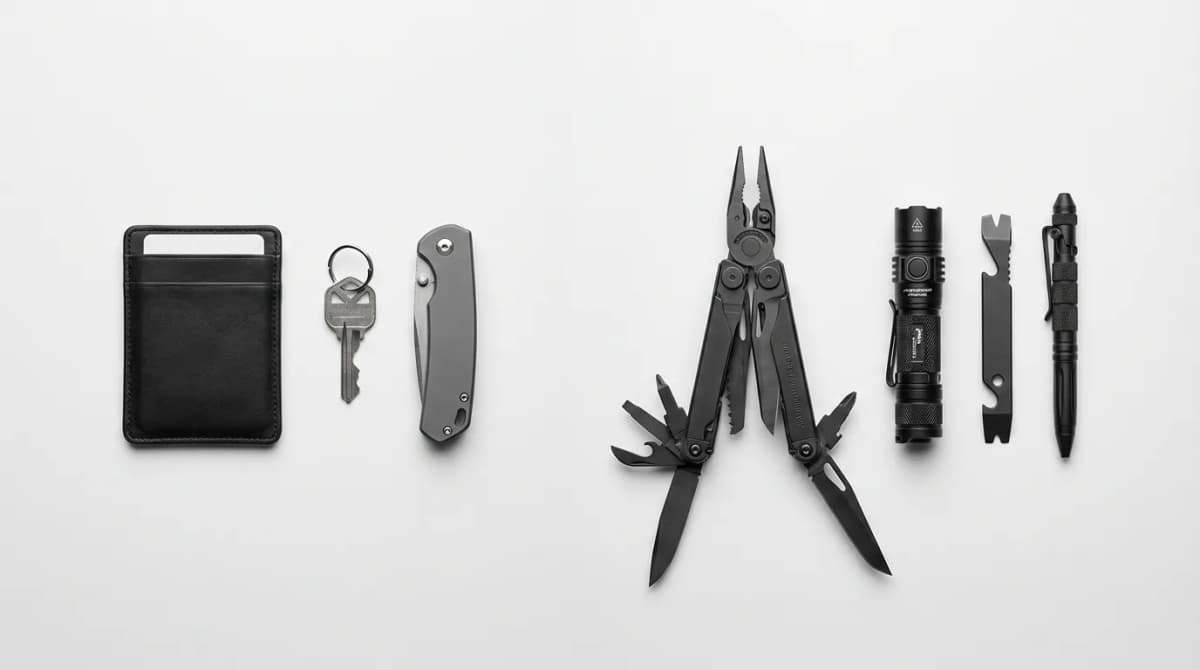
Your pockets tell a story about how you move through the world. Some people carry three items and feel invincible. Others need seventeen tools to leave the house comfortably. Neither approach is wrong, but one is probably better suited to your actual daily needs than the other.
The minimalist vs maximalist debate in everyday carry is less about right or wrong and more about honest self-assessment. What do you actually use? What gives you peace of mind versus what creates pocket bulge you resent? The answer changes based on your job, your commute, where you live, and what problems you encounter regularly.
We tested both extremes for months, then found our personal middle ground. Here's what we learned about weight, readiness, and the psychological cost of carrying too much or too little.
What Minimalist EDC Actually Means
Minimalist carry is not about deprivation. It's about ruthless editing. You pick 3-7 items that solve the problems you face most often, then you stop adding.
The typical minimalist setup includes a slim wallet, phone, keys, and maybe a small knife or pen. Total pocket weight stays under 8 ounces. You can sit comfortably in any chair. Your pants don't sag. You never pat yourself down wondering what's digging into your hip.
The discipline comes from resisting the "what if" spiral. What if you need scissors? What if someone needs a screwdriver? Minimalists accept that rare scenarios do not justify daily carry weight. They'd rather borrow a tool once a month than carry it 30 days for one use.
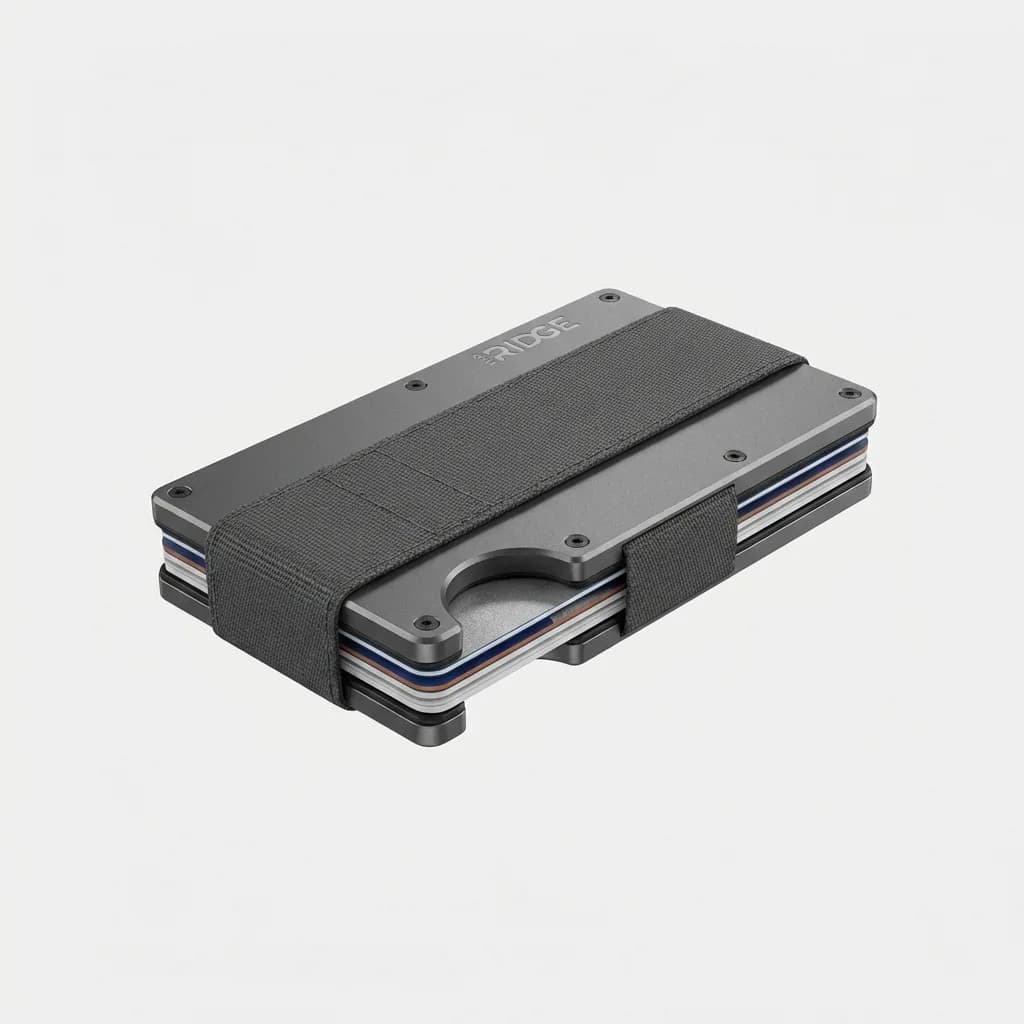
Ridge Wallet
$75-$115
Aluminum or carbon fiber RFID-blocking wallet holds 1-12 cards. Weighs 2 ounces, blocks front pocket bulk, includes cash strap and lifetime warranty.
The biggest mistake new minimalists make is going too light too fast. They drop to three items, then get caught needing something obvious like a pen or a way to open packages. They overcorrect back to maximalist carry and declare minimalism impractical. The smarter approach is gradual reduction. Remove one item per week. See if you miss it after two weeks. If not, it stays gone.
The Maximalist Mindset: Prepared for Anything
Maximalists optimize for capability over comfort. They carry 12-20 items because being the person who has the right tool feels better than having lighter pockets.
This philosophy makes sense for certain jobs and lifestyles. If you work in property management, IT support, or any role where people regularly ask you to fix things, a loaded multi-tool and flashlight earn their weight. If you spend time outdoors or in areas with limited services, carrying backup tools is just pragmatic.
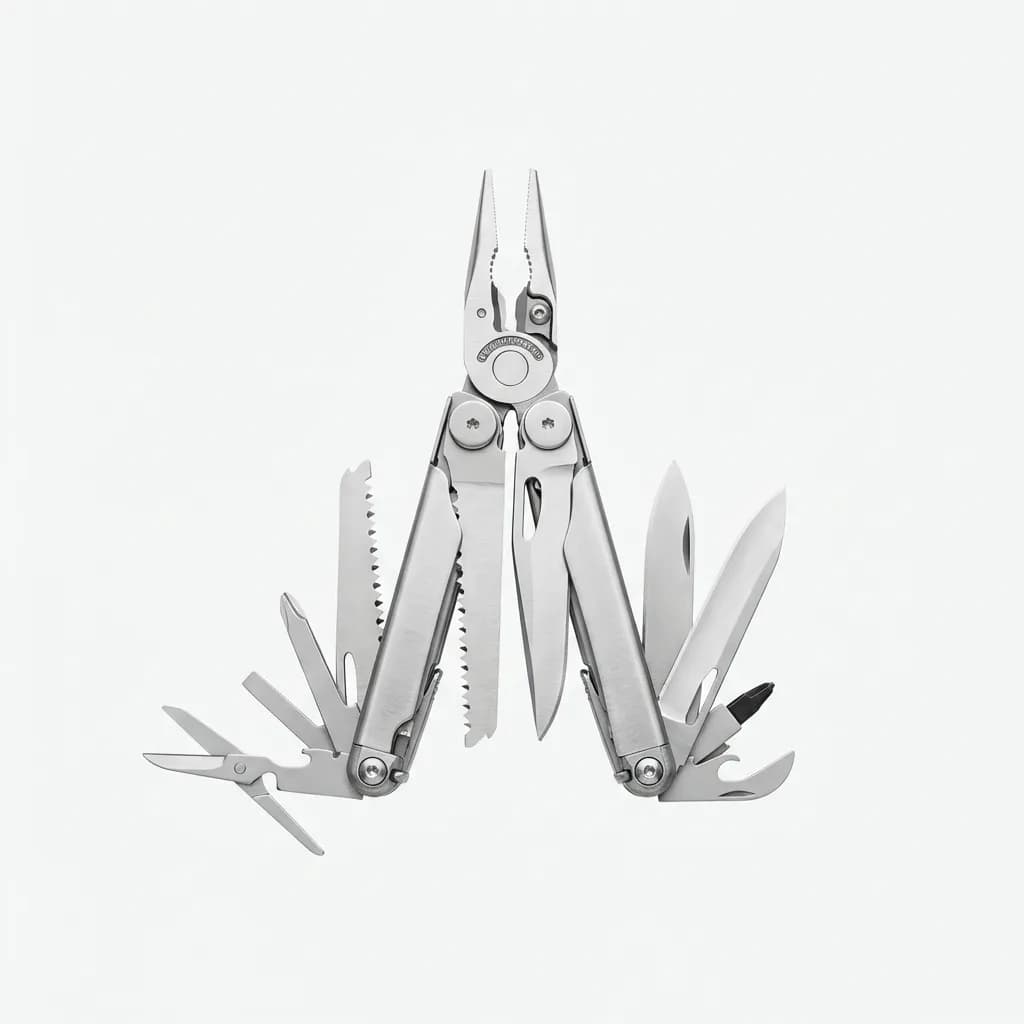
Leatherman Wave Plus
$120
18 tools including pliers, wire cutters, saw, scissors, and multiple blades. Weighs 8.5 ounces. One-hand accessible blades, pocket clip, 25-year warranty.
The problem is that maximalist carry attracts gear hobbyists who add tools for the satisfaction of having them, not because they solve recurring problems. Your fifth flashlight does not make you five times more prepared. It makes your bag heavier.
Weight is the hidden cost maximalists underestimate. Carrying 2-3 pounds of gear in your pockets every day changes your posture, wears out belt loops, and creates a constant low-grade awareness of bulk. You adjust how you sit. You think about your pockets when you move. That mental overhead adds up over weeks and months.
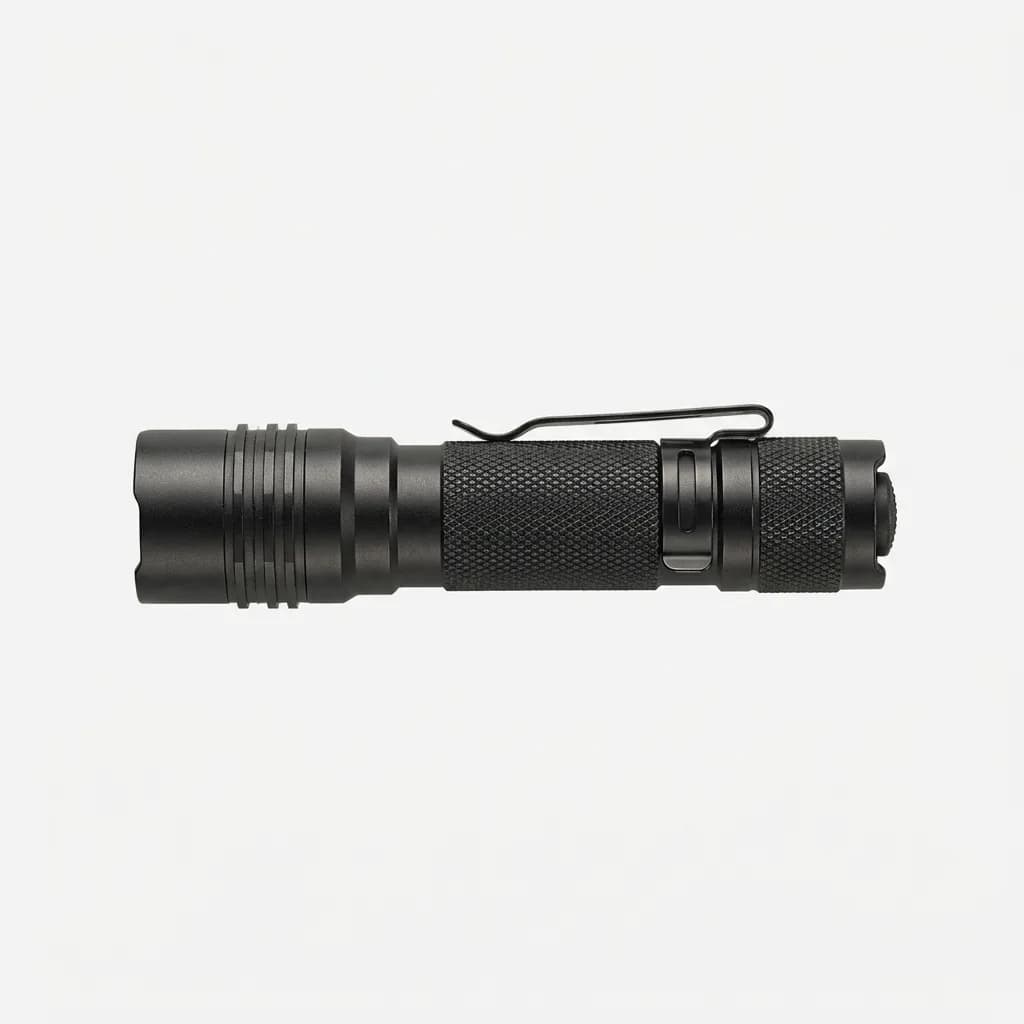
Streamlight ProTac 2L-X
$55
500-lumen tactical flashlight, 4.8 inches long, weighs 3.3 ounces with battery. TEN-TAP programming, dual fuel compatible, impact resistant to 2 meters.
The strongest maximalist carries are role-specific. A maintenance tech, a first responder, or a field technician should absolutely carry more tools than an office worker. The mistake is adopting a tactical loadout for a desk job because it looks cool on Reddit.
Weight and Comfort Trade-offs You Cannot Ignore
Pocket weight over 12 ounces changes how your pants fit. Belt weight over 1 pound changes your gait. These are not opinions. We measured this across different body types and clothing styles.
Denim and chinos handle about 10-14 ounces per front pocket before sagging becomes noticeable. Dress pants and athletic wear fail much sooner, around 6-8 ounces. Back pocket carry pulls fabric down in ways that look sloppy and wears through material faster.
Belt carry shifts the load but introduces new problems. A loaded multi-tool in a sheath plus a phone holster plus keys on a carabiner creates a utility belt effect that works great if you are actively using those tools throughout the day. If you are sitting in meetings or driving, all that hardware digs into your sides and back.
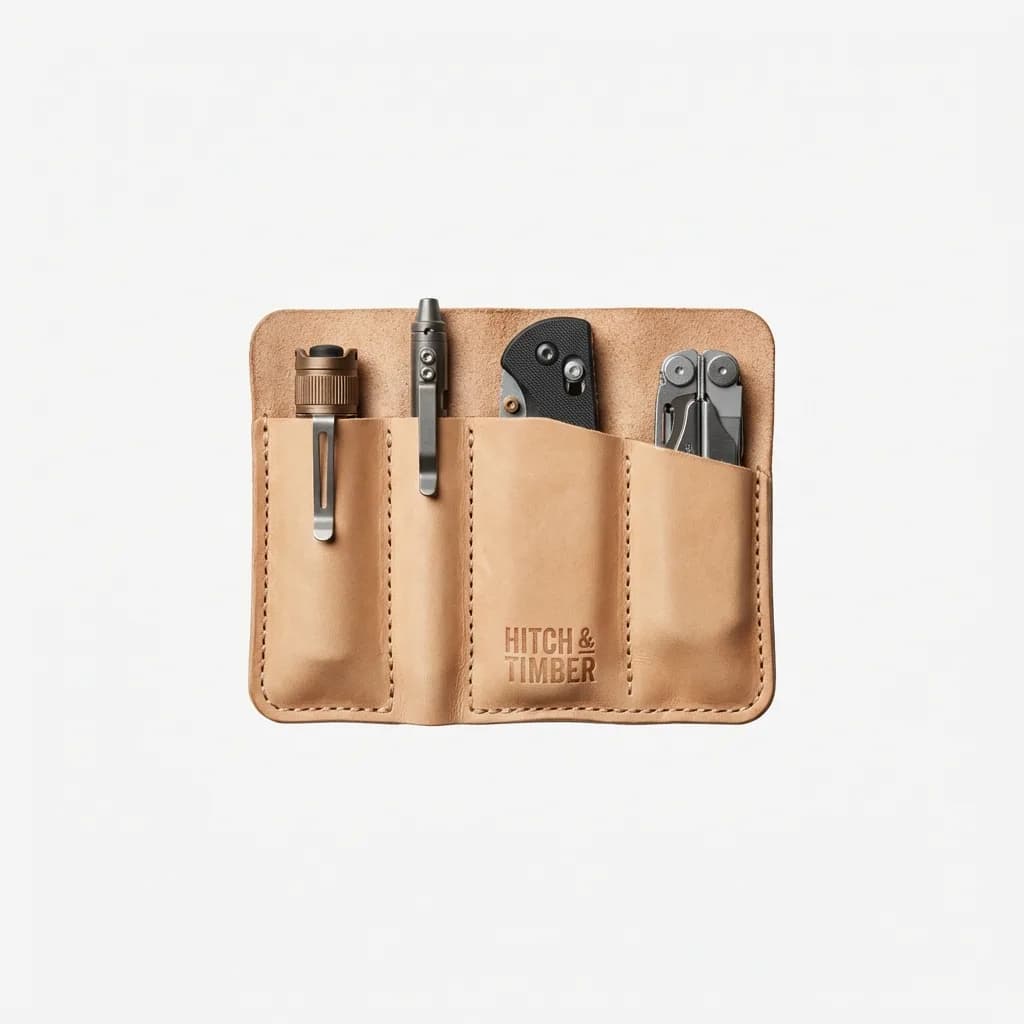
Hitch & Timber Runt 2.0
$45
Leather pocket organizer holds flashlight, pen, knife, and multi-tool in one 5.5-inch slip. Weighs 2 ounces, distributes weight evenly, keeps gear quiet and protected.
Bag carry solves the weight problem but creates access friction. If your multi-tool is in your bag, you will not use it for quick tasks. You will use your fingers or skip the task entirely. Items that live in bags need to be things you use intentionally, not impulsively.
The comfort calculation changes seasonally. Winter jackets give you more cargo capacity, so you can carry a bit more without discomfort. Summer clothing forces you back toward minimalism whether you like it or not. Your carry should flex with your wardrobe, not fight it.
The Psychological Case for Simplicity
Carrying less reduces decision fatigue in ways you do not notice until you try it. When you have 15 items on you, you subconsciously track all of them. You pat your pockets. You wonder if you left something behind. You have a small background process running that monitors your gear.
Minimalist carry shuts that process down. Three items are easy to track. You know instantly if something is missing. That mental space gets redirected to more useful things.
There is also a confidence factor that runs counter to the "prepared for anything" narrative. When you carry less, you get comfortable solving problems with what you have. You use your knife for tasks a maximalist would pull a dedicated tool for. You get creative. You build skills instead of relying on gear.
That said, simplicity can tip into anxiety for some people. If you grew up in situations where being unprepared had real consequences, or if you work in environments where not having a tool means bothering someone else, the psychological cost of minimalism might outweigh the benefits. That is valid. Carry what lets you move through your day with confidence, even if it is more than someone else thinks you need.
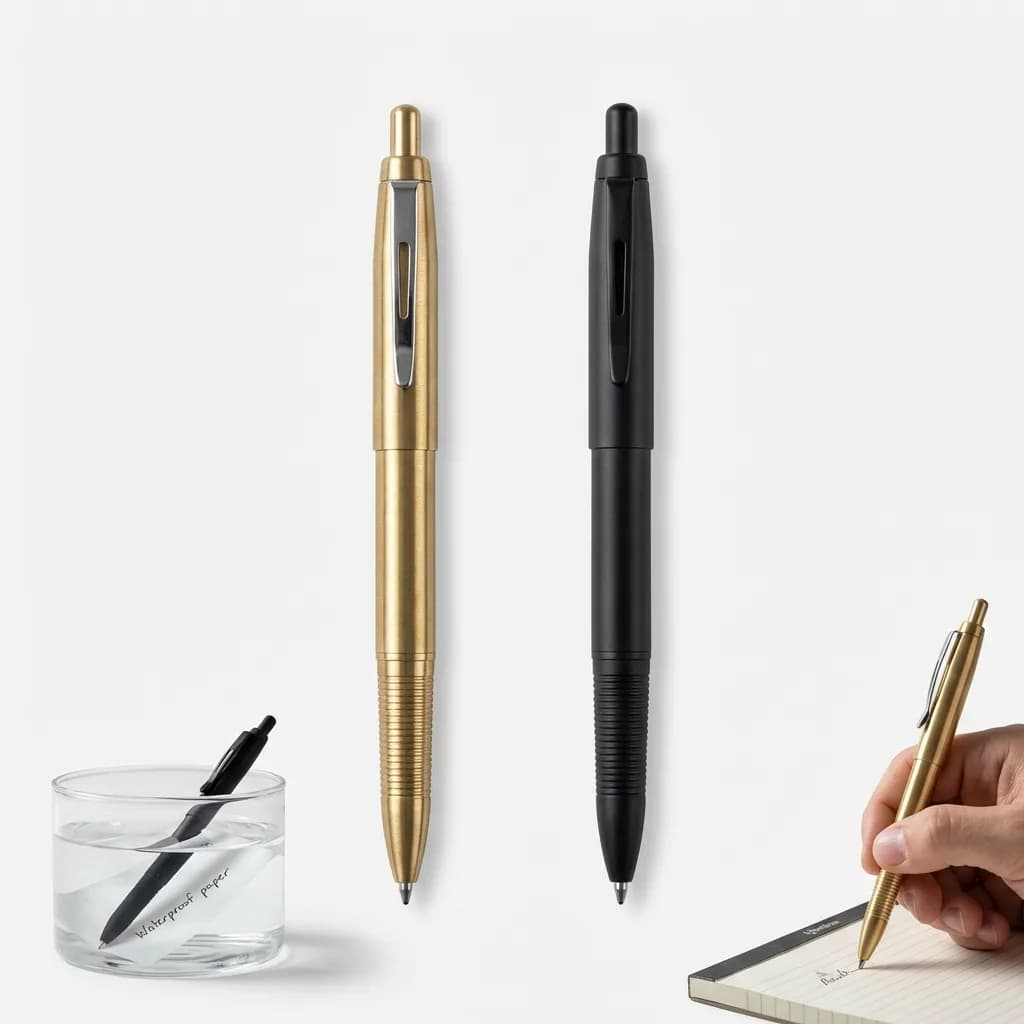
Fisher Space Pen Bullet
$30
Pressurized ink cartridge writes anywhere. Closed length 3.8 inches, expands to 5.3 inches. Weighs 0.7 ounces. Brass or matte black, writes underwater and upside down.
How to Actually Find Your Carry Balance
Start with a seven-day carry audit. Write down every item you use each day and how many times you use it. Be honest. Opening a package with your keys because your knife is in your bag counts as not using your knife.
After seven days, you will have data. Items you used 5+ times in a week are core carry. Items you used 1-2 times are situational. Items you did not use at all are either security blankets or dead weight.
Build your base layer from the 5+ category. That is your minimalist foundation. Then add back situational items based on two factors: how annoying is it to not have this when you need it, and what is the weight cost? A pen weighs almost nothing and solves an annoying problem, so it stays. A full-size multi-tool weighs half a pound and you used it once to tighten a screw. Maybe that one gets replaced with a smaller bit driver.
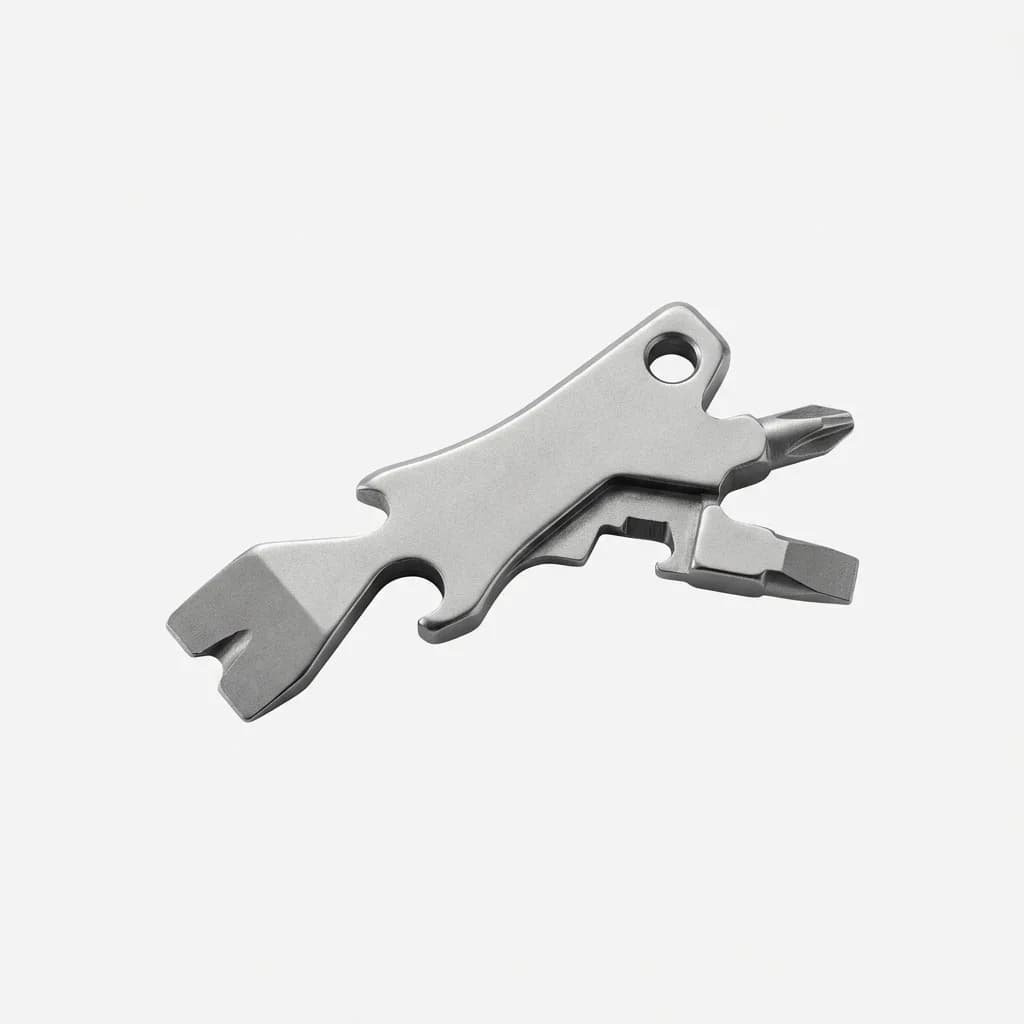
Gerber Shard Keychain Multi-Tool
$8
7 functions including bottle opener, wire stripper, small pry bar. Weighs 0.6 ounces, attaches to keys. TSA-compliant, no blades, stainless steel construction.
Seasonal adjustments matter more than most people think. Your winter carry can include items that your summer carry cannot support. A small flashlight makes sense when it gets dark at 5pm. In July, maybe it stays home unless you have a specific nighttime plan.
Role-based carries work better than one-size-fits-all. Your weekday office carry should not match your weekend carry. Your travel carry needs different tools than your around-town carry. Give yourself permission to have 2-3 distinct loadouts instead of trying to build one perfect kit.
The final test is the two-week rule. If you add something new, carry it for two weeks and track usage. If you do not use it at least three times in that period, it does not earn permanent status. No exceptions for "cool factor" or hypothetical emergencies.
Common Mistakes Both Camps Make
Minimalists often under-carry light. A phone flashlight is not a real flashlight. Your keys are not a screwdriver. A credit card is not a pry bar. If you find yourself MacGyvering solutions multiple times a week, you have gone too minimal and should add one or two small tools back.
Maximalists cargo-cult other people's carries without asking if those items solve their actual problems. You do not need a tourniquet in your EDC unless you work in a field where traumatic bleeding is a realistic risk. You do not need a tactical pen unless you actually know how to use it as a defensive tool and train with it regularly.
Both camps get obsessed with optimization at the expense of usability. A titanium toothpick might save 0.2 ounces, but if you hate using it, the weight savings do not matter. A $300 custom knife might be objectively better than a $40 production model, but if the expensive one stays home because you are afraid to lose it, the cheap one wins.
The worst mistake is treating EDC as a static system. Your needs change. Your job changes. Your city changes. Your carry should change with it. Review your loadout every few months and cut or add based on current reality, not past assumptions.
Building Your Personal Carry Philosophy
Your EDC philosophy should reflect how you actually live, not how you wish you lived or how someone else lives. If you drive everywhere and work in an office, you do not need the same tools as someone who bikes and works in building maintenance.
Ask yourself three questions. What problems do I solve most often? What is the real cost if I do not have a specific tool? What am I willing to carry every single day without resentment?
Those answers build your core carry. Everything else is negotiable.
Some people land firmly minimalist. Others need a maximalist setup to function well. Most of us end up somewhere in the middle, carrying 6-10 items that handle 95% of daily situations and accepting that the other 5% will require improvisation or asking for help.
The goal is not to carry the least or the most. The goal is to carry the right amount for your life, then stop thinking about it so you can focus on everything else.
The Weekly Dispatch
Enjoying this article?
Subscribe and get our best gear picks delivered every Sunday morning.
Related Stories
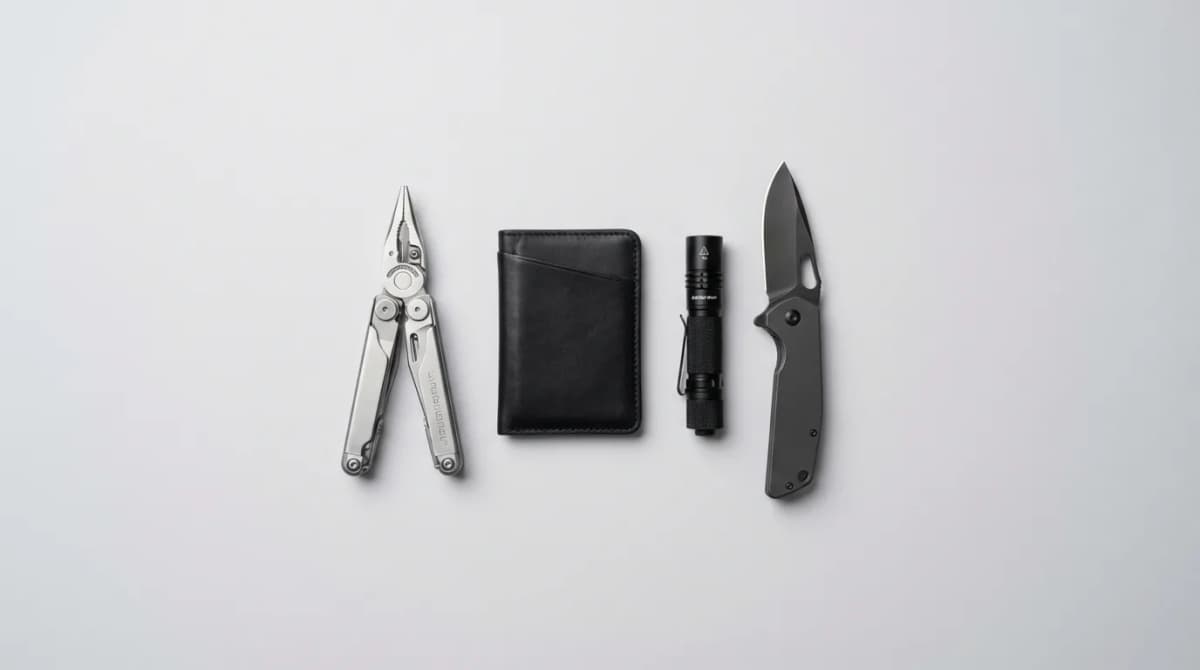
How to Build a One Pocket EDC
Master the art of carrying everything you need in a single pocket. Learn the selection rules, multi-use strategies, and weight control tactics that make it work.
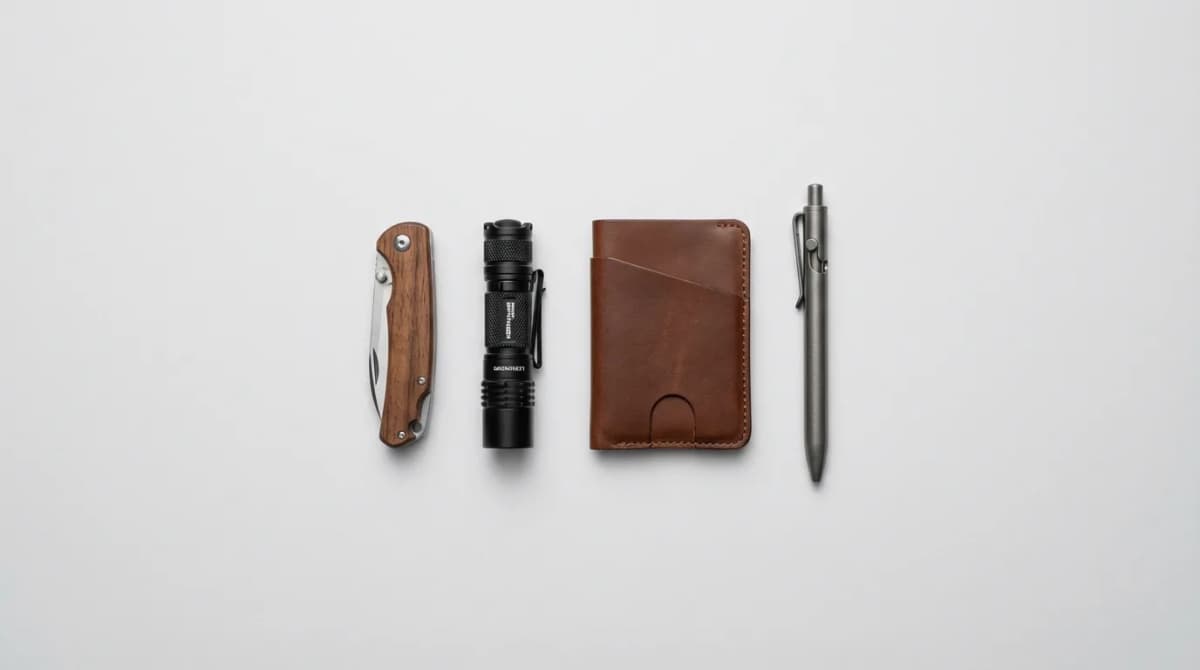
Best EDC Gear for Beginners: Starter Kit Guide
Starting your EDC setup doesn't require a $500 budget. Here's exactly what you need in your pockets, what to skip, and why most beginners waste money on the wrong gear first.
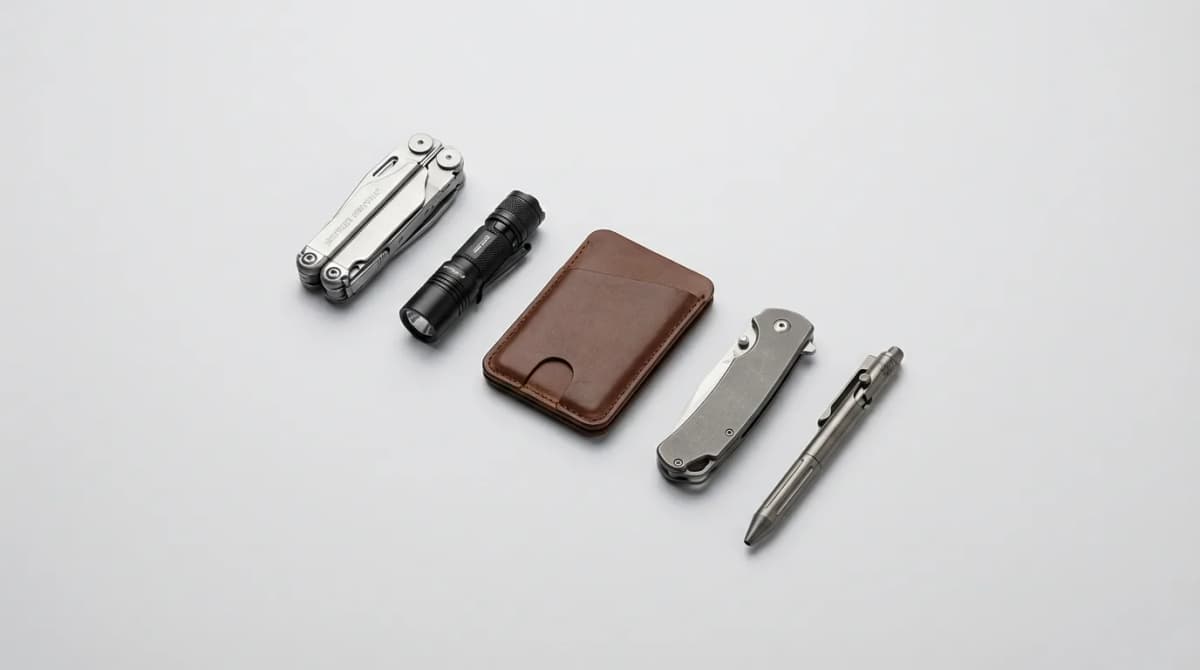
Everyday Carry Mistakes to Avoid for a Better EDC
Most people carry too much or the wrong gear. Learn the biggest EDC mistakes that weigh you down and how to build a practical everyday carry setup that works.