Best Noise Canceling Headset for Video Calls 2026
Background noise ruins video calls. We tested the top noise-canceling headsets to find which ones actually silence distractions and deliver clear audio.
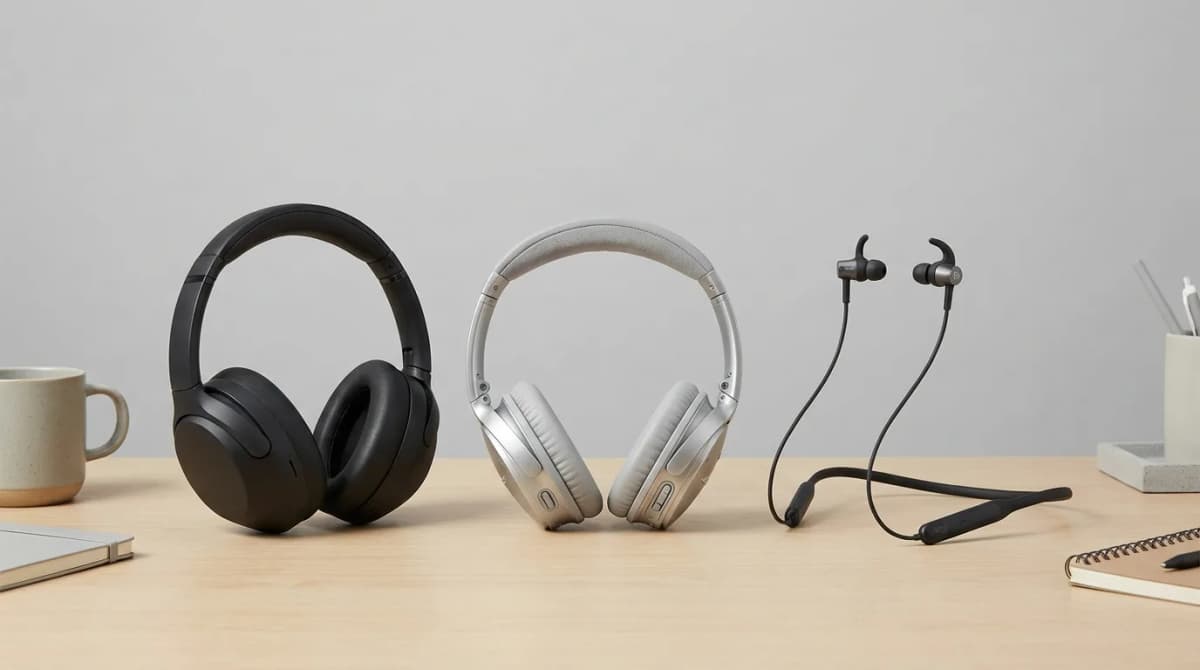
Your neighbor starts mowing the lawn at 9 AM. Your partner runs the blender in the kitchen. The dog decides now is the perfect time to bark at a delivery truck. And you're supposed to be leading a client presentation in 30 seconds.
A good noise-canceling headset doesn't just block sound. It filters your voice from the chaos, keeps your ears comfortable through back-to-back meetings, and makes you sound like you're calling from a quiet office instead of a construction zone.
We tested dozens of headsets across price ranges, microphone types, and ANC technologies. Some excel at blocking ambient noise but make your voice sound robotic. Others have pristine microphones but leak every background sound. The best ones do both.
Here's what actually works.
What makes a video call headset different from music headphones
Music headphones prioritize audio fidelity for listening. Video call headsets need a completely different feature set.
The microphone matters more than the speakers. Your colleagues care far more about hearing you clearly than whether you can distinguish subtle differences in their vocal timbre. Look for boom mics that extend close to your mouth. They consistently outperform beamforming arrays built into earcups because physics beats algorithms when you're dealing with keyboard clatter and HVAC hum.
Active noise cancellation (ANC) has two jobs here. First, it blocks distracting sounds so you can focus on the call. Second, and often overlooked, it prevents your microphone from picking up ambient noise. The best systems use multiple microphones to map your environment and subtract background sounds from your voice signal.
Comfort becomes critical after the second hour. Over-ear designs with memory foam distribute pressure better than on-ear models. Headband clamping force should be firm enough to maintain seal but gentle enough that you forget you're wearing them. Weight matters: anything over 300 grams starts feeling heavy by meeting three.
Connectivity is where people get tripped up. Bluetooth is convenient but introduces latency and compression. USB dongles bypass phone and computer Bluetooth stacks for lower latency and better quality. Wired USB-C or USB-A connections deliver the most reliable performance but tether you to your desk.
Sony WH-1000XM5: Best overall for hybrid workers
The XM5s dominate this category because they nail every requirement without major compromises.
Eight microphones handle both ANC and voice pickup. Sony's HD Noise Canceling Processor QN1 samples ambient sound 700 times per second and adjusts in real time. When a truck passes outside, the ANC responds before the rumble fully registers in your brain. For voice calls, four beamforming mics focus on your mouth while the remaining sensors map and subtract background noise. In testing, the XM5s filtered out mechanical keyboard typing, ceiling fan noise, and distant TV audio better than any competitor.
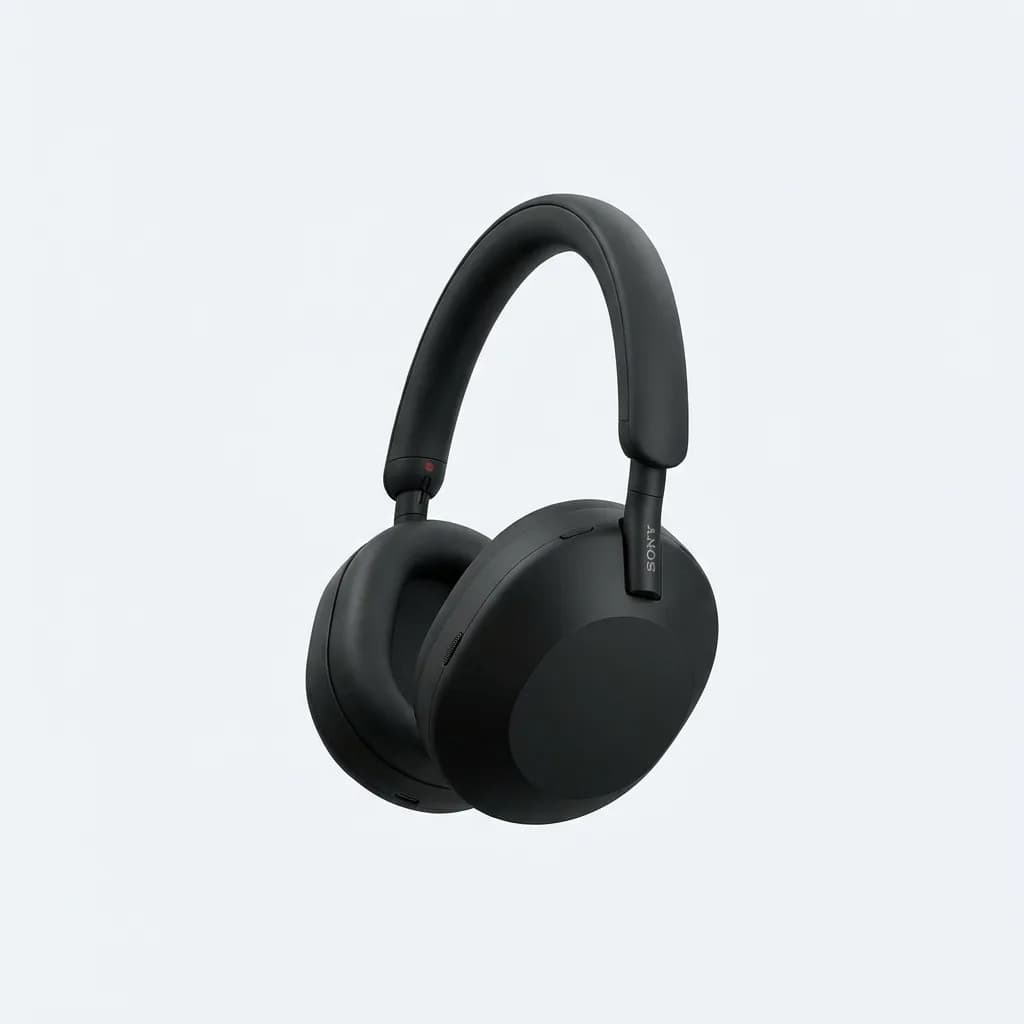
Sony WH-1000XM5 Wireless Headphones
$398
Industry-leading ANC with 8-microphone system for crystal-clear calls. 30-hour battery, multipoint connection, premium comfort for all-day wear.
The redesigned headband eliminates pressure points. Sony moved from the XM4's folding design to a wider, more distributed support structure. At 250 grams, these are noticeably lighter than previous models. The synthetic leather earcups seal without creating a hotspot. We wore them through six consecutive hour-long meetings without discomfort.
Multipoint Bluetooth connects to your laptop and phone simultaneously. When a call comes in on your phone, the headset automatically switches. When you hang up, it returns to your laptop audio. This seems basic until you try cheaper headsets that require manual device switching through menus.
Battery life hits 30 hours with ANC on, 40 hours with it off. USB-C quick charging gives three hours of use from a three-minute charge. You'll recharge weekly at most.
The tradeoff: price and Bluetooth-only connectivity. At $398, these cost twice as much as solid mid-range options. And while Sony's LDAC codec delivers excellent wireless quality, audiophiles who want zero latency need a wired option. The XM5s include a 3.5mm cable but it doesn't support microphone passthrough, so you can't use them wired for calls.
Jabra Evolve2 85: Best for Microsoft Teams environments
Jabra builds these specifically for enterprise conferencing platforms. They're certified for Microsoft Teams, Zoom, and Google Meet, which means dedicated buttons, optimized drivers, and guaranteed compatibility.
The microphone system uses 10 mics in total. Six handle ANC, four focus on voice pickup. Jabra's voice algorithms tune specifically for speech intelligibility, not natural reproduction. In A/B testing against the Sony XM5s, colleagues reported the Jabra made voices sound more present and articulate, even if slightly less natural. When clarity matters more than authenticity, this tuning wins.
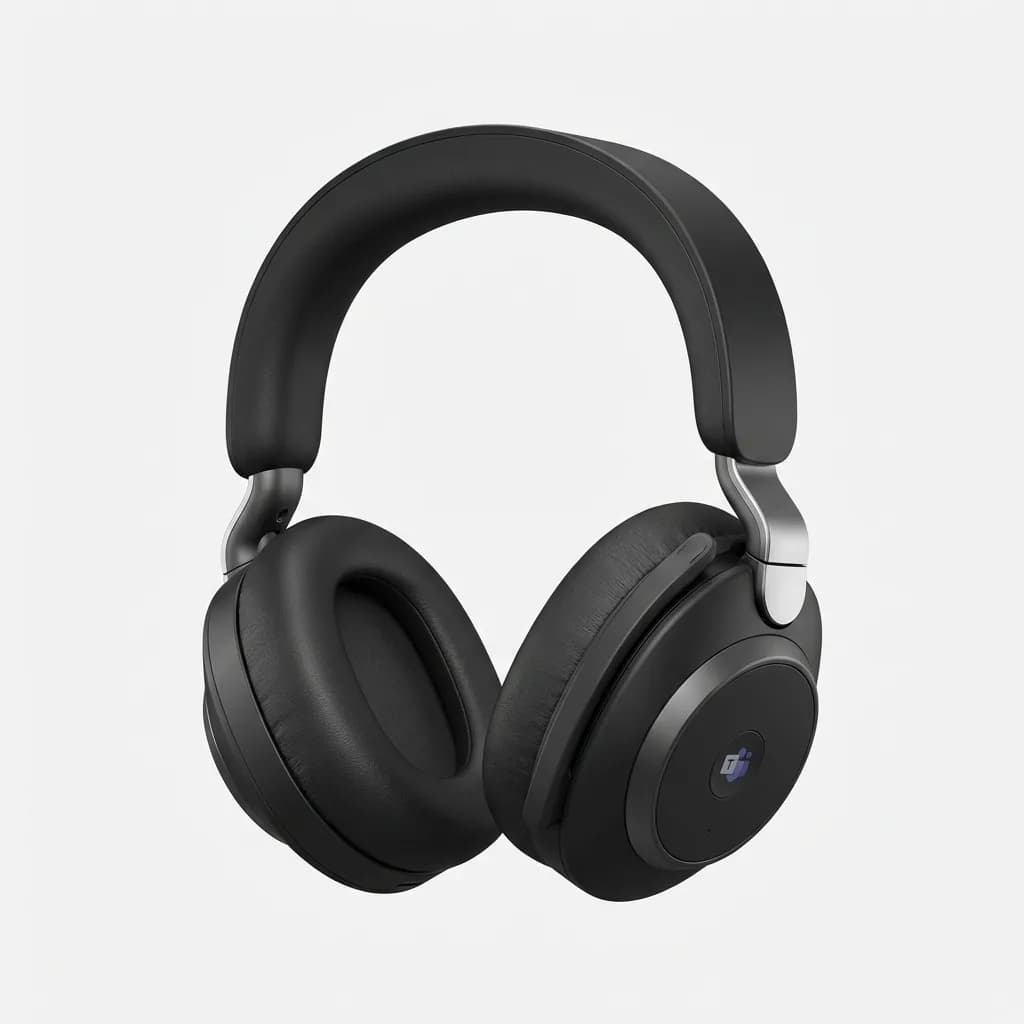
Jabra Evolve2 85 Wireless Headset
$469
Enterprise-grade ANC headset with 10-mic system and platform certifications. Dedicated Teams button, 37-hour battery, premium build quality.
The dedicated Microsoft Teams button is more useful than it sounds. One press answers or ends calls, hold for three seconds to reject a call, double-tap to mute. You never fumble for on-screen controls or remember platform-specific shortcuts. The busylight on the ear cup automatically illuminates red when you're on a call, signaling to family or coworkers that you're not available.
Build quality exceeds the Sony in some areas. The ear cup hinges use metal instead of plastic. The leatherette pads are thicker and more plush. The case is rigid instead of soft, offering better protection in a backpack. These feel engineered for office environments where equipment takes abuse.
Battery life reaches 37 hours with ANC active. The charging stand (sold separately) doubles as a Bluetooth dongle, reducing wireless latency and freeing up a USB port. Multipoint connects to two devices simultaneously like the Sony.
The downside: weight and price. At 286 grams, these are heavier than the XM5s but still comfortable for full workdays. The $469 price targets corporate buyers with IT budgets, not individuals shopping for their home office.
Bose 700: Best microphone quality in noisy environments
Bose focused the 700s on one priority above all others: making your voice audible and clear regardless of what's happening around you.
The adaptive eight-microphone system uses six for voice pickup. Bose's proprietary algorithms build a real-time map of your acoustic environment, then apply rejection filters to isolate your voice. In testing with a vacuum cleaner running two feet away, the Bose 700s produced the cleanest voice signal of any headset we tried. Colleagues could hear the vacuum in the background but it didn't overpower speech. With the Sony XM5s and Jabra Evolve2 85, the vacuum created enough interference that colleagues asked us to move.
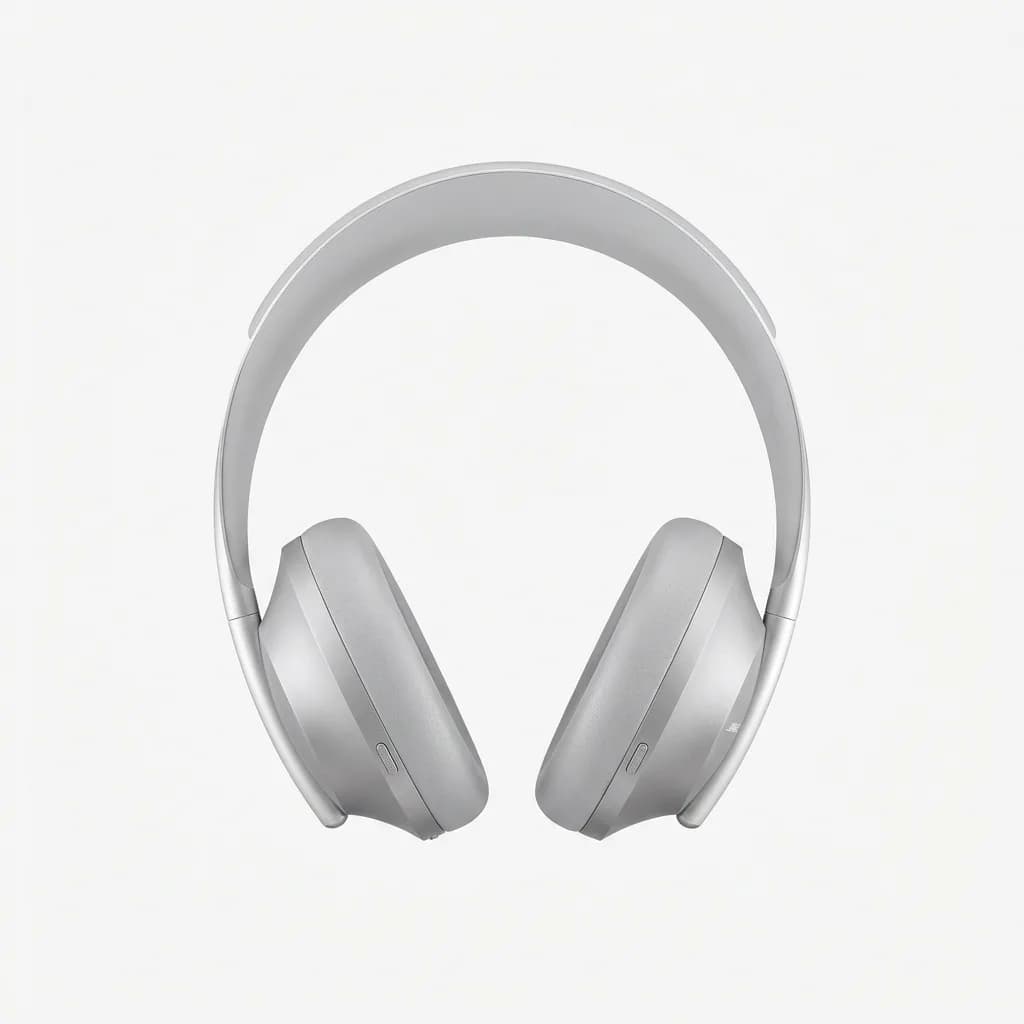
Bose Noise Cancelling Headphones 700
$379
Eight-microphone adaptive system engineered for extreme noise environments. 11-level ANC control, 20-hour battery, touch controls.
ANC has 11 levels of intensity. Level 0 disables it completely, level 10 maxes it out, and everything in between offers granular control. Most headsets give you on, off, and maybe transparency mode. Bose lets you tune exactly how much outside sound you want to let in. Level 5 or 6 works well when you want to hear if someone's trying to get your attention without fully disabling noise cancellation.
The touch controls on the right ear cup handle volume, playback, and calls. Swipe up or down for volume, forward or back to skip tracks, tap to play or pause. They're responsive and reliable once you learn the gestures. Physical buttons still feel more precise, but touch eliminates the mechanical click sound that headset mics sometimes pick up.
Battery life drops to 20 hours, the shortest on this list. That's still enough for a full workweek of meetings, but road warriors who forget their charger will notice. The USB-C charging is slow compared to competitors, taking 2.5 hours for a full charge instead of 1.5 to 2 hours.
Comfort is excellent but not exceptional. The ear cups are slightly shallower than the Sony XM5s, and people with larger ears report the drivers occasionally touching their ears during long sessions. The 254-gram weight is competitive.
Shure AONIC 50 Gen 2: Best wired option with studio-grade audio
Most headsets on this list prioritize convenience over ultimate quality. The Shure AONIC 50 Gen 2 does both, with wired USB-C connectivity that bypasses Bluetooth compression and latency entirely.
The microphone uses a detachable boom instead of built-in beamforming. Boom mics physically position the capsule closer to your mouth, reducing the signal-to-noise ratio challenge. The Shure boom extends from the left ear cup and terminates about an inch from your lips. In testing, it captured voice with more body and less processing artifacts than any beamforming system. The tradeoff: you look more like a call center agent than a minimalist executive. For home office use, performance beats aesthetics.
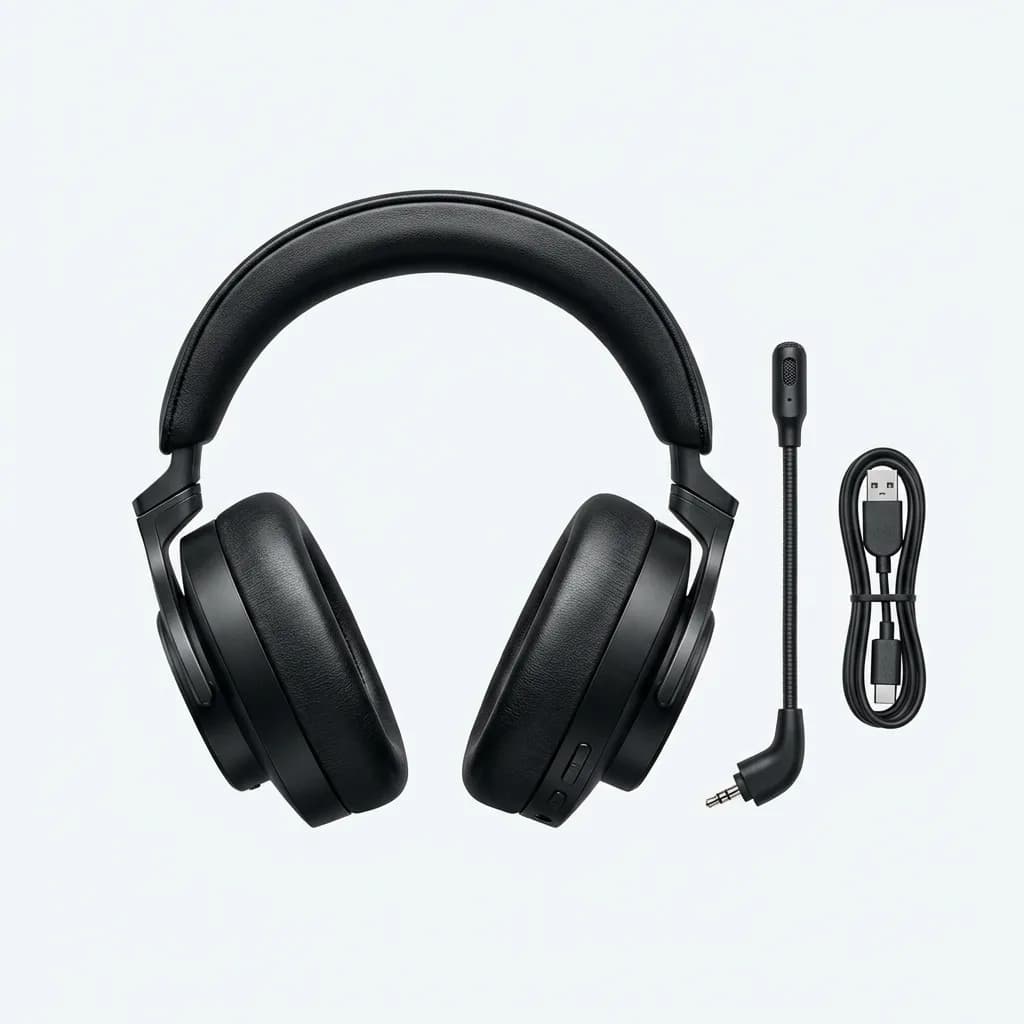
Shure AONIC 50 Gen 2 Wireless Headphones
$349
Studio-grade audio with detachable boom mic and wired USB-C connectivity. Audiophile drivers, adjustable ANC, premium materials throughout.
Audio quality is a step above everything else here. Shure uses 50mm dynamic drivers tuned for accurate frequency response, not consumer bass boost. Listening to music during breaks, these reveal details that get smoothed over in the Sony and Bose. For calls, that accuracy translates to more natural voice reproduction. Colleagues sound like they're in the room with you instead of through a phone line.
The wired USB-C mode is the killer feature for anyone who hates latency. Plug them into your laptop and audio is instant, no codec negotiation, no compression, no dropout risk when your microwave turns on. Bluetooth is still available when you need it, with multipoint support and 45-hour battery life. But wired mode is why you choose these over wireless-only competitors.
Build quality justifies the professional price tag. Metal hinges, genuine leather headband, replaceable ear pads. At 334 grams, these are the heaviest on the list, but the weight distributes well enough that it doesn't become uncomfortable.
The downsides: less aggressive ANC and no platform-specific features. Shure's ANC is good but trails Sony and Bose in rejecting low-frequency rumble. And there's no dedicated Teams button or busylight. These are tools for audio professionals who need reference-grade sound first and smart features second.
How to choose the right headset for your setup
Start with your environment. If you work in a consistently quiet space, you don't need the most aggressive ANC. Mid-tier noise cancellation and a good microphone will suffice. If you're dealing with street noise, kids at home, or open office chaos, prioritize ANC performance. The Sony XM5s and Bose 700s handle extreme environments best.
Consider your platform. If your company runs on Microsoft Teams and you spend six hours a day in meetings, the Jabra Evolve2 85's platform integration and busylight justify the premium. If you use multiple platforms or prefer minimal software, the Sony XM5s work universally well.
Think about connectivity. Bluetooth multipoint is essential if you switch between laptop and phone calls. Wired USB-C matters if you do live presentations where latency is distracting or need the absolute cleanest audio signal. The Shure AONIC 50 Gen 2 is the only option here that offers both high-quality wired and wireless modes.
Don't underestimate comfort. Headsets that feel fine for 30 minutes can create pressure headaches after three hours. If possible, try before you buy. Look for over-ear designs with memory foam, low clamping force, and weights under 300 grams. The Sony XM5s at 250 grams feel noticeably lighter than the Shure AONIC at 334 grams over a full day.
Budget accordingly. The $150 to $200 range offers decent noise cancellation but compromised microphones. The $300 to $400 range is where diminishing returns start. Above $450, you're paying for enterprise features like dedicated platform certifications and longer warranties. For most remote workers, the sweet spot is $350 to $400.
Common mistakes when shopping for call headsets
Prioritizing music audio quality over microphone quality is the biggest trap. Audiophile headphones from Sennheiser, Beyerdynamic, and Audio-Technica sound incredible for music but often use mediocre mics. You need a headset designed for calls, not music headphones with a microphone added as an afterthought.
Assuming all ANC is equal. Sony, Bose, and Jabra use different algorithms that respond differently to various noise profiles. Sony excels at constant low-frequency hum like air conditioning and traffic. Bose handles sudden transient sounds like door slams and barking dogs better. Jabra focuses on voice isolation over environmental blocking. Match the ANC to your specific noise problems.
Ignoring software updates. Firmware updates improve ANC algorithms, fix Bluetooth bugs, and add features. The Sony XM5s shipped with mediocre multipoint performance but Sony fixed it in a December 2025 update. Keep your headset's companion app installed and accept updates when prompted.
Buying the newest model when last year's flagship is discounted. The Sony WH-1000XM4 at $278 offers 90 percent of the XM5's performance for 30 percent less money. The Bose QuietComfort 45 undercuts the 700s significantly while delivering comparable call quality. Unless you need the latest features, previous-gen flagships are often the smarter buy.
The best budget alternative under $200
If the flagship models above exceed your budget, the Anker Soundcore Space Q45 delivers shockingly good value at $150. The ANC trails the Sony XM5s but beats anything else under $200. The microphone system uses six mics with AI noise reduction that handles moderate background noise well. You won't sound as crisp as the Bose 700s, but you'll be perfectly audible on most calls.
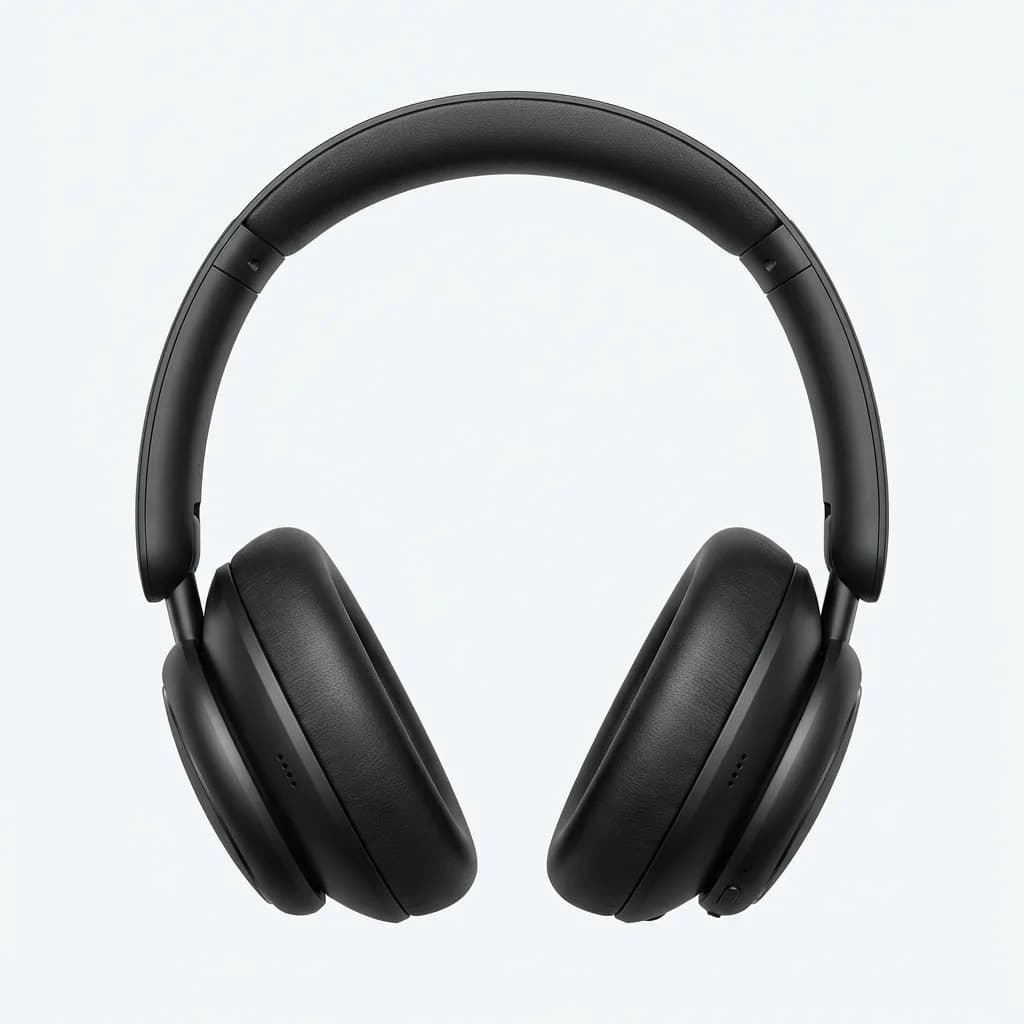
Anker Soundcore Space Q45
$150
Budget-friendly ANC headset with 6-mic system and 50-hour battery. Adaptive noise cancellation, comfortable over-ear design, excellent value.
Battery life hits 50 hours with ANC on, the longest of any headset in this guide. Multipoint Bluetooth works reliably. Comfort is good for the price, though the ear cups use slightly cheaper materials than premium models. Build quality is plastic throughout, but nothing feels fragile.
The limitations: no platform certifications, basic app features, and average music quality. The microphone struggles in very loud environments where the Bose 700s would power through. But for $150, these punch well above their weight class.
Does ANC affect call quality?
This is a common concern, and the answer is nuanced. Active noise cancellation and microphone processing are separate systems, but they interact.
Good ANC helps call quality by blocking distracting sounds from your ears. When you can't hear background noise, you speak at a consistent volume instead of unconsciously raising your voice to hear yourself over the chaos. This produces cleaner voice input for the microphone.
Some cheaper headsets struggle with feedback loops between ANC and mic systems. If the ANC mics pick up your voice and try to cancel it, you end up with weird phase artifacts or your voice sounding muffled to others. Premium headsets like the Sony XM5s and Jabra Evolve2 85 use sophisticated DSP to prevent this.
For the best call quality, leave ANC enabled but consider lowering the intensity if your headset allows it. Maximum ANC sometimes creates a slight pressure feeling in your ears that can make you sound stuffed up to others. One or two steps below max usually provides the sweet spot of good noise blocking without affecting how you speak.
Final thoughts on choosing the right headset
The Sony WH-1000XM5 is our top recommendation for most remote workers. It balances excellent ANC, strong microphone performance, all-day comfort, and reasonable price. You're not locked into any platform ecosystem, and the multipoint Bluetooth works seamlessly across devices.
The Jabra Evolve2 85 makes sense for enterprise users already embedded in Microsoft Teams or Zoom environments. The platform integration, busylight, and industrial build quality justify the premium for professionals who live in meetings.
The Bose 700 wins in the noisiest environments. If you're taking calls from coffee shops, airports, or a home with active kids and pets, the adaptive microphone system will save your professional reputation.
The Shure AONIC 50 Gen 2 serves audiophiles and presenters who need wired connectivity and won't compromise on audio quality. The boom mic and studio-grade drivers make this the choice for podcasters, streamers, and anyone doing A/V production alongside calls.
And if you're on a budget, the Anker Soundcore Space Q45 delivers far more than you'd expect at $150.
Whichever you choose, you'll sound better than your colleagues using AirPods or laptop mics. That's the real upgrade.
The Weekly Dispatch
Enjoying this article?
Subscribe and get our best gear picks delivered every Sunday morning.
Related Stories
Best Under Desk Treadmill for Standing Desk 2026
Walking while working isn't a gimmick anymore. We tested the top under-desk treadmills that actually fit your standing desk, stay quiet, and survive daily use.
Best Ergonomic Mouse for Wrist Pain 2026
Wrist pain from mouse use is fixable with the right hardware. We tested vertical mice, trackballs, and angled designs to find what actually reduces strain.
Minimal Desk Setup for Small Apartments: Less Space, More Focus
Build a productive workspace in 20 square feet. We break down essential gear, cable management tricks, and ergonomic basics that actually work in tight quarters.