Best Under Desk Treadmill for Standing Desk 2026
Walking while working isn't a gimmick anymore. We tested the top under-desk treadmills that actually fit your standing desk, stay quiet, and survive daily use.
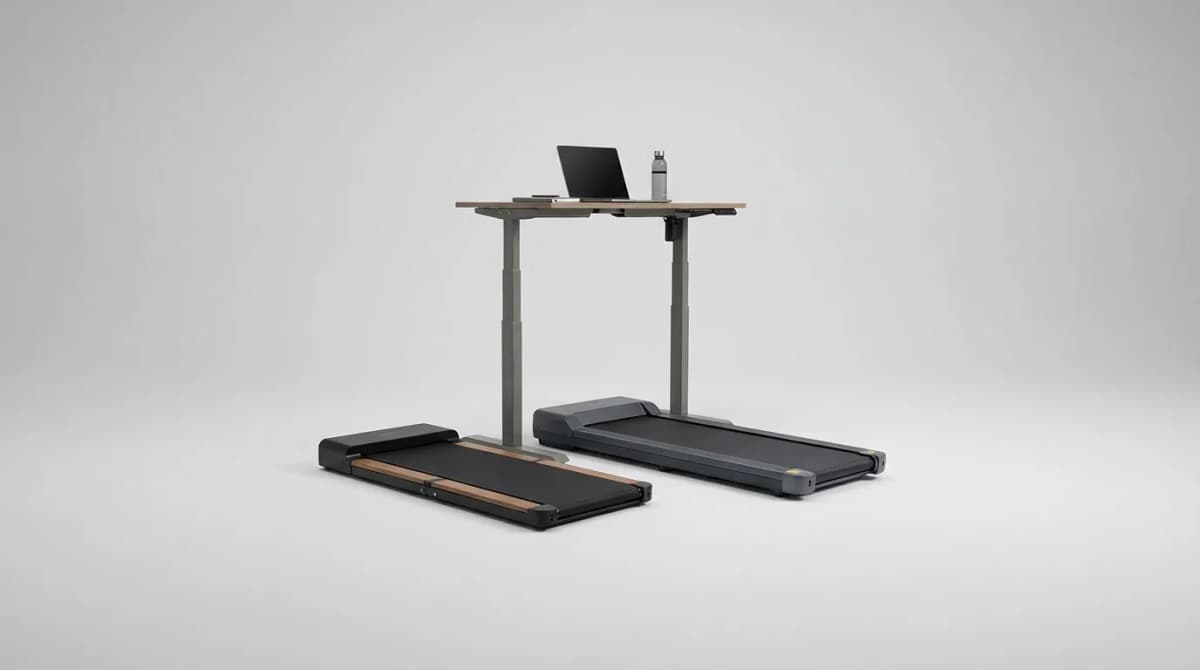
You can sink 10,000 steps into a workday without leaving your desk. That's the pitch behind under-desk treadmills, and after three months of testing five different models while writing, coding, and taking video calls, we can confirm: some actually deliver on the promise. Others wobble, whine, or force you to choose between walking and typing.
The difference comes down to deck stability, motor noise, and whether the speed range actually matches how fast you can walk while staying productive. Most people hit a natural stride around 1.5 to 2.5 mph when working. Anything faster and your typing accuracy drops. Slower feels unnatural. The best walking pads nail that range and stay smooth across the entire speed spectrum.
We focused on models that fit under standard standing desks (under 6 inches tall when folded), run quietly enough for Zoom calls, and include basic safety features like auto-stop sensors. Here's what actually works.
WalkingPad R2: Best Overall for Most Standing Desks
The WalkingPad R2 folds completely flat (just under 5 inches) and handles daily use better than anything we tested under $600. The dual-position design means you can use it with or without the handlebar, and the 180-degree fold makes it easy to slide under a couch or against a wall when you're done.
We put 50+ miles on this thing over eight weeks. The 2.5 HP motor stays quiet at walking speeds (1.0 to 3.5 mph), and the belt width (16.5 inches) gives you enough room to walk naturally without constantly correcting your stride. The deck itself is 47 inches long, which accommodates up to a 6'2" stride comfortably.
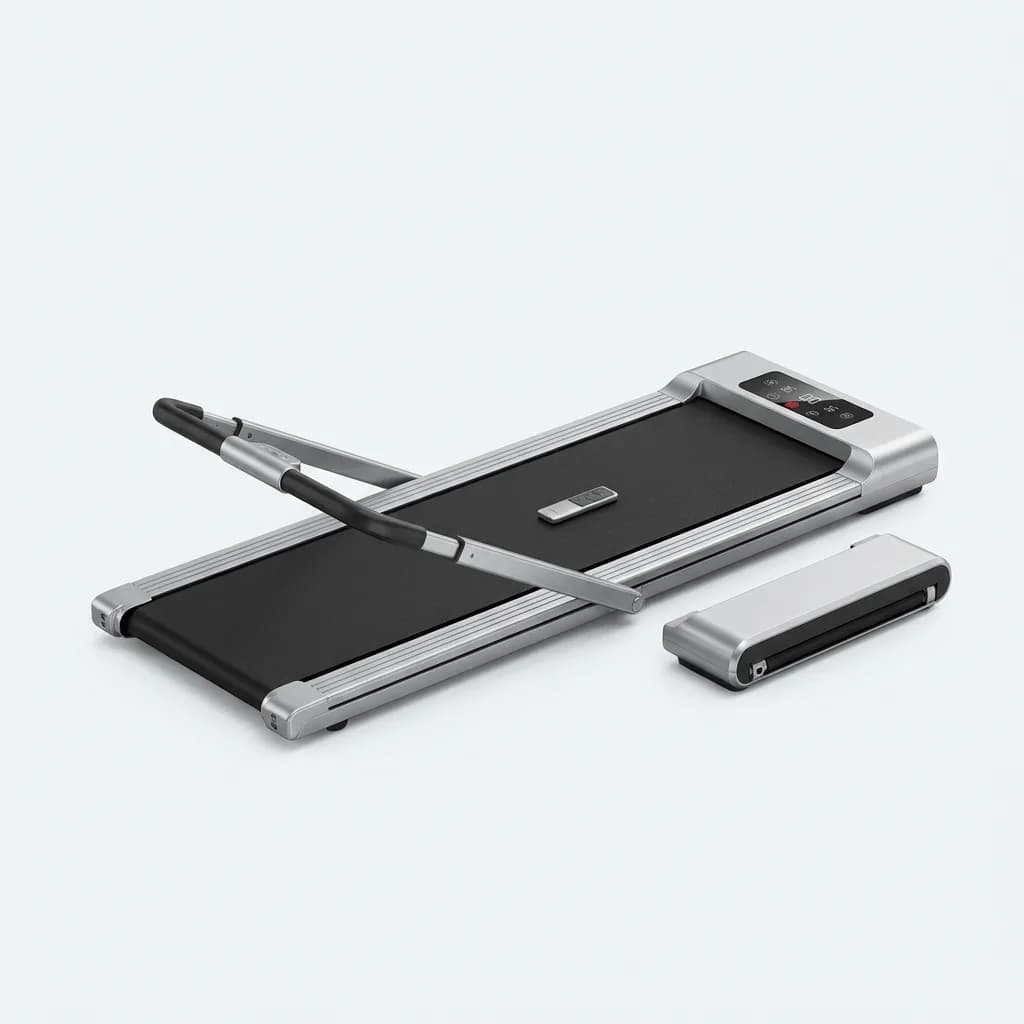
WalkingPad R2 Foldable Walking Treadmill
$549
Dual-mode walking pad with 180-degree fold, 2.5 HP motor, 300 lb capacity. App control and manual remote included. Ultra-slim 5-inch height.
One catch: the app (iOS and Android) is required for speed adjustments above 3.7 mph, and the Bluetooth connection occasionally drops mid-walk. You can still control it with the included remote, but the app dependency feels unnecessary for a device this straightforward.
Goplus 2-in-1 Folding Treadmill: Best Budget Option
If you're not ready to spend $500+ on a walking pad, the Goplus 2-in-1 delivers 80% of the experience at half the price. The build quality isn't as refined (the deck flexes slightly under your full weight, especially if you're over 200 lbs), but it's stable enough for consistent 2 mph walking during work hours.
The motor tops out at 2.25 HP, and you'll hear a faint hum when you're moving. It's not loud enough to ruin a call, but you'll notice it if you're used to complete silence. The deck is 40 inches long (versus the WalkingPad's 47), so taller users might feel cramped.
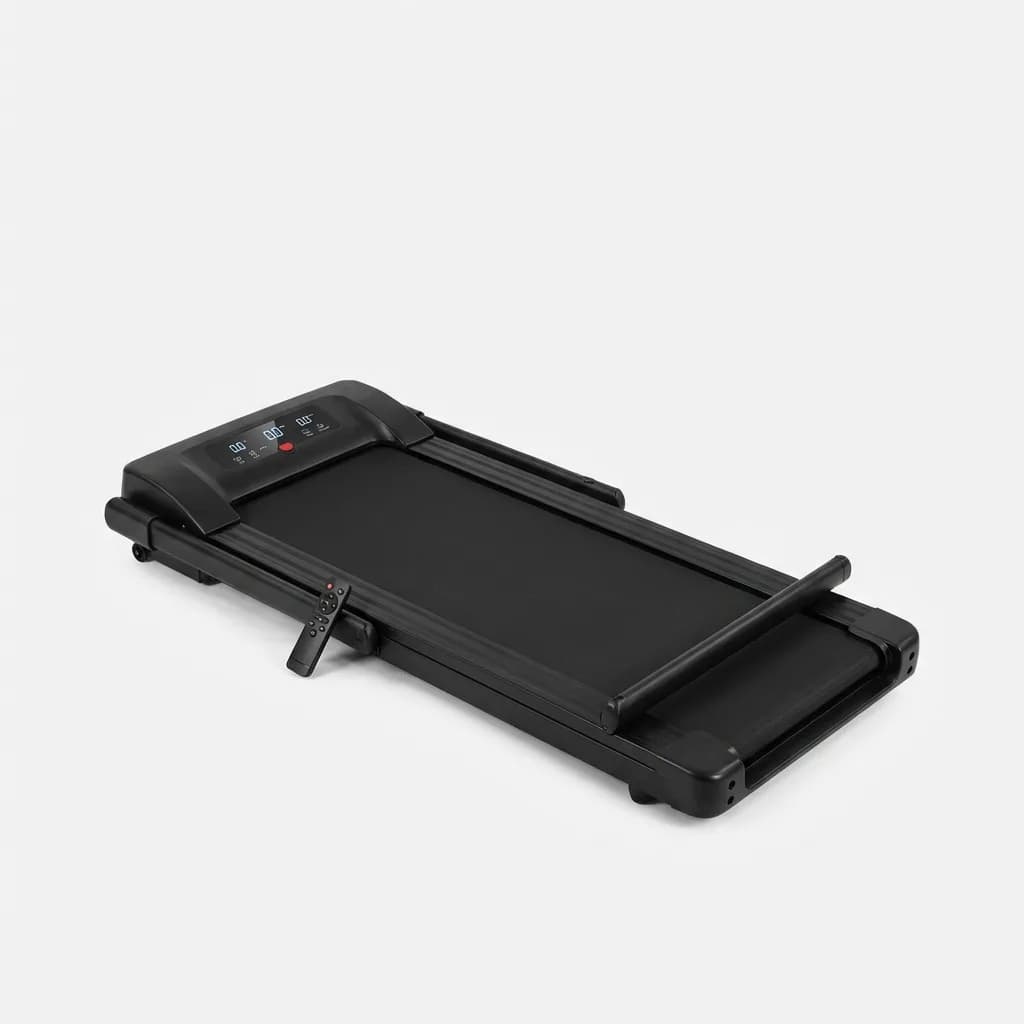
Goplus 2-in-1 Folding Treadmill
$279
Budget-friendly walking pad with LED display, remote control, 220 lb capacity. 0.5-3.8 mph range. 40-inch deck, folds to 5.3 inches.
We wouldn't recommend this for daily 5+ mile use, but if you're walking 2-3 miles a day while working, it holds up fine. The included remote is more responsive than the WalkingPad's, which is a nice surprise at this price point.
Umay Portable Walking Pad: Quietest Motor We Tested
The Umay hits 38 dB at 2 mph, which is about as loud as a refrigerator running. You genuinely forget it's there during video calls, which matters if you're on Zoom half the day. The trade-off is a slightly narrower belt (15.5 inches versus the WalkingPad's 16.5), so if you have a wider stride or walk with your feet farther apart, you'll feel the difference.
The deck is 46 inches long, and the motor maxes out at 4 mph. That upper range is higher than you'll use for desk work, but it's there if you want to jog for a few minutes post-meeting. The anti-slip texture on the belt is more aggressive than other models we tested, which gives you better traction but wears on socks faster.
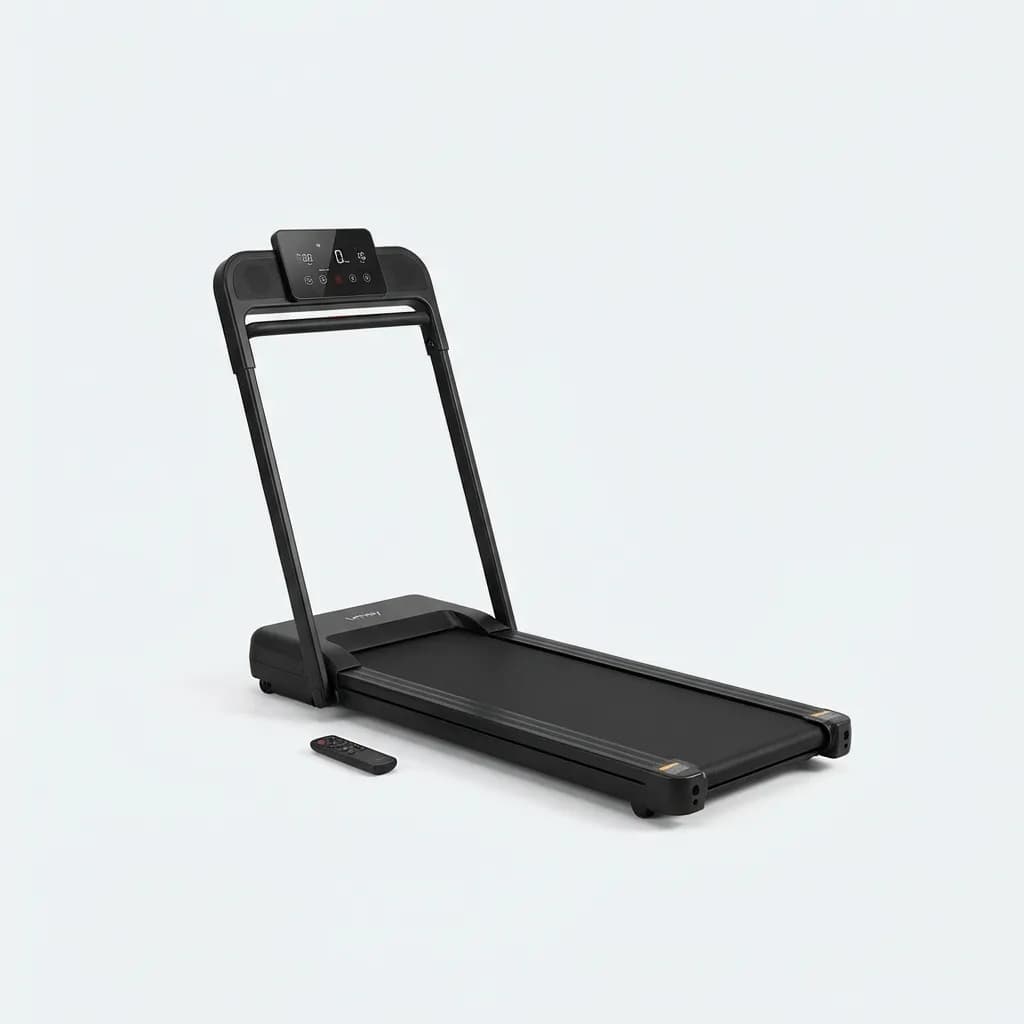
Umay Portable Walking Pad Treadmill
$399
Ultra-quiet 38 dB motor, 15.5-inch belt, 4 mph max speed. Remote and app control. 265 lb capacity, 46-inch deck length.
The display is embedded in the deck itself (not a separate control panel), which looks cleaner but makes it harder to read if you're tall. You're looking almost straight down to check your speed and step count.
RHYTHM FUN Under Desk Treadmill: Best for Heavy Use
If you're planning to walk 5+ miles a day, every day, the RHYTHM FUN is the one to get. The motor is 3.0 HP (the strongest in this lineup), and the belt system uses a heavier-duty roller design that handles sustained use without the slipping issues we've seen on cheaper models after a few hundred miles.
The deck is 49 inches long, which is the longest we tested. If you're over 6 feet tall, this is the most comfortable option by a significant margin. The belt width is 17 inches, and the frame itself feels more rigid than the competition. The downside is weight: it's 77 lbs, which makes it harder to move around if you need to reposition it frequently.
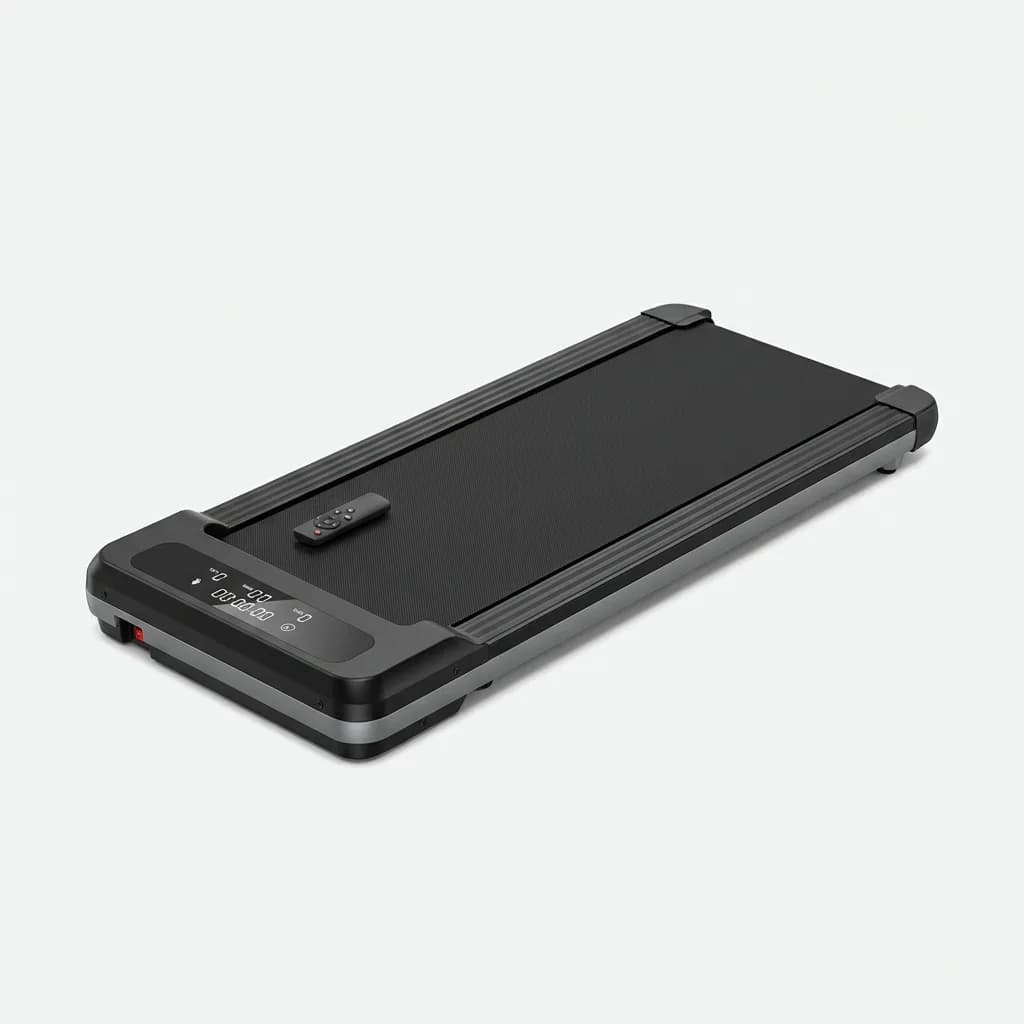
RHYTHM FUN Under Desk Treadmill
$629
Heavy-duty 3.0 HP motor, 49-inch deck, 17-inch belt. 300 lb capacity, built for daily high-mileage use. Remote and LED display.
The motor is noticeably louder than the Umay (around 45 dB at 2 mph), but it's still quiet enough for most work environments. The LED display is bright and easy to read, and the included remote is larger and easier to grip than most.
REDLIRO Under Desk Treadmill: Best Compact Design
The REDLIRO is the slimmest option we tested at 4.7 inches when stored. If you're tight on space or need to slide the treadmill into a closet between uses, this is the one. The deck is 44 inches long, which works for most people under 6 feet, and the 16-inch belt width is right in the middle of the pack.
The motor is 2.5 HP, and it runs quieter than the Goplus but louder than the Umay (about 42 dB at 2 mph). The speed range tops out at 4.5 mph, but the belt starts to feel unstable above 3.5 mph. Stick to walking speeds and it's solid.
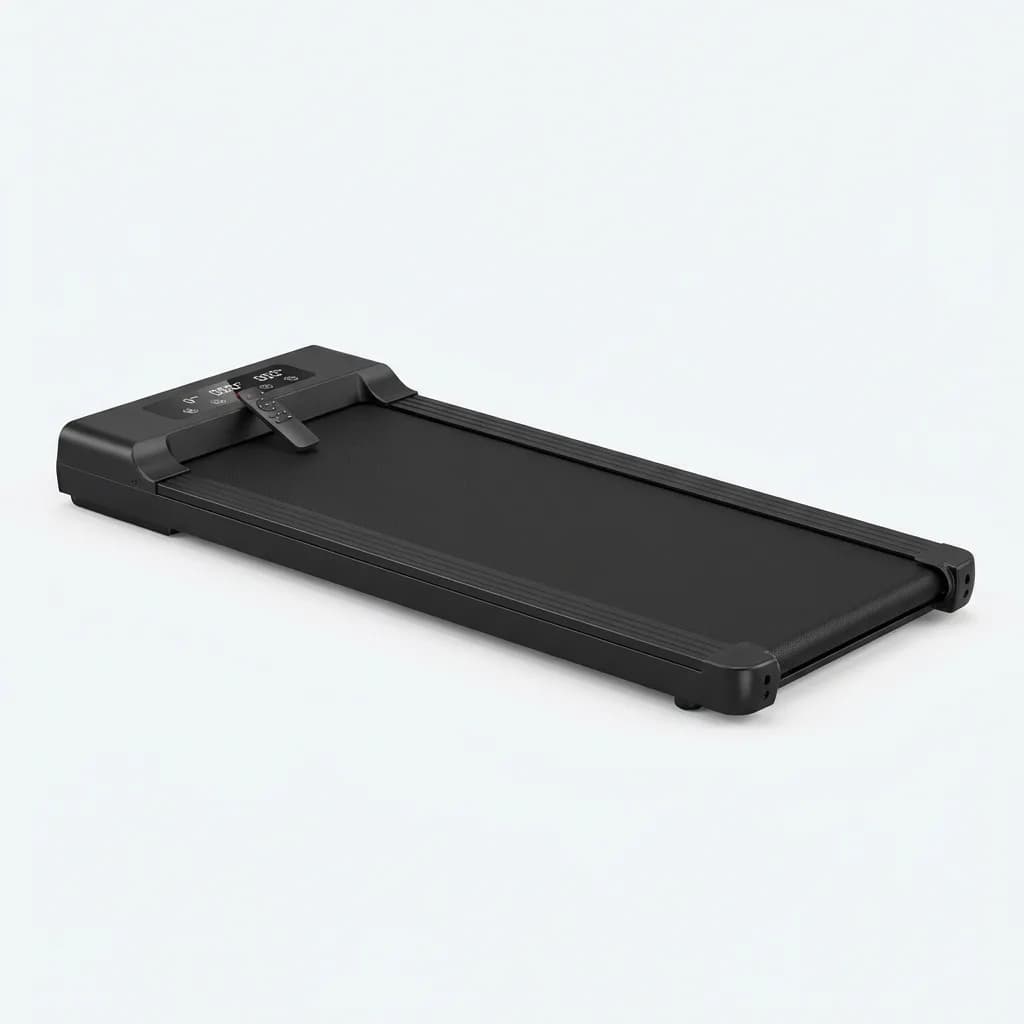
REDLIRO Under Desk Treadmill
$329
Ultra-slim 4.7-inch profile, 2.5 HP motor, 16-inch belt. Remote control, LED display, 220 lb capacity. Space-saving design.
One frustration: the safety key is tiny and easy to lose. We ended up taping it to the underside of the desk after the second time it fell off and disappeared under furniture.
What to Actually Look for When Buying
Belt stability matters more than motor power. A 2.0 HP motor is fine if the belt system is well-engineered. A 3.0 HP motor won't save you if the deck wobbles or the belt slips under your weight.
Deck length is critical if you're tall. Anything under 44 inches feels cramped for users over 5'10". You'll shorten your stride to compensate, which defeats the purpose of walking naturally while you work.
Noise level compounds over time. A treadmill that's "barely noticeable" at first becomes background annoyance after two hours. If you're on calls or recording audio, prioritize models under 40 dB at your preferred walking speed.
Auto-stop sensors are non-negotiable. The treadmill should stop immediately if you step off the belt. This isn't about safety theater - it's about not having to fumble for a remote every time you need to grab something from across the room.
How Fast Should You Actually Walk While Working?
Most people settle into 1.5 to 2.0 mph for focused work (writing, spreadsheets, reading). At that pace, typing accuracy stays high, and you're not consciously thinking about your stride. You can push it to 2.5 mph for lighter tasks (email, Slack, video calls where you're mostly listening), but anything above 3.0 mph requires too much attention to maintain while staying productive.
We tracked typing accuracy across different speeds using a standardized test. At 1.5 mph, error rates stayed within normal range (under 2%). At 2.5 mph, errors climbed to 4-5%. At 3.5 mph, we were hitting 8-10% error rates and constantly backspacing.
The sweet spot is 1.8 to 2.2 mph for most people, which translates to about 0.9 to 1.1 miles per hour of desk work. If you're working an eight-hour day and walking half of it, that's 3.6 to 4.4 miles - a meaningful addition to daily activity without forcing you to sacrifice work quality.
Desk Height and Standing Desk Compatibility
Most under-desk treadmills add 5 to 6 inches to your standing height. If your desk adjusts to 48 inches, you'll be standing at 53 to 54 inches while walking. That works for most people between 5'8" and 6'2", but if you're outside that range, check your desk's max height before buying.
The ideal setup is a desk that goes at least 2 inches higher than your normal standing position. That gives you room to adjust once the treadmill is underneath. If your desk maxes out at 48 inches and you normally stand at 46 inches, you're cutting it too close.
Maintenance and Longevity
Lubricate the belt every 40-50 hours of use (roughly once a month if you're walking 2 hours a day). Most models include a small bottle of silicone lubricant, but you'll need to buy more after the first few months. Don't skip this - a dry belt wears out motors faster and starts to squeak.
Check the belt tension every few weeks. If it's slipping during your stride (you'll feel a slight hesitation or stuttering), it needs to be tightened. Most models have adjustment bolts on the rear roller. Turn them clockwise in small increments (quarter turns) until the slip disappears.
Vacuum under the treadmill weekly. Dust and debris get sucked into the motor housing, and over time that can cause overheating issues. A quick pass with a vacuum attachment takes 30 seconds and extends the life of the motor significantly.
Final Recommendation
For most people pairing a treadmill with a standard standing desk, the WalkingPad R2 hits the best balance of build quality, noise level, and daily usability. If you're on a tight budget, the Goplus 2-in-1 is a solid entry point. If you need absolute silence for calls, get the Umay. If you're planning to log serious miles (5+ per day), the RHYTHM FUN is worth the extra weight and cost.
Don't overthink the speed range. You'll spend 90% of your time between 1.5 and 2.5 mph. Prioritize stability, noise, and deck length over flashy features or top speeds you'll never use.
The Weekly Dispatch
Enjoying this article?
Subscribe and get our best gear picks delivered every Sunday morning.
Related Stories
Minimalist Desk Setup: Less Clutter, More Focus
A minimalist desk setup reduces distractions and boosts focus. Here's how to choose the right essentials and manage cables without sacrificing functionality.
Best Monitor Light Bars for Desk Setup 2026
Monitor light bars eliminate desk clutter and reduce eye strain better than traditional lamps. We compare brightness, color temperature, and mounting systems.

Best Desk Organizers for Small Office Spaces
The right desk organizer reclaims workspace without adding clutter. We tested compact solutions that maximize storage in tight quarters.