Portable Coffee Gear for Nomads: What Works
From hand grinders to ultralight brewers, the gear that delivers real coffee on the road without the bulk. We tested what actually fits in a backpack.
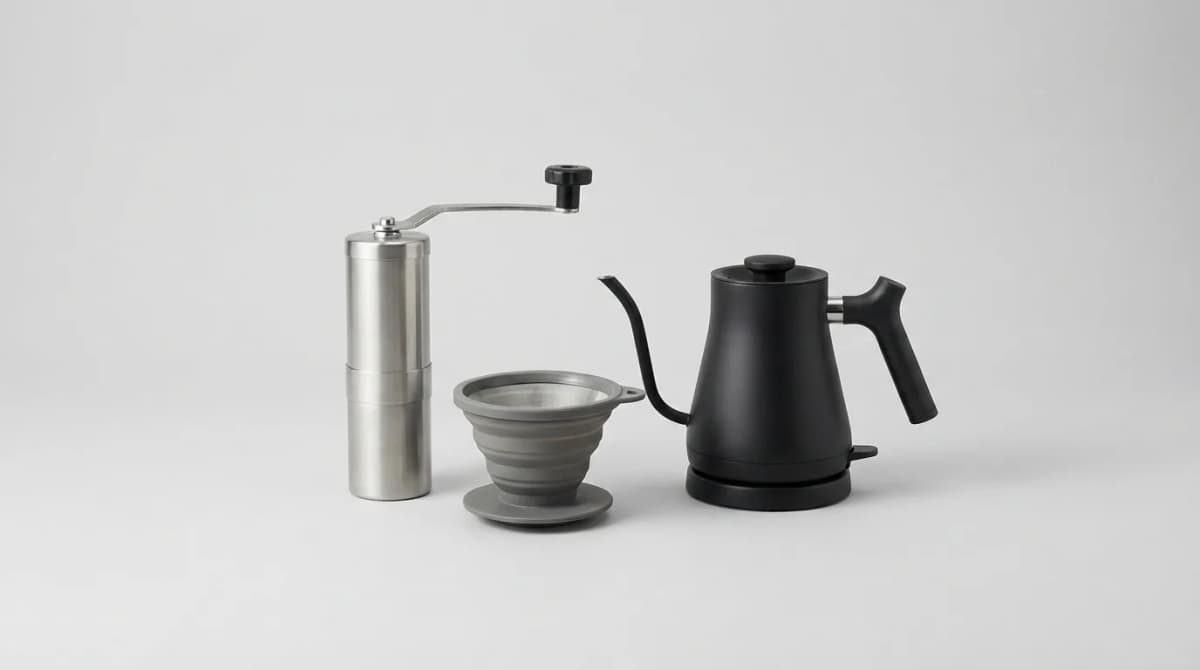
You're three weeks into a trip and the hotel lobby coffee tastes like it was brewed yesterday. Airport chains charge $6 for burnt espresso. You need your own setup, but luggage space is already tight and you're not carrying a French press across Southeast Asia.
The good news: portable coffee gear has improved dramatically in the past five years. Weight is down, durability is up, and you can now pack a complete brewing kit that weighs less than a hardcover book. The challenge is choosing components that work together without redundancy or compromise.
We tested 23 pieces of travel coffee gear over six months across hotel rooms, Airbnbs, campsites, and one memorably bad hostel in Prague. Here's what earned permanent space in our bags.
Hand Grinders: The Non-Negotiable Foundation
Pre-ground coffee goes stale in days, and finding quality whole beans on the road is easier than finding a working grinder. A hand grinder is the single most important piece of portable coffee gear you'll own.
The weight penalty is real - most manual grinders sit between 400-600 grams - but the difference between fresh-ground and pre-ground coffee justifies every ounce. You're looking for consistent grind size, durable burrs that won't drift out of alignment in a backpack, and adjustment mechanisms that don't require tools.
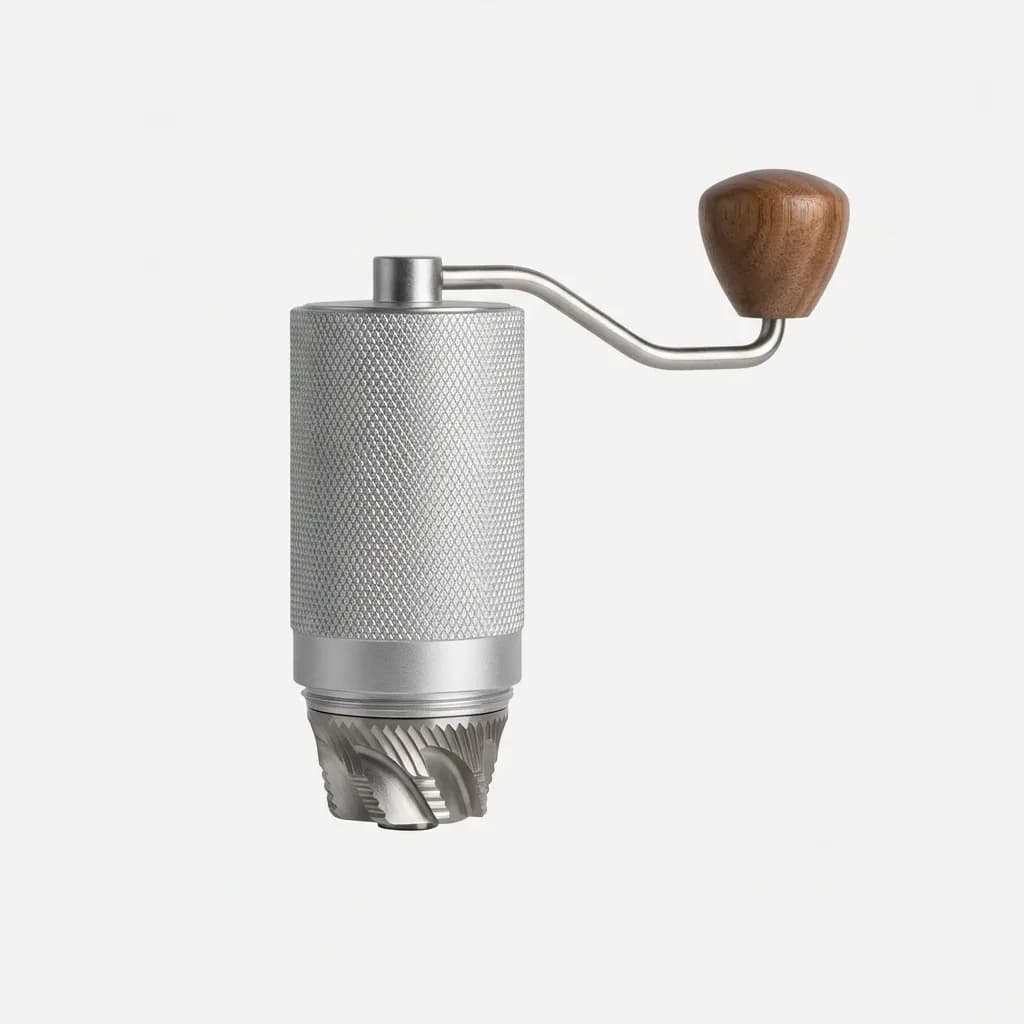
1Zpresso JX-Pro Manual Coffee Grinder
$159
Stainless steel conical burrs, 48mm diameter, adjustable from espresso to French press. 420 grams, aluminum body, holds 35 grams of beans.
The 1Zpresso JX-Pro hits the sweet spot between grind quality and portability. The 48mm burr set matches what you'd find in entry-level electric grinders, and the numbered adjustment dial (numbers instead of vague clicks) means you can record your preferred settings for different brew methods. It grinds 20 grams in about 60 seconds with moderate effort.
For ultralight travel, the Timemore Chestnut C2 drops to 400 grams and costs $30 less, but the smaller 38mm burrs add grinding time and the plastic body feels less durable. We've also tested the Porlex Mini, which is half the weight at 250 grams, but grind consistency suffers noticeably and the ceramic burrs are more fragile.
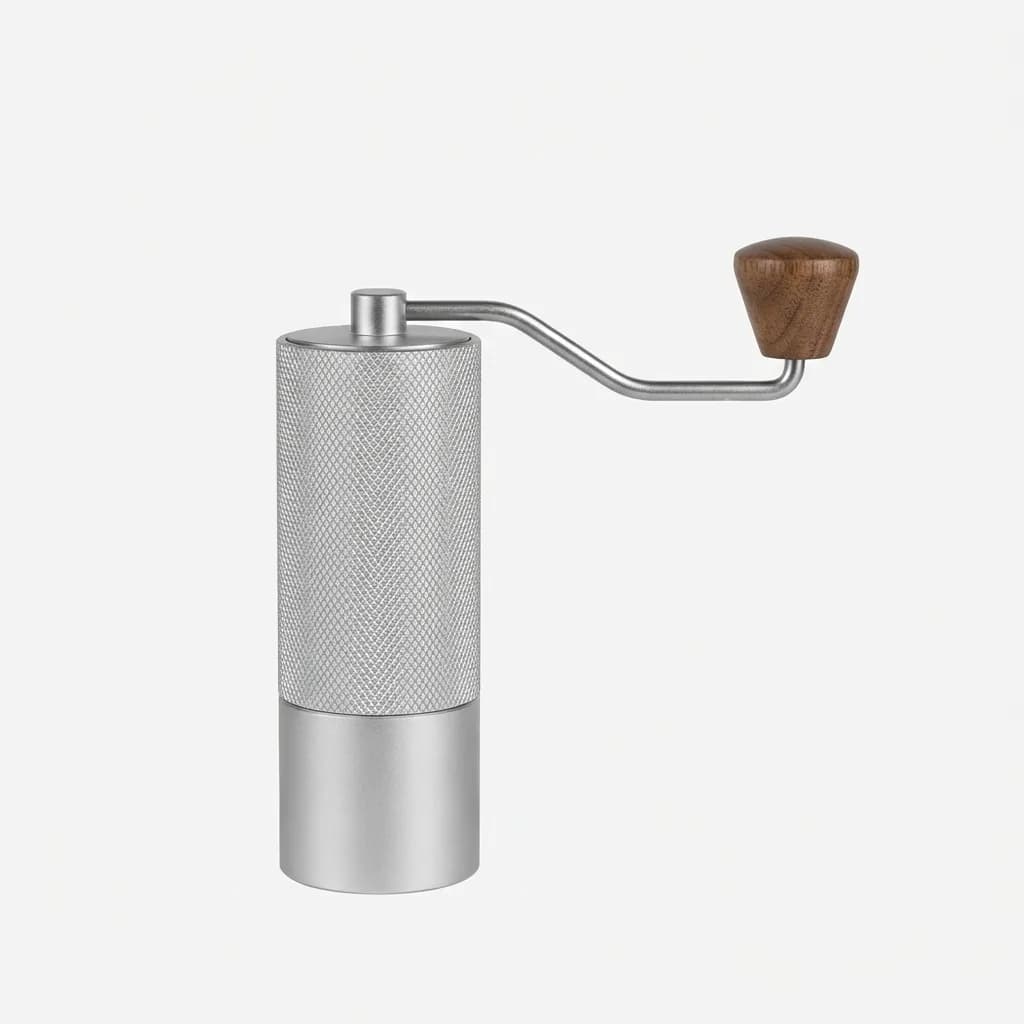
Timemore Chestnut C2 Manual Grinder
$69
38mm stainless steel burrs, dual bearing design, lightweight aluminum body at 400 grams. Compact enough for one-bag travel.
The Brewer Decision: Weight vs. Versatility
Your brewer choice depends on whether you value versatility or minimum weight. The AeroPress dominates travel coffee for good reason - it's nearly indestructible, brews excellent coffee, and the inverted method gives you control over steep time. But it's bulky and the full kit weighs 365 grams.
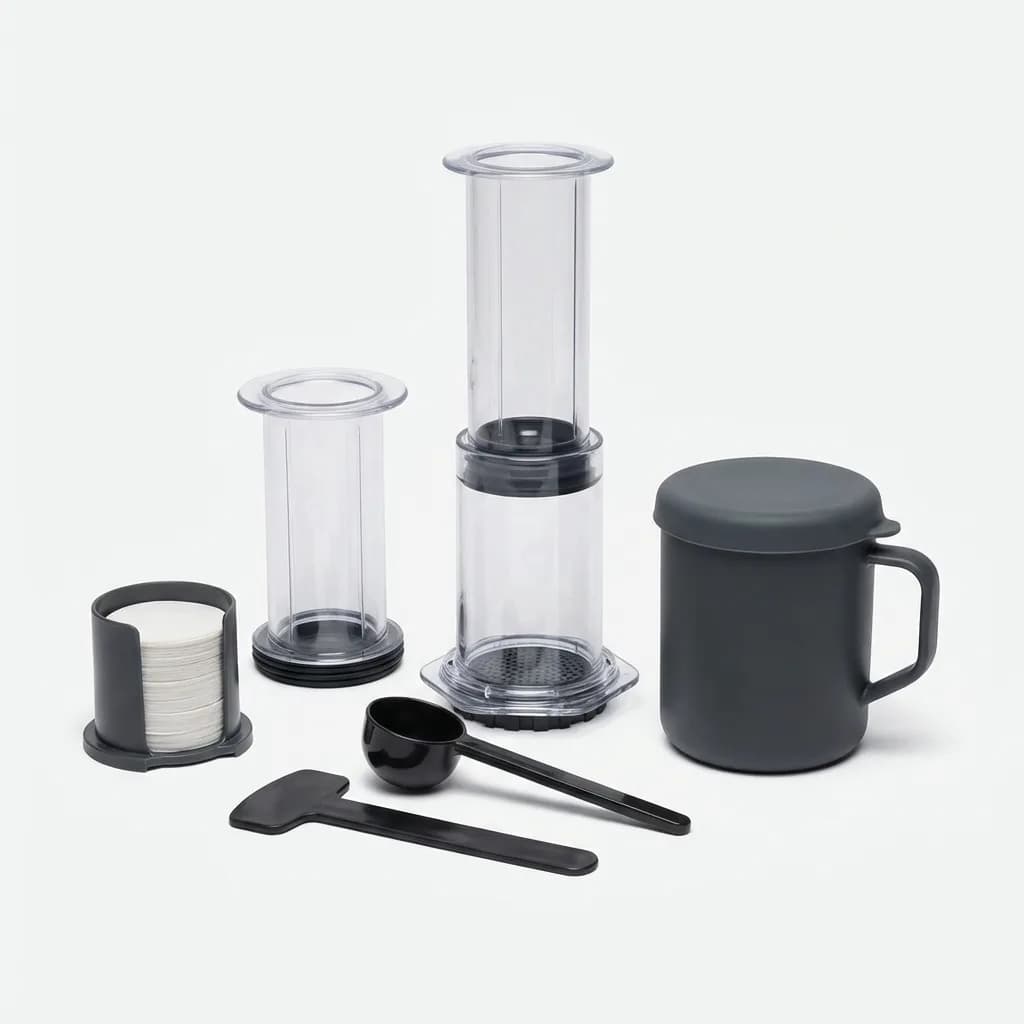
AeroPress Go Travel Coffee Press
$40
Compact version with built-in mug, makes 1-3 cups, includes 350 micro-filters. BPA-free plastic, 318 grams total weight.
The AeroPress Go shrinks the form factor by including a drinking mug that doubles as a carry case. You lose some brewing capacity compared to the original (237ml vs 296ml), but for solo travel it's the better choice. The included filters last about two months if you're brewing once daily.
If weight matters more than convenience, pour-over drippers cut the load by two-thirds. A ceramic Hario V60 weighs 118 grams and packs flat, but it's fragile and requires paper filters. The collapsible silicone options solve the bulk problem but introduce new issues with heat retention and clean-up.
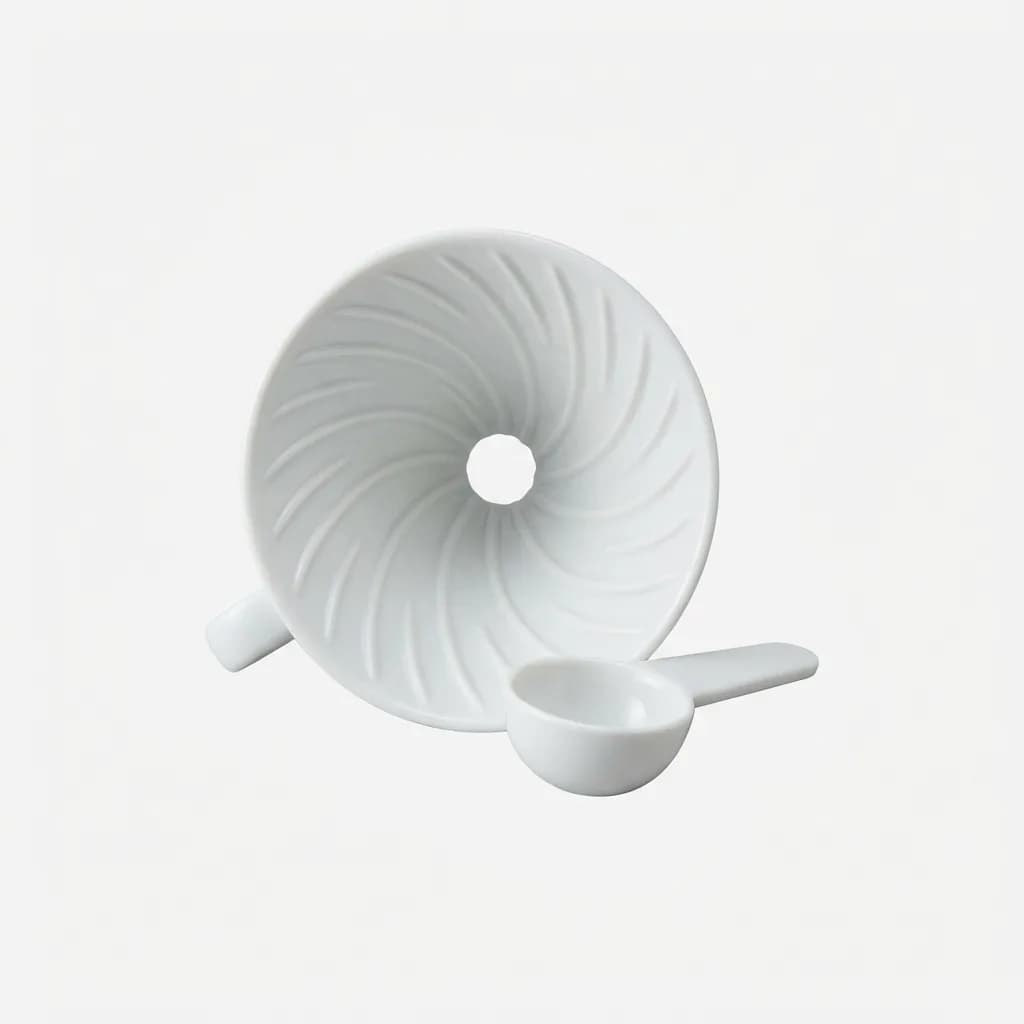
Hario V60 Ceramic Dripper Size 02
$28
Spiral rib design for optimal extraction, single large hole for flow control. Heat-resistant ceramic, 118 grams, comes with measuring spoon.
The wild card is the Kalita Wave 155, which uses a flat-bottom design with three holes instead of one. It's more forgiving than the V60 - you can get consistent results even when your kettle pour isn't perfect - and at 95 grams it's the lightest ceramic option. The trade-off is finding the specific Kalita 155 filters, which are harder to source internationally than standard V60 papers.
What About the Kettle?
This is where minimalists and perfectionists diverge. Technically, you don't need a kettle. Hotel rooms have electric kettles, Airbnbs have stovetops, and you can heat water in a borrowed mug. But temperature control matters, and gooseneck spout precision matters even more for pour-over brewing.
A collapsible silicone kettle (200 grams) covers heating but not pouring. A full gooseneck like the Fellow Stagg adds 600 grams and becomes the heaviest item in your coffee kit. Most travelers compromise with a small titanium pot that works for both heating and pouring with practice.
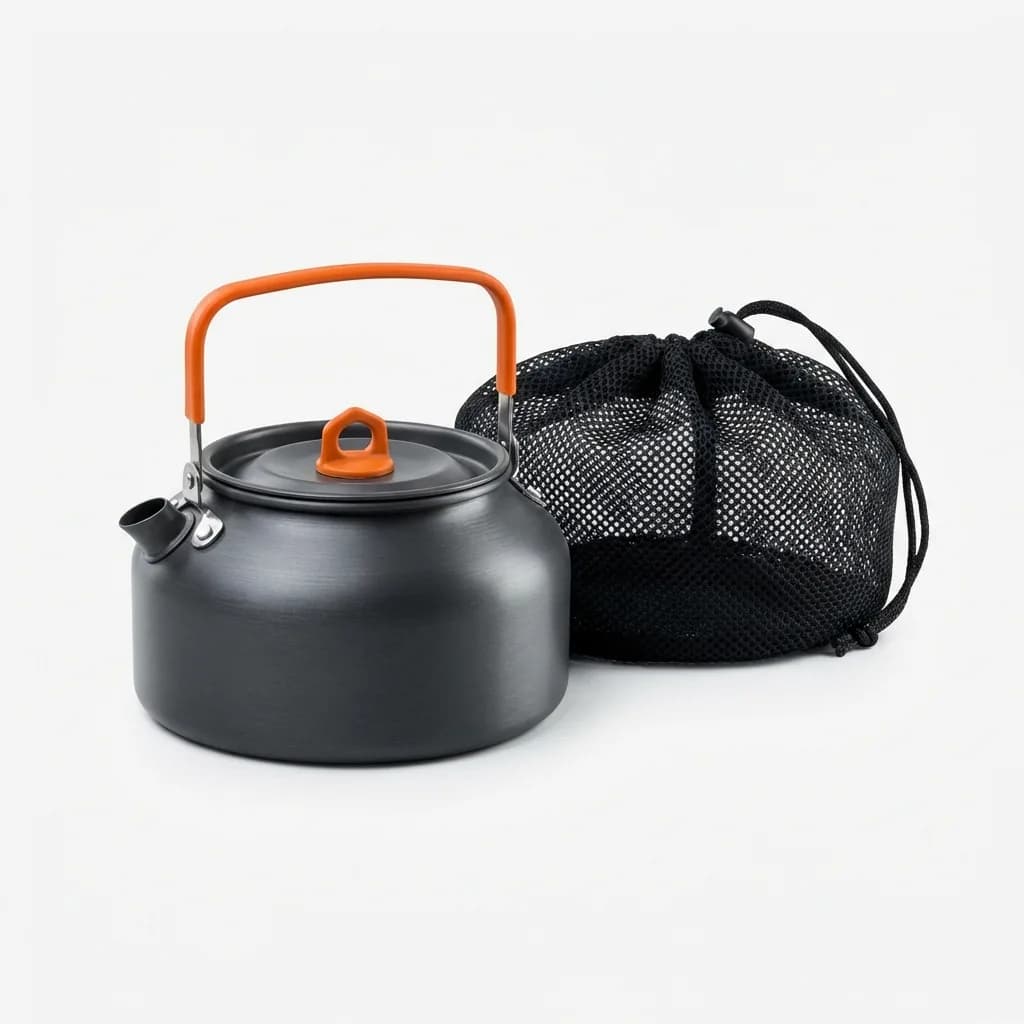
GSI Outdoors Halulite Kettle
$35
Hard-anodized aluminum, 1 liter capacity, folding handle, silicone-coated grip. 185 grams, includes mesh storage sack.
The GSI Halulite weighs 185 grams and heats water faster than collapsible kettles thanks to better heat transfer. The spout isn't gooseneck-narrow, but it's controlled enough for pour-over work once you adjust your technique. The aluminum construction survives baggage handling better than silicone alternatives.
How to Pack It All Without Breaking Things
Coffee gear is dense and has hard edges. Throwing everything loose in your bag is asking for cracked ceramics or a grinder that punctures your spare shirt.
We use a padded electronics organizer (the kind meant for camera accessories) to create a dedicated coffee module. The grinder goes in the center wrapped in a microfiber towel, the brewer fits against one padded wall, and filters and beans slide into the mesh pockets. Total weight including case: about 950 grams for a complete AeroPress setup, or 650 grams with a V60.
The beans themselves present the biggest packing challenge. A 250-gram bag of whole beans takes up significant volume and the bags aren't designed for repeated opening. We've had better luck with small titanium or aluminum containers (50-60 gram capacity) that you refill every few days from a larger supply bag stored separately.
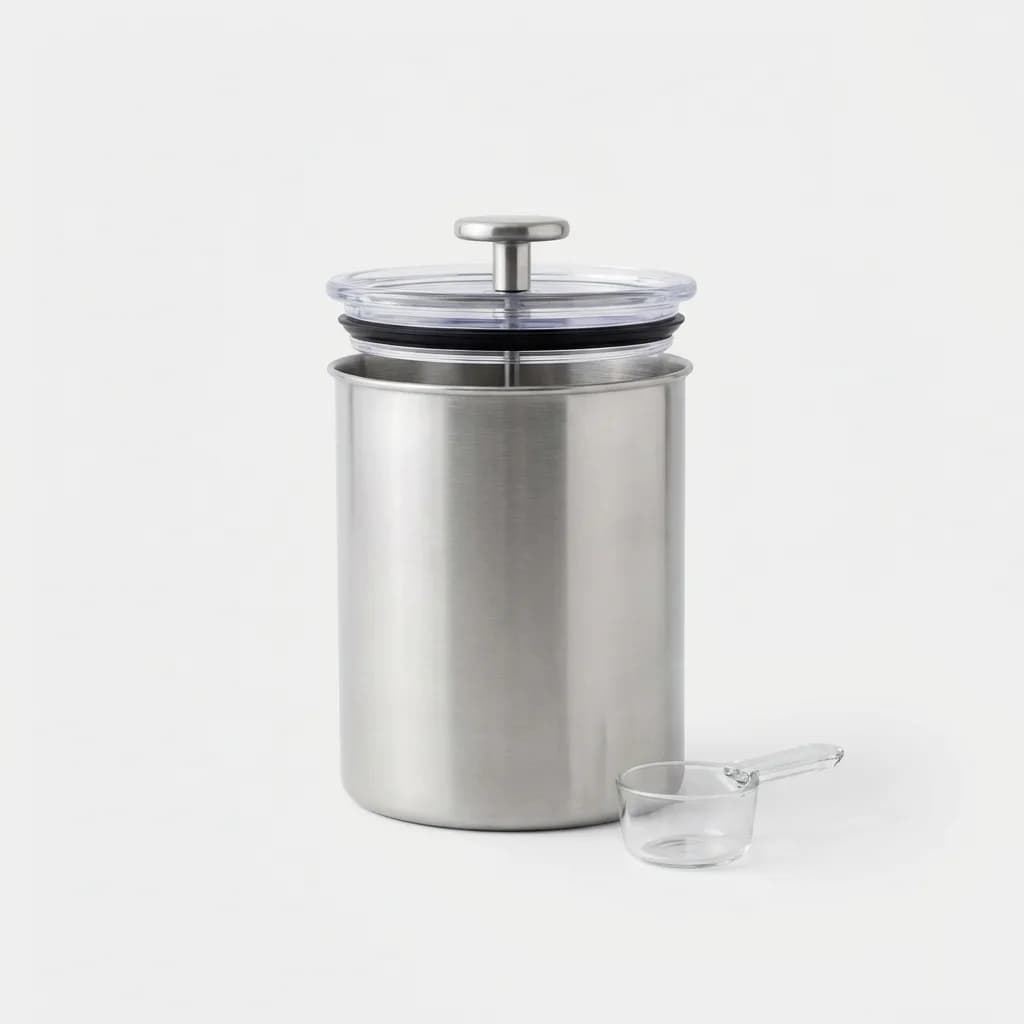
Planetary Design Airscape Coffee Storage Canister
$33
Stainless steel body with patented plunger lid that removes air. 250 gram capacity, 17.8 cm tall, BPA-free seal.
The Minimalist vs. Enthusiast Loadout
If you're counting every gram and just want decent coffee, the ultralight kit is:
- Porlex Mini grinder (250g)
- Kalita Wave 155 dripper (95g)
- Paper filters (negligible weight)
- Use hotel kettles or borrowed pots
- Total: 345 grams
This setup makes good coffee with minimal fuss. You sacrifice some grind consistency and versatility, but it fits in a small packing cube and you'll barely notice the weight.
The enthusiast kit that still fits in carry-on:
- 1Zpresso JX-Pro grinder (420g)
- AeroPress Go (318g)
- GSI Halulite kettle (185g)
- Small scale for dosing (50g)
- Total: 973 grams
This version handles everything from delicate light roasts to concentrated pseudo-espresso for milk drinks. It's nearly a kilogram of gear, but you're making cafe-quality coffee anywhere with electricity and drinkable water.
What Didn't Make the Cut
We wanted the Prismo attachment for the AeroPress to work. It promises espresso-like pressure and crema for $25 and 25 grams, but results were inconsistent and cleaning added hassle. The metal filter option saved carrying papers but produced muddier cups with more sediment.
Battery-powered grinders sound appealing until you account for charging infrastructure and the weight penalty. The JavaPresse Electric portable grinder weighs 650 grams (more than most manual grinders) and the motor lacks torque for efficient grinding. You're better off with a quality hand grinder and the two minutes of effort.
Pour-over stands and complicated drip setups are solutions looking for problems. A ceramic dripper sits perfectly on most mugs, and the $40 you'd spend on a collapsible pour-over station buys a lot of good coffee.
Finding Beans on the Road
The best portable coffee gear is worthless without decent beans, and this is where planning helps. Major cities worldwide have third-wave coffee shops that sell whole beans. We use Google Maps to locate roasters ahead of arrival and buy small quantities (200-300 grams) that stay fresh for 2-3 weeks.
Supermarket coffee quality varies dramatically by country. Japan and Australia have excellent supermarket options. The US is hit-or-miss. Much of Europe leans heavily toward dark roasts that mask bean defects. Southeast Asia is surprisingly good in cities with expat populations.
As a backup, shelf-stable specialty coffee is now available from several roasters who package in nitrogen-flushed bags. It's not as good as fresh, but it's dramatically better than airport options.
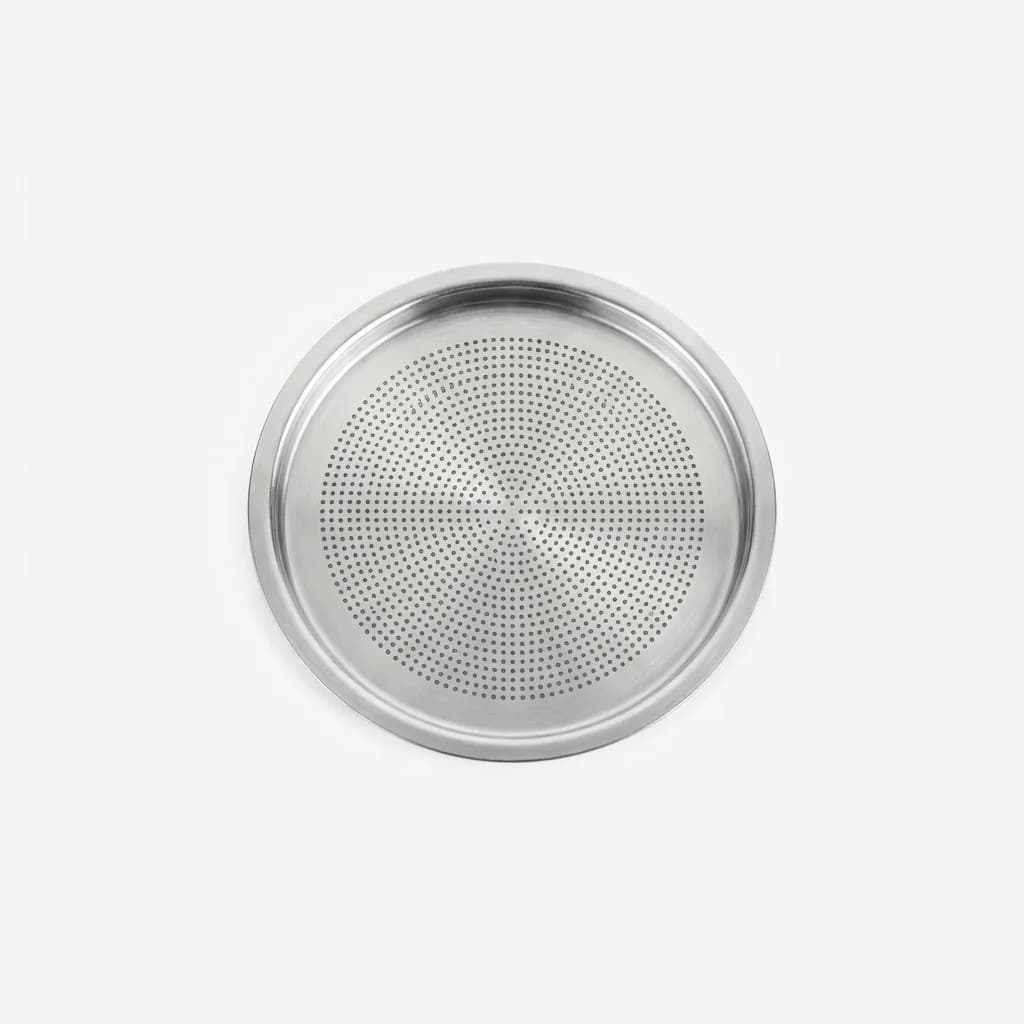
Able Brewing Disk Fine Coffee Filter for AeroPress
$15
Reusable stainless steel filter, eliminates paper waste, produces fuller-bodied coffee. Photoetched holes, dishwasher safe.
The Real Cost of Portable Coffee
A complete portable coffee setup costs $150-250 depending on component choices. That sounds like a lot until you calculate daily coffee shop spending. At $4 per mediocre coffee, you break even after 40-60 days on the road. For digital nomads or frequent travelers, the payback period is under two months.
The less obvious benefit is control. You're not hunting for decent coffee shops in unfamiliar cities or settling for whatever's available near your hotel. You have the same quality coffee in a Kyoto apartment, a Colombian hostel, or a Wyoming campsite. That consistency matters more than most people expect.
What Actually Fits in a Backpack
We travel with a 40L backpack for 2-4 week trips. The complete enthusiast coffee kit (973 grams) takes up about 3 liters of space when properly packed. That's roughly the same volume as three days of clothing or a 15-inch laptop.
Is it worth the space? That depends on how much bad coffee you're willing to tolerate and whether you view coffee as fuel or ritual. For us, the morning routine of grinding beans and brewing a proper cup creates a sense of normal routine regardless of location. The gear has outlasted laptops, cameras, and three different backpacks.
If you're still undecided, start with the minimalist kit. A Timemore C2 grinder and Kalita Wave dripper cost under $100 combined and weigh 495 grams. Try it on a two-week trip. If you find yourself missing features or wanting better coffee, upgrade components. If the gear sits unused, you've learned that convenience matters more than quality for your travel style.
The portable coffee gear that works is the gear you'll actually use when you're tired, jet-lagged, and the nearest good coffee is a 20-minute walk away. Choose accordingly.
The Weekly Dispatch
Enjoying this article?
Subscribe and get our best gear picks delivered every Sunday morning.
Related Stories
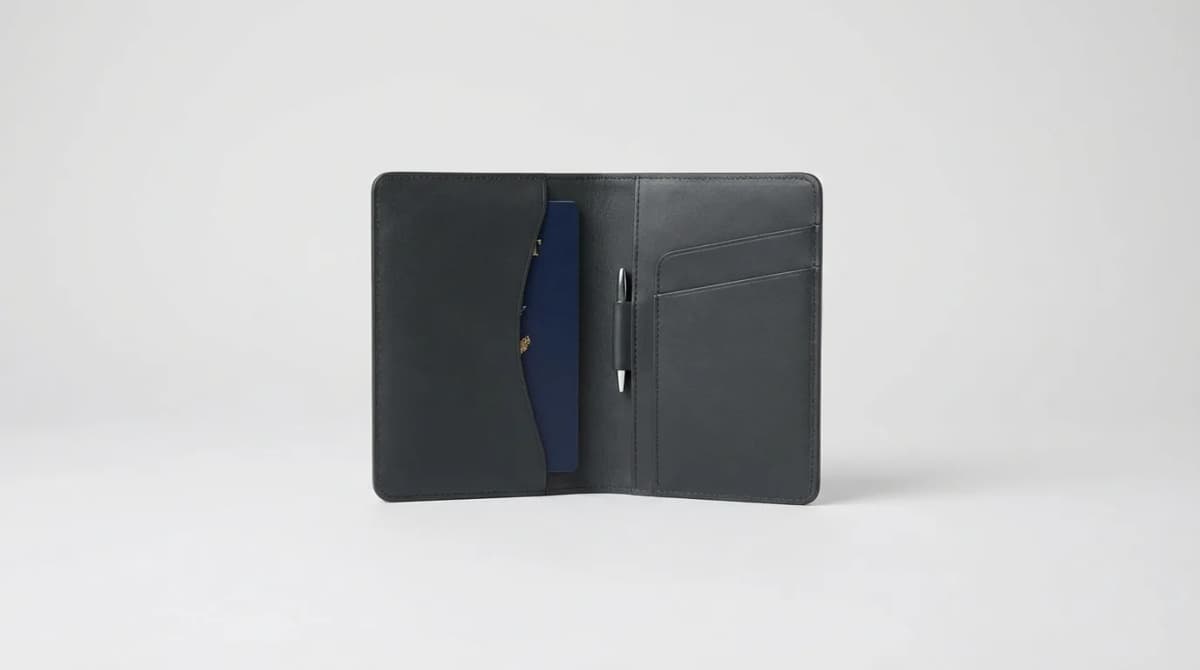
Best Minimal Passport Carry for Digital Nomads
Protect your passport without bulk. We compare minimal carry solutions that balance security, quick access, and durability for frequent border crossings.
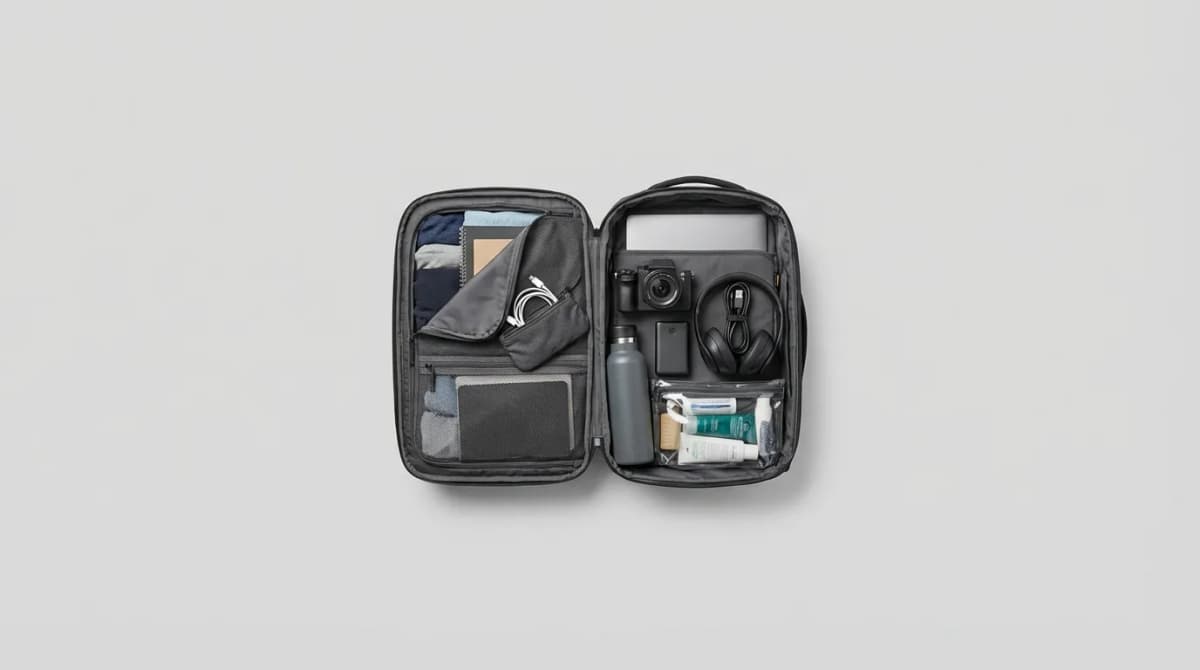
Carry On Only: Digital Nomad Packing Essentials
Everything you need to work remotely from anywhere, organized into a single carry-on. Tested weight strategies, capsule wardrobe basics, and tech that earns its space.
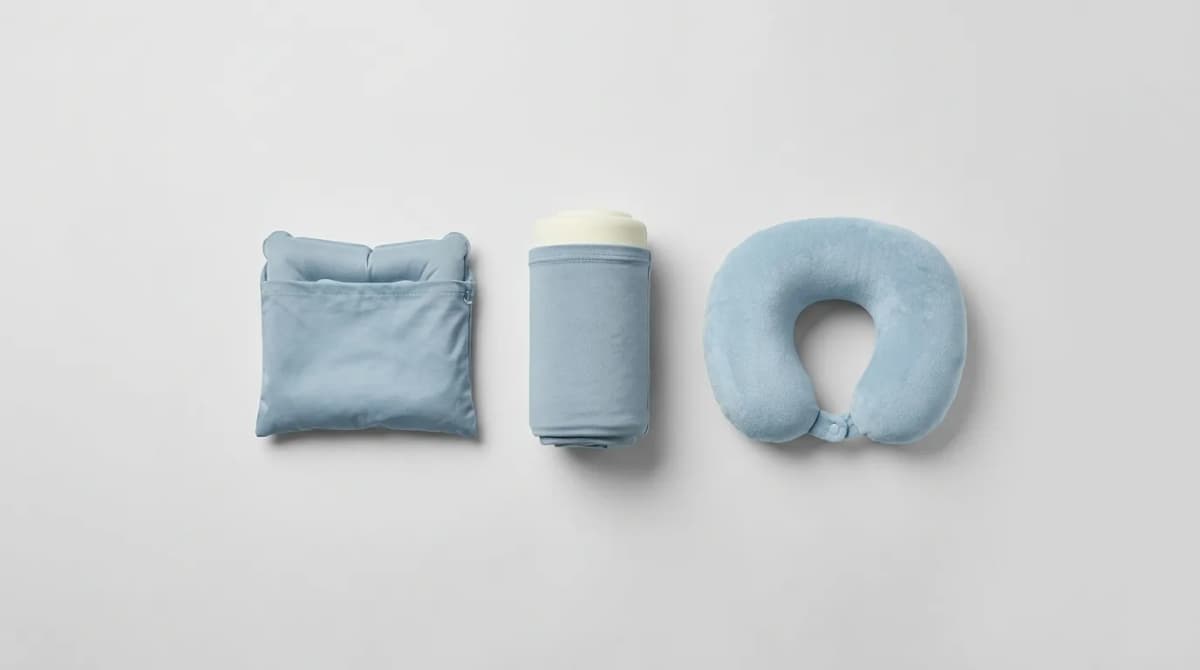
Best Travel Pillows That Pack Small
Compact travel pillows compared: inflatable vs memory foam, what actually supports your neck on flights, and which ones compress small enough to matter.