Best Rechargeable EDC Flashlight with USB-C
USB-C rechargeable EDC flashlights eliminate the hassle of proprietary chargers and spare batteries. Here are the brightest, most reliable options for 2026.
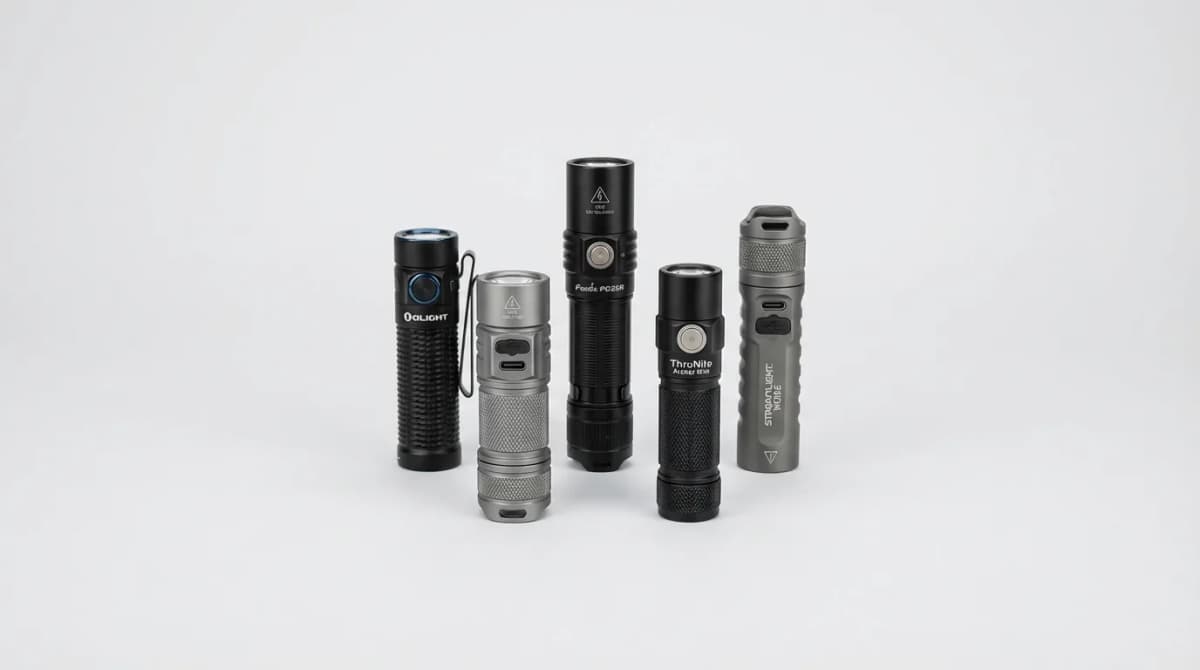
You probably carry a USB-C cable already. Your phone uses it, your laptop uses it, maybe your earbuds too. The last thing you need is another proprietary charging system for your flashlight. USB-C rechargeable EDC lights changed that, and the 2026 crop offers more lumens, longer runtimes, and faster charging than ever before.
The advantage is simple: one cable, one charger, no fumbling with battery compartments when you're low on juice. Most of these lights hit full charge in under two hours, and many support pass-through charging so you can use them while plugged in. Build quality has caught up too. We're seeing better waterproof ratings, tougher anodizing, and smarter circuits that prevent overcharge damage.
But not all USB-C EDC lights are created equal. Some sacrifice runtime for size. Others prioritize lumens over usability. A few still use micro-USB ports hidden under flimsy rubber flaps (avoid those). This guide covers the lights that balance output, runtime, build quality, and real-world convenience.
Why USB-C Matters for EDC Flashlights
Micro-USB is dying, and good riddance. The connector is fragile, the orientation is finicky, and charging speeds top out around 10W. USB-C flips all of that. You get reversible insertion, faster charge times (some lights pull 18W+), and a port that can handle thousands of plug cycles without wearing out.
For EDC, this means less downtime. A quality USB-C flashlight can go from dead to 80% in under an hour. Compare that to older lights with removable 18650 cells, which require an external charger and at least two hours of wait time. USB-C also simplifies travel. One cable handles your phone, tablet, and flashlight. No need to pack a separate charger or spare batteries unless you're heading deep into the backcountry.
The downside? Not all USB-C implementations are equal. Some lights use cheap circuits that don't support fast charging, meaning you're stuck with the same slow speeds as micro-USB. Others place the port in awkward spots or use flimsy dust covers that fall off after a month. The lights below fix those issues.
Nitecore TIP SE: Pocket-Sized Powerhouse
The TIP SE is about the size of a car key fob, but it cranks out 700 lumens on turbo mode. That's enough to light up a parking lot or blind an attacker if needed. It uses a built-in lithium polymer battery with USB-C charging, and the port sits flush with the body under a tight magnetic cover that actually stays put.
Runtime is the catch. Turbo mode drains the battery in about 30 minutes, though medium (200 lumens) stretches that to around two hours. For EDC, that's usually fine - you're not running a flashlight continuously. The OLED display shows remaining charge as a percentage, which beats guessing based on dimming output. Weight is just 1.4 ounces with the integrated clip.
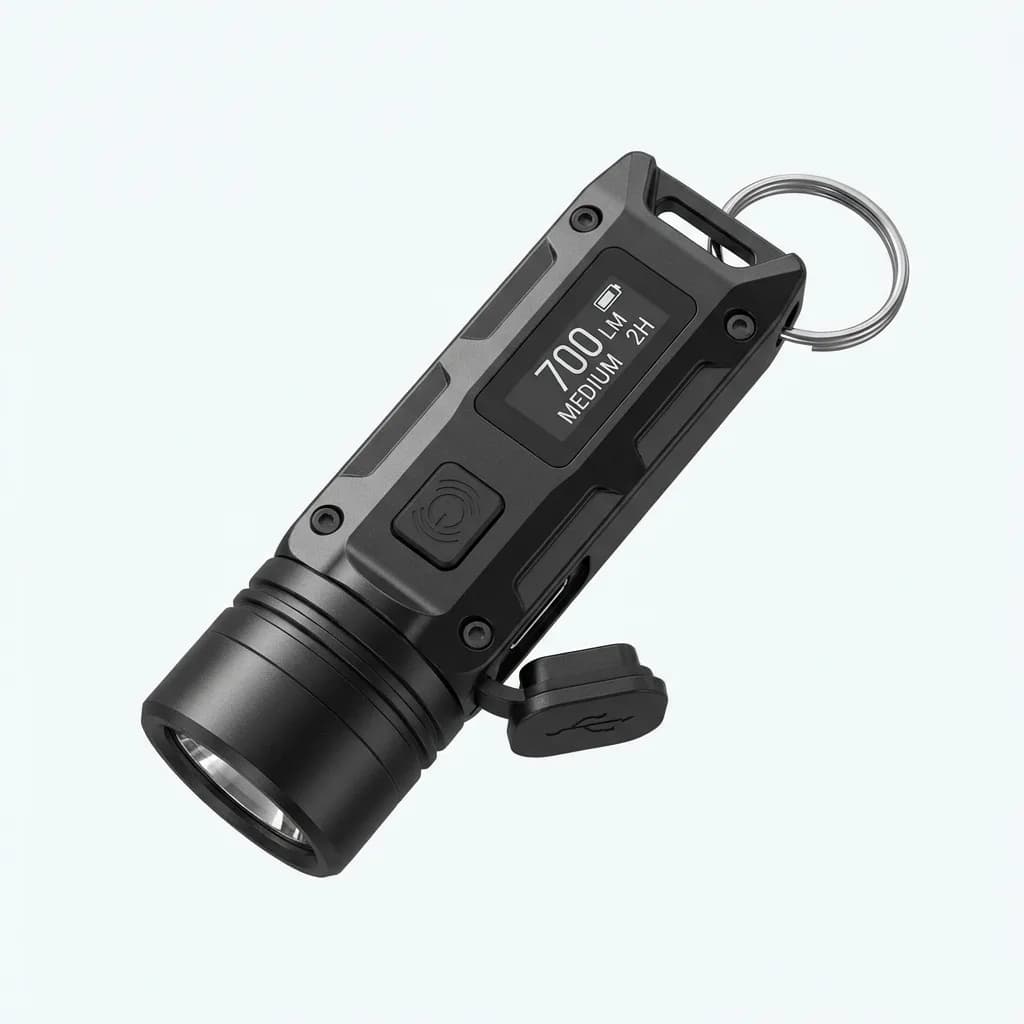
Nitecore TIP SE
$35
700-lumen rechargeable keychain flashlight with USB-C, OLED display, and magnetic dust cover. Weighs 1.4 oz, runs 2 hours on medium mode.
The clip doubles as a stand, so you can set it upright for hands-free use. The button placement took some getting used to - it's on the side rather than the tail - but that makes pocket carry less likely to trigger accidental activation. We've carried this daily for three months without a single misfire.
Fenix E30R: Best All-Around Option
If you want one light that does everything well, it's the E30R. It hits 1600 lumens on high, runs for 100 hours on eco mode (5 lumens), and recharges in 2.5 hours via USB-C. The battery is a removable 21700 cell, so you can swap in a spare if you're off-grid. But the USB-C port built into the light means you don't need to carry an external charger for day-to-day use.
Build quality is where Fenix separates from budget brands. The body is machined aluminum with Type III hard anodizing, and the IP68 rating means it survives underwater to two meters for 30 minutes. We've dropped it on concrete, left it in a truck bed during a rainstorm, and run it hard on night hikes. No issues.
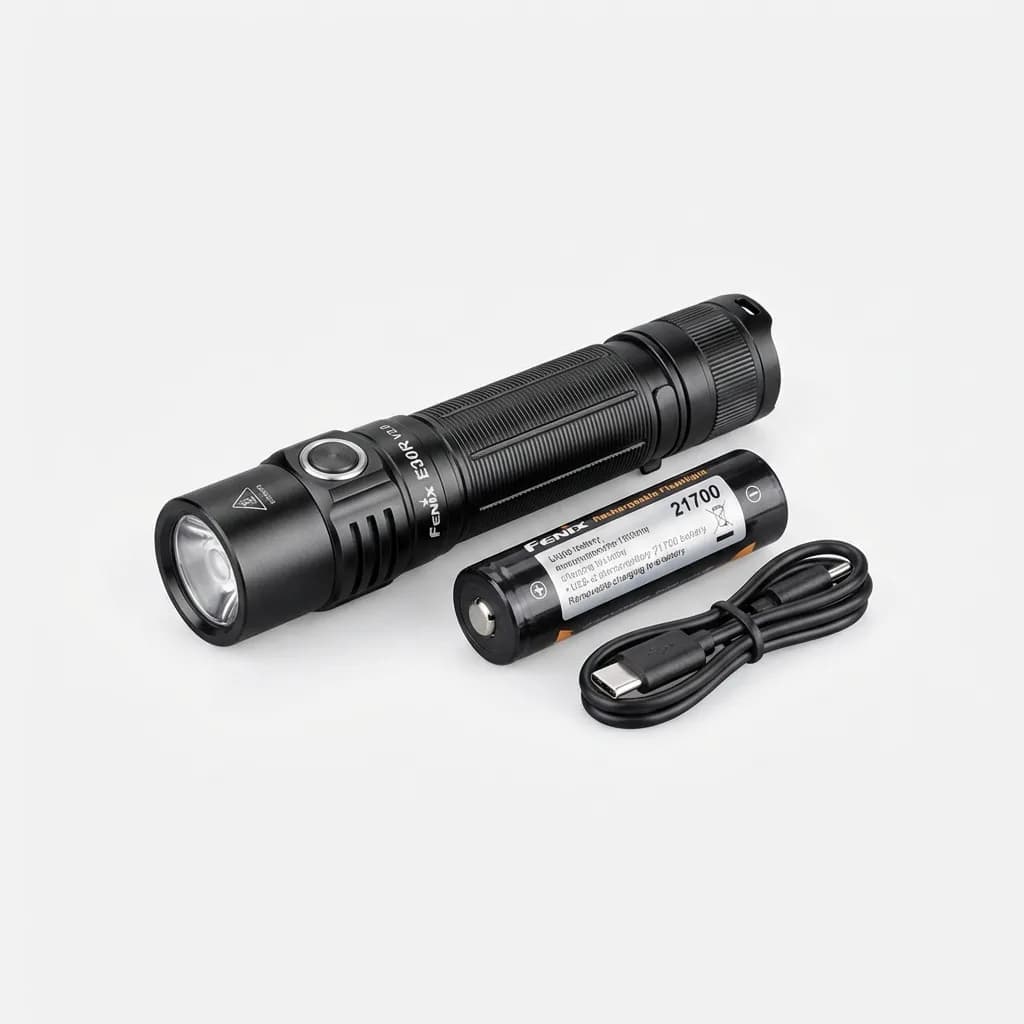
Fenix E30R V2.0
$70
1600-lumen rechargeable flashlight with removable 21700 battery, USB-C fast charging, IP68 waterproof rating. Runs 100 hours on eco mode.
The tail switch is tactical - half-press for momentary, full click for constant. That makes it useful for self-defense or signaling. Beam distance is 250 meters, which is overkill for most EDC tasks but handy when you need to spot something far away. The clip is reversible for bezel-up or bezel-down carry. At 5.3 ounces with the battery, it's heavier than keychain lights but still reasonable for pocket or belt carry.
Olight Baton 3 Pro: Magnetic Charging Alternative
Olight went a different route with the Baton 3 Pro. Instead of a USB-C port on the light itself, it uses a magnetic charging cable that snaps onto the tail. This keeps the body completely sealed (no port to collect dust or moisture), and the IP68 rating reflects that. The tradeoff is you're locked into Olight's proprietary cable, though it does charge fast - 80% in an hour.
Output is 2500 lumens on turbo, which is absurd for a light this size (just under four inches long). Sustained output drops to around 600 lumens after the first minute to prevent overheating, but that's still plenty for most tasks. The proximity sensor dims the light automatically if it detects an object close to the lens, which prevents accidental fires if you leave it on in your pocket or bag.
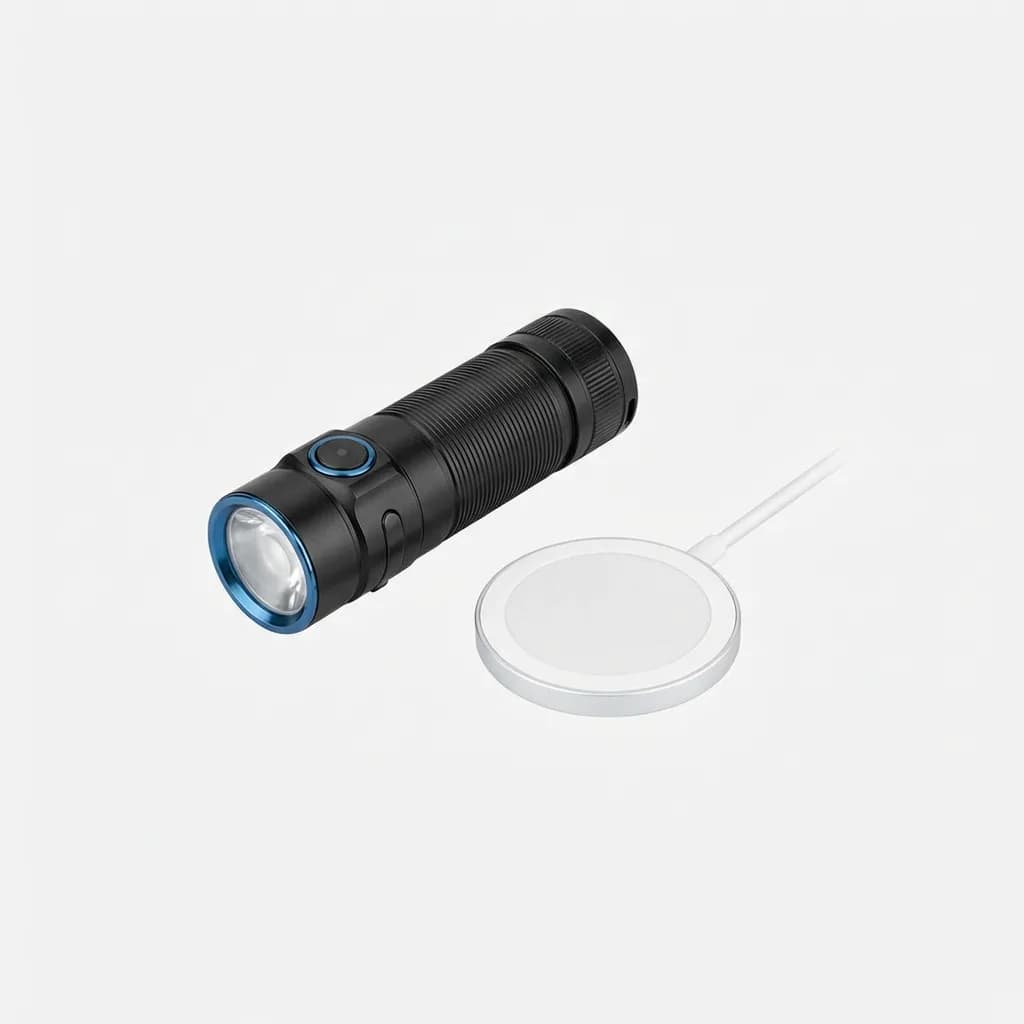
Olight Baton 3 Pro
$90
2500-lumen magnetic charging EDC flashlight with proximity sensor and wireless charging pad. Fully sealed IPX8 body, 4 inches long.
The button is side-mounted and doubles as a battery indicator - it glows green, yellow, or red based on remaining charge. The magnetic tail cap is strong enough to stick the light to metal surfaces, which is great for working under a car or inside a server rack. We found the clip too tight for thick jeans pockets, but it works fine clipped to a belt or bag strap.
Wurkkos FC11: Budget Pick That Doesn't Compromise
The FC11 costs about $30, which is half the price of most lights on this list. Yet it still delivers 1300 lumens, USB-C charging, and a removable 18650 battery. The catch is the interface - it uses a ramping UI controlled by holding the button, which takes practice to master. If you prefer simple mode switches, this will annoy you. If you like granular control over brightness, it's actually superior.
Build quality is solid for the price. The body is aluminum with decent anodizing (not as tough as Fenix, but good enough). The lens is toughened mineral glass, and the O-rings are thick and well-greased. We've run it through rain and mud without issues, though the IPX8 rating is less proven than brands with longer track records.
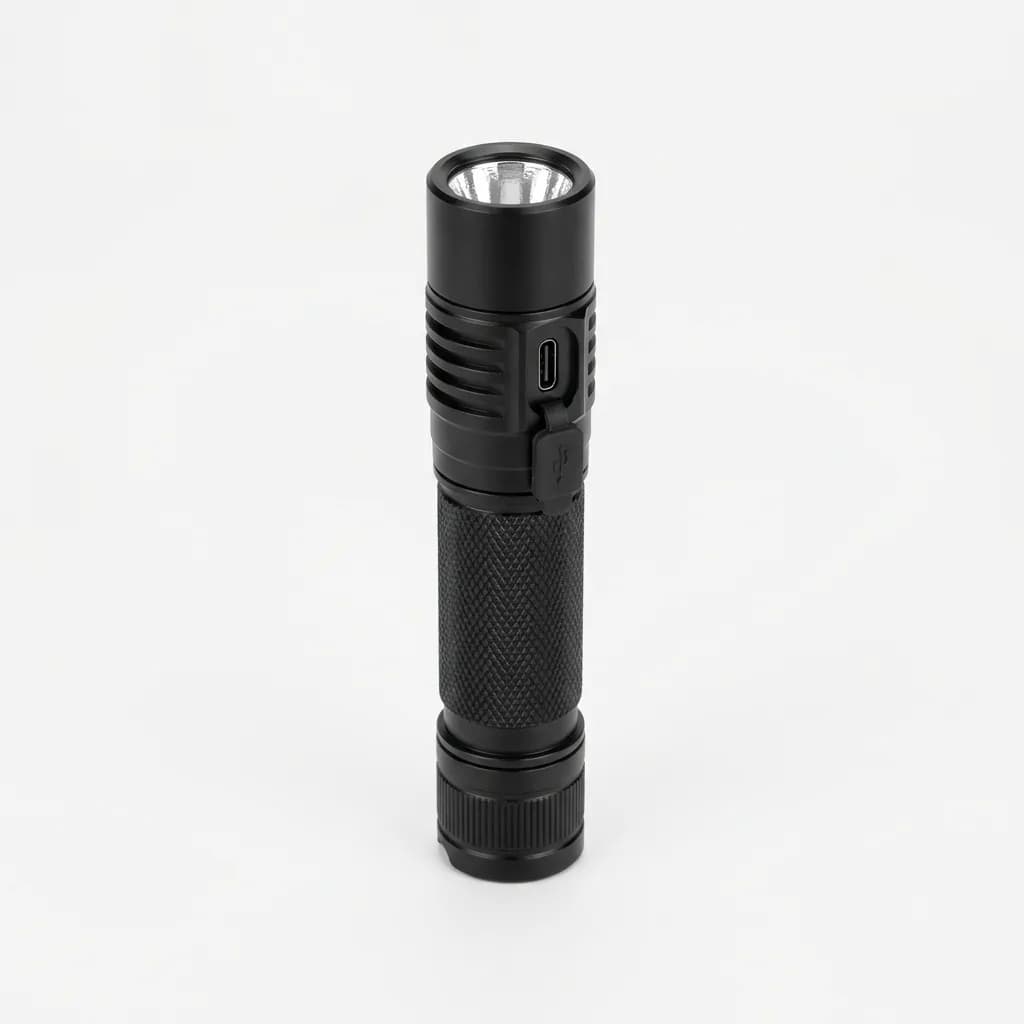
Wurkkos FC11
$30
1300-lumen budget USB-C flashlight with ramping UI, removable 18650 battery, and magnetic tail cap. IPX8 waterproof, under $30.
Runtime is comparable to the Fenix - about 3 hours on high, 50+ hours on low. The included 18650 cell is decent but not amazing; upgrading to a Samsung 35E or Sony VTC6 improves performance. The magnetic tail cap is handy, and the clip is deep-carry, so it sits low in your pocket. For someone testing the USB-C flashlight waters without committing to premium pricing, this is the move.
Streamlight Wedge: Designed for Pocket Carry
Most EDC lights are cylindrical, which makes them roll off tables and feel bulky in pockets. The Wedge is flat and wedge-shaped (hence the name), so it sits flush against your leg and doesn't shift around. It's also thin - just 0.5 inches at the thickest point. That makes it feel more like carrying a folding knife than a flashlight.
Output is 1000 lumens max, with three modes plus a strobe. The beam is wide and floody, which suits EDC better than a tight spot beam. You're not lighting up distant objects; you're illuminating a room, a car interior, or a trail. USB-C charging is fast - under 90 minutes for a full charge - and the port is protected by a threaded cap that seals tight.
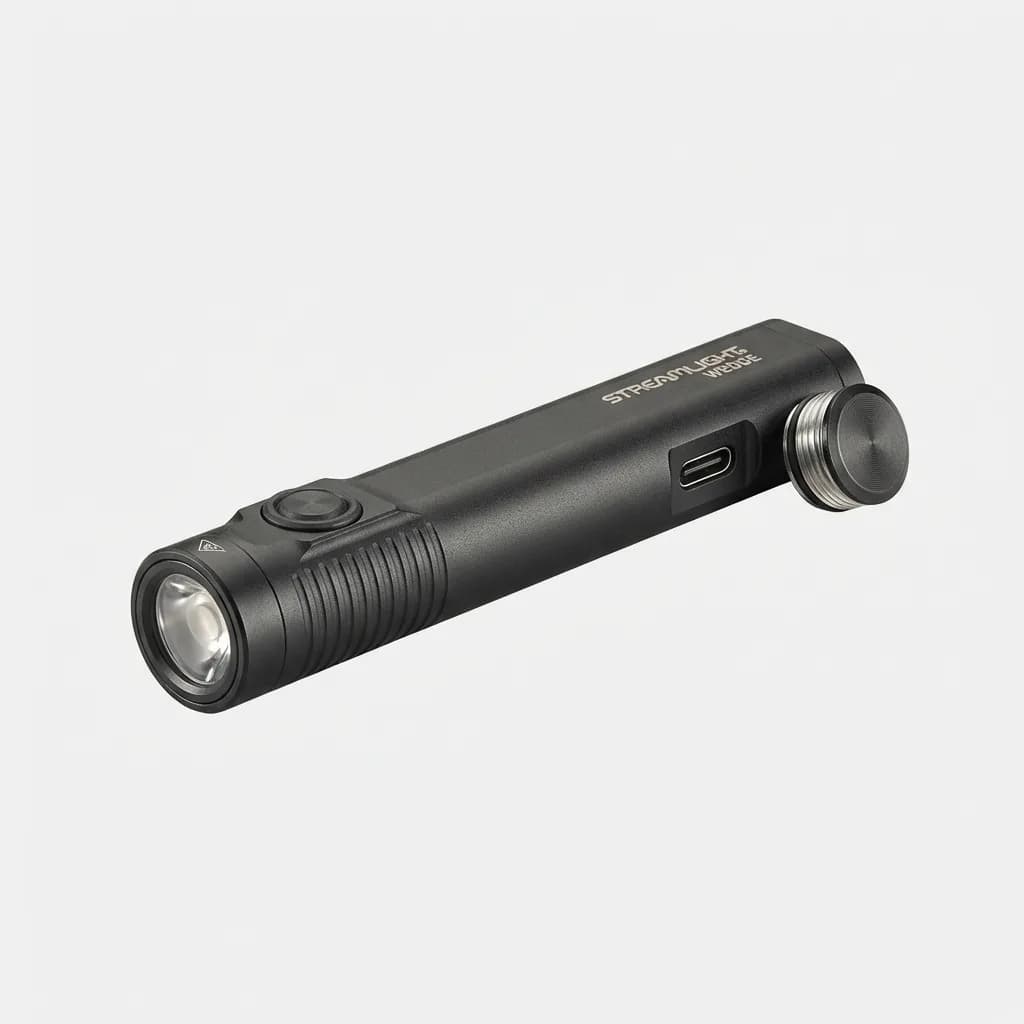
Streamlight Wedge
$75
1000-lumen flat EDC flashlight with USB-C charging, 0.5-inch profile, wide flood beam. Threaded port cover, charges in 90 minutes.
The downside is the battery is non-removable, so when it eventually wears out (after 500+ charge cycles), the light is done. That's fine if you plan to upgrade in a few years anyway, but it's worth considering if you like buying gear once and keeping it forever. The body is polymer over aluminum, which saves weight but feels less premium than full metal construction. Still, at 2.9 ounces, it's one of the lightest options here.
What to Look for in a USB-C EDC Flashlight
Charging speed matters more than you'd think. A light that pulls 10W or more can recharge during a lunch break. Slower chargers mean you're tethered for half a day, which defeats the convenience factor. Check the specs - most manufacturers list charge time in hours. Anything under two hours is good; under 90 minutes is excellent.
Port placement is another common failure point. Lights with side-mounted ports or ports near the tail tend to be more pocket-friendly than head-mounted ports, which require removing the light completely to plug in. Dust covers should be captive (attached with a tether) or integrated into the design. Separate rubber plugs get lost within weeks.
Lumens grab headlines, but runtime and beam profile matter more for EDC. A 2000-lumen turbo mode sounds great, but if it only lasts 30 seconds before thermal throttling kicks in, it's a gimmick. Look for sustained output ratings and runtime charts. Similarly, a tight spot beam is great for search and rescue, but most EDC tasks benefit from a wider flood beam that lights up your immediate surroundings.
Battery type splits into two camps: integrated and removable. Integrated batteries (like the TIP SE or Wedge) are more compact and eliminate the hassle of swapping cells. Removable batteries (like the E30R or FC11) let you carry spares and replace worn cells instead of tossing the whole light. For urban EDC, integrated is fine. For backcountry or tactical use, removable wins.
Common Mistakes When Choosing a Rechargeable EDC Light
The biggest mistake is buying based on peak lumens alone. A 3000-lumen light sounds incredible until you realize it runs for 90 seconds before dropping to 300 lumens and overheating in your hand. Sustained output and thermal management are what actually matter for real-world use. Check independent reviews that measure output over time, not just the manufacturer's peak rating.
Another pitfall is ignoring the user interface. Some lights require multiple clicks, holds, and double-taps to switch modes. That's fine if you're a flashlight enthusiast who enjoys complexity. For most people, it's frustrating. The best EDC lights offer simple, intuitive controls - usually a single button with short press for mode switching and long press for on/off.
Don't overlook beam tint either. Most budget lights use cool white LEDs (6000K+) that produce a harsh, blue-ish light. It's bright but causes eye fatigue and washes out colors. Neutral white (4000-5000K) is easier on the eyes and renders colors more accurately, which helps when you're trying to identify objects or navigate unfamiliar terrain. High CRI (color rendering index) above 80 is a bonus - it makes everything look more natural.
Finally, waterproof ratings are often misunderstood. IPX4 means splash-resistant (fine for rain). IPX7 means submersible to one meter for 30 minutes (good for dropping it in a puddle). IPX8 or IP68 means submersible beyond one meter (typically two meters for flashlights). For EDC, IPX7 is the minimum you should accept. Anything less and you're risking water damage from a sudden downpour or accidental drop in a sink.
Wrapping It Up
USB-C rechargeable EDC flashlights have matured. You're no longer sacrificing performance or durability for the convenience of integrated charging. The Fenix E30R offers the best balance of output, runtime, and build quality for most users. If you want something smaller, the Nitecore TIP SE fits on a keychain without feeling like a toy. For pocket-friendly design, the Streamlight Wedge beats everything else in its class.
Budget-conscious buyers should look at the Wurkkos FC11 - it's proof you don't need to spend $70+ to get a reliable light with USB-C charging. And if you prefer magnetic charging for better water resistance, the Olight Baton 3 Pro delivers absurd brightness in a compact package, though you're locked into their cable ecosystem.
The days of carrying spare batteries and external chargers are over. USB-C charging means your flashlight stays topped off using the same cable you already carry for your phone. That's the kind of simplification that actually improves EDC, rather than just adding bulk for its own sake.
The Weekly Dispatch
Enjoying this article?
Subscribe and get our best gear picks delivered every Sunday morning.
Related Stories
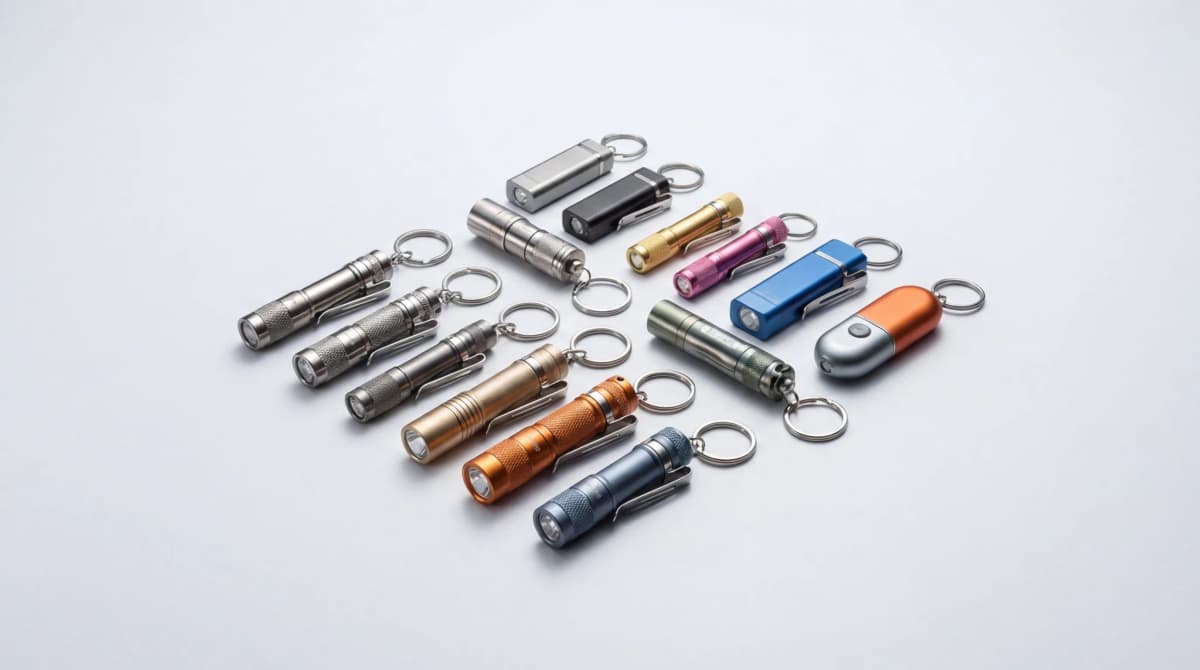
Best Tiny Flashlights for Keychains (2026)
The best keychain flashlights deliver 150+ lumens in a package under 2 inches. We tested clip durability, runtime, and real-world usability to find the top options.
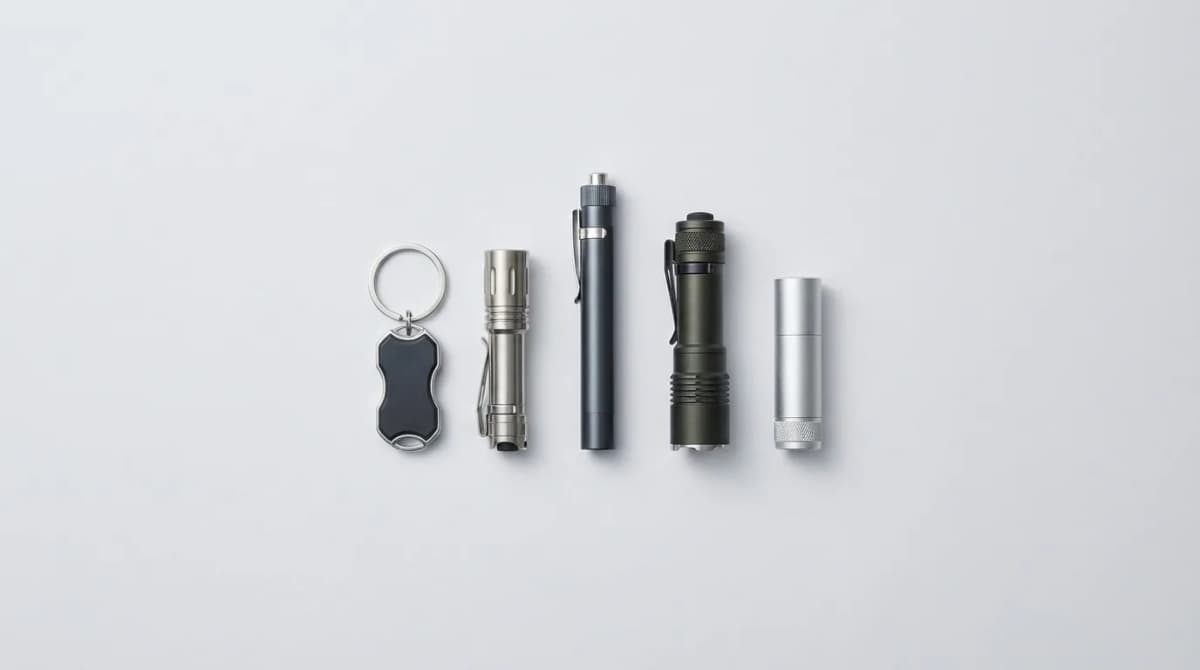
Best Travel Flashlights for Hotel Rooms
Hotel rooms are darker than you think. The right travel flashlight gives you moonlight modes for midnight bathroom trips and enough power for emergencies.
How to Build a Simple Personal Safety Kit
Build a practical personal safety kit with non-weapon tools focused on prevention, visibility, and getting help when needed.