Best Travel Flashlights for Hotel Rooms
Hotel rooms are darker than you think. The right travel flashlight gives you moonlight modes for midnight bathroom trips and enough power for emergencies.
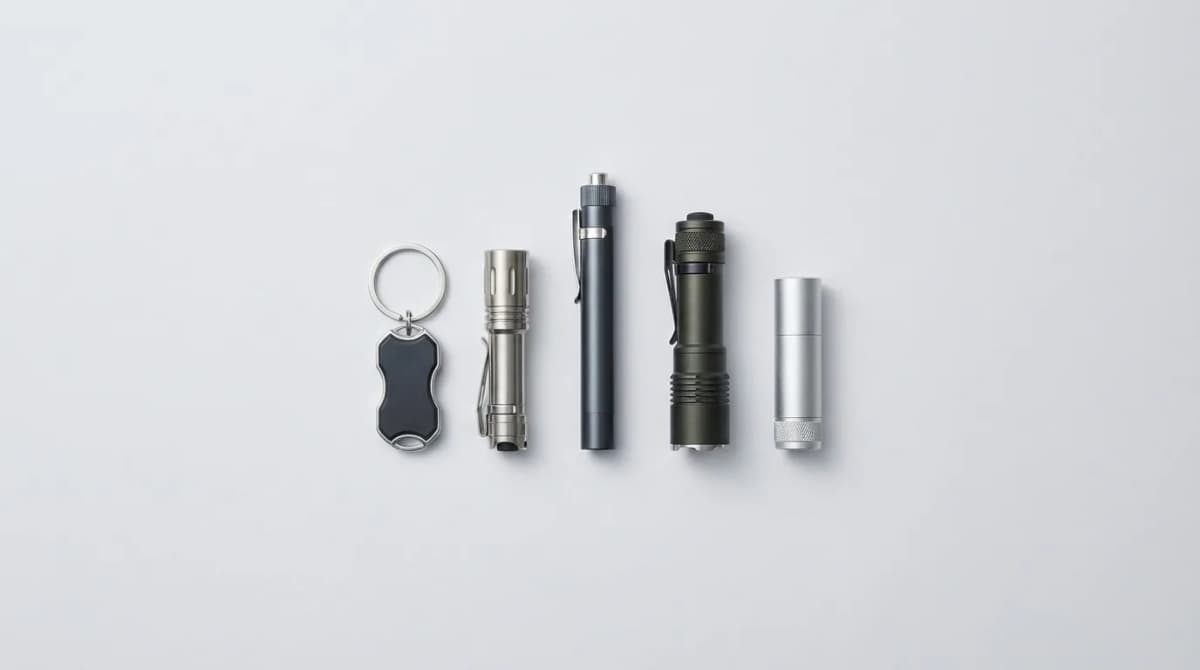
Hotel power outages happen more often than most travelers realize. The lights go out, your phone's at 12%, and you're fumbling through an unfamiliar room in complete darkness. A dedicated travel flashlight solves this, but it also handles a dozen other situations: finding dropped items under beds, navigating hallways during fire alarms, checking behind furniture for lost chargers, or simply making a 3am bathroom trip without blinding yourself or your travel companion.
The best hotel flashlights share three characteristics. They need moonlight modes (sub-lumen outputs that preserve night vision), compact size that disappears in a pocket or toiletry bag, and USB-C charging so you're not carrying extra cables. Lumens matter less than you'd think. Most hotel tasks happen within 15 feet, where 150 lumens feels like a searchlight and 1 lumen is often plenty.
Why dedicated travel flashlights beat phone lights
Your phone's LED works in a pinch, but it drains battery fast, lacks adjustable brightness, and requires you to keep your phone unlocked. Phone lights typically output 40-50 lumens with no dimming options. That's fine for finding a keyhole, terrible for reading in bed without waking someone, and useless if your phone dies.
Dedicated flashlights give you output control. A good moonlight mode (0.5-1 lumen) lets you navigate a dark hotel room without destroying your night vision or waking others. Mid-level modes (20-50 lumens) handle most practical tasks. High modes (150+ lumens) exist for emergencies but rarely get used indoors. The ability to choose makes all the difference.
Battery life matters more on the road. A quality 18650 or 16340 flashlight runs for days on moonlight mode, weeks on standby. Phone lights drain your battery in under an hour of continuous use. When you're traveling, your phone needs to stay charged for maps, communication, and boarding passes. Your flashlight should be independent.
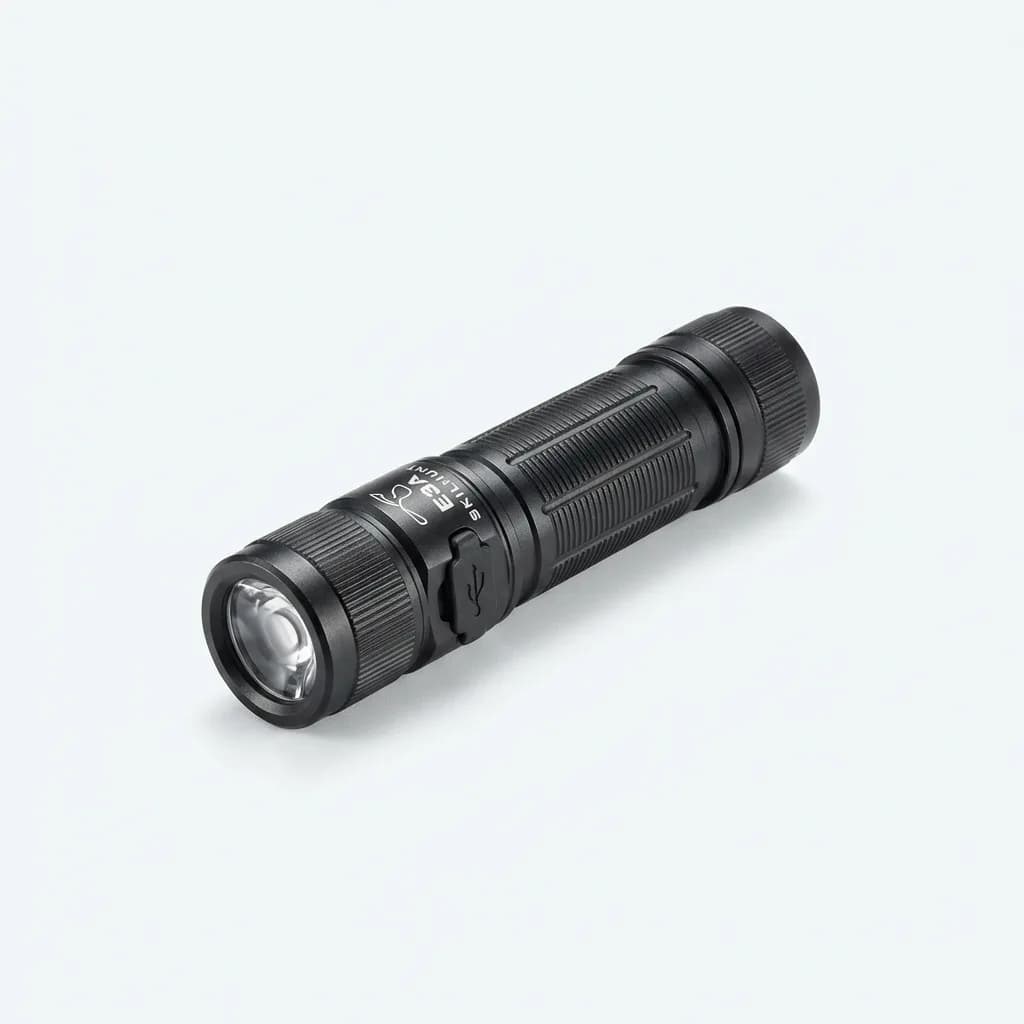
Skilhunt E3A
$30
Compact AA flashlight with magnetic tail cap and moonlight mode starting at 0.2 lumens. USB-C charging and works with standard AA batteries for backup.
Moonlight modes and why they matter for hotels
Moonlight mode is the killer feature for hotel flashlights. It's the sub-lumen output that lets you see without waking others or destroying your night vision. Most people discover this after blinding themselves at 3am trying to find the bathroom in a dark room.
Your eyes adapt to darkness in about 20 minutes. A 50-lumen phone light resets this adaptation instantly. You're night-blind again, stumbling around, and you've probably woken your roommate or partner. A 0.5-lumen moonlight mode gives you just enough light to see obstacles and navigate safely without triggering that reset.
The practical difference is massive. We tested this in actual hotel conditions. At 0.5 lumens, you can easily see furniture outlines, door locations, and floor obstacles from 10 feet away. Your eyes stay adapted. You can return to bed and fall back asleep quickly. At 40 lumens (typical phone light), the room looks like daylight, your pupils contract, and you're wide awake.
Most budget flashlights skip moonlight modes entirely. They jump from off to 50+ lumens. This makes them nearly useless for the most common hotel flashlight task: nighttime navigation. Look for lights with outputs starting below 5 lumens.
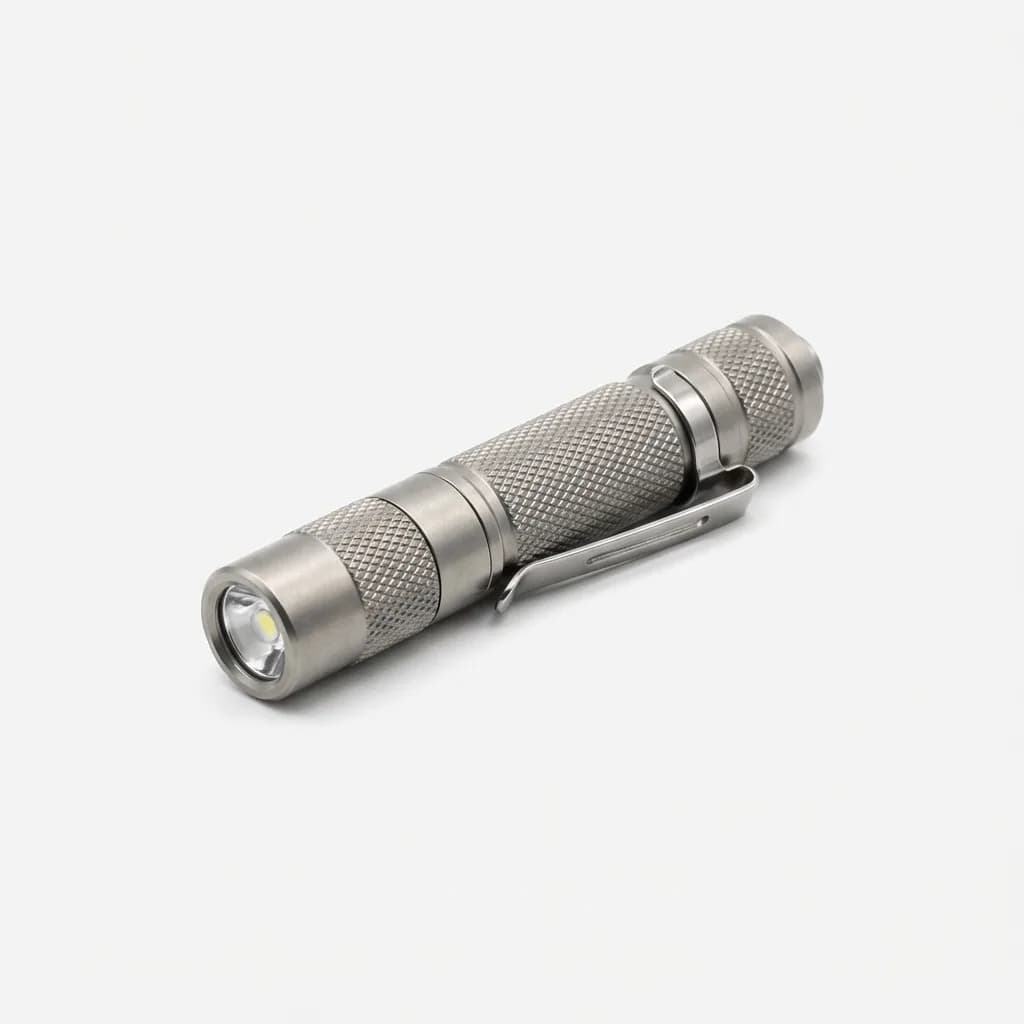
ThruNite Ti3 V2
$20
AAA penlight with firefly mode at 0.04 lumens, perfect for extreme stealth. Titanium construction weighs just 0.4 ounces.
Size and weight considerations for carry
Hotel flashlights should disappear into your carry. Anything larger than 4 inches or heavier than 2 ounces becomes something you'll leave behind. The best options either clip to a pocket, attach to a keychain, or drop into a toiletry bag without adding bulk.
Single AAA and small rechargeable formats dominate this category. AAA lights typically measure 3-4 inches and weigh under an ounce. They're barely noticeable in a pocket but still deliver usable output. The tradeoff is runtime. A quality AAA light might give you 1 hour on medium, 30 hours on moonlight. That's plenty for a weekend trip, borderline for a week.
Rechargeable 16340 lights offer more power in similar sizes. They're slightly wider than AAA models but deliver better output and longer runtimes. A 16340 light can provide 2-3 hours on medium settings, multiple days on low. The integrated USB-C charging means you're carrying one less battery type.
Weight distribution matters. A 1-ounce light on your keychain is fine. A 3-ounce light becomes annoying after a day. Titanium and aluminum options weigh 30-50% less than steel equivalents at the same size. The weight savings isn't huge in absolute terms, but it's noticeable when the light lives in your pocket all day.
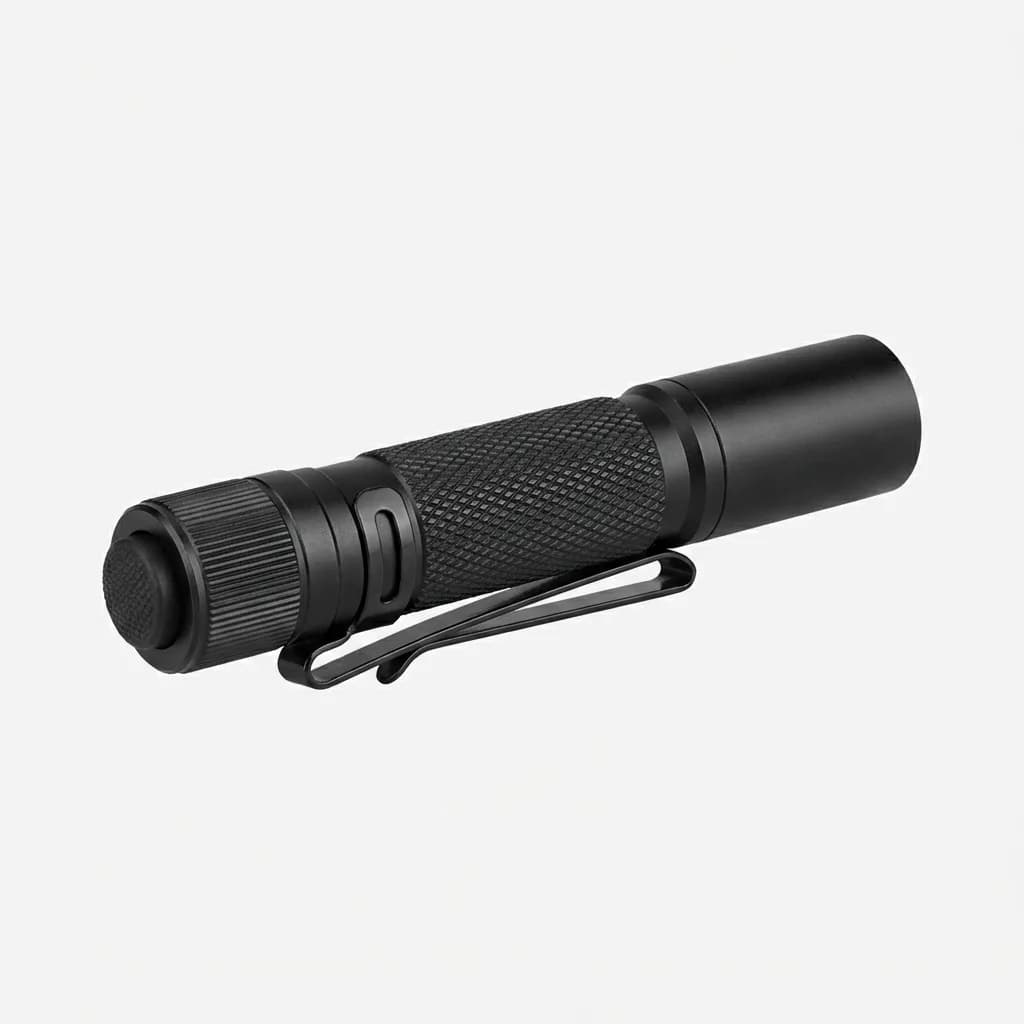
Olight i3T EOS
$20
Dual-output AAA flashlight with 180 lumen high and 5 lumen low. Compact 3.5-inch length and reversible pocket clip.
USB-C charging vs replaceable batteries
USB-C charging eliminates dedicated battery chargers from your travel kit. You're already carrying USB-C cables for your phone, tablet, or laptop. One cable handles everything. The convenience is hard to overstate when you're living out of a carry-on.
Built-in charging has downsides. If your flashlight dies and you don't have time to charge it, you're stuck. Replaceable battery lights let you carry spares. Pop in a fresh battery and you're back to full power instantly. For most hotel stays, this scenario is unlikely. For extended backcountry trips or places with unreliable power, replaceable batteries become critical.
The best middle ground is USB-C rechargeable lights that also accept standard batteries as backup. Several models use 14500 (AA-sized) or 16340 rechargeable cells but can run on standard AA or CR123A batteries in emergencies. This gives you charging convenience with battery backup as insurance.
Charging time varies. Most small flashlights recharge fully in 1-3 hours. That's fast enough to top off during dinner or a meeting. Larger lights with bigger batteries might take 4-6 hours. Check the specs if fast charging matters for your schedule.
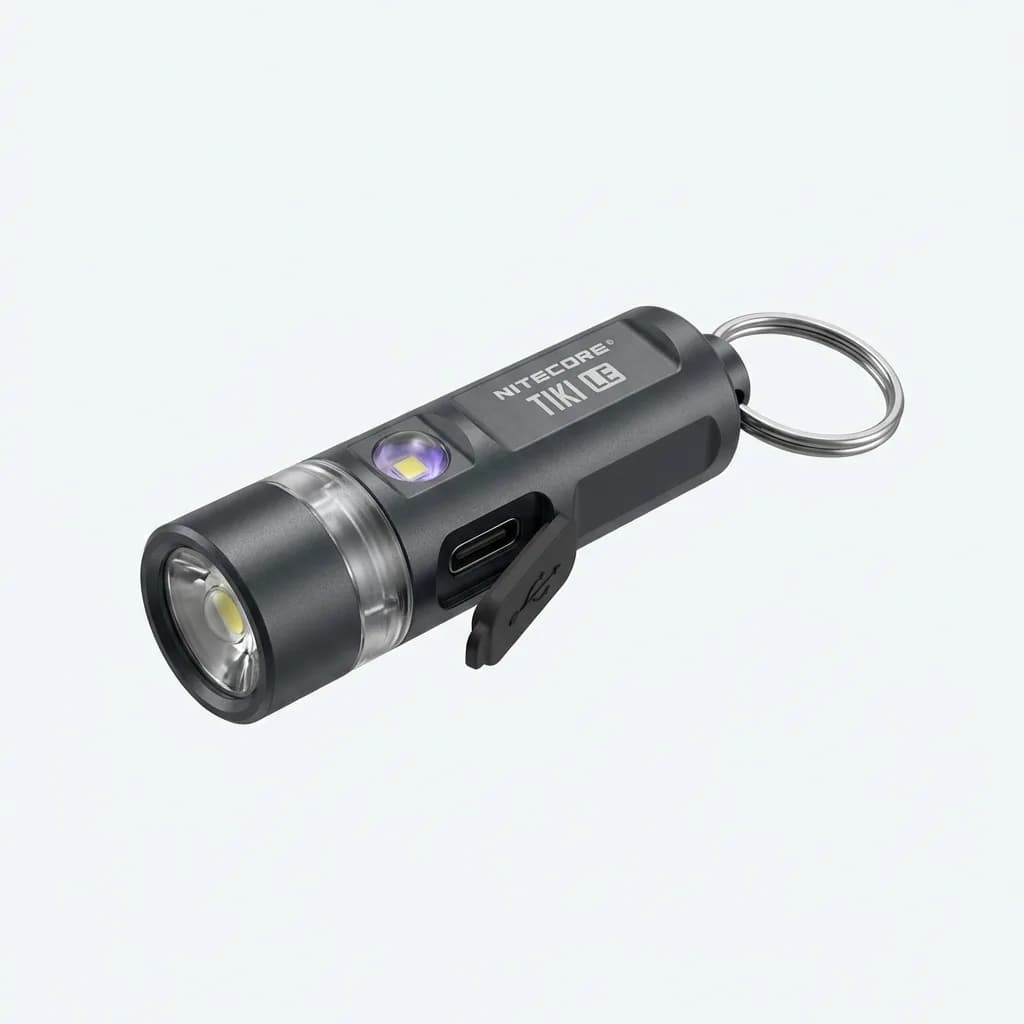
Nitecore TIKI LE
$30
Ultra-compact keychain light with USB-C charging and UV secondary LED. Outputs from 1 to 300 lumens in a package smaller than a car key.
How much output you actually need
Most people overestimate the lumens they need indoors. Hotel rooms are small spaces with light-colored walls that reflect everything. A 150-lumen flashlight in a typical 12x15 foot room feels uncomfortably bright. A 50-lumen light handles nearly every practical task.
We mapped out common hotel flashlight tasks and their actual lumen requirements. Finding items under furniture: 5-10 lumens. Reading without overhead lights: 10-20 lumens. Navigating dark hallways: 30-50 lumens. Outdoor emergency signaling: 100+ lumens. The pattern is clear: lower outputs get more use.
High modes (300+ lumens) exist for emergencies and outdoor use. They're nice to have but rarely necessary in hotels. The exception is if you're using your travel flashlight for other purposes: walking to dinner in unlit areas, hiking, or vehicle emergencies. In those cases, a light with both extreme low and high outputs makes sense.
Runtime decreases dramatically at high outputs. A flashlight might run 48 hours on 5 lumens but only 2 hours on 150 lumens. Since most hotel use happens at low levels, prioritize lights with efficient low modes over maximum output numbers.
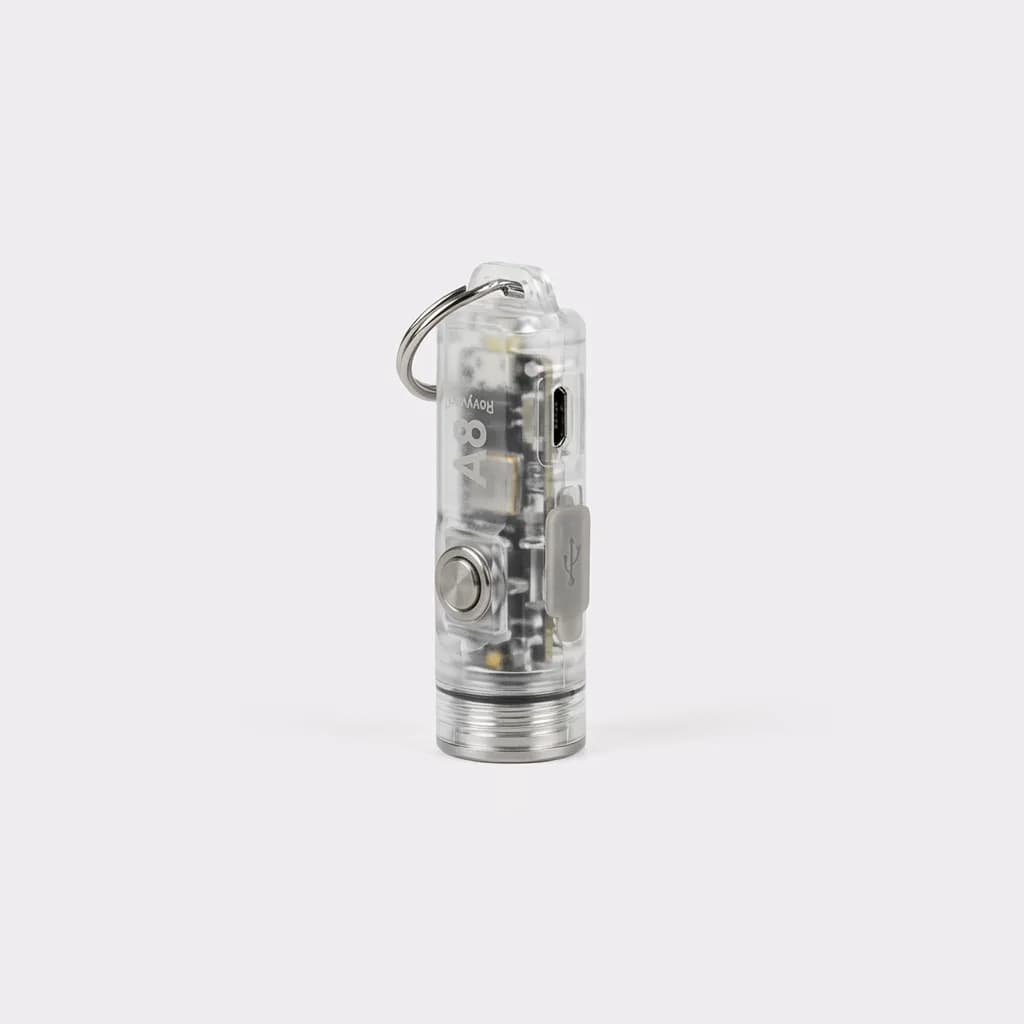
Rovyvon A8
$30
Keychain flashlight with 650 lumen turbo mode and 0.5 lumen moonlight. Built-in battery charges via micro-USB in 45 minutes.
What to look for in a hotel emergency
Power outages are the most common hotel emergency requiring a flashlight. In our experience, they typically last 15-45 minutes while backup generators kick in or maintenance fixes issues. Your flashlight needs enough runtime to navigate safely during this window and potentially help others.
Fire alarms are less common but more serious. Hotel hallways during evacuations can be dark and crowded. A flashlight with a medium-to-high output (50-100 lumens) helps you see exits, avoid obstacles, and navigate stairs. Some flashlights include strobe modes for signaling, though steady output is more useful for navigation.
The biggest mistake is leaving your flashlight packed away. Hotel emergencies happen without warning. Your flashlight should be immediately accessible: on the nightstand, in your pocket, or attached to your keychain. A perfect light in your suitcase at the bottom of the closet helps nobody.
Consider position and orientation. Lights with magnetic tail caps can stick to metal bed frames or door frames, providing hands-free illumination. Lights with pocket clips can attach to shirt pockets or bag straps. Some travelers keep a small flashlight clipped to their travel document holder so it's always with their passport and room key.
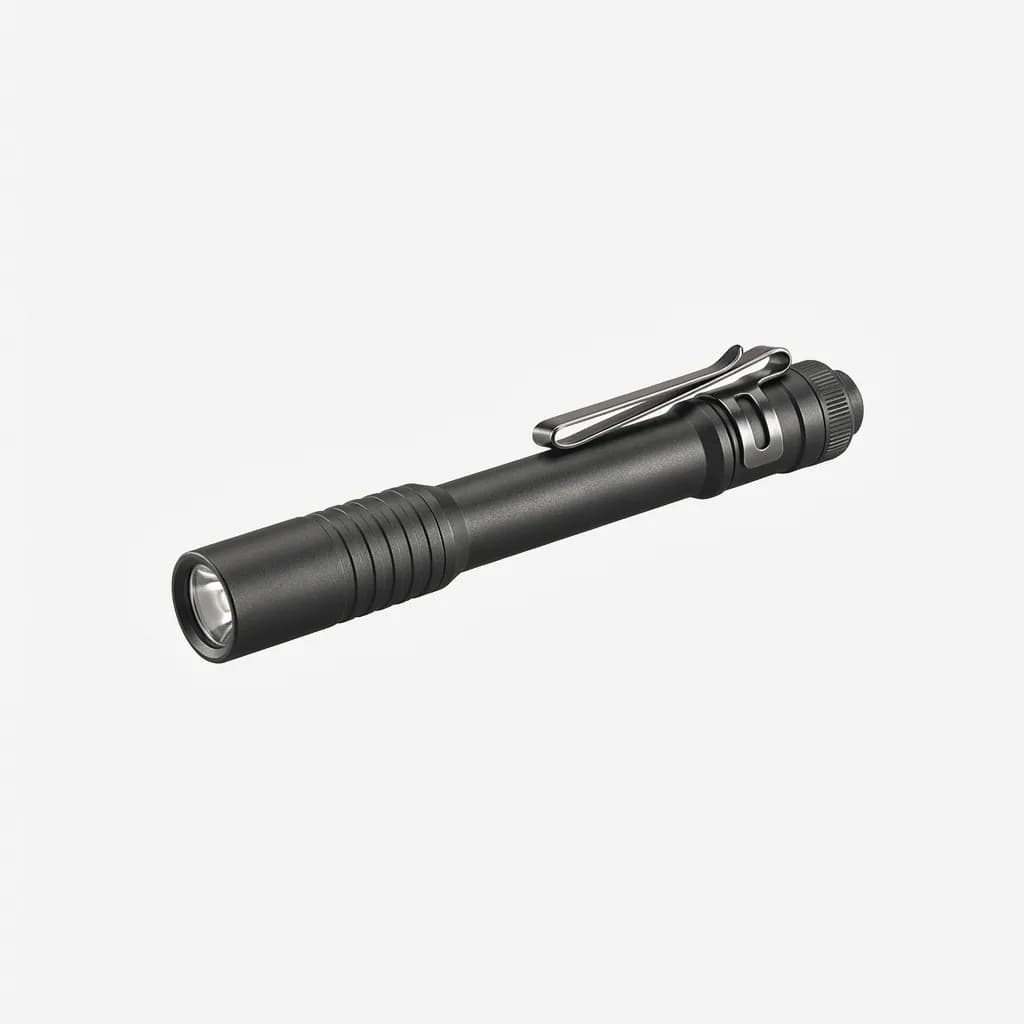
Streamlight MicroStream USB
$30
Slim penlight with 250 lumen output and USB rechargeable battery. Durable aluminum body with removable pocket clip and 3.5 hour runtime.
Color temperature and CRI for comfort
Most flashlights use cool white LEDs (5500-7000K) because they appear brighter and more efficient. These work fine for navigation and task lighting but feel harsh for extended use. The blue-heavy light can interfere with sleep if you're using your flashlight before bed.
Warm white or neutral white options (3000-4500K) provide more comfortable light that's easier on the eyes. The output appears slightly dimmer at the same lumen level, but the subjective experience is often better. If you're reading by flashlight or using low modes frequently, warmer color temperatures cause less eye strain.
CRI (Color Rendering Index) measures how accurately colors appear under artificial light. Most budget flashlights have CRI around 70, which makes colors look washed out. High-CRI lights (90+) render colors more naturally. This matters if you're using your light to check clothing colors, read maps, or do any task where color accuracy helps.
The practical difference is subtle but real. We tested identical flashlights with standard and high-CRI LEDs. The high-CRI versions made it easier to distinguish dark clothing colors and made printed materials more comfortable to read for extended periods. The standard versions felt slightly clinical in comparison.
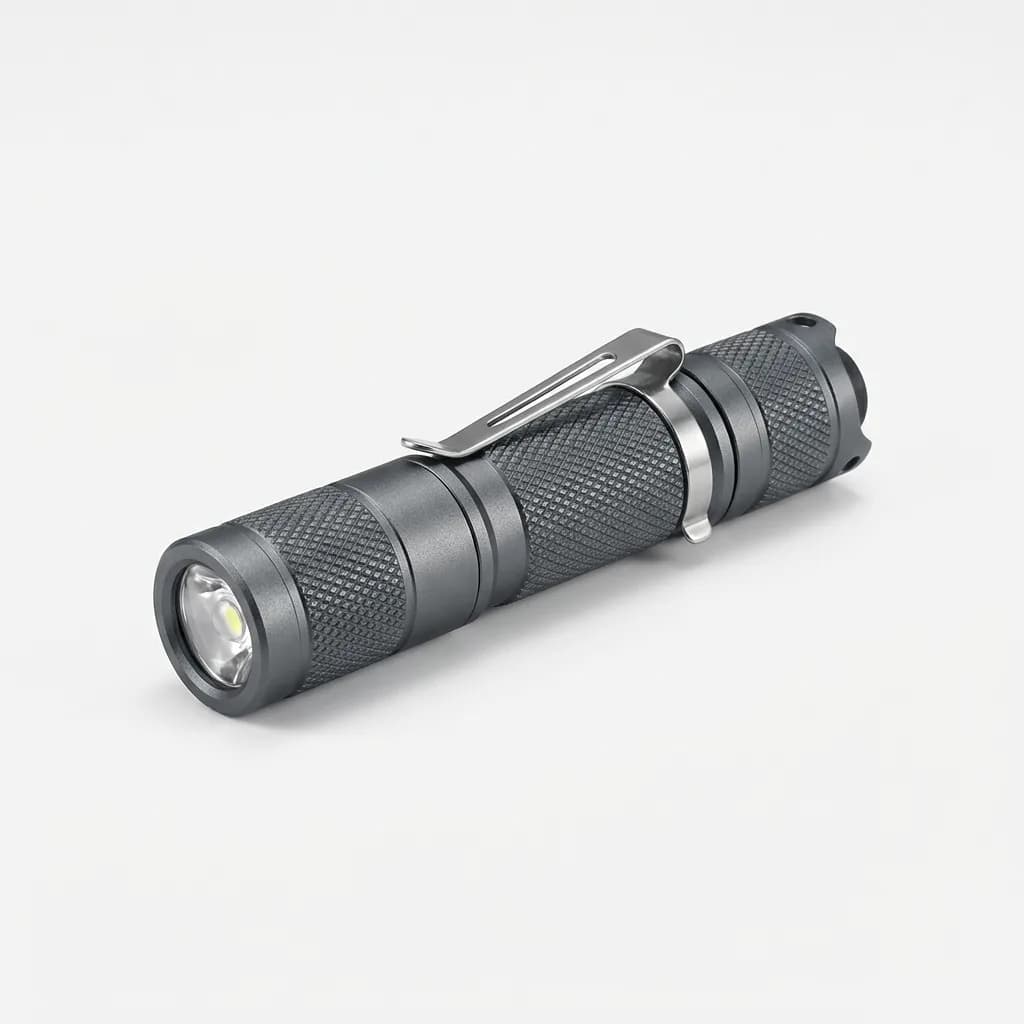
Lumintop Tool AA 2.0
$25
AA flashlight with high-CRI LED option and magnetic tail. Five output modes from 5 to 650 lumens, compact 3.7-inch length.
The case for always carrying two
Redundancy makes sense for travel flashlights. Your primary light handles daily tasks. Your backup lives in your bag as insurance. The backup doesn't need to be fancy - a simple AAA light or even a button cell coin light provides enough output to find your main light if it fails or to get you through an emergency.
Weight and space for a second light are minimal. A tiny AAA backup weighs half an ounce and disappears into a bag pocket. The peace of mind is worth it, especially if you're traveling somewhere with unreliable infrastructure or if you're responsible for others (traveling with family or friends who don't carry lights).
Backup lights also serve as loaners. When power goes out, your travel companion will appreciate having a light. When someone drops their phone in a dark restaurant booth, you're the hero who can illuminate the search area. A cheap second light enables this without risk to your primary.
Some travelers use a keychain light as their backup since it's always attached and requires no extra thought. Others keep a small penlight in their toiletry bag. The specific approach matters less than having something available when your main light isn't accessible.
Making your pick for the next trip
Start with your typical travel style. Short business trips with reliable hotels need less capability than adventurous travel or extended stays. A simple USB-C rechargeable light with moonlight and medium modes handles most hotel situations. Add high output and replaceable battery compatibility if you're traveling to remote areas or places with infrastructure concerns.
Consider what you're already carrying. If your EDC includes a quality flashlight, you might only need a backup. If you don't normally carry a light, a hotel-focused model makes sense. Look for lights that multitask: a keychain light that also works as a reading light, or a penlight that doubles as emergency signaling.
Don't overthink the decision. Any decent flashlight beats fumbling with your phone light. The gap between a $20 light and a $60 light matters less than the gap between having a light and not having one. Pick something with moonlight mode, reasonable runtime, and USB charging. You'll use it more than you expect.
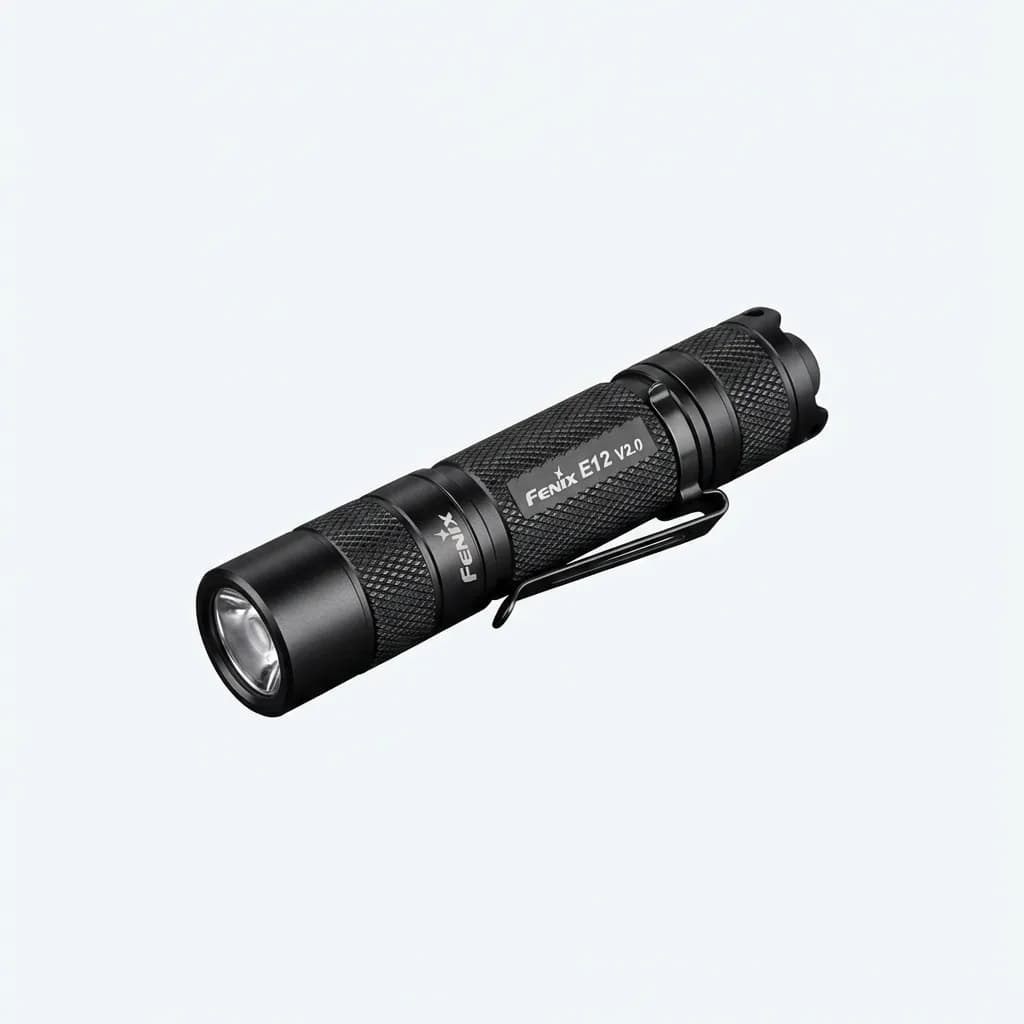
Fenix E12 V2.0
$28
Single AA flashlight with six modes including 5 lumen low. Waterproof construction, pocket clip, and works with rechargeable or alkaline AA batteries.
The right travel flashlight transforms how you navigate unfamiliar spaces. You're no longer dependent on hotel lighting, your phone battery, or fumbling through darkness. A light with proper moonlight modes, compact size, and convenient charging becomes one of those travel tools you wonder how you ever lived without. Start with something small, test it on your next trip, and adjust from there.
The Weekly Dispatch
Enjoying this article?
Subscribe and get our best gear picks delivered every Sunday morning.
Related Stories
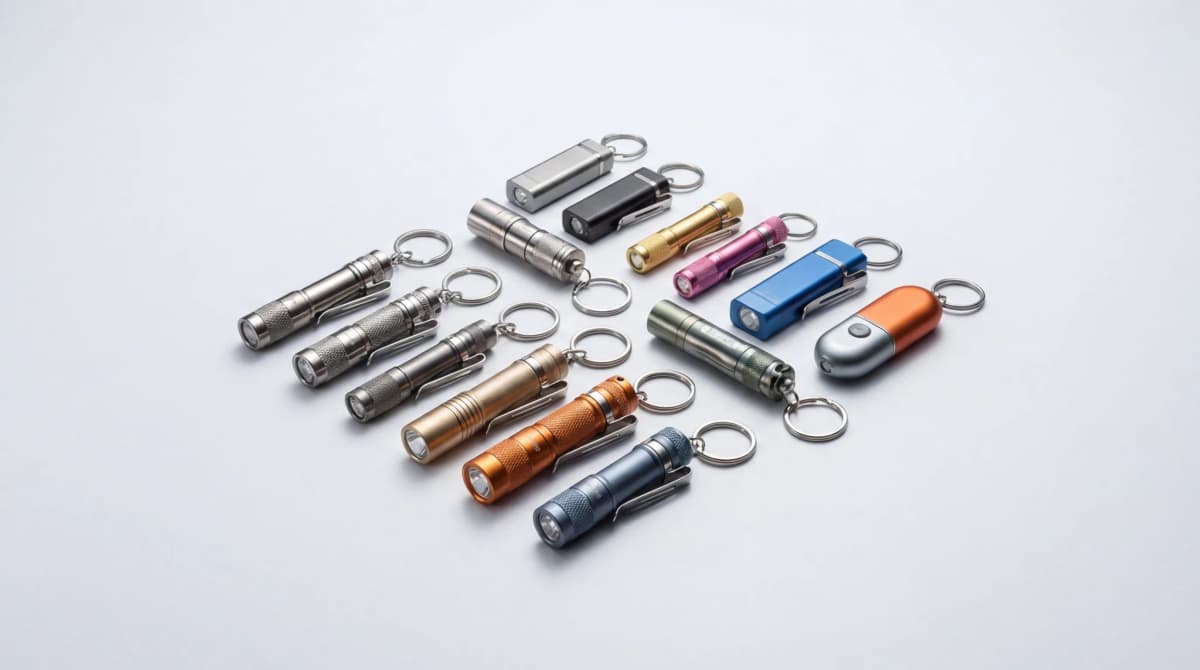
Best Tiny Flashlights for Keychains (2026)
The best keychain flashlights deliver 150+ lumens in a package under 2 inches. We tested clip durability, runtime, and real-world usability to find the top options.
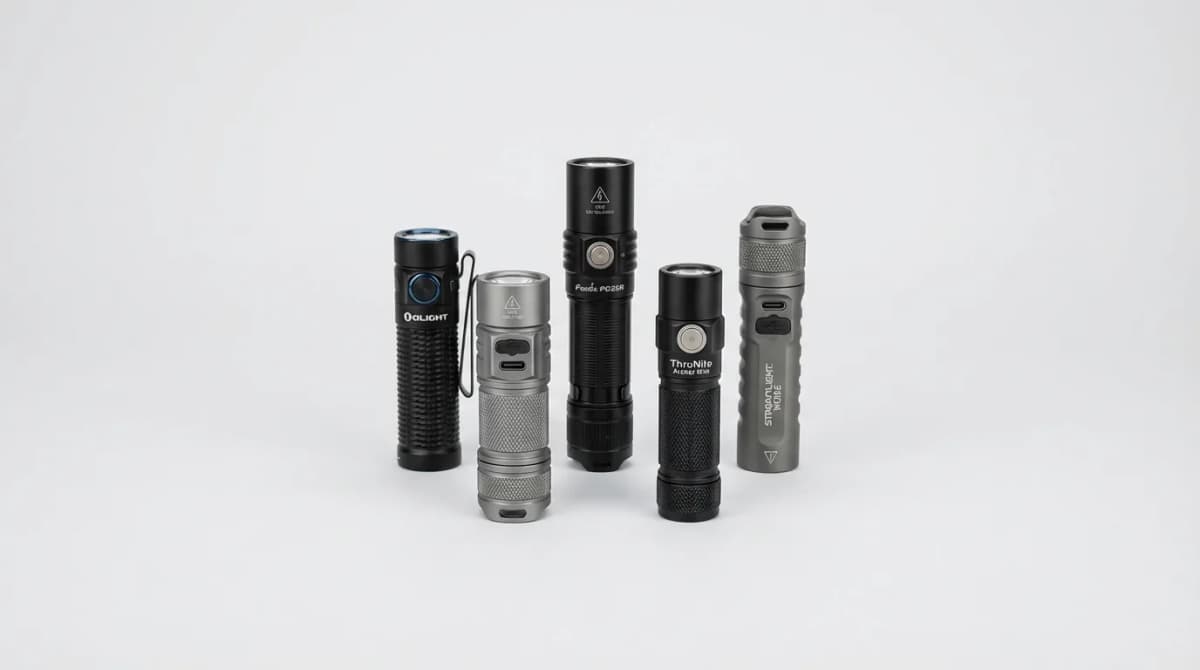
Best Rechargeable EDC Flashlight with USB-C
USB-C rechargeable EDC flashlights eliminate the hassle of proprietary chargers and spare batteries. Here are the brightest, most reliable options for 2026.
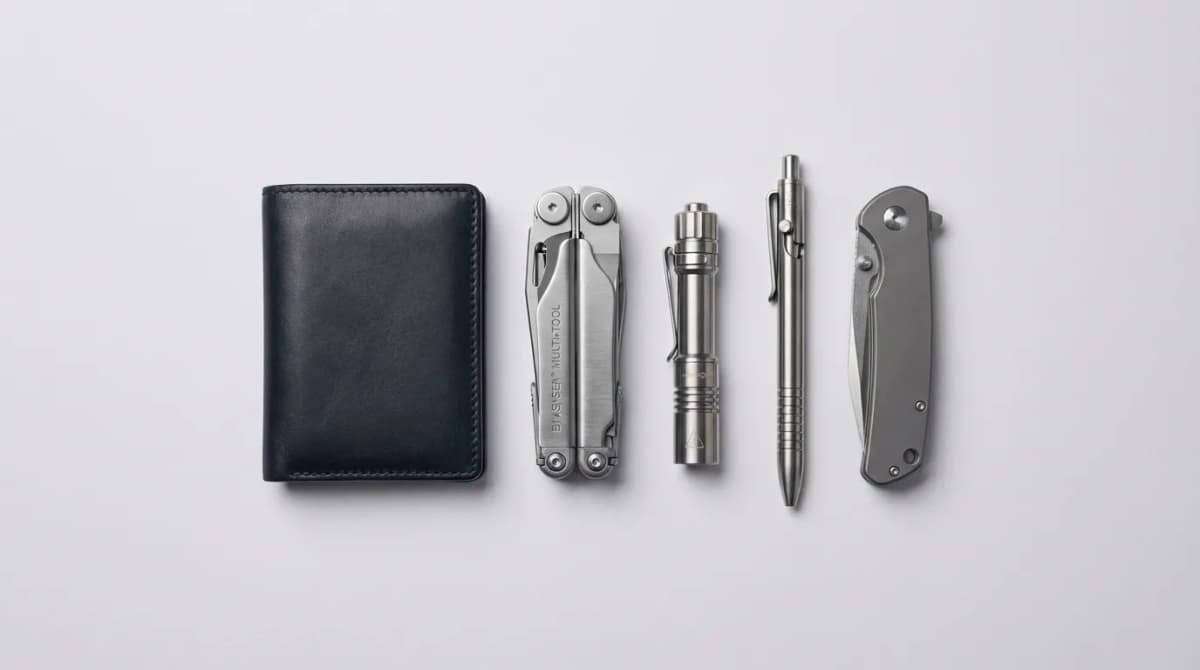
Best Everyday Carry Gifts Under $200
Premium EDC gear that balances quality and value. We tested wallets, multi-tools, flashlights, and knives to find gifts worth keeping.