Beyond Leather: Exotic Wallet Materials That Perform
Carbon fiber, wood, titanium, and fabric wallets offer advantages leather can't match. Here's how exotic materials stack up for weight, durability, and style.
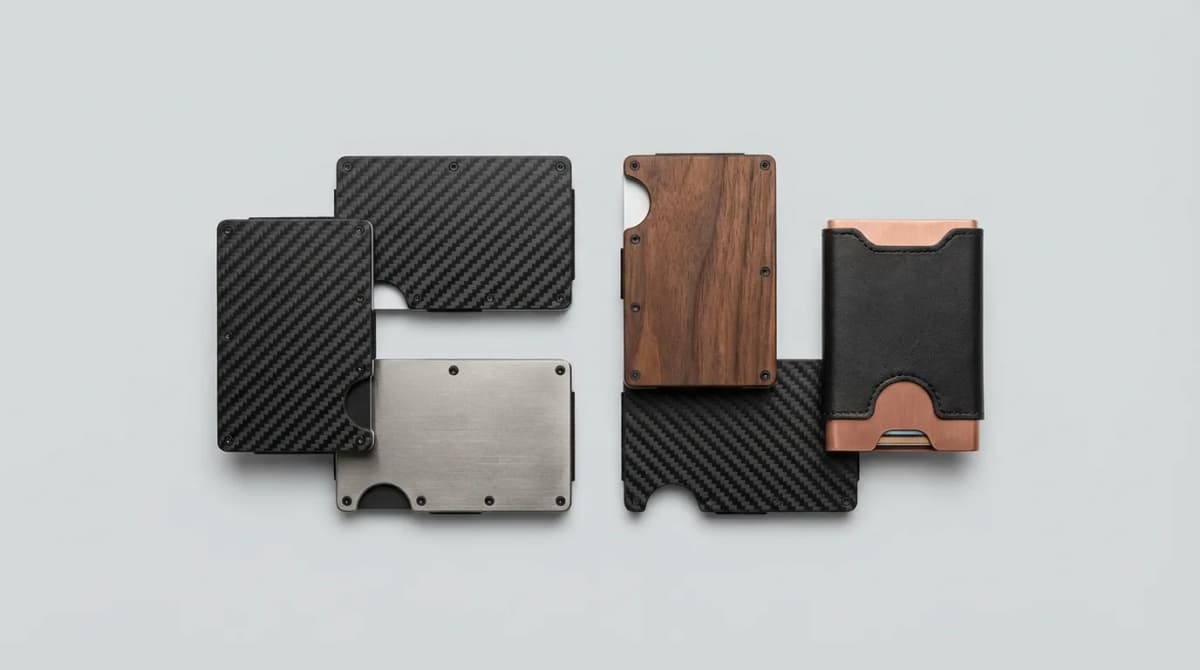
Leather wallets dominate the market for good reason. They age well, they feel substantial, and they've been the default for decades. But they're also heavy when wet, prone to stretching, and they all start to look similar after a while.
If you want something lighter, more rigid, or just visually distinct, exotic materials deliver. Carbon fiber weighs almost nothing and won't deform in your pocket. Wood gives you grain patterns no two wallets share. Titanium survives anything you throw at it, literally. The tradeoff is usually price, and sometimes a learning curve on how these materials behave day-to-day.
We've tested wallets made from everything from Kevlar to cork. Here's what actually works, what's just marketing, and which material makes sense for your carry.
Why Carbon Fiber Wallets Are Lighter Than They Look
Carbon fiber wallets feel like they should weigh nothing, and most of them nearly do. A typical carbon fiber card holder weighs 15-25 grams. Compare that to a leather bifold at 60-100 grams, and you're cutting pocket weight by more than half.
The real benefit isn't just weight. Carbon fiber doesn't flex or stretch, so cards stay put without elastic bands or tight stitching. It also blocks RFID signals naturally in some designs, though this depends on the weave and whether there are metal layers.
The downside is durability variance. Cheap carbon fiber wallets use a thin veneer over plastic, which cracks at the corners within months. True carbon fiber layups, where the material is structural, last years without visible wear. You can tell the difference by flexing the wallet slightly - real carbon fiber barely moves, veneer versions feel hollow.
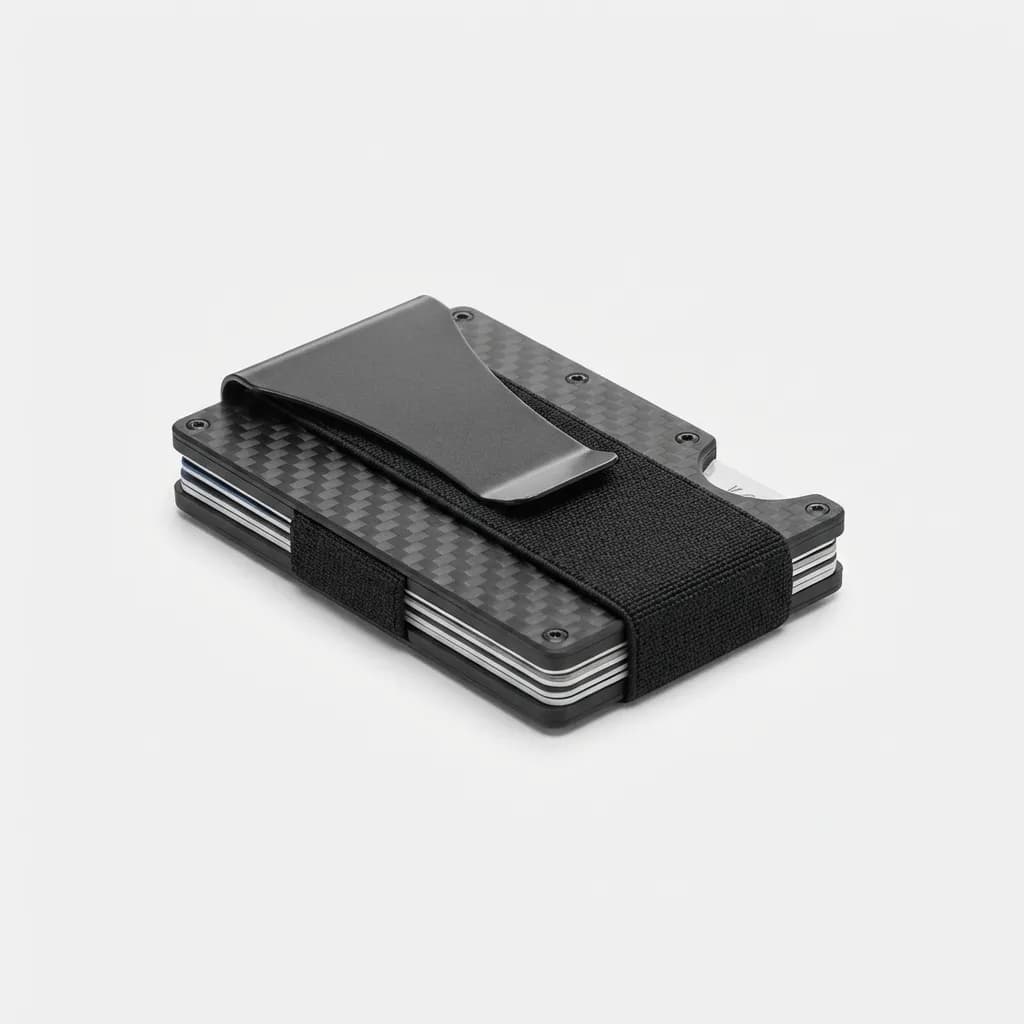
Ridge Carbon Fiber Wallet
See current price
CNC-machined carbon fiber plates with elastic band. Holds 1-12 cards, includes money clip and RFID blocking. Weighs 22 grams.
One mistake people make is expecting carbon fiber to age like leather. It doesn't develop patina or soften over time. It stays exactly as rigid as day one, which is either a feature or a limitation depending on what you value.
Wood Wallets: Grain Patterns You Won't Find Twice
Wood wallets stand out visually because every piece of wood has unique grain. Two wallets from the same batch will never match perfectly, which is the entire appeal if you're tired of mass-produced designs.
Most wood wallets use a thin wood veneer laminated over a core material, usually flexible plastic or thin wood layers. This keeps them slim (under 10mm thick) while maintaining the natural wood appearance. Solid wood wallets exist but they're thicker and heavier, closer to 15mm.
Durability depends on the finish. Wallets with polyurethane or lacquer coatings resist moisture and scratches better, but they lose some of the natural wood texture. Oiled finishes feel more organic but require occasional reapplication, similar to a wood cutting board.
The grain itself affects strength. Wallets cut with the grain running horizontally across the cards tend to resist splitting better than those cut perpendicular. This isn't something manufacturers advertise, but you can see it in how the grain lines run across the wallet face.
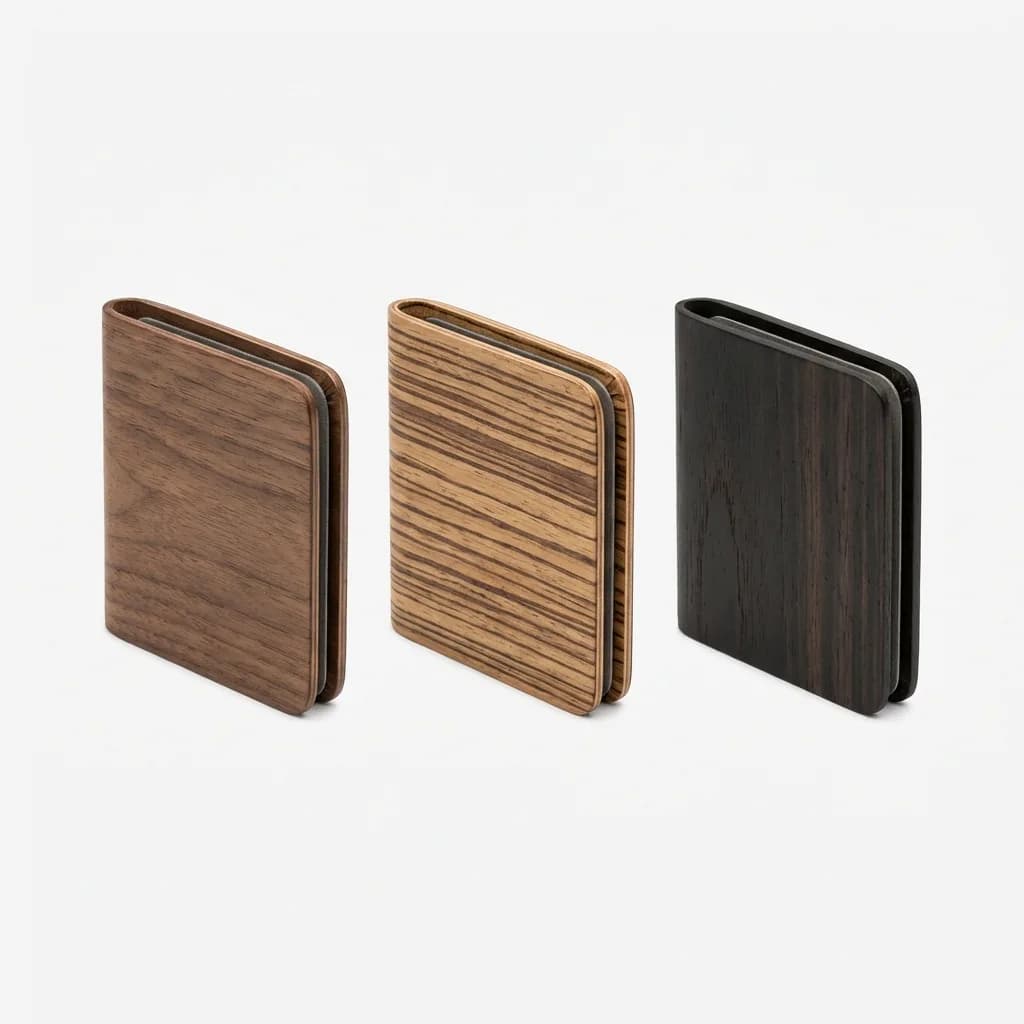
Slim Timber Wood Wallet
See current price
Real wood veneer over flexible core. Available in walnut, zebrawood, and ebony. Holds 4-8 cards, RFID blocking layer. Slim profile at 8mm thick.
Wood wallets do absorb moisture, even with a finish. If you sweat heavily or work outdoors, expect some expansion and contraction. It's not enough to crack the wallet in most cases, but it can make card slots feel tighter or looser depending on humidity.
Carbon Fiber vs. Aluminum vs. Titanium: The Metal Comparison
Metal wallets share some traits - they're all rigid, scratch-resistant, and impervious to water. But the differences matter more than the similarities.
Aluminum is the lightest and cheapest. A basic aluminum card holder weighs 25-35 grams and costs $20-40. The tradeoff is that aluminum dents and scratches easily. Anodized finishes help, but they wear through at contact points like pocket edges.
Titanium weighs slightly more (30-45 grams for a card holder) but resists scratching and denting far better. It also doesn't corrode, even in saltwater. Titanium wallets cost $80-150, which is the main barrier. If you're hard on gear or want something truly permanent, the price difference pays off.
Stainless steel sits between them - heavier than titanium (50-70 grams), cheaper than titanium ($40-80), and nearly as durable. The weight is the killer. A stainless wallet in your front pocket feels like carrying a deck of cards made of metal, because that's exactly what it is.
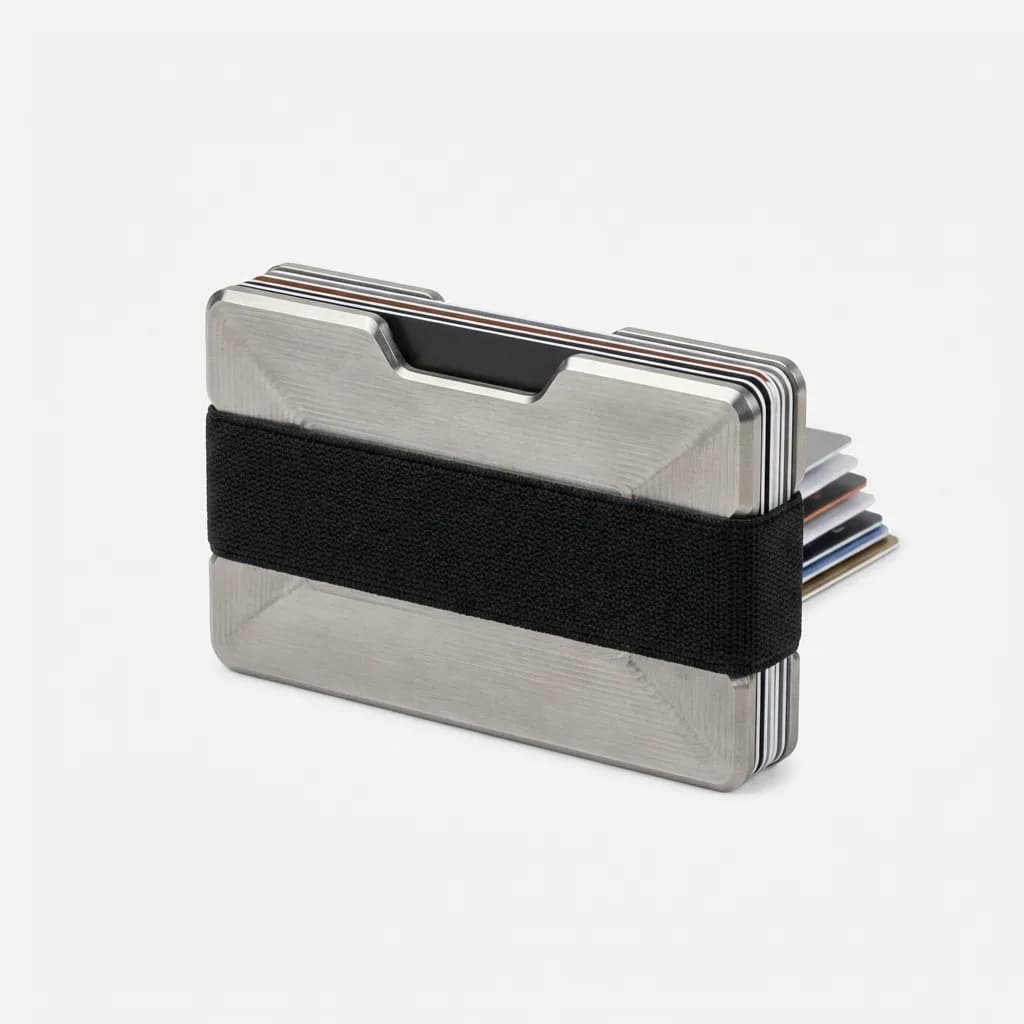
Machine Era Titanium Wallet
See current price
Solid titanium construction, CNC-machined. Elastic band closure, holds 4-10 cards. Weighs 34 grams. Lifetime warranty. Made in USA.
All metal wallets share one quirk: they're slippery. Leather grips fabric naturally, metal slides around. This means metal wallets migrate in your pocket more, especially in dress pants or athletic wear. Some designs add texture or rubberized edges to counter this.
Fabric and Woven Wallets: Dyneema, X-Pac, and Sailcloth
Fabric wallets made from technical textiles (Dyneema, X-Pac, sailcloth) are having a moment, mostly because they weigh almost nothing and pack flat when empty.
Dyneema (also called Cuben Fiber) is the standout material here. It's a ultra-high-molecular-weight polyethylene used in yacht sails and climbing gear. Wallets made from Dyneema weigh 5-12 grams, less than half what carbon fiber weighs. They're also waterproof and nearly tear-proof.
The texture is stiff and crinkly, like a Tyvek envelope but smoother. Some people find it cheap-feeling compared to leather or metal, which is fair - it doesn't have the heft or warmth of traditional materials. But if minimizing weight is the goal, nothing beats it.

Flowfold Minimalist Card Holder
See current price
Made from Dyneema sailcloth. Holds 2-6 cards, exterior pocket for cash. Weighs 8 grams. Waterproof and tear-resistant. Lifetime warranty.
X-Pac is a laminate fabric with a polyester face, waterproof film layer, and nylon diamond ripstop backing. It's heavier than Dyneema (wallets weigh 15-25 grams) but more abrasion-resistant. X-Pac wallets also hold their shape better when stuffed with cards, whereas Dyneema can look crumpled.
Sailcloth wallets use recycled boat sails, so every wallet has different wear patterns and discoloration from UV exposure. This gives them character, but it also means durability varies - a sail that's been sun-damaged for years won't hold up as well as fresh material.
What About Cork, Kevlar, and Other Niche Materials?
Cork wallets exist, and they're exactly what they sound like: thin sheets of cork laminated together or bonded to fabric. They're lightweight (20-30 grams), water-resistant, and have a soft texture. Durability is the question mark. Cork compresses over time, so card slots loosen up after 6-12 months of daily use.
Kevlar wallets are mostly marketing. True Kevlar fabric is cut-resistant and heat-resistant, but wallet use doesn't involve cutting or heat. Most "Kevlar wallets" use a Kevlar-blended fabric for visual texture, not for the material properties. You're paying a premium for a look, not a performance gain.
Rubber and silicone wallets (like those made from bicycle inner tubes or industrial rubber) are durable and waterproof, but they're grippy to the point of being annoying. They stick to pocket linings, attract lint, and can be hard to extract quickly.
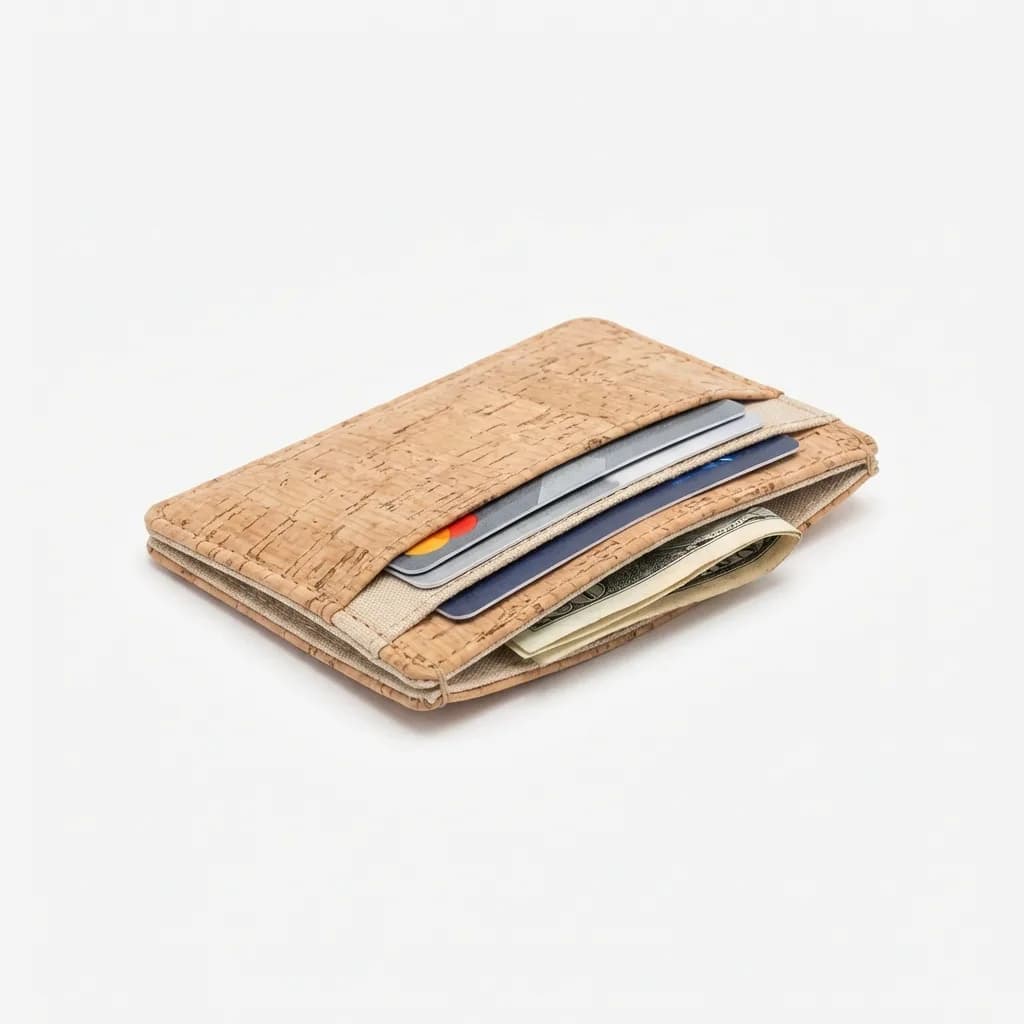
Corkor Cork Slim Wallet
See current price
Natural cork exterior with fabric lining. Holds 6-10 cards plus cash. Water-resistant, vegan, and eco-friendly. Weighs 28 grams.
The pattern with niche materials is that they solve specific problems (vegan alternatives, recycled materials, conversation starters) but rarely outperform mainstream options on core metrics like weight, durability, or cost.
How to Choose: Match Material to Your Use Case
If you prioritize weight above all else, Dyneema or carbon fiber makes sense. Both cut wallet weight to under 25 grams without sacrificing capacity.
If you want durability that outlasts you, titanium or solid carbon fiber (not veneer) are the only materials that don't degrade visibly over decades. They'll outlive leather by a factor of 3-5x.
If you value uniqueness and don't mind maintenance, wood wallets give you grain patterns and texture that evolve over time. Just accept that they'll require occasional oiling and won't stay pristine.
For the best balance of price, weight, and durability, aluminum or X-Pac fabric wallets deliver solid performance at $30-60. They're not exceptional in any single category, but they don't have glaring weaknesses either.
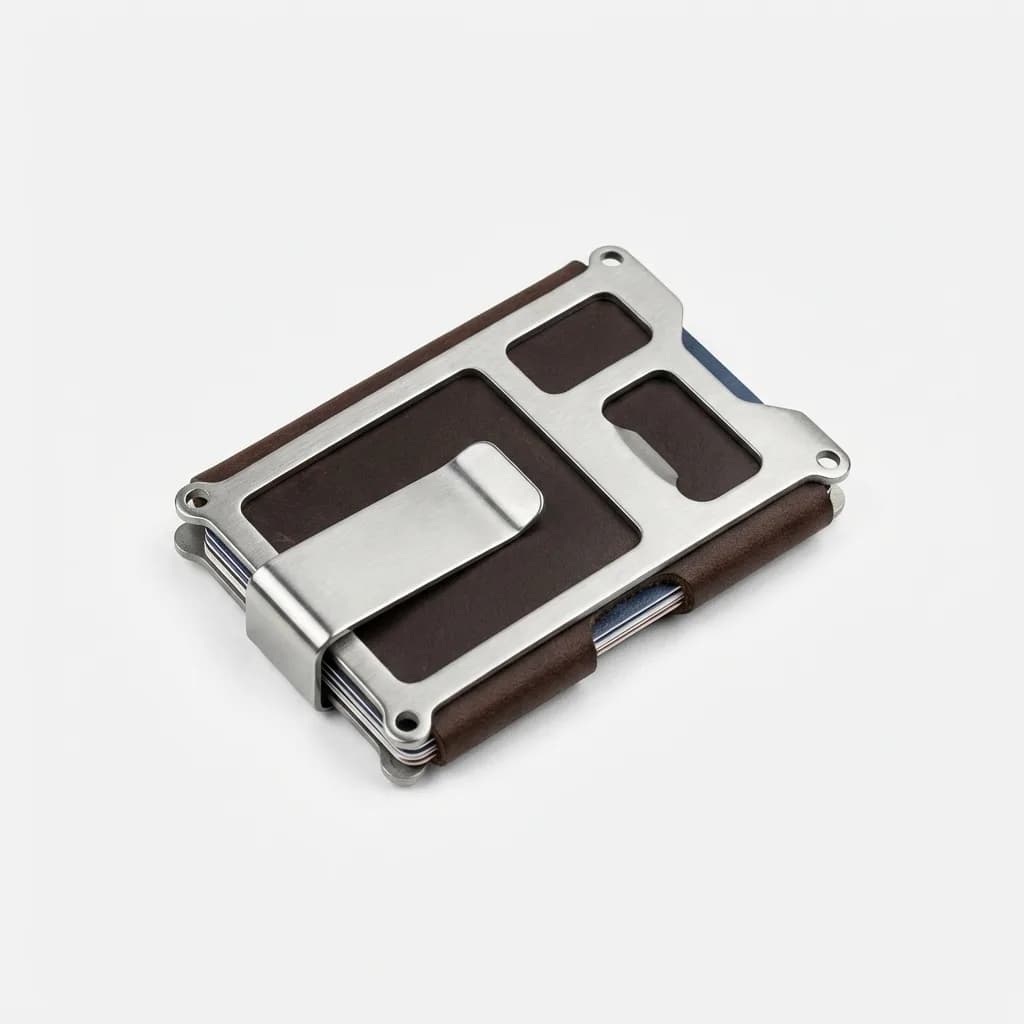
Trayvax Contour Wallet
See current price
Stainless steel frame with leather or fabric inserts. Holds 4-8 cards, includes bottle opener and money clip. Modular design. Weighs 56 grams.
One final consideration: how the material ages. Leather develops patina, wood can be refinished, metals stay static or develop scratches (depending on hardness), and fabrics fray at seams. If you want your wallet to look the same in five years as it does today, stick with hard materials like carbon fiber or titanium. If you prefer visible aging that tells a story, leather or wood makes more sense.
The right material isn't about what's objectively best. It's about which compromises you're willing to live with and which benefits matter most in your daily carry.
The Weekly Dispatch
Enjoying this article?
Subscribe and get our best gear picks delivered every Sunday morning.
Related Stories
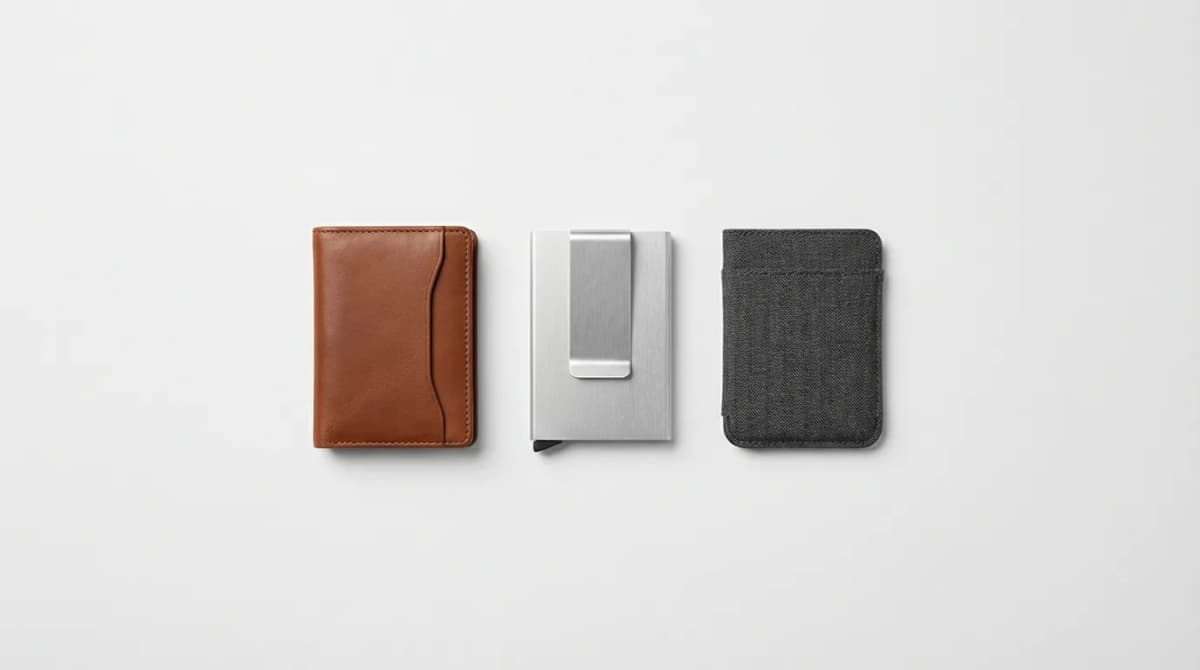
Best Minimalist Wallets of 2026: Slim EDC Picks
The best minimalist wallets balance card capacity with pocket-friendly profiles. We tested slim designs in leather, metal, and carbon fiber to find winners.
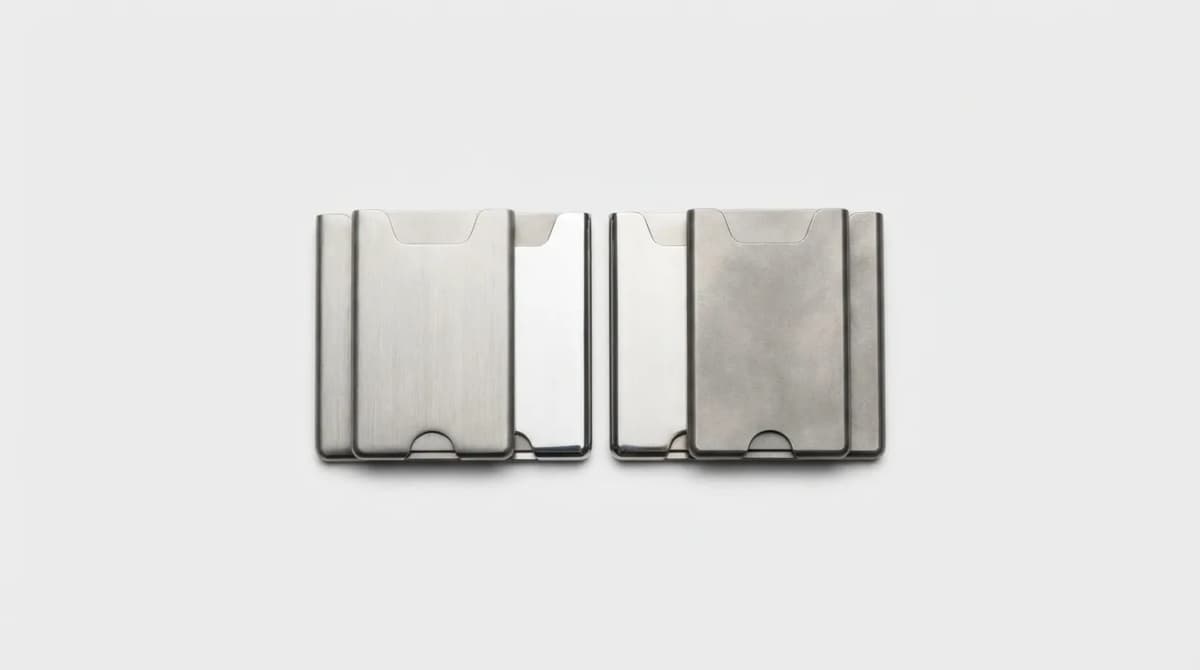
Are Titanium Wallets Worth It? Complete Review
Titanium wallets promise durability and RFID protection, but they cost 3-5x more than leather. We tested the top models to see if the premium is justified.
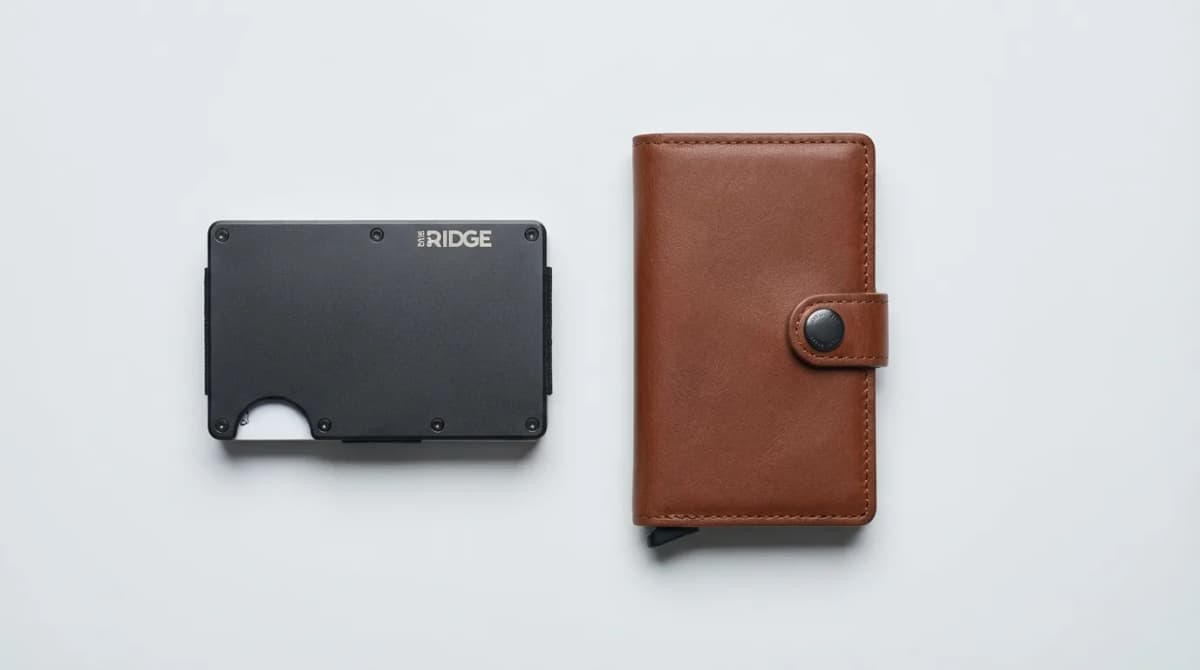
Ridge Wallet vs Ekster: Which Slim Wallet Wins
Ridge and Ekster dominate the slim wallet market, but they take different approaches. We compare materials, capacity, tracking features, and daily carry to find the winner.