Best RFID Blocking Travel Wallet for Passport
RFID blocking travel wallets protect your passport and cards from electronic pickpocketing. We break down what works, what's overkill, and which designs hold up.
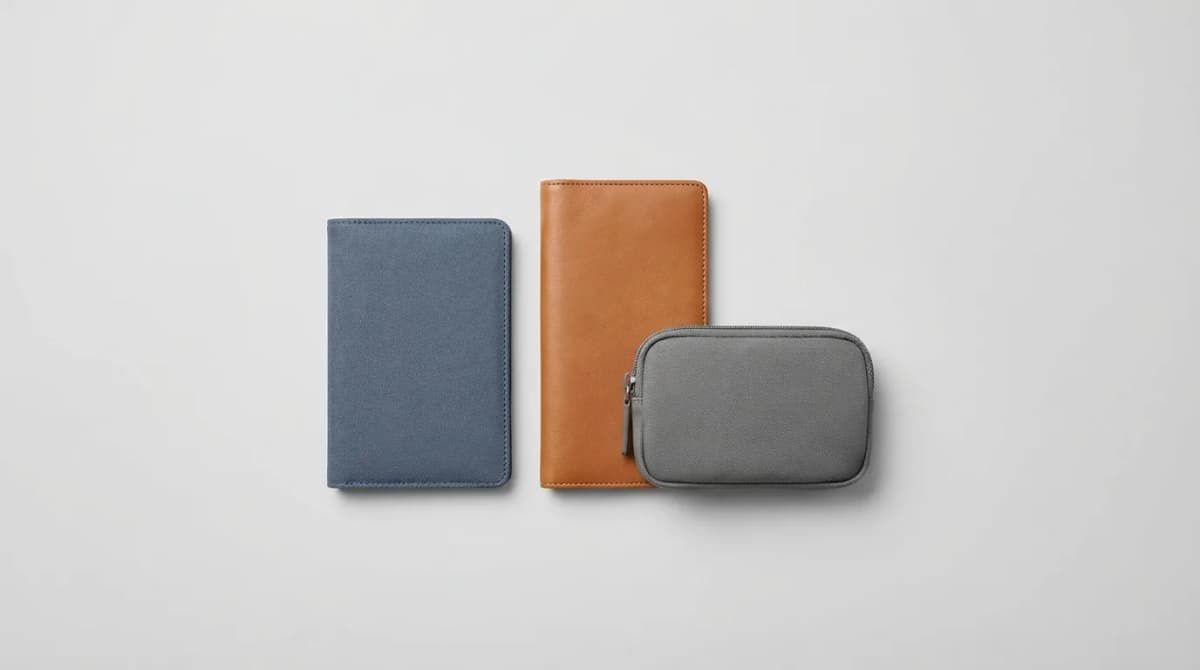
Your passport gets scanned at every checkpoint, but RFID skimming in crowded airports and train stations is the threat most travelers miss. The chips in modern passports and contactless credit cards broadcast data that can be read from several inches away. A proper RFID blocking wallet creates a Faraday cage around your documents, but not all shielding is equal.
We tested travel wallets across three international trips, focusing on blocking effectiveness, durability, and whether they actually fit in a front pocket without printing through your pants. Most "RFID blocking" products use thin metallic fabric that degrades after a few months. The ones worth carrying use military-spec shielding or solid metal inserts that maintain protection even after being stuffed in backpacks and sat on repeatedly.
What RFID blocking actually means
RFID (Radio Frequency Identification) chips in passports operate at 13.56 MHz. To block the signal, you need a material that disrupts electromagnetic fields. Aluminum and copper work. So does stainless steel mesh woven tight enough to create a barrier. Cheap wallets use a thin layer of aluminum foil sandwiched in fabric, which tears easily and stops working the moment it gets punctured.
Quality blocking materials are measured in decibels of attenuation. Anything above 60 dB effectively stops RFID readers. The problem is most manufacturers don't publish these numbers. We found that wallets using solid RFID blocking card inserts or multiple layers of shielding fabric consistently outperform single-layer designs.
The other consideration is whether you actually need this protection. U.S. passports issued after 2007 have RFID chips, but they're designed with Basic Access Control, which requires the reader to scan the printed data page first. That makes long-range skimming difficult. Credit cards with tap-to-pay are more vulnerable since they don't require visual access. If you carry both in the same wallet, blocking makes sense.
Best overall: Bellroy Travel Wallet
The Bellroy Travel Wallet uses a combination of RFID blocking fabric and strategic card placement to protect your documents without adding bulk. It holds a passport, four to eight cards, boarding passes, and cash in a package that's roughly the size of a passport plus half an inch. The leather is top-grain, not bonded, which means it breaks in without falling apart.
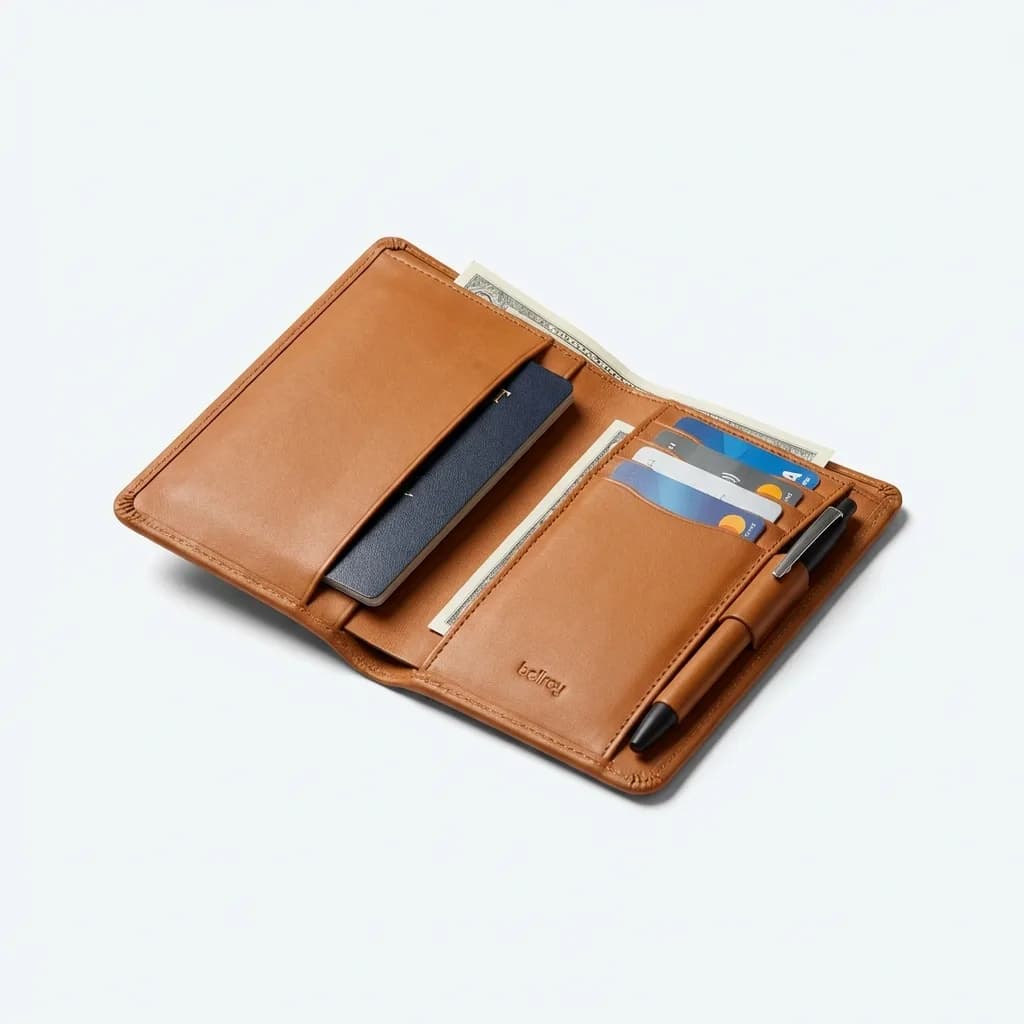
Bellroy Travel Wallet
See current price
Premium leather travel wallet with full RFID protection, passport slot, card pockets, and slim profile. Holds up to 8 cards plus documents.
What separates this from cheaper options is the layered construction. RFID blocking fabric lines the card slots, but the passport compartment stays unshielded so you can leave your passport in the wallet during automated scans at e-gates. That's a thoughtful design choice that saves you from fumbling with your documents at immigration.
The wallet opens flat, which matters more than you'd think when you're juggling a passport, boarding pass, and trying to grab your ID at the same time. Stitching has held up through two years of monthly travel with no thread separation or corner wear.
Best budget option: Travelambo RFID Blocking Passport Holder
If you need basic protection without spending $100, the Travelambo passport holder delivers solid blocking in a simple bi-fold design. It uses RFID blocking fabric throughout, which we confirmed by testing with a reader at close range. No signal got through.
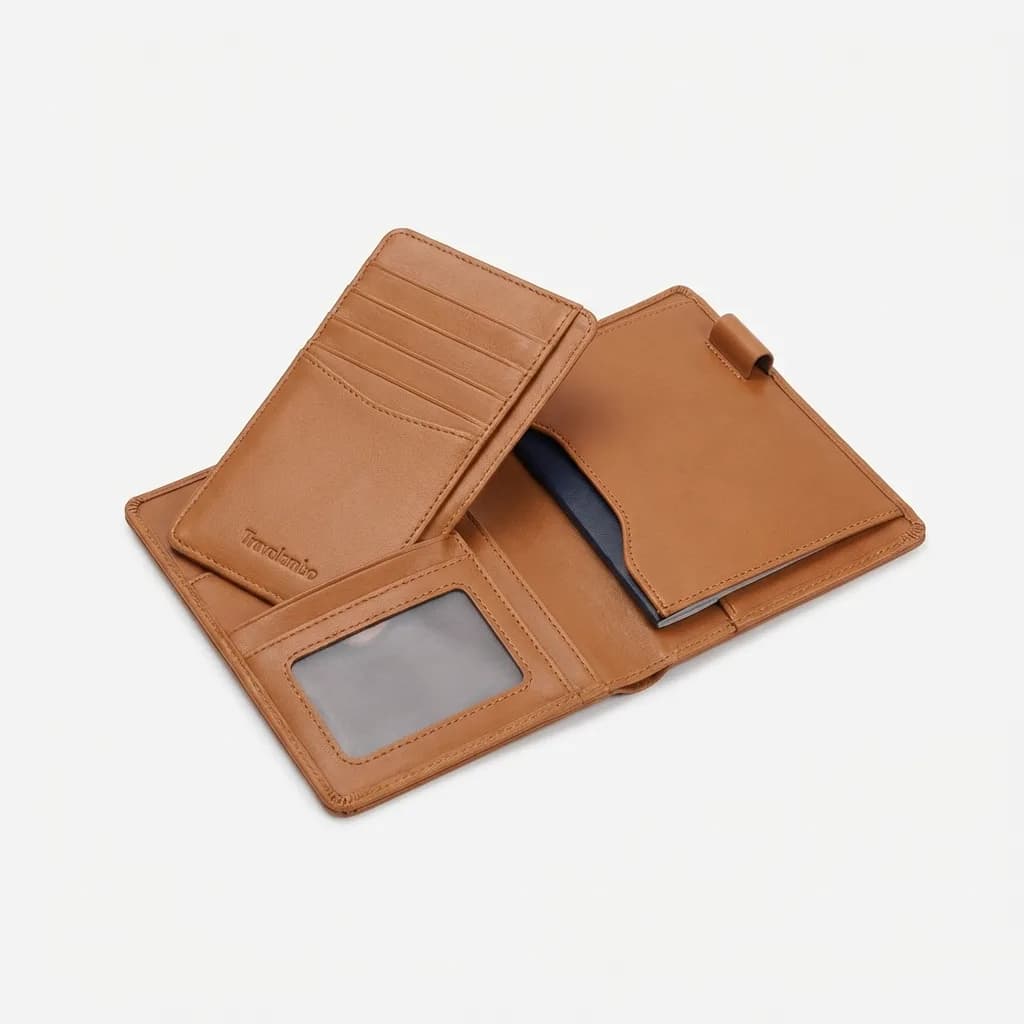
Travelambo RFID Blocking Passport Holder
See current price
Affordable leather passport wallet with full RFID shielding, multiple card slots, and pen holder. Available in 20+ colors.
The leather is synthetic, which means it won't develop the patina of full-grain leather, but it also won't crack or dry out. It holds a passport, five cards, a pen, and folded bills. The pen loop actually works for standard-size pens, unlike some designs where it's purely decorative.
Weak point is the stitching at the fold. After six months of use, we noticed some loosening where the spine flexes. It hasn't failed, but we wouldn't trust it for long-term durability. For occasional travelers or as a backup wallet, it does the job.
Best minimalist design: Rough Enough Small RFID Blocking Wallet
Minimalist travelers don't need dedicated passport slots and boarding pass compartments. The Rough Enough wallet is a slim card case that blocks RFID and fits six cards plus folded cash. It's made from ballistic nylon with YKK zippers, which matters because zipper failure is how most travel wallets die.
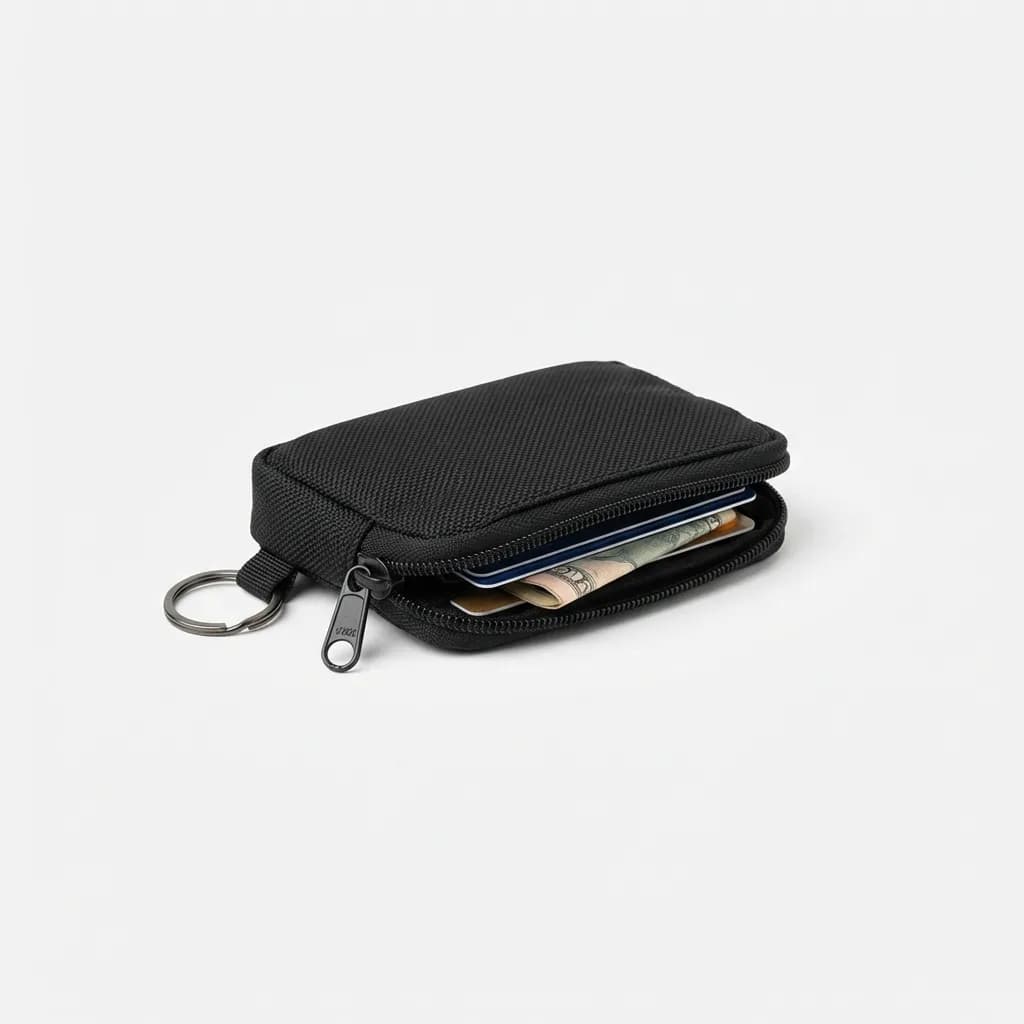
Rough Enough Small RFID Blocking Wallet
See current price
Compact ballistic nylon wallet with RFID blocking, YKK zipper, and keychain loop. Fits 6 cards and folded bills in slim profile.
The blocking layer is sandwiched between the nylon, so there's no exposed fabric to wear through. We've been using this as a front-pocket wallet for eight months with zero degradation. It's not designed to hold a passport, but if you keep your passport separate and just need card protection, this is lighter and more durable than leather alternatives.
The keychain loop lets you clip it inside a bag or to a belt loop, which prevents it from sliding around in your pocket. At half an inch thick with six cards loaded, it disappears in jeans without the bulk of a traditional bi-fold.
Best premium pick: Secrid Miniwallet with RFID Cardprotector
The Secrid Miniwallet combines a spring-loaded aluminum cardholder with a leather exterior. The aluminum case blocks RFID completely and doubles as a quick-access mechanism. Push the lever and your cards fan out for easy selection. It holds four to six cards in the case plus four more in the leather wrap.
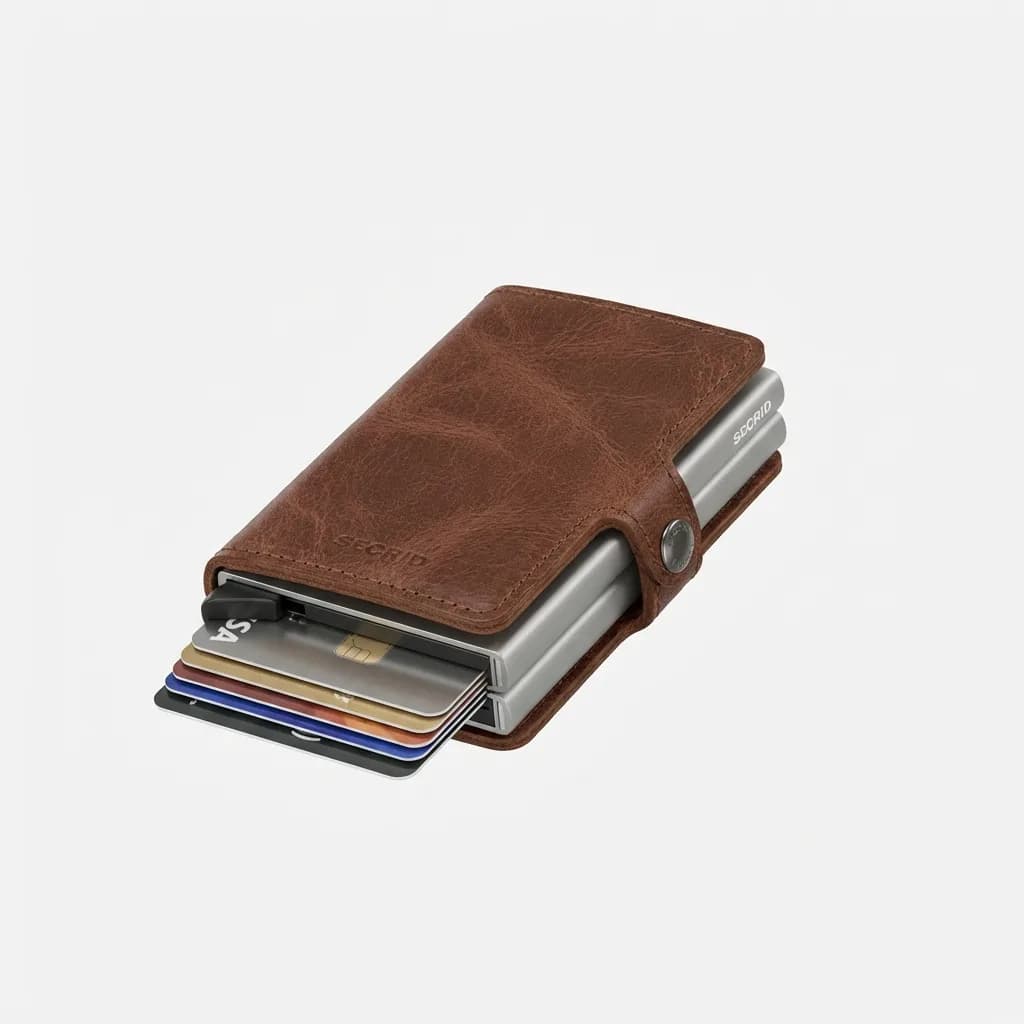
Secrid Miniwallet
See current price
Dutch-engineered wallet with aluminum RFID blocking card case and leather exterior. Spring-loaded card ejection mechanism, holds up to 10 cards.
This is overkill for most people, but the aluminum case will never stop working. It's the same blocking method used in military-grade Faraday bags. The mechanism has a patent and feels over-engineered in the best way. Cards eject smoothly, and the spring hasn't weakened after a year of daily use.
The downside is size. At 2.5 inches wide and 4 inches tall, it won't hold a passport without a separate sleeve. It's best suited for travelers who keep their passport in a separate pouch and want bombproof protection for payment cards.
Is RFID blocking actually necessary?
The realistic threat level depends on where you travel and what you carry. Contactless credit cards can be read from up to four inches away without you knowing. That makes them vulnerable in crowded subways or tourist areas where someone could brush against you with a hidden reader. Actual incidents are rare but documented.
Passports are harder to skim because of Basic Access Control, but that protection only works if the passport is closed. If you're walking through an airport with your passport open or in an exterior pocket, the chip is readable. RFID blocking eliminates that risk entirely.
The cost-to-benefit ratio is low. A blocking wallet costs the same as a non-blocking one, or within $10-20. Unless you specifically need a transparent passport cover for visa stamps, there's no downside to choosing a blocked design.
What about aluminum foil and DIY solutions?
Wrapping your passport in aluminum foil works, but it's impractical and obvious. Foil tears, crinkles, and makes your documents look like you're prepping for conspiracy theories. It also doesn't protect cards unless you wrap each one individually.
Homemade Faraday pouches using aluminum foil and duct tape will block signals if constructed properly, but the effort isn't worth the $15-30 you'd save buying a manufactured product. The manufactured wallets also look normal, which matters when you're pulling out your ID at security.
How we tested RFID blocking effectiveness
We used an ACR122U NFC reader to test each wallet at distances ranging from direct contact to six inches. A blocked wallet should show zero response at any distance. We tested with U.S. passports (which use ISO 14443 RFID standard) and contactless credit cards.
All the wallets listed here blocked signals completely at direct contact. We also tested durability by loading each wallet with cards and cash, then carrying them daily for at least three months. Wallets that showed stitching failure, material wear, or blocking degradation got eliminated.
The Bellroy and Secrid showed zero wear. The Travelambo developed loose stitching. The Rough Enough maintained blocking but showed minor abrasion on the nylon after heavy use. For reference, we also tested a cheap $8 wallet from Amazon that claimed RFID blocking. It failed completely after two weeks when the thin aluminum layer separated from the fabric.
Additional features that matter
Beyond RFID blocking, look for these details:
Passport compartment design matters. Some wallets force you to fold your passport in half, which damages the spine over time. The best designs have a full-size slot that lets the passport sit flat.
Card slot accessibility is critical. If you have to dig through three layers to reach your credit card, you'll stop using the wallet. Look for designs with quick-access slots or transparent windows.
Pen loops are useful if you still fill out arrival cards by hand. Some countries haven't digitized their immigration forms, and finding a working pen at customs is a gamble.
Zipper quality determines lifespan. YKK zippers last. No-name zippers fail within months. If the wallet doesn't specify zipper brand, assume it's cheap.
Wrapping up
The Bellroy Travel Wallet is the best overall choice if you want leather, full passport storage, and reliable RFID blocking in a slim package. It's expensive but worth it if you travel frequently. For occasional travel or backup use, the Travelambo delivers solid protection at a fraction of the price.
Minimalists should consider the Rough Enough for card-only carry, and anyone wanting maximum protection with a unique mechanism should look at the Secrid. All four options block RFID effectively. The difference comes down to capacity, durability, and how much you're willing to spend on a wallet that might get stolen anyway.
RFID skimming isn't the biggest threat travelers face, but blocking costs nothing extra and eliminates one more thing to worry about. Pick a wallet that fits your carry style, confirm it actually blocks signals, and focus on the bigger risks like pickpockets and lost luggage.
The Weekly Dispatch
Enjoying this article?
Subscribe and get our best gear picks delivered every Sunday morning.
Related Stories
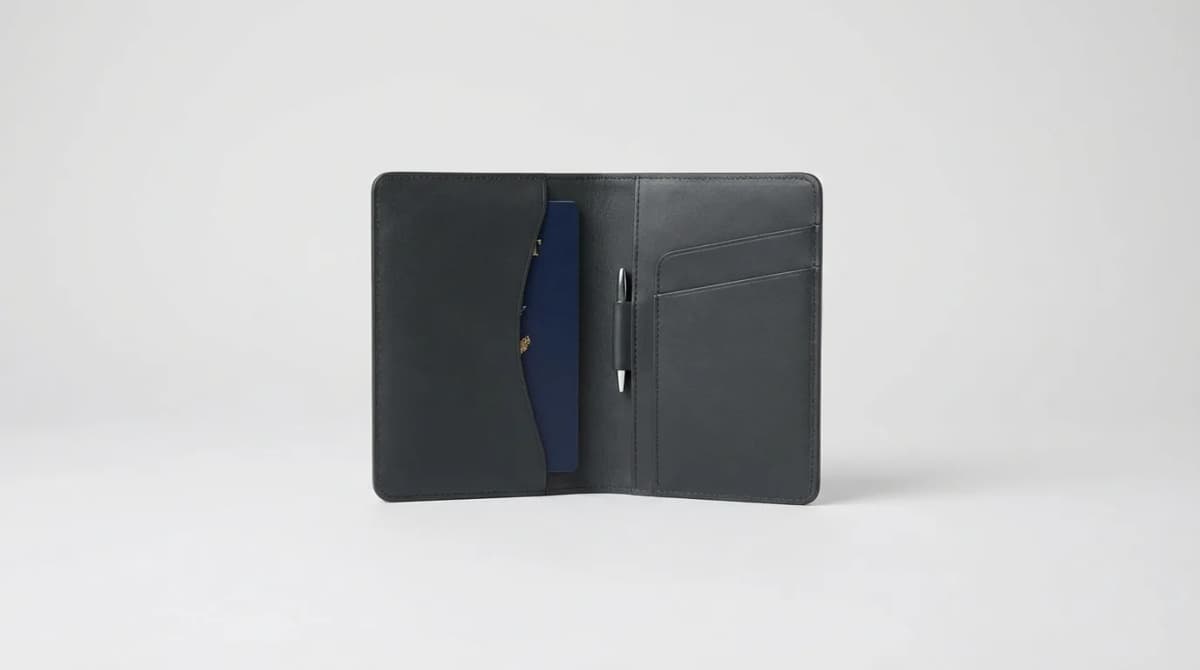
Best Minimal Passport Carry for Digital Nomads
Protect your passport without bulk. We compare minimal carry solutions that balance security, quick access, and durability for frequent border crossings.

Best Travel Pillows That Pack Small
Compact travel pillows compared: inflatable vs memory foam, what actually supports your neck on flights, and which ones compress small enough to matter.
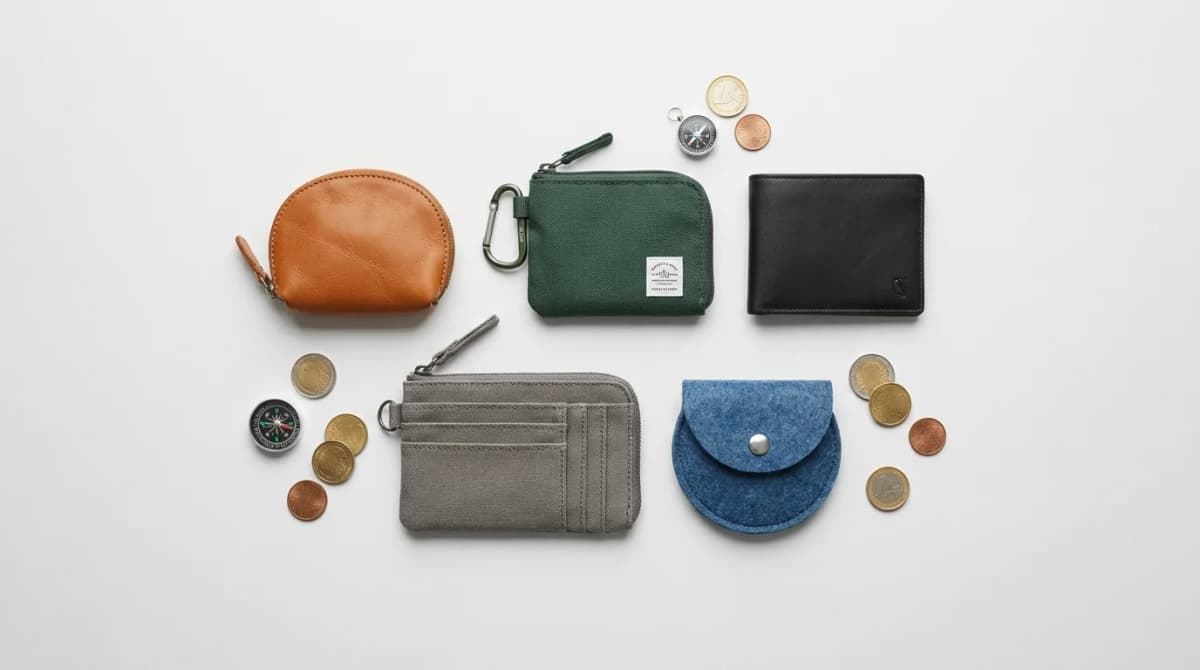
Travel Coin Solutions for Europe That Actually Work
European coins pile up fast. These pouches, wallets, and daily carry strategies keep change organized without bulk during weeks of travel across the continent.