Best Pocket Organizers for Men in 2026
Pocket organizers solve the bulk problem better than any wallet alternative. We tested the best designs for comfort, durability, and keeping your essentials accessible.
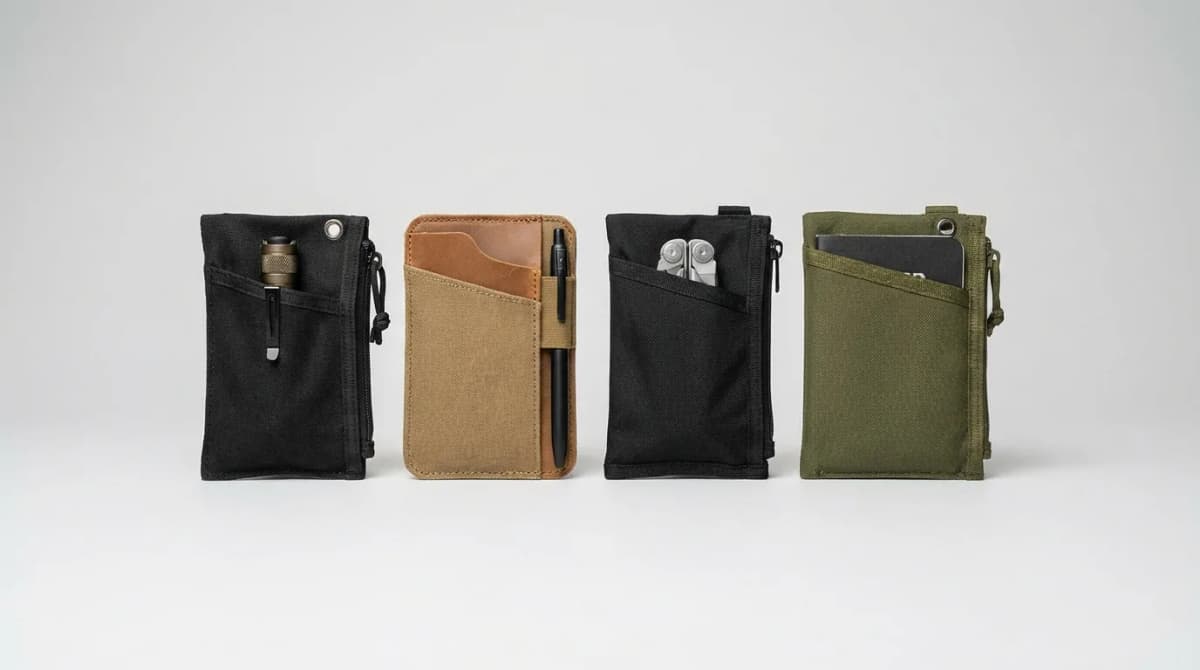
Your front pockets weren't designed for the modern carry load. Keys dig into your leg, cards bend against your phone, and loose items migrate to the bottom of your jeans. Pocket organizers fix this by creating dedicated slots in a package thinner than most bifold wallets.
We tested over 20 designs to find which ones actually reduce bulk instead of adding to it. The difference between a good pocket organizer and a bad one comes down to three things: how it distributes weight, whether it stays flat under pressure, and if you can access what you need without pulling the whole thing out.
Most people overcomplicate their EDC. A pocket organizer forces you to edit down to essentials, which is the real benefit. You end up carrying less, but what you do carry is instantly accessible.
Why pocket organizers beat traditional wallets
Traditional wallets force everything into one bulky stack. Cards press against cash, receipts get trapped between layers, and the whole assembly creates a lump that only gets worse as you sit down. Pocket organizers spread items across separate compartments, so your pocket bulge becomes a thin profile instead of a thick wedge.
The best designs use multiple pockets with different depths. Your most-used card goes in a quick-access slot. Keys attach to an external loop or tuck into a dedicated channel. The small stuff - guitar picks, SIM tools, folded bills - gets its own compartment instead of floating loose.
Material matters more than layout. Cheap nylon pouches collapse on themselves and turn into fabric lumps. Quality Cordura or waxed canvas holds its shape even when half-empty. Full-grain leather starts stiff but molds to your specific carry after a few weeks, creating a custom fit you won't get from synthetics.
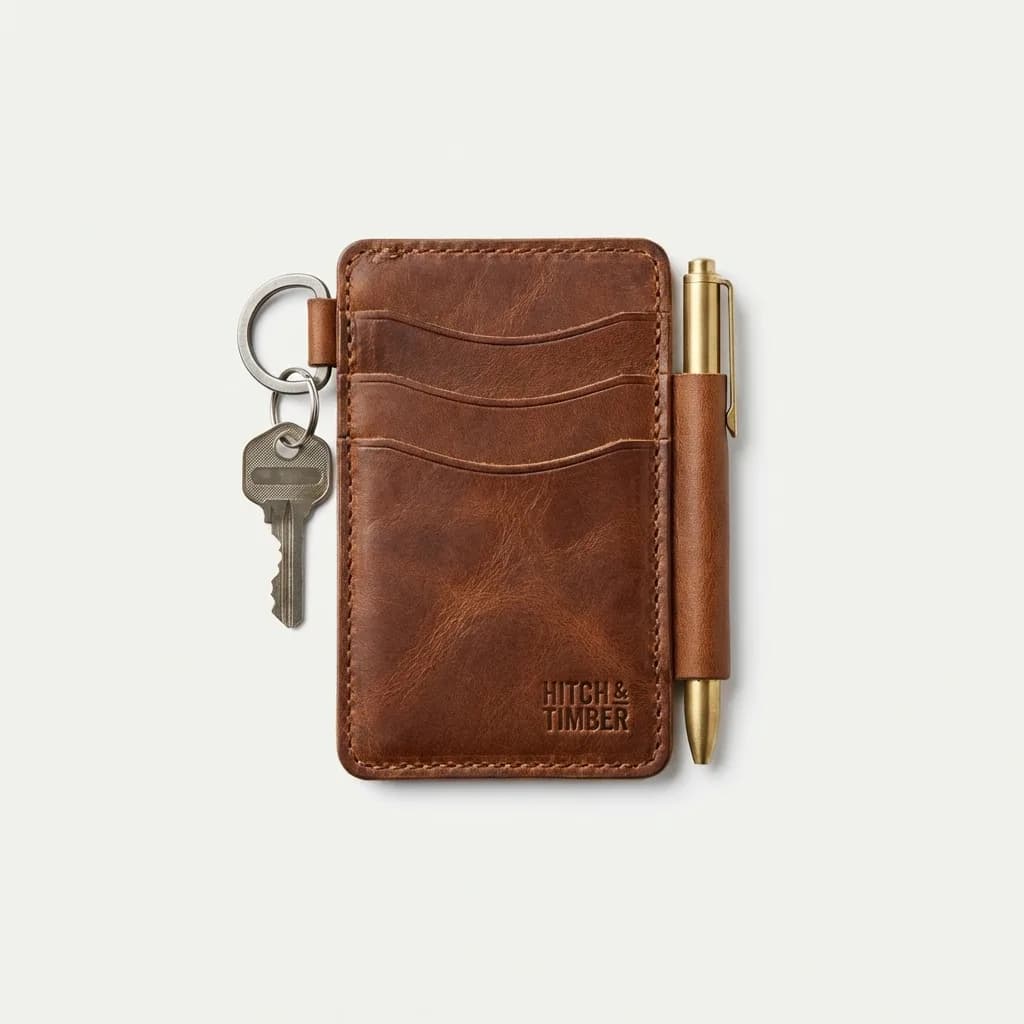
Hitch & Timber Pocket Runt 2.0
See current price
Full-grain leather organizer with three card slots, key loop, and pen sleeve. Fits front or back pocket. Develops rich patina over time.
Thickness is the spec that matters most. Anything over 0.5 inches when loaded defeats the purpose. The best organizers measure 0.3 to 0.4 inches fully packed, which is thinner than an iPhone in a case.
Pocket layout configurations that actually work
Single-compartment sleeves sound minimal, but they create the same stacking problem as a wallet. You need at least three separate pockets to make a functional system: one for cards, one for keys or tools, and one catch-all for coins or small items.
The card pocket should sit on the outside for quick access. Interior card slots require you to open the organizer every time you need your ID, which defeats the speed advantage. Some designs use an elastic band across the exterior - this works but stretches out after six months of daily use.
Key loops need to be external or semi-external. Fully internal key storage means digging past other items, and sharp key edges can puncture interior pockets from the inside. The best approach is a reinforced D-ring or snap loop on the exterior edge where keys hang outside the main body.
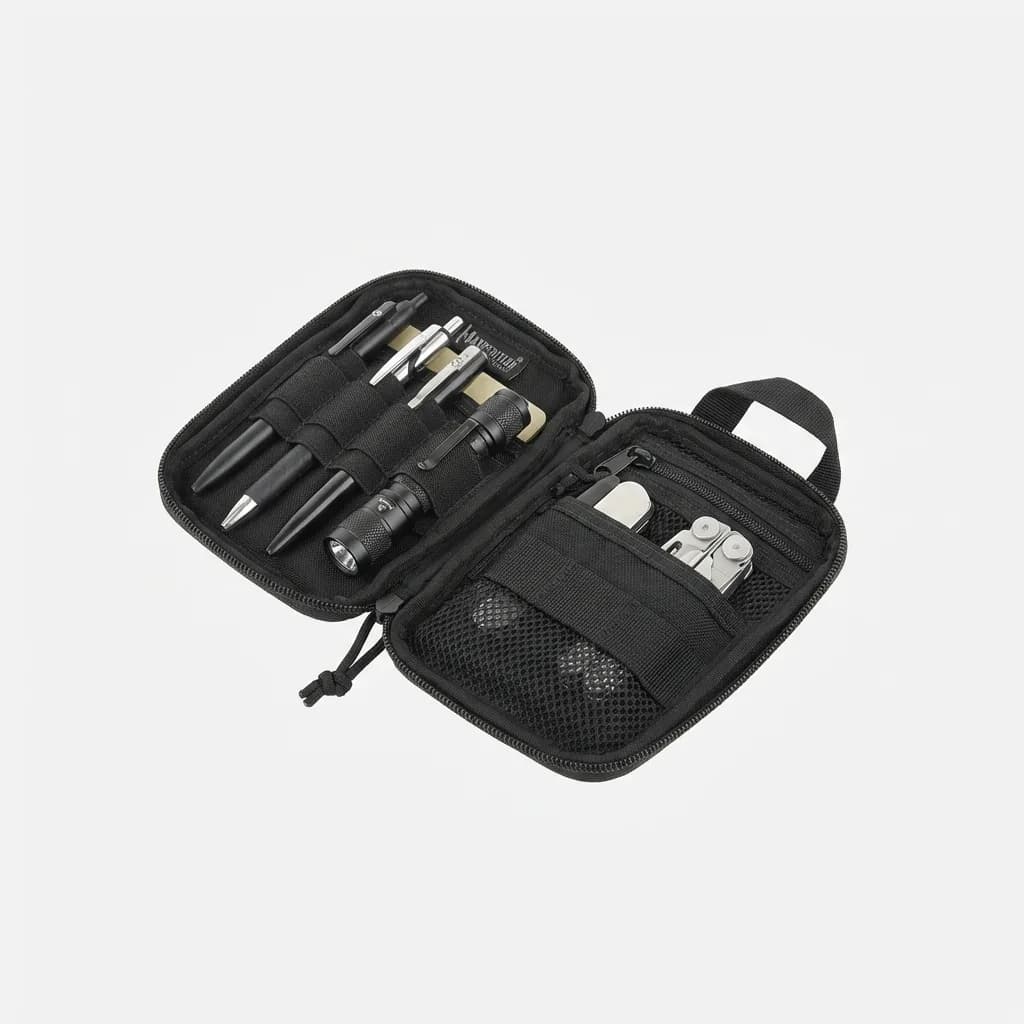
Maxpedition Micro Pocket Organizer
See current price
Ballistic nylon construction with multiple elastic loops and zippered compartment. Fits pens, flashlights, and small multitools. MOLLE-compatible.
Zippered closures add security but slow down access. We prefer half-zip designs where the top stays open for quick grabs but the bottom zips shut to secure small items. Full zippers make sense if you carry coins or tiny screws that could fall out, but for cards and standard EDC items, an open-top design with snap closure works better.
Elastic retention is common but inconsistent. It works great for the first year, then cards start sliding out as the elastic fatigues. Stitched dividers last longer but don't adjust to different card thicknesses. The hybrid approach - stitched pockets with a thin elastic overlay - gives you both structure and grip.
Materials ranked by durability and comfort
Cordura 1000D is the go-to for tactical-style organizers. It resists abrasion better than leather, doesn't absorb water, and maintains its shape indefinitely. The downside is texture - Cordura feels technical, not refined. If your EDC leans tactical, it fits. If you carry brass and titanium gear, it clashes.
Waxed canvas splits the difference between synthetic and leather. It develops character like leather but weighs less and handles moisture better. Waxed canvas organizers need re-waxing every 12-18 months to maintain water resistance, but the process takes 10 minutes with a bar of otter wax.
Full-grain leather is the classic choice for a reason. It starts stiff, requires a break-in period of 2-3 weeks, then molds to your exact carry. Vegetable-tanned leather develops the best patina but scratches easily. Chrome-tanned leather resists scratches but stays uniform in appearance. Both last decades if you condition them twice a year.
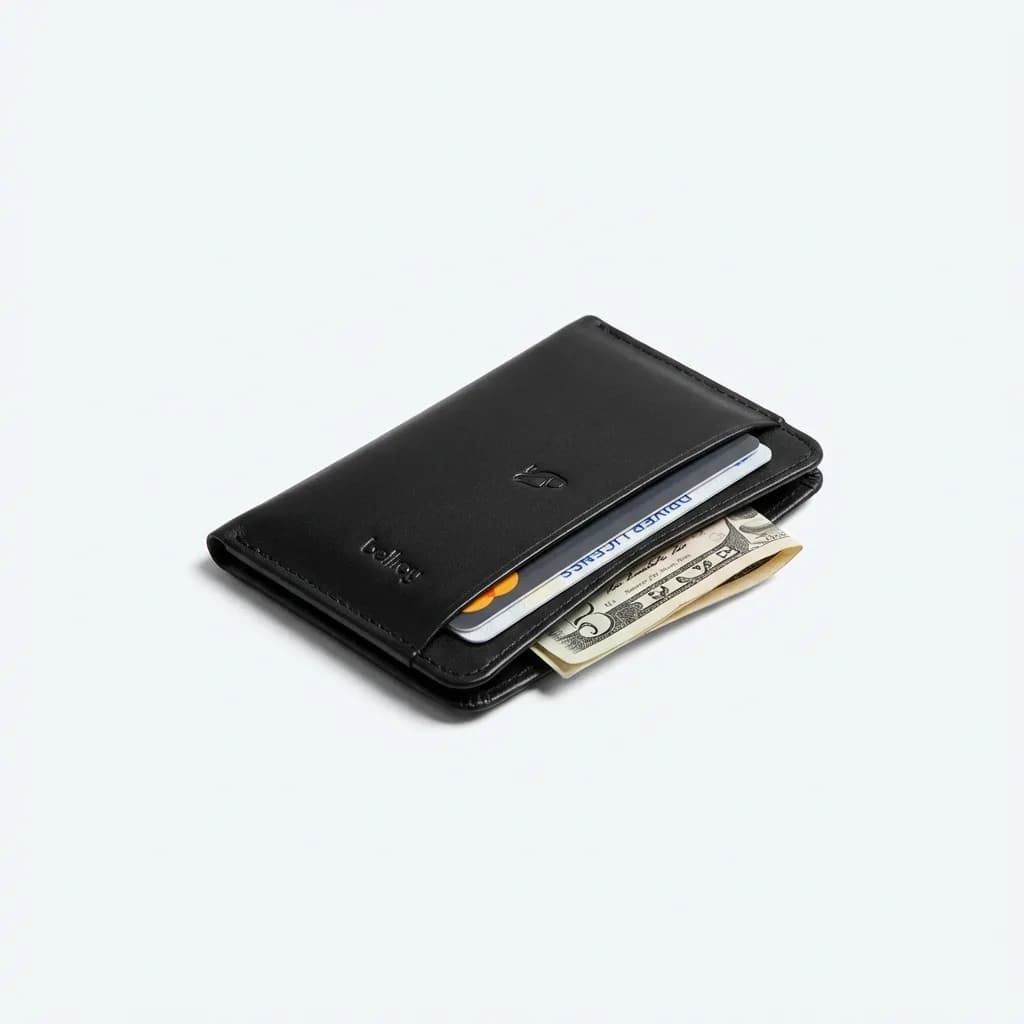
Bellroy Card Pocket
See current price
Slim leather card holder with hidden pocket for folded bills. Holds 4-8 cards depending on embossing. Premium leather with RFID protection option.
X-Pac and other sailcloth materials show up in ultralight designs. They're impressively thin and completely waterproof, but they lack structure. X-Pac organizers work best for minimal carries - 2-3 cards and a key. Load them up with a full EDC and they become floppy.
Avoid bonded leather, PU leather, and anything described as "vegan leather" unless the alternative material is specifically named. These materials delaminate within 18 months of daily pocket carry. The coating separates from the backing, edges peel, and the whole thing looks shabby fast.
How to prevent pocket sag and weight distribution issues
Front pocket carry works until you overload it. A pocket organizer loaded with 8 cards, a key ring with 6 keys, a Swiss Army Knife, and a flashlight will still sag your pants. The solution is weight distribution across multiple pockets, not cramming everything into one pouch.
Split your carry into primary and secondary items. Primary items - ID, one credit card, car key, phone - stay in your dominant-hand pocket in a minimal organizer. Secondary items - backup cards, house keys, multitool - go in the opposite pocket or a bag. This keeps your main pocket light enough to avoid sag.
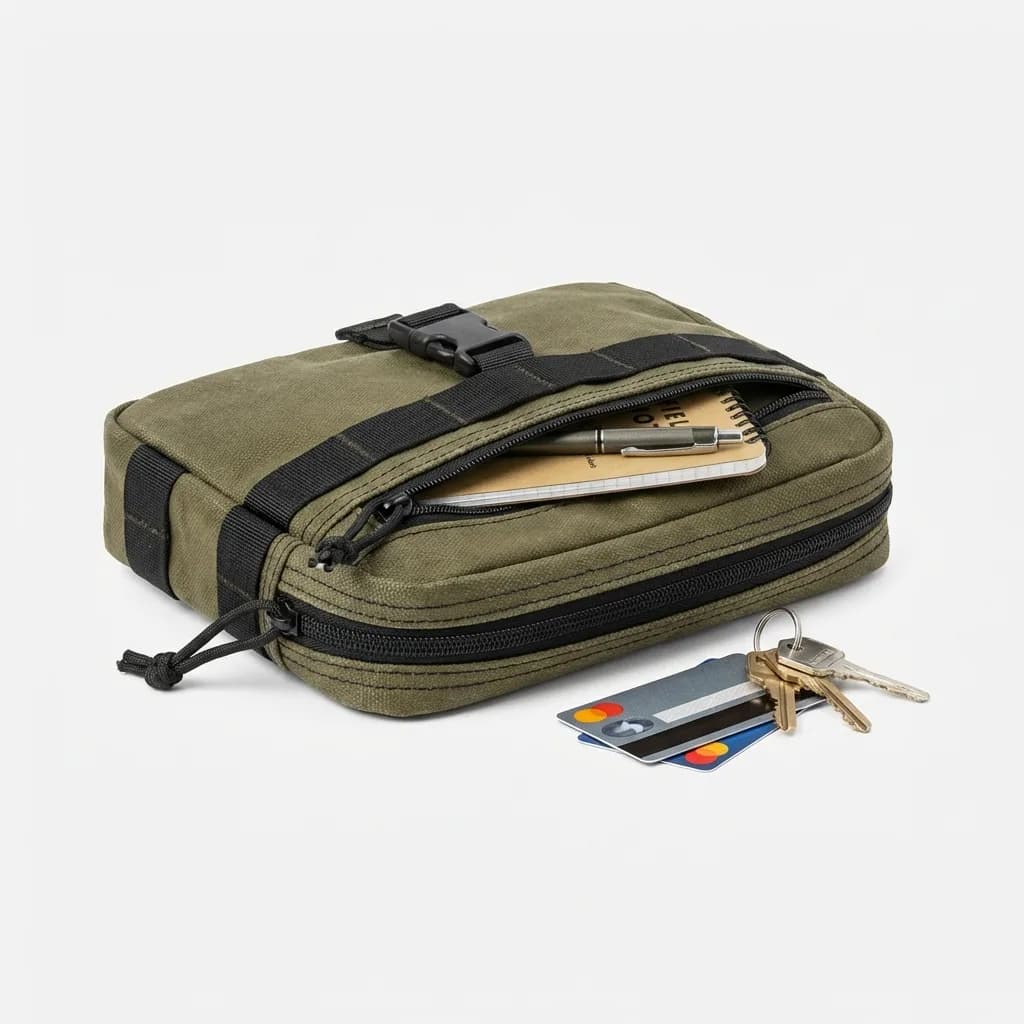
Recycled Firefighter Sergeant Pouch
See current price
Made from repurposed fire hose and military-spec materials. Holds notebook, pen, cards, and keys. Extremely durable with lifetime warranty.
Vertical orientation prevents sag better than horizontal. A tall, narrow organizer distributes weight along the depth of your pocket. A wide, flat organizer creates a pancake that pulls your waistband down. This is why most successful designs measure roughly 4 inches tall by 2.5 inches wide instead of the reverse.
Reinforced corners matter more than overall thickness. The bottom corners take the most stress as you sit and stand throughout the day. Organizers with bar-tacked corners or leather reinforcement patches last 3-4 times longer than designs with simple stitched corners.
Attachment points help if you're worried about losing the organizer. A thin paracord loop clipped to a belt loop or zipper pull keeps it tethered without adding bulk. Some designs build in a snap loop or D-ring specifically for this purpose.
What to look for if you carry a multitool or flashlight
Standard pocket organizers assume you carry flat items - cards, cash, keys. If you EDC a Leatherman or a 3-inch flashlight, you need a design with tool-specific retention.
Elastic loops are the most common solution. They work for cylindrical items like pens and flashlights but don't grip rectangular multitools well. The tool slides around inside the loop, creating bulk without security. Dedicated sleeves with snap or Velcro closures work better for tools with irregular shapes.
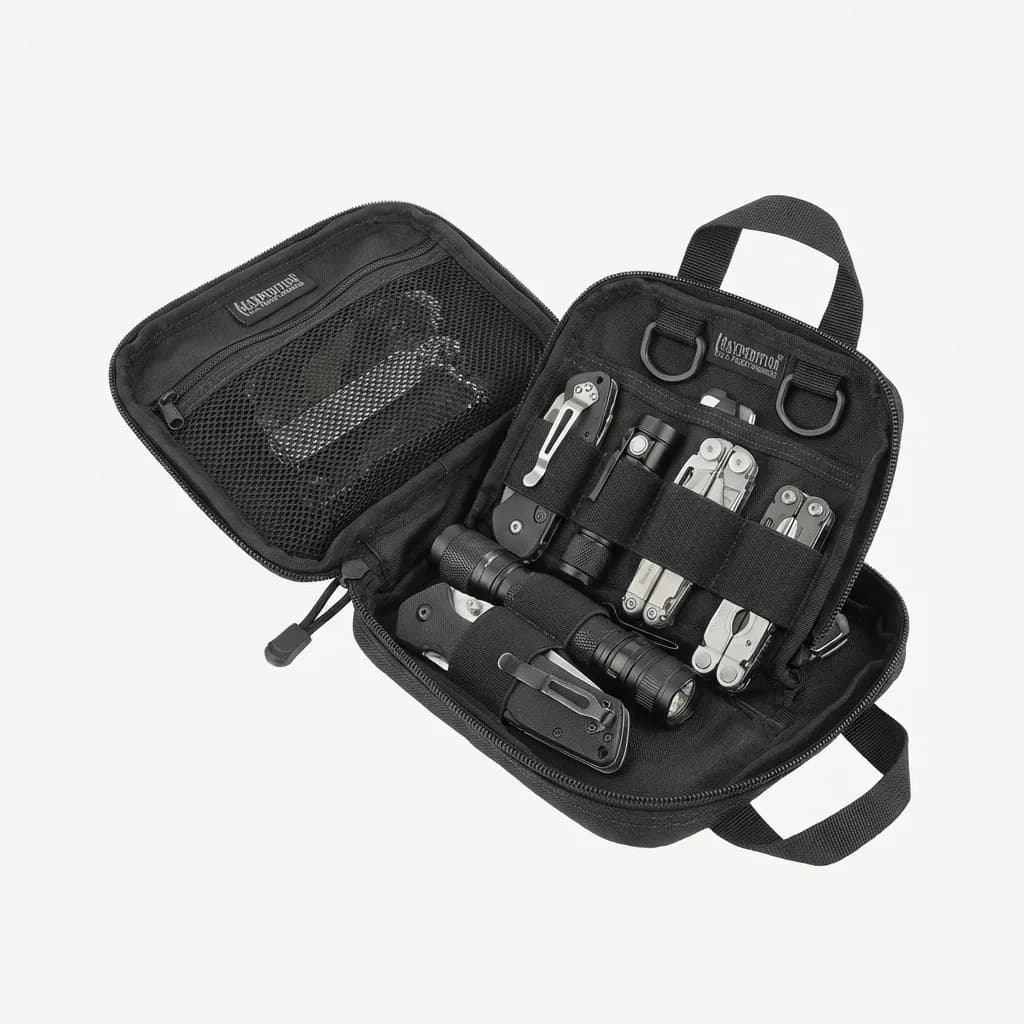
Maxpedition E.D.C. Pocket Organizer
See current price
Expanded organizer with 9 elastic loops, mesh pocket, and D-rings. Fits larger EDC including folding knives, lights, and tools. Teflon-coated fabric.
Size creep is the real problem with tool-carrying organizers. A pouch designed to hold a multitool, flashlight, pen, knife, and cards ends up 6 inches tall and too large for most front pockets. These designs work better as bag organizers or cargo pocket inserts than true pocket carry.
Weight becomes the limiting factor before size does. A loaded tool organizer can weigh 8-10 ounces, which is heavy enough to pull on your waistband all day. If your EDC genuinely requires that many tools, consider a small sling bag or belt pouch instead of forcing everything into a pocket organizer.
The best compromise is a micro organizer for cards and cash paired with a separate dedicated tool pocket. Your multitool and flashlight clip directly to your pocket edge or belt. This keeps items separated so you're not digging through cards to reach your knife.
Quick-access designs vs. security-focused options
Open-top organizers let you see and grab items in under a second. This matters if you use your ID or primary card frequently. The tradeoff is that items can slide out if the organizer tips upside down, which happens more often than you'd expect when reaching into bags or pulling items from pockets quickly.
Flap closures with snaps or magnetic clasps split the difference. You get one-handed opening with reasonable security. Magnetic closures feel premium but can demagnetize cards if the magnet sits directly against the card pocket. Look for designs with the magnet offset from card storage.
Zippered organizers provide maximum security but require two hands to open in most cases. If you're fumbling with a zipper every time you need your driver's license, you'll abandon the organizer within a week. Zippers make sense for secondary storage - the coins, backup cards, and small items you access occasionally but need secured.
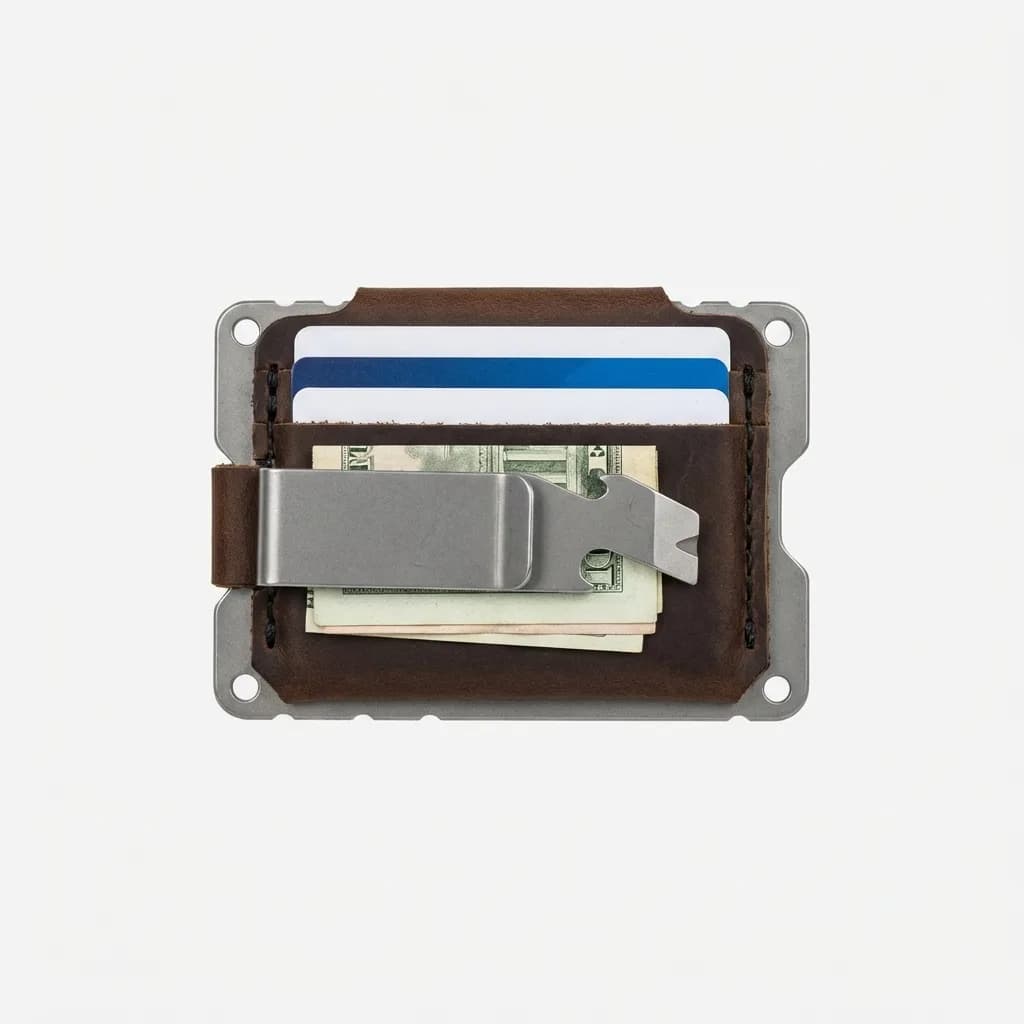
Trayvax Contour Wallet
See current price
Metal frame wallet with quick-access card slot and multi-tool money clip. Holds 4-8 cards and folded cash. Bottle opener and pry bar integrated.
RFID blocking is marketed heavily but rarely necessary. Credit card skimming through pockets requires the thief to be within 2 inches with specialized equipment. It happens, but pickpocketing is a much more common threat. If RFID protection gives you peace of mind, get it, but don't pay a 50% premium for a feature you may never need.
The actual security concern with pocket organizers is loss. They're small enough to slip out of shallow pockets or fall between car seats. Bright interior lining helps you spot the organizer when it does fall out. Some designs add a small lanyard loop specifically so you can attach a tile tracker or paracord tether.
Breaking in leather organizers without damaging them
New leather organizers feel like carrying a wood block. The leather is stiff, pockets don't open easily, and cards require force to insert. This is normal for vegetable-tanned leather and high-quality chrome-tanned hides. The break-in period takes 15-25 days of daily carry.
Speed up the process by loading the organizer to capacity and leaving it under a stack of books overnight. The sustained pressure stretches the leather more evenly than daily use alone. Repeat this for 3-4 nights, and you'll cut the break-in time in half.
Leather conditioner helps but can be overdone. Apply a thin layer of dedicated leather conditioner once before first use, then not again for at least 3 months. Over-conditioning makes leather limp and greasy. Your hands provide enough oils during normal use - additional conditioning is only needed 2-3 times per year in dry climates, less in humid areas.
Never use heat to speed break-in. Hair dryers, radiators, and direct sunlight dry out leather oils and cause cracking. The "bake it to break it" method ruins more organizers than it helps. If you're impatient with the break-in period, buy a synthetic organizer instead.
Water exposure during break-in can cause permanent stretching or shrinkage depending on the tanning method. Keep new leather organizers dry for the first month. After the leather sets its shape, it handles moisture much better.
Wrapping up
The right pocket organizer disappears in your pocket while keeping everything exactly where you need it. Start with a slim design that holds 3-4 cards and your most-used items. Add specialized compartments only if you genuinely use them daily.
Leather develops character but requires patience during break-in. Cordura and waxed canvas work immediately and handle abuse better. Choose based on whether you value patina or performance.
Most people discover they can carry less than they thought once items are organized properly. That realization is worth more than any specific product recommendation.
The Weekly Dispatch
Enjoying this article?
Subscribe and get our best gear picks delivered every Sunday morning.
Related Stories
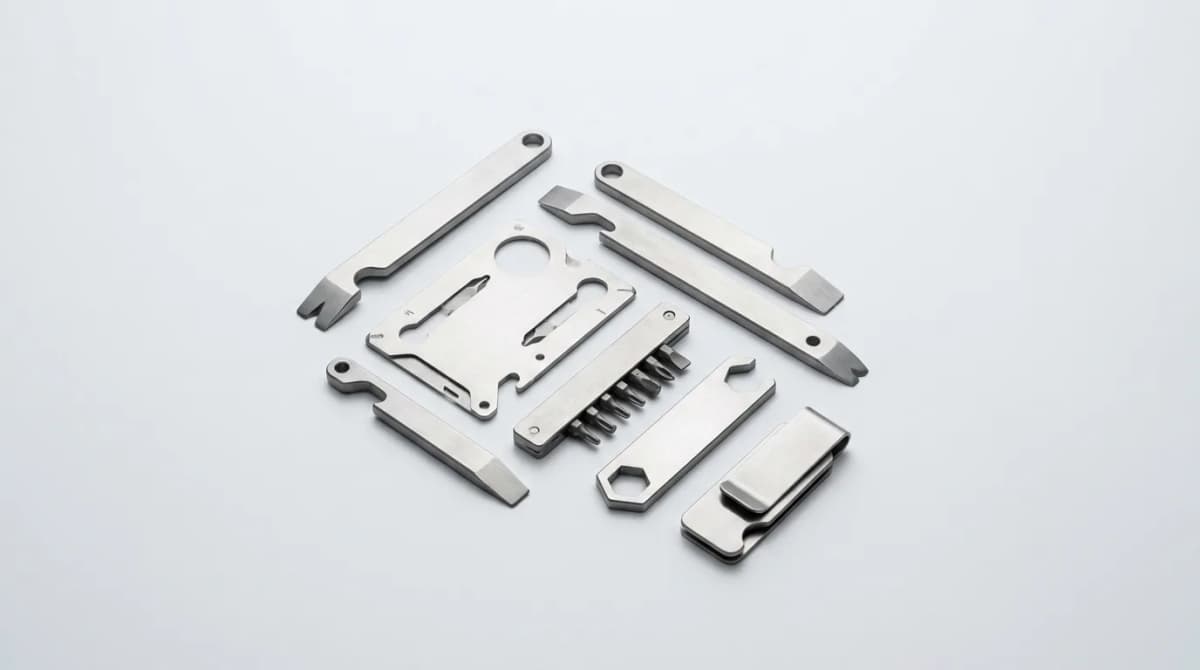
Best Flat EDC Tools for Minimal Carry
Flat EDC tools deliver pry bars, bit drivers, and wrenches in a profile thinner than two credit cards. Here's what actually works in your wallet.
Best EDC Pouch for Organizing Small Items
Stop digging through your bag for loose items. These EDC pouches keep cables, tools, and pocket gear organized with smart layouts and durable materials.
How to Build a One Pocket EDC
Master the art of carrying everything you need in a single pocket. Learn the selection rules, multi-use strategies, and weight control tactics that make it work.