Vintage Lenses on Modern Cameras: A Beginner's Guide
Vintage lenses offer unique image character and serious cost savings on modern mirrorless cameras. Here's how to choose adapters, master manual focus, and avoid common pitfalls.
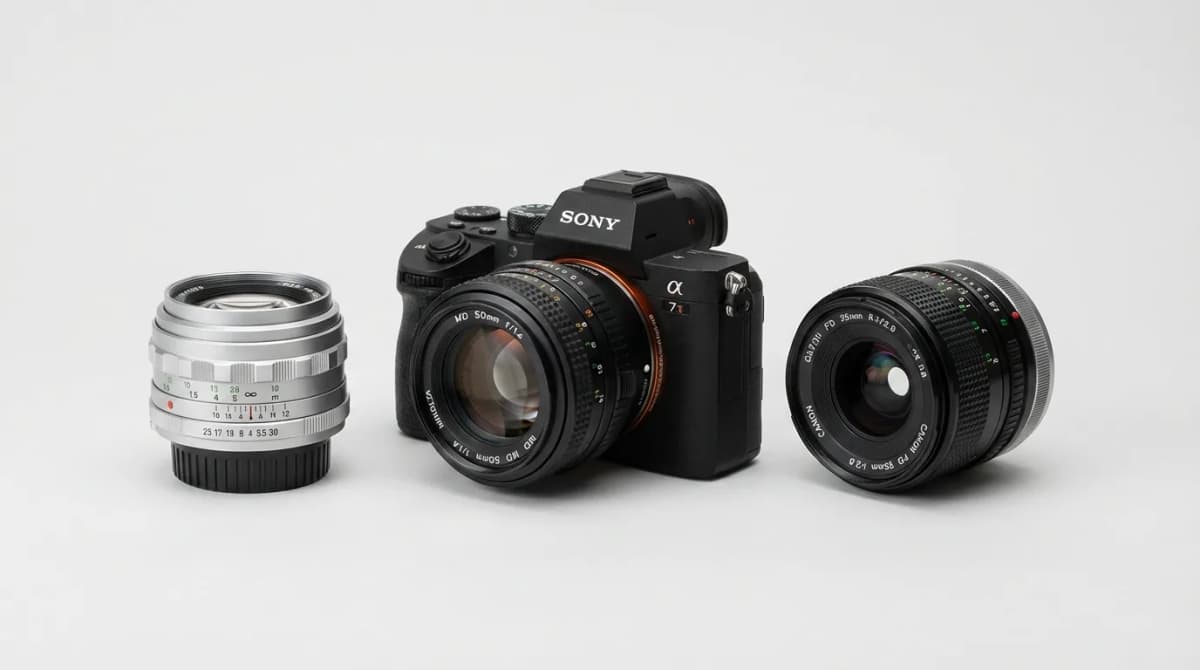
A 50-year-old lens can produce images your $2,000 modern zoom never will. The rendering, the bokeh, the slight imperfections that give photos actual character. Vintage glass on modern mirrorless bodies has become one of photography's best-kept secrets, and the barrier to entry is lower than you think.
We're not talking about nostalgia projects or hipster aesthetics. Vintage lenses deliver optical qualities that modern computer-designed glass deliberately engineers out. That's the whole point. Plus, you can build a collection of fast primes for less than one contemporary equivalent.
Why Vintage Lenses Work Better Now Than Ever
Modern mirrorless cameras made vintage glass practical. The short flange distance (the space between lens mount and sensor) means you can adapt nearly any old lens mount to bodies like Sony E-mount, Fujifilm X-mount, or Micro Four Thirds. DSLRs had mirror boxes in the way. Mirrorless doesn't.
Adapters are simple mechanical spacers, often with no electronics. A Canon FD to Sony E-mount adapter is just precisely machined metal that maintains the correct distance for infinity focus. They cost $15 to $200 depending on build quality and whether you want features like variable ND filters or tilt-shift capability.
The image quality argument is real. Vintage lenses were designed when film was king, and film has different requirements than digital sensors. Many old lenses produce "glow," slight chromatic aberration, or swirly bokeh that digital lenses correct away. If you shoot portraits, street, or creative work, these "flaws" are features.
Cost savings are dramatic. A mint Pentax Super-Takumar 50mm f/1.4 runs $80-150. The modern equivalent costs $400-800. You're getting a legendary fast prime with beautiful rendering for coffee money.
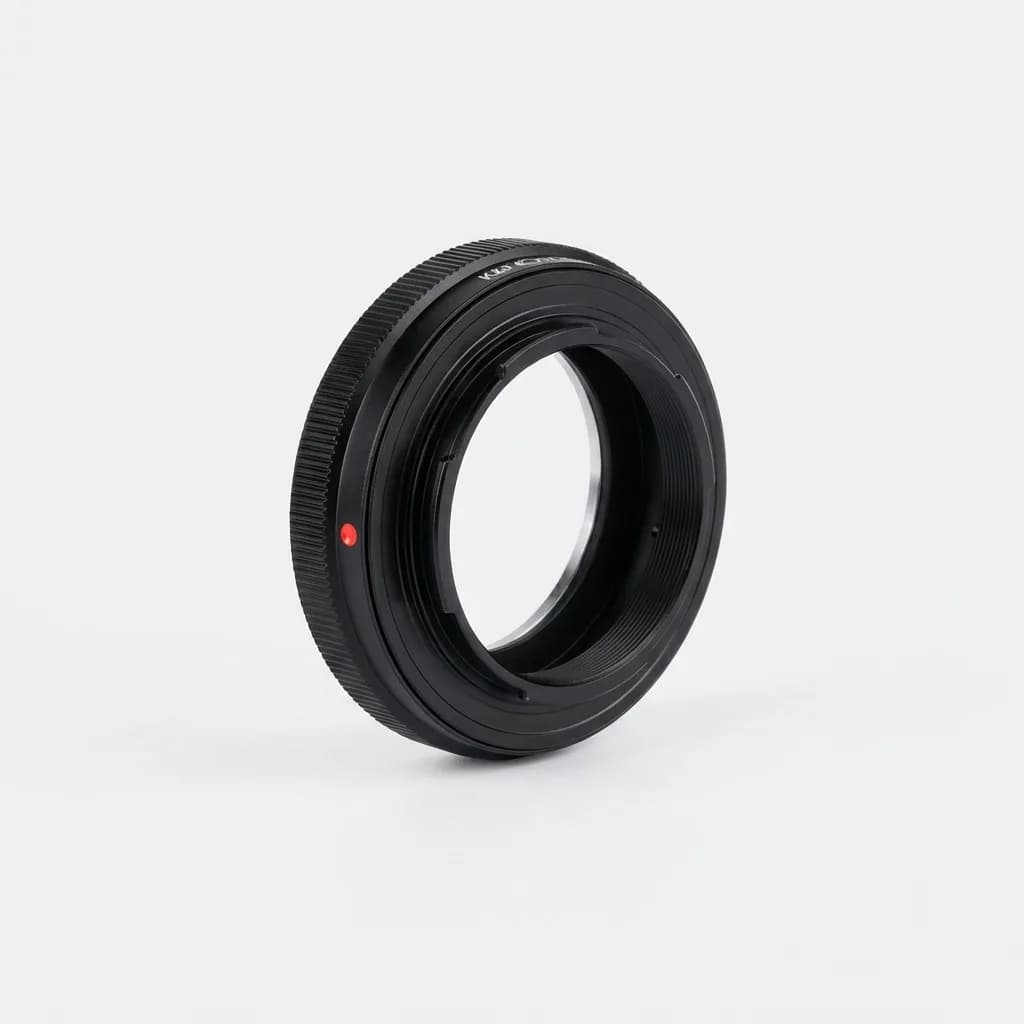
K&F Concept Lens Mount Adapter
See current price
High-precision adapter ring for mounting vintage manual focus lenses to modern mirrorless cameras. Includes Canon FD, M42, Pentax K, and Nikon F to Sony E-mount, Fujifilm X, and Canon RF options.
Understanding Lens Mounts and Crop Factor
You need to match three things: your camera's mount, the vintage lens mount, and the adapter that connects them. Sony shooters have it easiest because E-mount accepts nearly everything. Fujifilm X-mount and Canon RF work well too. Nikon Z-mount has a long flange distance, so some vintage mounts won't reach infinity focus.
Common vintage mounts you'll encounter: M42 screw mount (universal standard from the 1960s-70s), Canon FD (pre-EOS film cameras), Pentax K, Nikon F (still current but older versions are cheap), Olympus OM, and Contax/Yashica C/Y. Each has different characteristics and price ranges.
Crop factor matters if you're on APS-C or Micro Four Thirds. A 50mm lens on full-frame becomes a 75mm equivalent on APS-C (1.5x crop) or 100mm on MFT (2x crop). This is great for telephoto work, less ideal for wide angles. A vintage 28mm becomes a boring 42mm on APS-C.
Flange distance determines what you can adapt. Short flange cameras (Sony E at 18mm, Fujifilm X at 17.7mm, MFT at 19.25mm) can adapt anything. Longer flange mounts like Nikon Z (16mm but with protocol requirements) or Canon RF (20mm) have more limitations.
Manual Focus Techniques That Actually Work
Modern cameras offer tools that make manual focus faster than autofocus in some situations. Focus peaking highlights in-focus areas with colored outlines (usually red, yellow, or white). It's not perfect, but it gets you 90% there instantly.
Magnification is your precision tool. Most mirrorless bodies let you punch in to 5x or 10x magnification with a button press. For critical focus on portraits or macro work, this beats autofocus confirmation every time. You see exactly what's sharp.
Focus by wire versus mechanical focus feels completely different. Vintage lenses have hard stops at infinity and minimum focus distance, with smooth, damped focus throw. You learn the distance scale by muscle memory. Modern focus-by-wire lenses have no stops and variable resistance. Once you adapt to mechanical focus, it's hard to go back.
The focus distance scale on vintage lenses is functional, not decorative. If your subject is 10 feet away, you can set 10 feet on the scale and shoot without looking through the viewfinder. Zone focusing (setting f/8-f/16 and using depth of field scales) is how street photographers worked for decades.
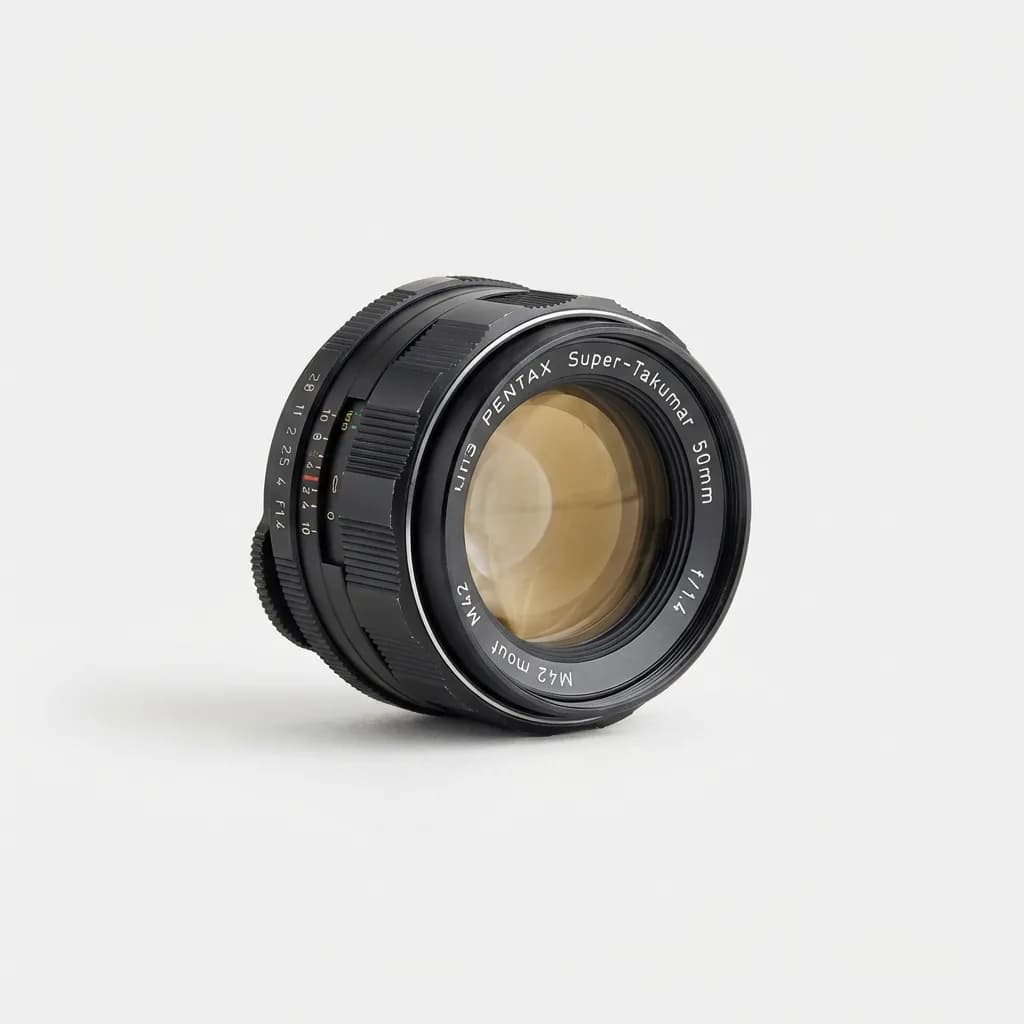
Pentax Super-Takumar 50mm f/1.4
$80-150
Legendary M42 mount fast prime from the 1960s-70s. Radioactive thorium glass creates unique rendering and warm color. Sharp wide open, creamy bokeh, all-metal construction.
Five Vintage Lenses Worth Hunting Down
The Helios 44-2 58mm f/2 is the gateway drug. Soviet-made M42 mount lens with swirly bokeh that looks like nothing else. Radioactive thorium glass (safe to use, don't lick it). Available everywhere for $30-80. It's soft wide open, sharp at f/4, and the bokeh is either magical or distracting depending on your taste.
Canon FD 50mm f/1.4 SSC is the refined option. Spectacular Bokeh, sharp across the frame even wide open, and accurate color. The breech-lock FD mount needs a specific adapter, but these lenses punch way above their $100-200 price tag. The SSC (Super Spectra Coating) version handles flare better than earlier models.
Pentax SMC Takumar 135mm f/2.5 is the portrait specialist. Insanely smooth bokeh, great contrast, and the 135mm focal length is perfect on full-frame for headshots. On APS-C it becomes a 200mm equivalent, ideal for candid work. Prices hover around $150-250 for clean copies.
Olympus OM Zuiko 28mm f/2.8 is compact, sharp, and well-corrected for a vintage wide angle. Olympus OM lenses are smaller than most vintage glass, making them perfect for travel. This particular lens is sharp corner to corner and shows minimal distortion. Expect to pay $120-180.
Minolta MD Rokkor 50mm f/1.7 delivers modern sharpness with vintage character. Minolta's multi-coating was ahead of its time, so these lenses handle backlight well. The 1.7 aperture is a sweet spot between speed and size. They're still undervalued at $60-100.
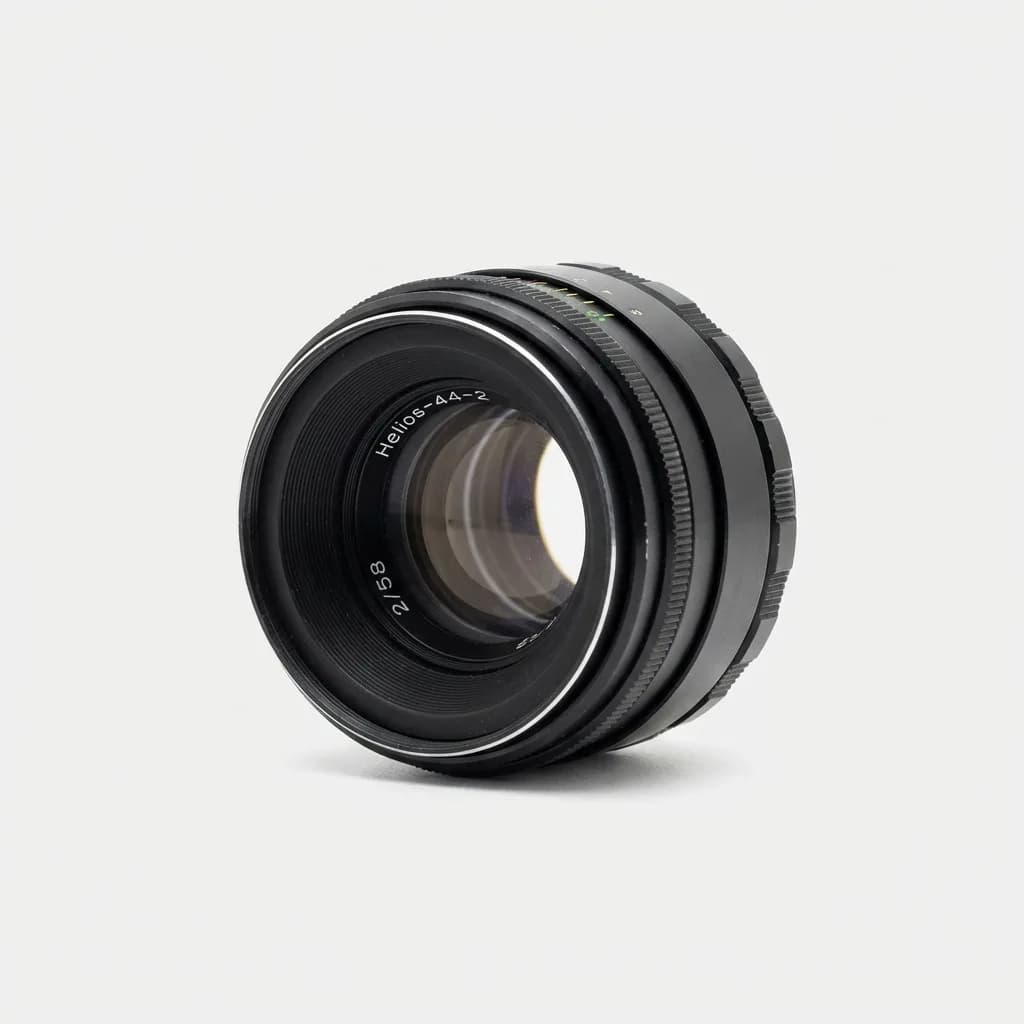
Helios 44-2 58mm f/2 Lens
$30-80
Iconic Soviet M42 mount lens famous for swirly bokeh rendering. Fast f/2 aperture, unique optical character, radioactive thorium glass element. Cult favorite for portraits and creative work.
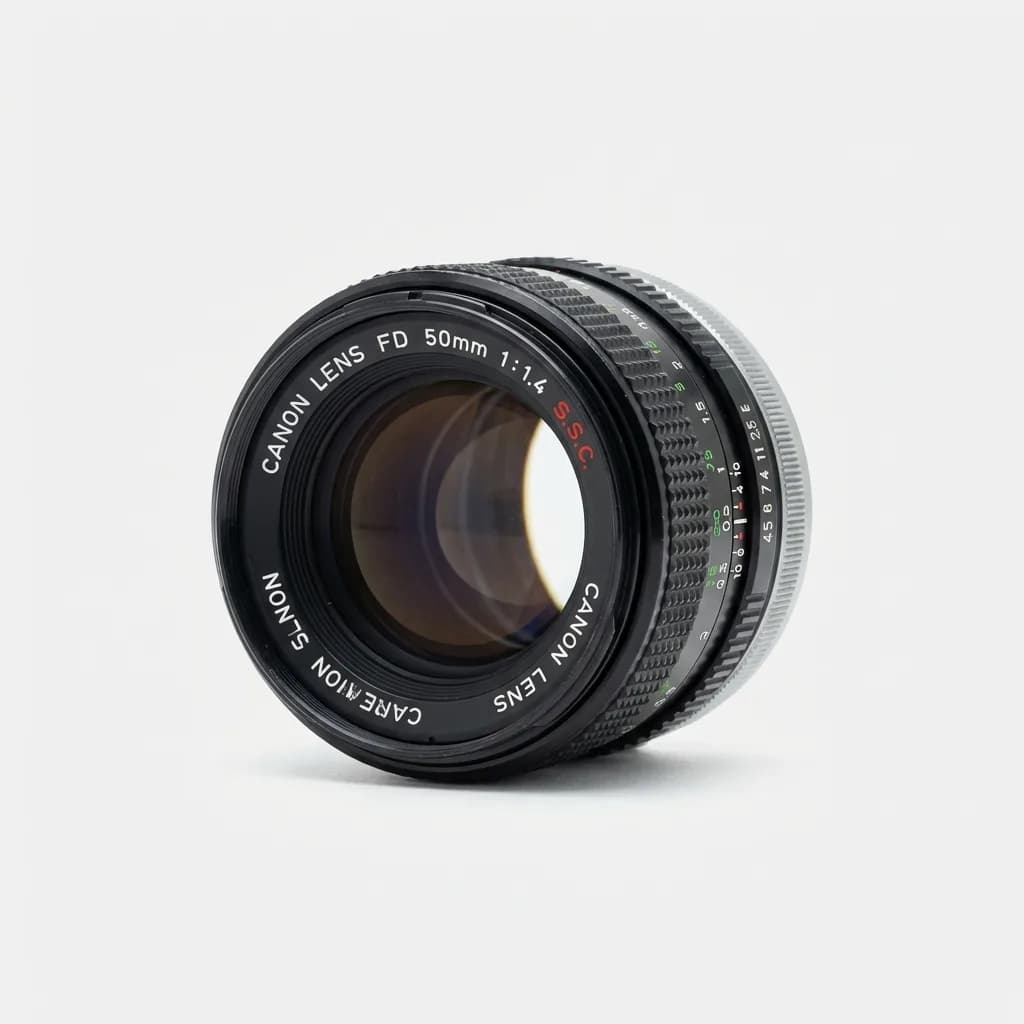
Canon FD 50mm f/1.4 S.S.C.
$100-200
Professional-grade fast prime from Canon's pre-autofocus era. Super Spectra Coating reduces flare, exceptional bokeh rendering, sharp wide open. Requires breech-lock FD adapter.
What You Give Up and What You Gain
No autofocus is the obvious sacrifice. For static subjects, landscapes, portraits with time to compose, it doesn't matter. For sports, birds, fast-moving kids, or video with tracking, it's a deal-breaker. Know your shooting style before investing in vintage glass.
No electronic communication means no EXIF data for aperture, and sometimes no aperture control at all. Many adapted lenses require setting aperture on the lens itself. Your camera records focal length and ISO but not f-stop. If you care about metadata, this gets annoying.
Flare and ghosting happen more with vintage lenses. Modern multi-coating technology is legitimately better. Shoot into the sun with vintage glass and you'll get veiling flare, reduced contrast, and rainbow artifacts. Sometimes that's the look you want. Sometimes it ruins the shot.
Image quality at the edges often suffers, especially wide open. Vintage lenses were optimized for center sharpness because that's what mattered on film. Digital sensors are less forgiving of edge softness and vignetting. Stop down to f/4-f/5.6 and most vintage lenses sharpen up considerably.
The weight and build quality are polarizing. All-metal construction feels premium, but it's also heavy. A vintage 50mm f/1.4 weighs more than a modern plastic equivalent. For some people, that's reassuring heft. For others, it's dead weight on a long shoot.
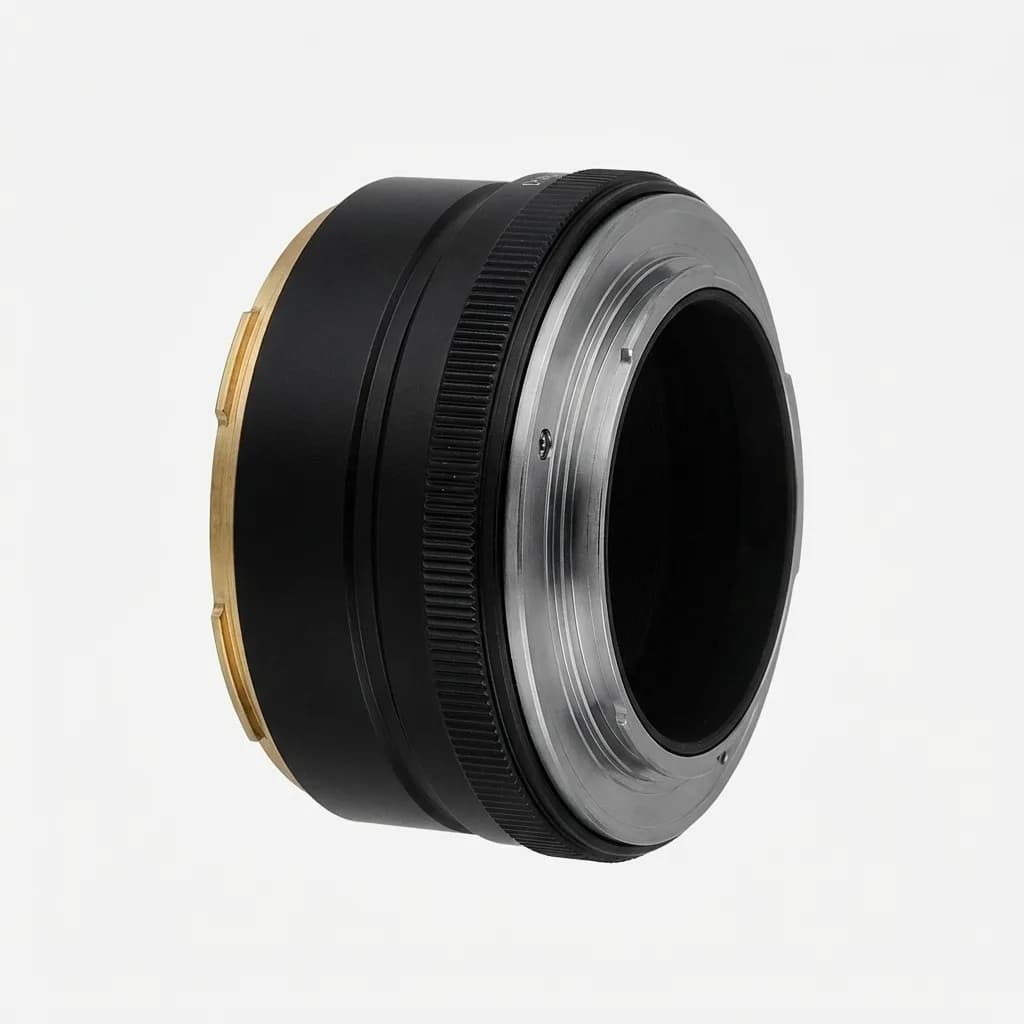
Fotodiox Pro Lens Mount Adapter
See current price
Precision-machined adapter with brass reinforcement and hardened steel mounting surfaces. Available for 20+ vintage mount combinations. Built-in aperture control ring for lenses without aperture rings.
Common Mistakes to Avoid
Buying adapters with glass elements unless you specifically need infinity focus correction. "Speed booster" adapters that include optics can introduce softness, chromatic aberration, or vignetting. If your camera mount allows, use simple mechanical adapters with no glass.
Overpaying for "rare" lenses that were actually mass-produced. The Helios 44-2, for example, was made in the millions. Anyone asking $150+ is pricing for hype, not scarcity. Do basic research on production numbers before buying.
Ignoring fungus, haze, and separation. Vintage lenses sat in closets for decades. Check photos carefully for spots inside elements (fungus), cloudiness (haze from coating degradation), or separation between cemented elements. Surface dust is fine. Internal issues ruin image quality.
Adapting lenses designed for smaller image circles to full-frame sensors. Some vintage lenses were made for smaller film formats or crop sensors. They'll vignette heavily on full-frame. Check the lens was designed for 35mm film or larger before adapting to full-frame digital.
Expecting vintage lenses to match modern clinical sharpness. They won't, and that's not the point. If you pixel-peep at 100% and complain about corner softness, you're using the wrong tool. Vintage glass is about character, rendering, and the joy of manual focus.
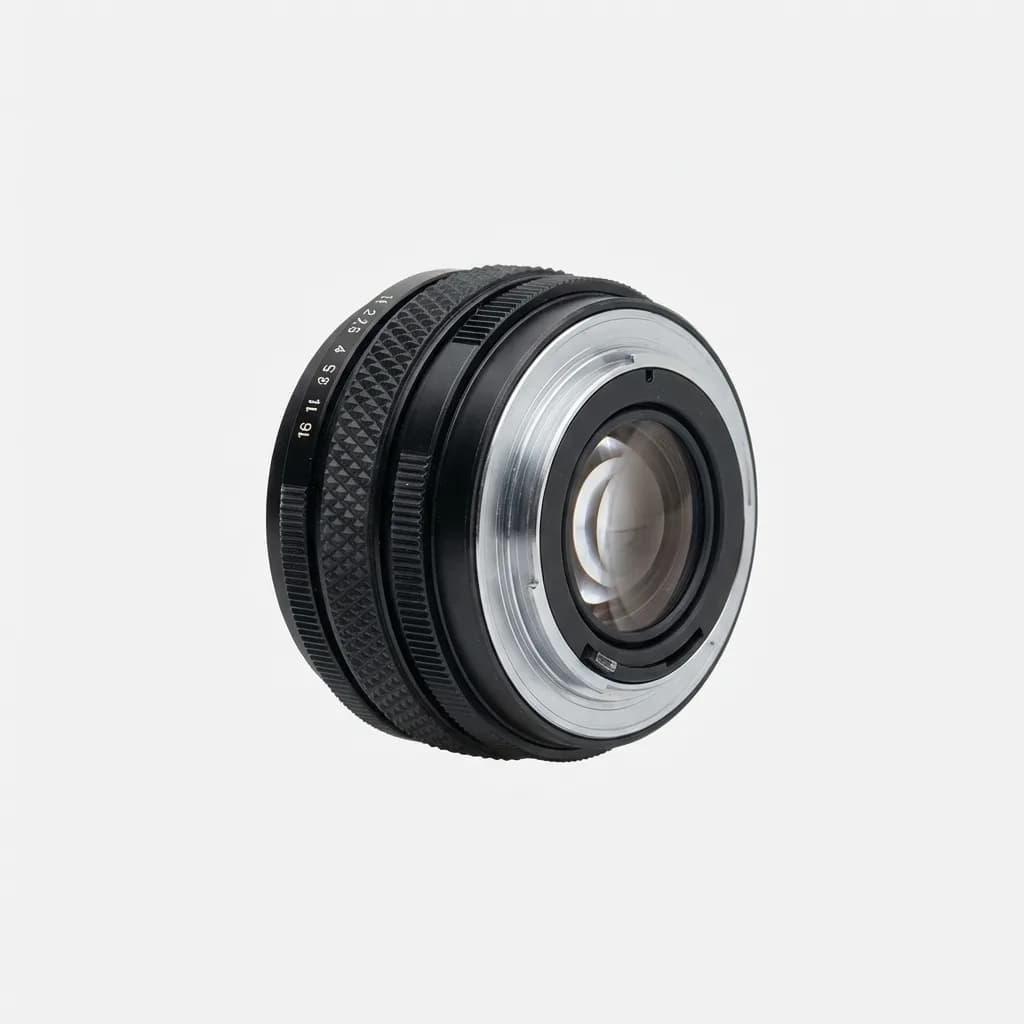
Olympus OM Zuiko 50mm f/1.8
$60-120
Compact fast prime from Olympus's legendary OM system. Excellent sharpness, neutral color rendering, smooth focus ring. One of the smallest vintage 50mm lenses available.
Is Vintage Glass Right for Your Work?
If you shoot landscapes, architecture, or product work where you're on a tripod with time to focus precisely, vintage lenses excel. Manual focus is no handicap when nothing's moving, and the unique rendering adds character to images that can look clinical with modern glass.
Portrait photographers get the most from vintage lenses. Fast fifties and short telephoto primes render skin tones beautifully, and the slightly lower contrast is flattering. The manual focus ritual slows you down in a good way, creating space for connection with your subject.
Street photography was invented with manual focus lenses. Zone focusing, pre-focusing, and shooting from the hip all work better with mechanical focus and hard stops. Plus, vintage lenses are small enough to keep your kit discreet.
Video shooters should think twice unless you're rigging focus pulls. Smooth manual focus is great for cinematic work, but if you need continuous autofocus for run-and-gun video, adapted vintage glass won't cut it. The exception is controlled narrative work where you're pulling focus deliberately.
Action, sports, and wildlife shooters should skip vintage glass entirely. You need autofocus, you need tracking, and you need modern optical stabilization. Manual focus on a moving subject is possible but frustrating. Use the right tool for the job.
The best reason to try vintage lenses isn't practical, it's experiential. Manual focus makes you think about composition, about decisive moments, about what you're actually trying to capture. Modern autofocus is incredible, but it can turn photography into pointing and clicking. Vintage glass reminds you that photography is a craft, not just a technology.
Start with one inexpensive fast fifty - a Helios, a Pentax, a Canon FD. Spend a weekend shooting only that lens. If the rendering clicks for you, if the manual focus feels natural, if the images have something your modern glass doesn't, then dive deeper. If it feels like fighting your tools, stick with autofocus and don't look back. There's no wrong answer, just different approaches to making images that matter to you.
The Weekly Dispatch
Enjoying this article?
Subscribe and get our best gear picks delivered every Sunday morning.
Related Stories
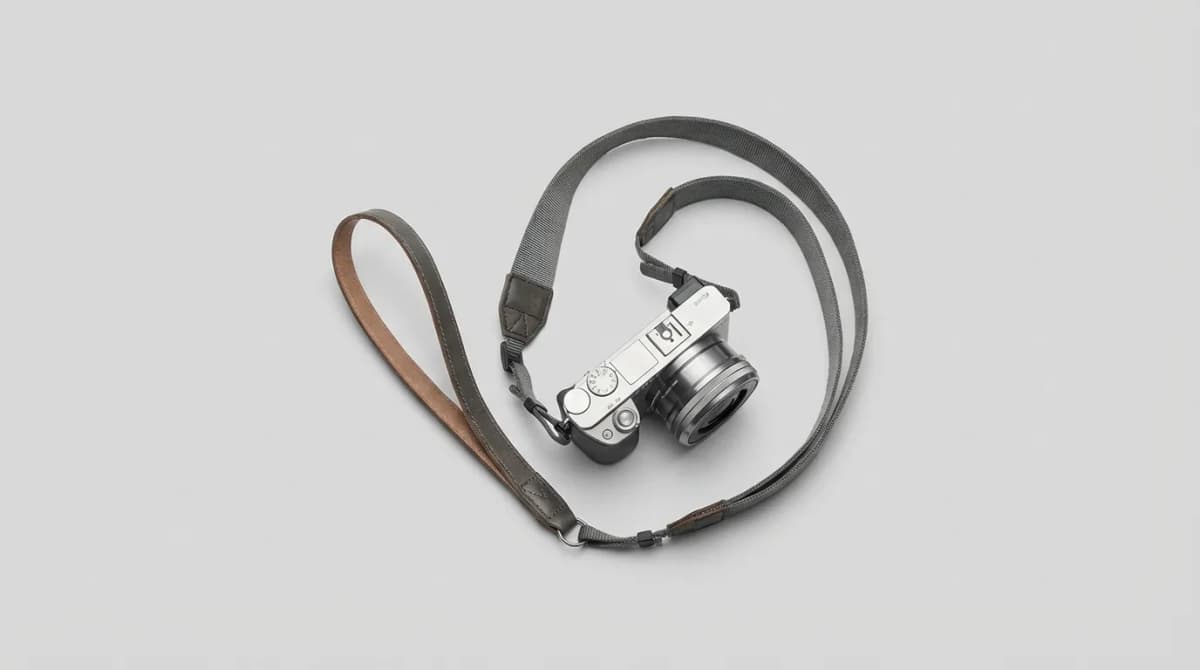
Wrist Straps vs Neck Straps for Street Shooters
Street shooters face a choice: wrist straps offer stealth and quick draw access, while neck straps distribute weight better. Here's how to match your strap to your shooting style.
How to Choose a Lens Ecosystem in 2026
Picking a lens mount locks you into decades of glass purchases. We break down cost, availability, size, and future-proofing for every major system.
Best Travel Photography Kit Under $500
Build a complete travel photography kit for under $500. Real-world camera body, lens, and accessory recommendations that prioritize portability without sacrificing image quality.