Smart EDC: Trackers, Wallets, and Charging That Work
Smart EDC tech promises convenience but often adds bulk and failure points. Here's what actually works for everyday carry without the headaches.
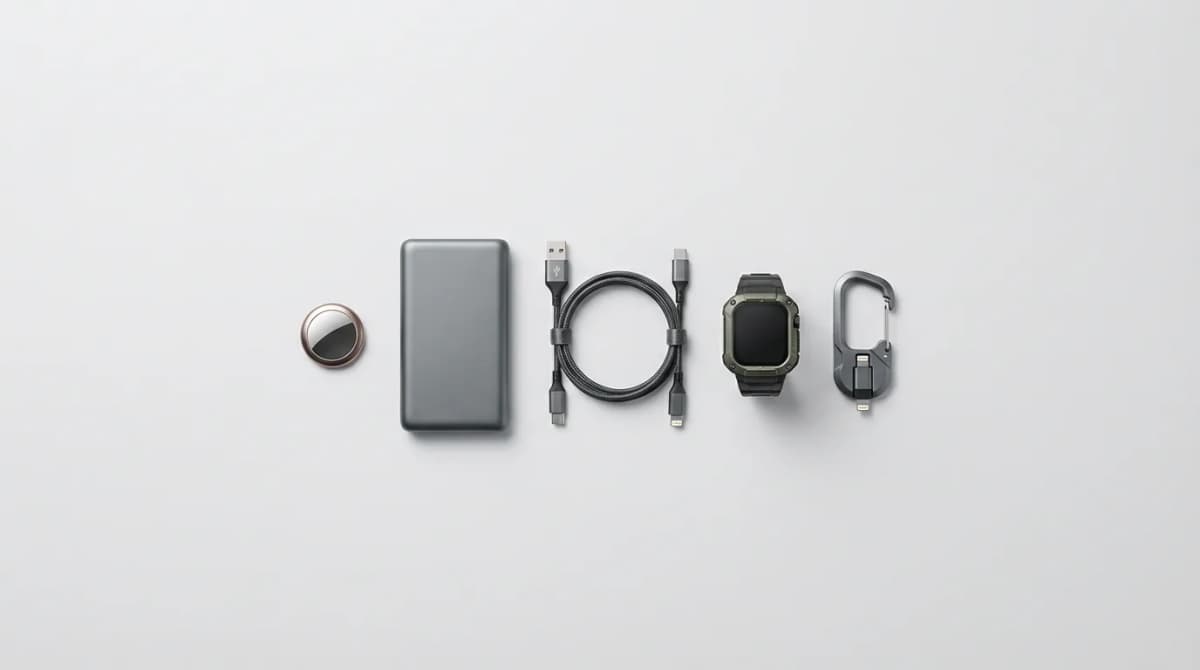
Your keys are in the couch cushions again. Your wallet's battery died three months ago and you never recharged it. The tracker you clipped to your backpack stopped connecting to your phone somewhere between the office and the coffee shop.
Smart EDC gear sounds great in theory. In practice, most of it adds bulk, requires constant charging, and fails exactly when you need it. But some combinations actually work. The difference comes down to knowing which tech solves real problems and which creates new ones.
Why Most Smart EDC Fails
The problem isn't the technology. It's the mismatch between what these devices need and how EDC actually works.
Traditional EDC items are passive. Your wallet doesn't need power. Your keys don't need updates. Your pen doesn't require pairing. Smart EDC inverts this. Now your everyday items need batteries, connectivity, and regular attention.
Most people don't want to manage their gear. They want their gear to work. That's why the best smart EDC either requires zero maintenance or integrates so seamlessly into existing routines that the overhead disappears.
Battery life matters more than features. A tracker that lasts six months beats one that lasts two weeks, even if the short-lived option has a speaker and LED lights. Replaceable batteries beat rechargeable for anything you might forget about for months.
Trackers That Actually Make Sense
AirTags work because Apple solved the maintenance problem. The CR2032 battery lasts a year. The Find My network is passive. You don't configure anything beyond the initial pairing.

Apple AirTag 4 Pack
$79
CR2032 battery lasts over a year, leverages Apple's Find My network with precise finding on iPhone 11 and newer. Water resistant (IP67).
The key is treating AirTags as insurance, not navigation. Drop one in your travel bag, stick one in the car, put one in the gear you'd genuinely panic about losing. Don't put them on things you check for constantly anyway.
Tile has better third-party integrations and works cross-platform, but the network effect matters. In dense urban areas, Tile works fine. In suburban or rural settings, Apple's network wins by sheer device count.

Tile Pro 2-Pack
$55
400-foot Bluetooth range, replaceable CR2032 battery lasts one year, works with Alexa and Google Assistant. Loud 119dB ringer.
The Tile Pro makes sense if you're in the Android ecosystem or need the louder speaker for finding items in the house. The range advantage over AirTag matters in large homes or offices.
Smart Wallets: Skip the Battery
Wallets with built-in batteries are a solution searching for a problem. The Ridge Wallet with an AirTag holder makes more sense than any rechargeable smart wallet we've tested.
Why? Separation. The wallet is passive. The tracker is modular. If the AirTag dies, you swap the battery in 30 seconds. If you want to stop carrying the tracker, you remove it. The wallet doesn't become e-waste when the battery stops holding a charge.

Ridge Wallet with AirTag Case
$125
Aluminum or carbon fiber frame, RFID blocking, holds 1-12 cards. AirTag holder adds 2mm thickness, keeps tracker flush with wallet profile.
Ekster's solar-powered wallets are the exception. Solar charging removes the maintenance overhead, but you're still adding thickness and weight for tracking you could accomplish with a separate AirTag in a sleeve pocket.
The better approach: slim wallet plus a separate tracker in your bag or jacket. If you lose the wallet, the tracker in your bag won't help, but most people lose bags more often than wallets anyway.
Charging: What You'll Actually Carry
Portable chargers follow the same rule as all EDC: if it's annoying to carry, you won't carry it. That eliminates most high-capacity bricks.
The Anker Nano Power Bank hits the sweet spot. 5,000mAh gives you one full phone charge. The built-in USB-C connector means no cable. It's thin enough to pocket comfortably.

Anker Nano Power Bank, 5000mAh
$30
Built-in USB-C connector (no cable needed), 22.5W fast charging, 0.6-inch thin profile, charges iPhone 14 to 50% in 30 minutes.
For travel, the RAVPower 20,000mAh makes sense. Multiple ports, pass-through charging, enough capacity to handle a tablet and phone for a long flight.

RAVPower 20000mAh Power Bank
$40
20,000mAh capacity charges iPhone 14 up to 4 times, dual USB ports (USB-C and USB-A), 18W fast charging, LED indicator.
Wireless charging pads for home or office eliminate the cable fumble. The Anker 313 is cheap, reliable, and won't slide around on your desk.
The Reliability Problem
Every smart device adds a potential failure point. The question isn't whether it will fail, but when, and whether you'll notice before it matters.
Trackers fail silently. Your AirTag battery dies and you don't know until you need it. Set a calendar reminder every 10 months to check batteries across all your trackers at once. Pull them all, test them, replace the weak ones.
Charging gear fails obviously. A dead power bank is immediately apparent. The issue is remembering to recharge the charger. If you use your power bank more than once a week, get two. Keep one charging while carrying the other. Swap them on a fixed schedule.
The most common failure isn't hardware. It's forgetting to bring the thing. Smart EDC only works if it's actually in your pocket or bag when you need it. That means the gear has to be light enough, thin enough, and unobtrusive enough that carrying it feels like nothing.
Combos That Work
The minimal smart EDC setup: AirTag in your backpack or daily bag, Anker Nano power bank in your pocket. That's it. Everything else is optional.
The expanded setup adds an AirTag to your keys and one to your car. Now you've covered the high-value items people actually lose.
For travel, add the larger power bank and a second AirTag for checked luggage. That's the full kit.
What Not to Bother With
Smart rings that track your keys: redundant if you already have AirTags, and the battery life is terrible.
Rechargeable smart wallets: maintenance overhead isn't worth the convenience. A slim wallet plus a separate tracker beats integrated every time.
Subscription trackers: Tile Premium, for example. The network already works without paying. The added features (smart alerts, extended warranty) don't justify the recurring cost for most people.
Charging cables with built-in batteries: they're heavier than a separate cable and power bank, and you can't replace components when one fails.
Bluetooth-enabled keychains that beep: your phone already does this better with AirTags or Tile. Don't pay for redundant functionality.
When Smart EDC Makes Sense
If you fly more than once a month, trackers in luggage are non-negotiable. Lost bag recovery time drops from days to hours when you can tell the airline exactly where your bag is.
If you work remotely and move between locations (coffee shops, coworking spaces, home office), a power bank eliminates outlet anxiety. You're not scanning for wall plugs or asking staff if you can plug in.
If you're responsible for expensive gear (cameras, laptops, tools), trackers provide peace of mind and actual recovery capability. The cost of one AirTag is nothing compared to replacing a $2,000 camera body.
If none of these apply, you probably don't need smart EDC. Your existing setup is fine.
The Future (That's Not Here Yet)
Ultra-wideband tracking with directional finding is impressive on newer iPhones, but it doesn't change the fundamental value proposition. You still need to be within Bluetooth range for it to work, and most lost items aren't lost because you can't pinpoint them to the inch. They're lost because they're in a different building or city.
Solar-powered everything sounds appealing, but solar panels add size and weight. Until someone cracks ultra-thin, flexible, high-efficiency solar that's cheaper than a CR2032 battery, it's not worth it for most EDC items.
Mesh networks for trackers (like Tile's) might close the gap with Apple's Find My network, but only if adoption grows significantly. Right now, the network effect heavily favors Apple in most regions.
What Actually Matters
Smart EDC works when it reduces mental overhead instead of adding to it. AirTags work because you genuinely forget they exist until you need them. Good power banks work because they're small enough to carry without thinking about it.
The rest is noise. You don't need seven different smart devices in your pockets. You need one or two that solve real problems without creating new ones.
Start minimal. Add only what you'll actually use. Ignore the rest.
The Weekly Dispatch
Enjoying this article?
Subscribe and get our best gear picks delivered every Sunday morning.
Related Stories

Best Bluetooth Trackers of 2026: Never Lose Your Keys
AirTag, Tile, and Chipolo go head-to-head. We compare range, battery life, network coverage, and privacy to help you pick the right tracker for keys, wallets, and bags.
EDC for Remote Work Days at Cafes
Working from cafes requires different gear than your home office. Here's what actually matters when you're competing for outlets and dealing with noise.
Best MagSafe Car Mounts for Commuters
MagSafe car mounts promise one-handed convenience, but many fail under vibration and heat. We tested the mounts that actually hold through rough roads.