How to Choose Your First Quality Watch
Your first quality watch is an investment piece that goes beyond telling time. Here's how to navigate movements, materials, and budgets to find one worth keeping.
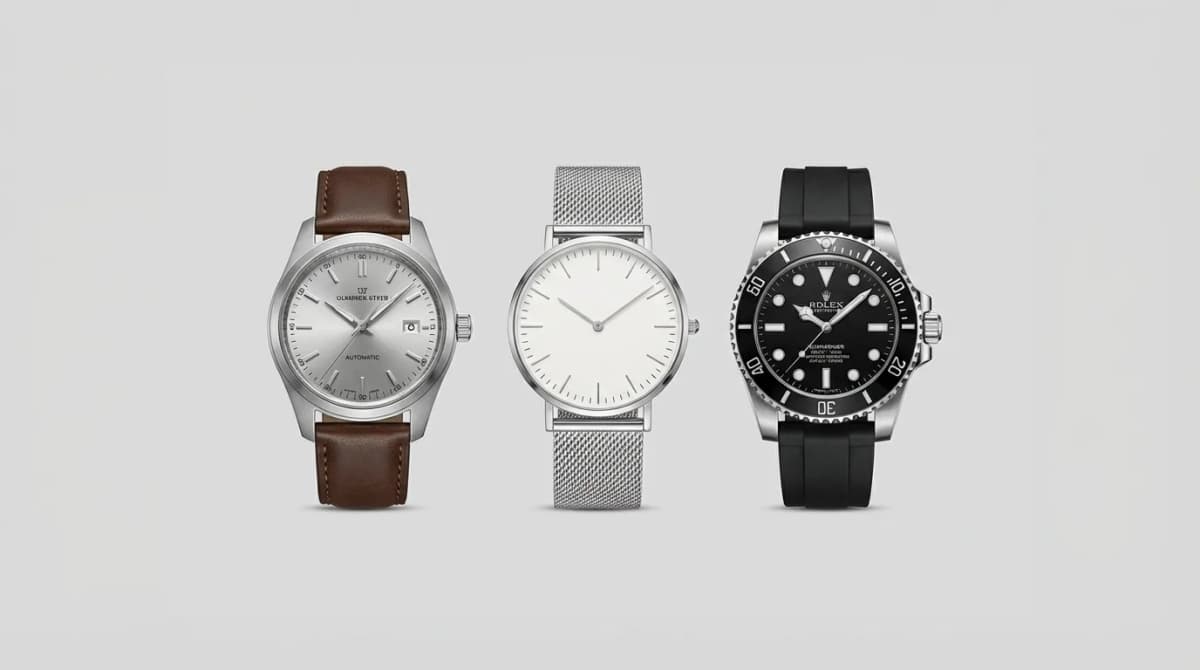
Your phone tells better time than any watch ever could. So why spend hundreds or thousands on a mechanical wristwatch? Because a quality watch is about craft, longevity, and wearing something engineered to last decades. Your first one teaches you what matters in a timepiece and what's just marketing noise.
Most people waste their first watch purchase on something they'll regret within a year. They chase brand names without understanding movements, or buy quartz when they really wanted automatic, or pick a 44mm case that wears like a dinner plate. We're breaking down exactly what to look for so your first quality watch becomes a keeper instead of a learning experience.
Understanding Watch Movements: Quartz vs Automatic vs Manual
The movement is the engine. It's the single biggest factor in price and long-term satisfaction.
Quartz movements use a battery and are accurate to within seconds per month. They're low-maintenance, reliable, and affordable. A $200 quartz watch will keep better time than a $5,000 automatic. If you want precision and never think about winding, quartz makes sense. Brands like Citizen and Seiko make excellent quartz watches that last decades.
Automatic movements wind themselves as you wear them. They're mechanical, visible through a display caseback, and require no battery. They'll gain or lose 10-30 seconds per day, which sounds terrible until you realize the appeal isn't accuracy. It's owning a tiny machine built from hundreds of parts. Automatics need servicing every 5-10 years, which costs $200-500 depending on the brand.
Manual-wind movements require daily winding. They're traditional, often slimmer than automatics, and connect you to the watch ritual. Most serious collectors end up preferring manual wind, but for a first watch, automatic is usually the better choice.
For your first quality piece, we recommend automatic. You get the mechanical experience without daily winding, and it teaches you how a real watch behaves.
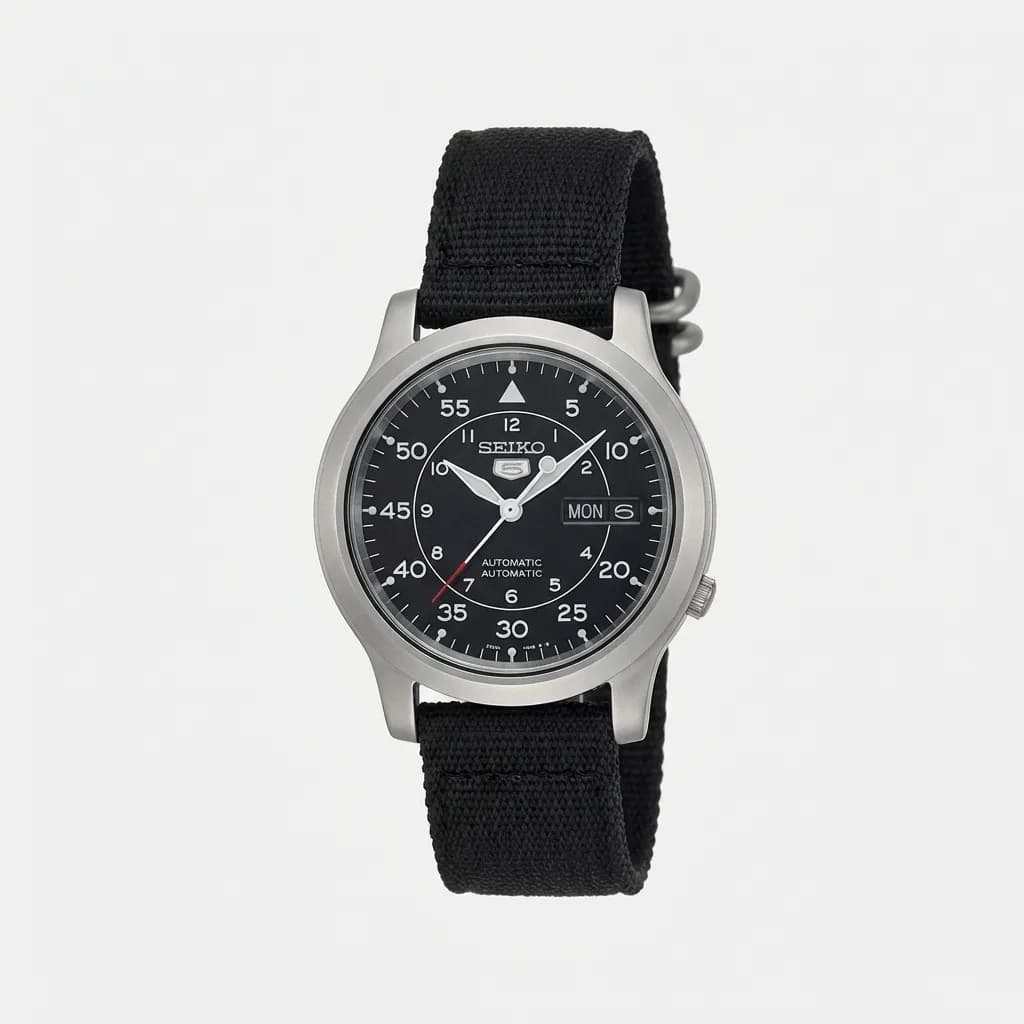
Seiko 5 SNK809 Automatic
$99
Reliable 7S26 automatic movement, 37mm case that fits most wrists, and a price point that makes mechanical watches accessible without compromise.
Case Size and Material: What Actually Fits Your Wrist
Case diameter means nothing without lug-to-lug measurements. A 42mm watch with short lugs can wear smaller than a 40mm with long ones. For most men, 38-42mm is the sweet spot. If your wrist is under 6.5 inches, stay below 40mm. Over 7.5 inches, you can go to 44mm without looking ridiculous.
Measure your wrist before you buy. Use a tape measure or string, then check lug-to-lug specs online. A watch shouldn't overhang your wrist, and the lugs shouldn't extend past the edges.
Stainless steel is standard for good reason. It's durable, takes a polish, and doesn't react with skin. 316L stainless is what you'll find on most watches under $1,000. It's the same grade used in surgical instruments.
Titanium is lighter and hypoallergenic but scratches more easily and costs more. Unless you have nickel allergies or want the lightest possible watch, stick with steel for your first piece.
Gold-plated and gold-tone cases look cheap and wear through to base metal. Real gold is out of budget for most first watches. If you want warmth, get a watch with a sunburst dial or bronze case instead.
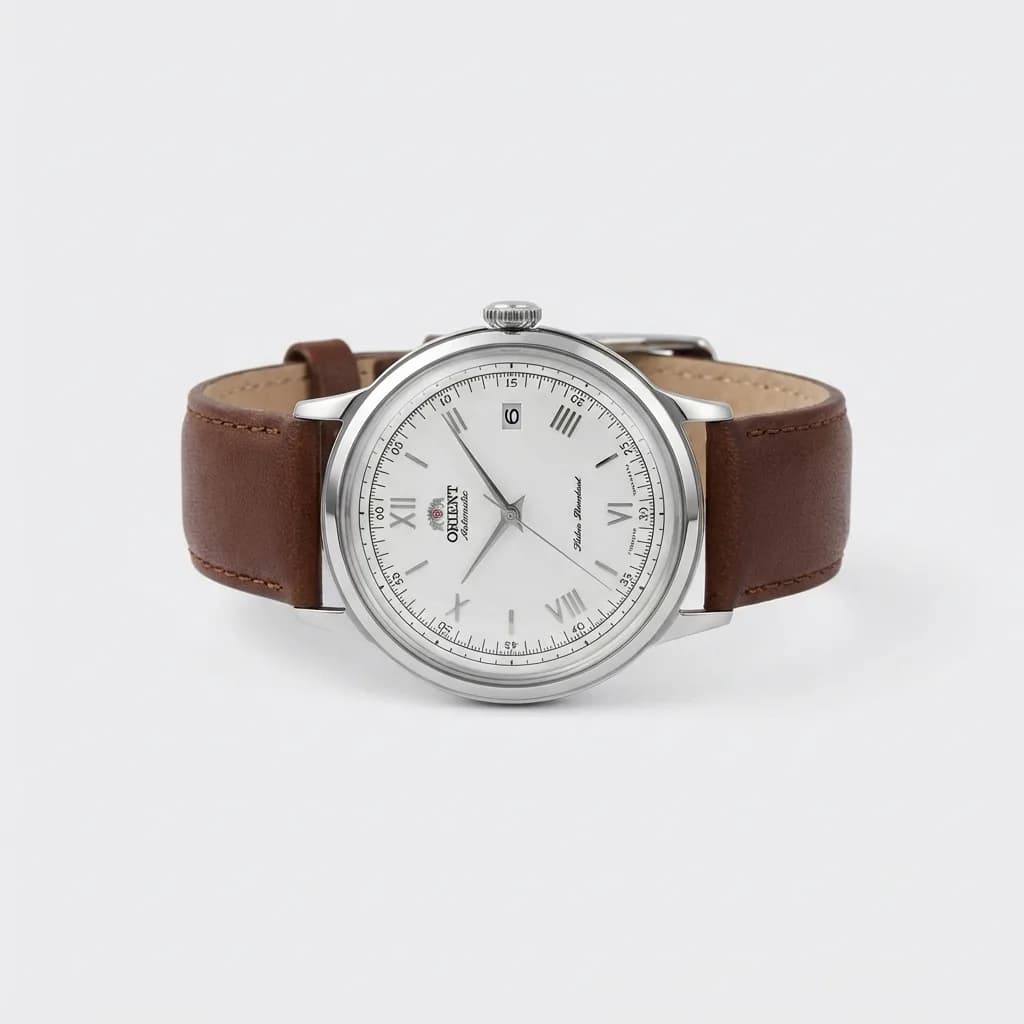
Orient Bambino Version 4
$140
40.5mm polished steel case with domed crystal, in-house automatic movement, and classic dress watch proportions at an entry-level price.
Bracelet vs Strap: Comfort and Versatility Matter
A watch on a bracelet feels more substantial and finished. Bracelets are sweat-resistant, adjust precisely with removable links, and last as long as the watch itself. Good bracelets have solid end links (not hollow) and solid links throughout. Cheap bracelets rattle and feel tinny.
Leather straps are classic and dress up or down depending on style. They wear out every 1-3 years depending on use and sweat exposure. Budget $30-80 for replacement straps from quality makers. Leather works best in dry climates and office environments.
NATO straps and canvas pass under the case, so the watch can't fall off even if a spring bar fails. They're casual, comfortable, and you can swap them in 30 seconds. A $15 NATO can completely change a watch's look. If you want one watch that works for multiple settings, get it on a bracelet and buy a couple straps.
Rubber straps are best for dive watches and sports pieces. They handle water and sweat without degrading. Quality rubber straps cost $50-150 and outlast leather by years.
For a first watch, we prefer bracelet. You get the full finished look, and you can always add straps later for $20-50.
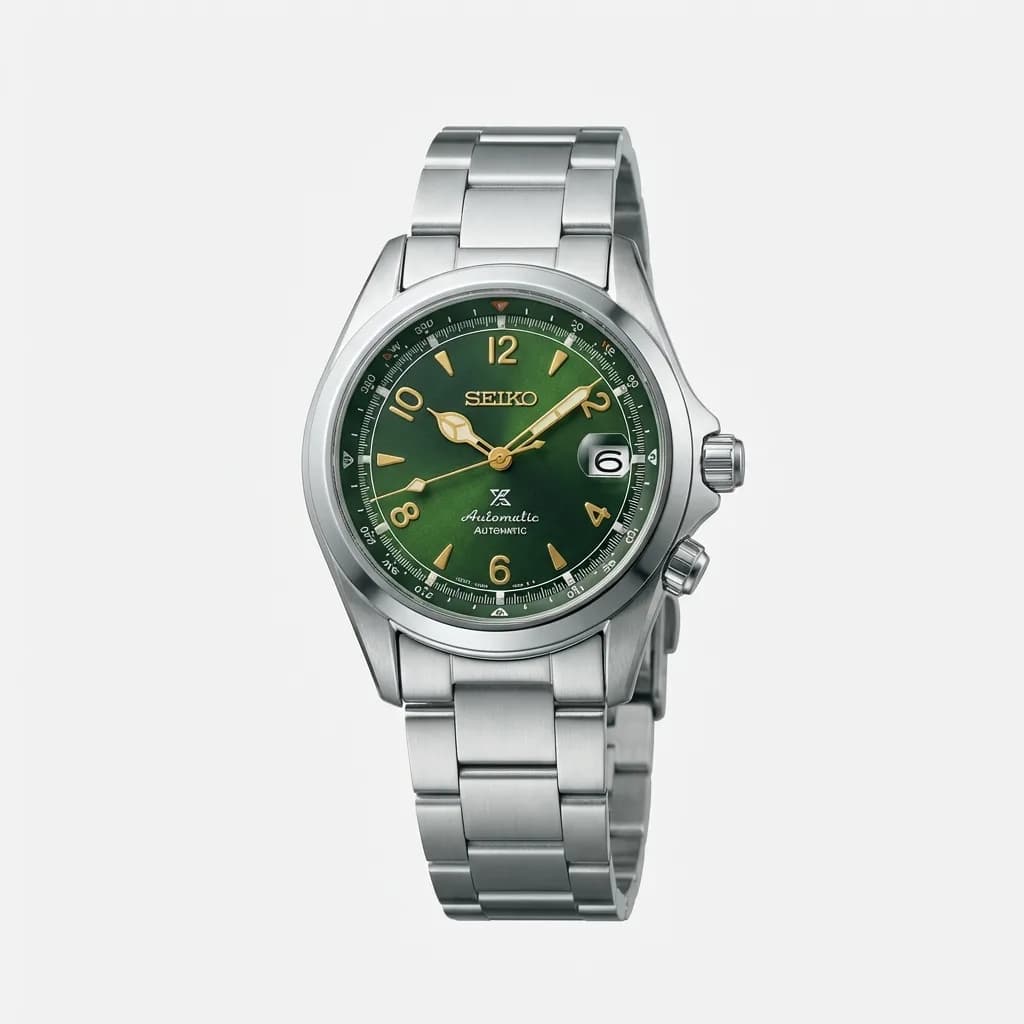
Seiko Alpinist SPB121
$625
39.5mm steel case with green sunburst dial, 6R35 automatic movement with 70-hour power reserve, comes on a comfortable bracelet with solid end links.
Budget Tiers: What You Get at Each Price Point
Under $200: You're in quartz or entry-level automatic territory. Seiko 5, Casio, Citizen, Timex, and Orient all make solid watches here. Expect mineral crystal (scratches easier than sapphire), stamped bracelets, and basic movements. These are great learning watches. If you're unsure whether you'll wear a watch daily, start here.
$200-500: This is the sweet spot for first automatic watches. You get sapphire crystals, better finishing, improved movements with hand-winding and hacking seconds, and bracelets that don't feel cheap. Orient, Seiko, Hamilton, and Tissot dominate this range. The watches look and feel like they cost twice as much.
$500-1,000: You enter Swiss-made territory and higher-grade Japanese movements. Cases are better finished, bracelets are excellent, and you start seeing complications like GMT hands and chronographs. Hamilton, Tissot, Longines (on sale), and high-end Seiko models live here.
Over $1,000: You're paying for brand heritage, in-house movements, and finishing details most people won't notice. Unless you're deep into watches as a hobby, your first piece doesn't need to cost this much. That said, if you want a watch you'll wear for 20 years and pass down, Tudor, Omega (used), and Longines are entry points to true luxury.
We recommend starting in the $200-500 range. You get quality that lasts without the anxiety of wearing something expensive while you're still learning what you actually want.
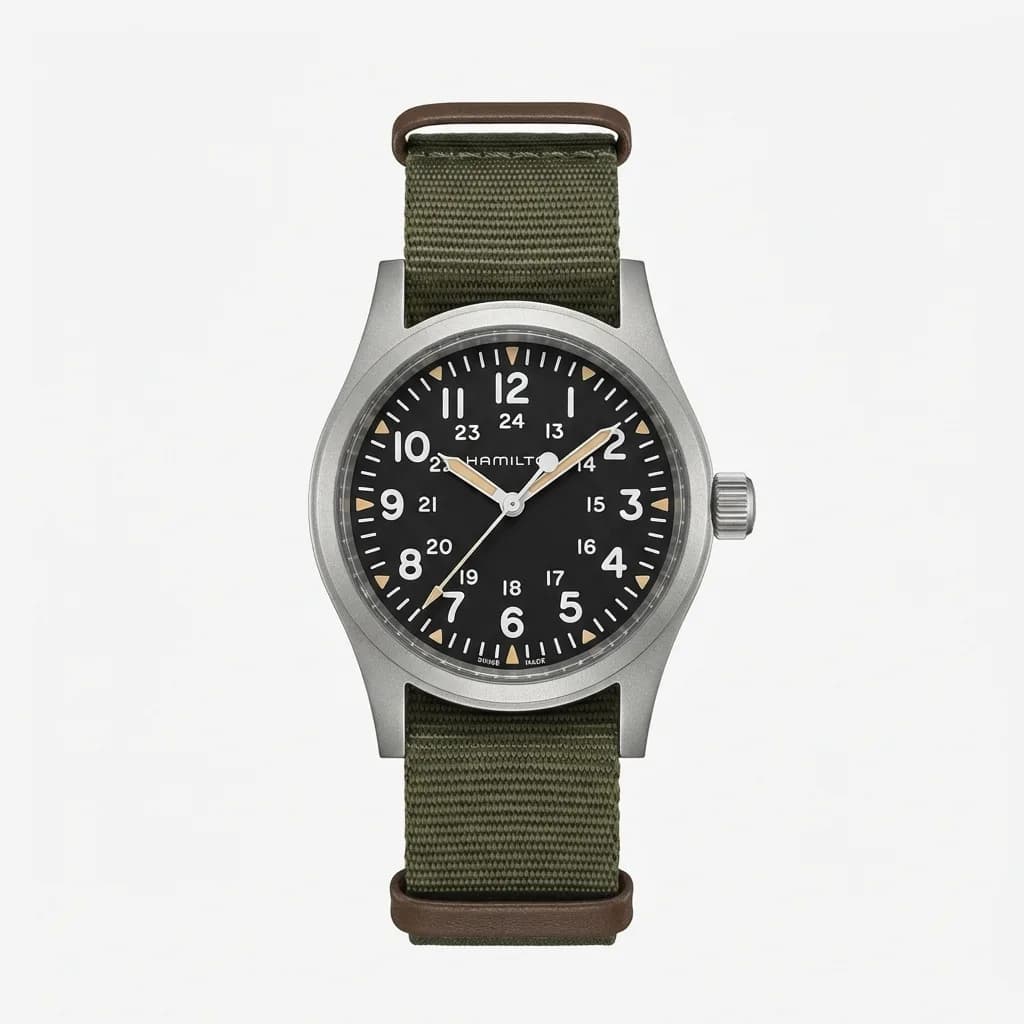
Hamilton Khaki Field Mechanical
$495
38mm stainless case with vintage military styling, hand-wind mechanical movement, 80-hour power reserve, and Swiss reliability at an accessible price.
What Style Works for Your Life?
Dress watches are thin, simple, and usually under 40mm with leather straps. They slide under a cuff and don't call attention. If you wear a suit or button-downs regularly, this is your move. Look for clean dials, minimal complications, and polished cases.
Field watches are military-inspired with high-contrast dials and durable cases. They work with everything from jeans to blazers. Most have 100m water resistance and fixed bezels. These are daily-wear champions.
Dive watches are chunky, water-resistant to 200m+, and feature rotating bezels. They're casual, extremely durable, and popular because they handle everything. Divers work in board rooms and oceans equally well. They're also the most over-marketed category, so watch out for cheap homages to Rolex and Omega.
Chronographs have stopwatch functions via pushers and subdials. They're busier visually and thicker on the wrist. Unless you actually time things regularly, skip the chronograph for your first watch. The complication adds cost and complexity without much benefit.
Pilot watches have large cases, high legibility, and often include GMT complications. They're bold and work best on larger wrists.
Your first watch should match your actual life. If you're in tech or startups, a field watch or minimal dive watch makes sense. Finance or law, go dress watch. If you genuinely don't know, get a 38-40mm field watch on a bracelet. It covers 90% of situations.
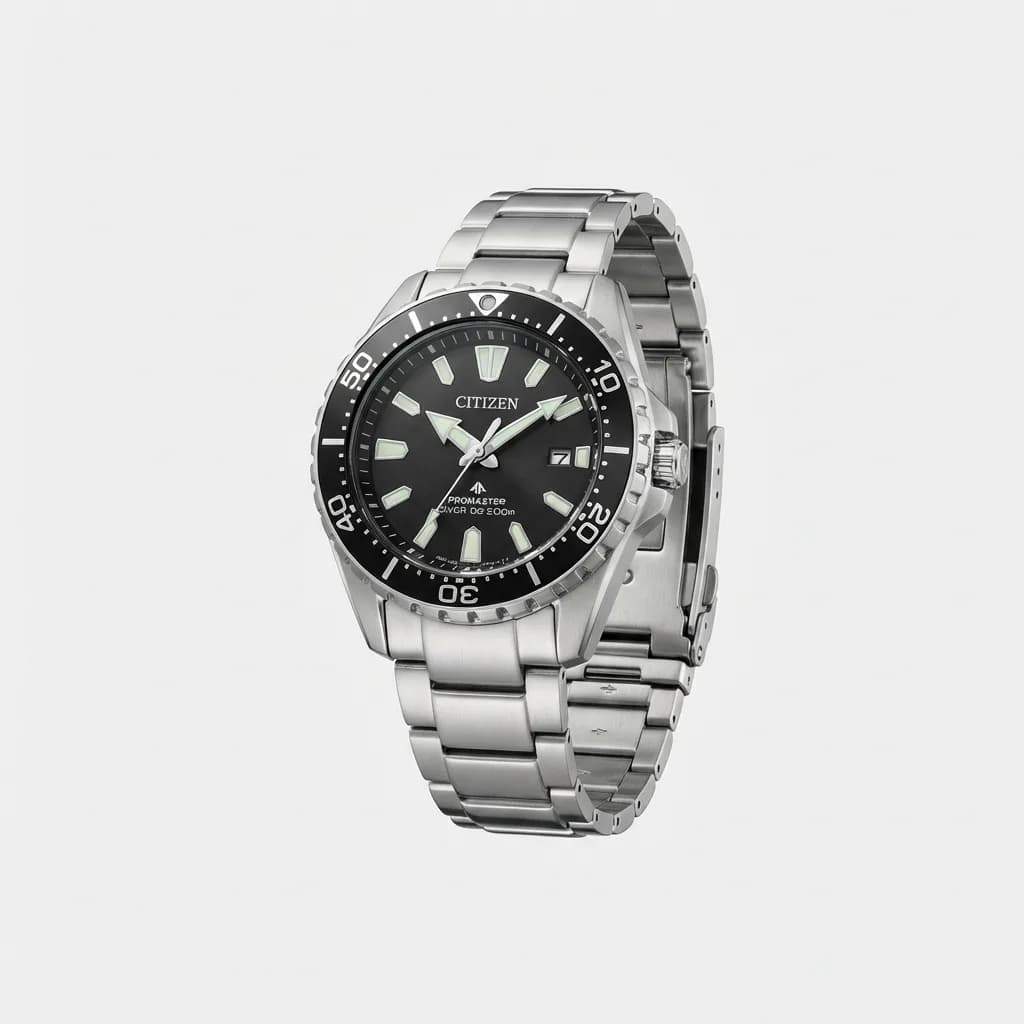
Citizen Promaster Diver
$275
42mm ISO-certified dive watch with Eco-Drive solar movement, 200m water resistance, and a bracelet that punches way above its price point.
Common First Watch Mistakes to Avoid
Buying too big. A 44mm watch looks dramatic in product photos and absurd on a 6.5-inch wrist. Try it on in person or check YouTube videos of people with your wrist size wearing that model.
Chasing brand names without understanding value. A $500 Seiko often has better finishing and a more reliable movement than a $500 fashion brand watch. Brand heritage matters, but so does what's actually inside the case.
Ignoring water resistance. Even if you never swim with it, you want at least 50m resistance so you're not paranoid around sinks. 100m is better. Anything labeled "water resistant" without a depth rating isn't.
Buying quartz when you want the mechanical experience, or buying automatic when you really just want accurate time and low maintenance. Be honest about what appeals to you.
Skipping the return policy. If you buy online, make sure you can return it. Watches photograph differently than they wear, and sometimes a piece just doesn't work on your wrist.
Where This Leaves You
Your first quality watch teaches you what you value. Some people discover they love the ritual of winding and keeping time. Others just want a reliable piece they forget about until they glance down. Both are fine.
Start with something in the $200-500 range from a known brand. Get it on a bracelet if possible. Wear it for six months before buying another. You'll learn whether you prefer 38mm or 42mm, whether you want complications or simplicity, whether that polished case scratches too easily for your lifestyle.
The best first watch is one you'll actually wear. It's not about impressing anyone. It's about having a well-made tool on your wrist that does its job for the next decade.
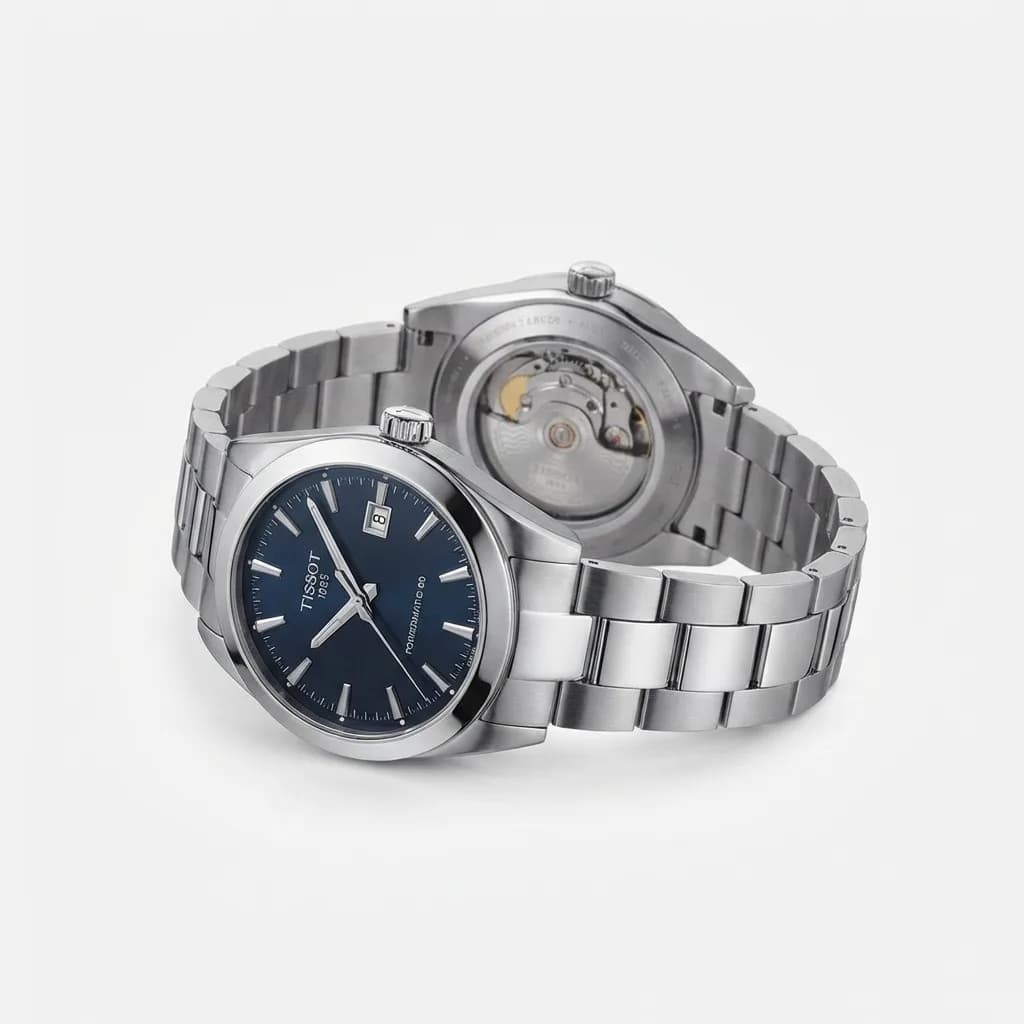
Tissot Gentleman Powermatic 80
$695
40mm Swiss automatic with 80-hour power reserve, silicon balance spring for better accuracy and magnetism resistance, and finishing that competes with watches twice the price.
The Weekly Dispatch
Enjoying this article?
Subscribe and get our best gear picks delivered every Sunday morning.
Related Stories
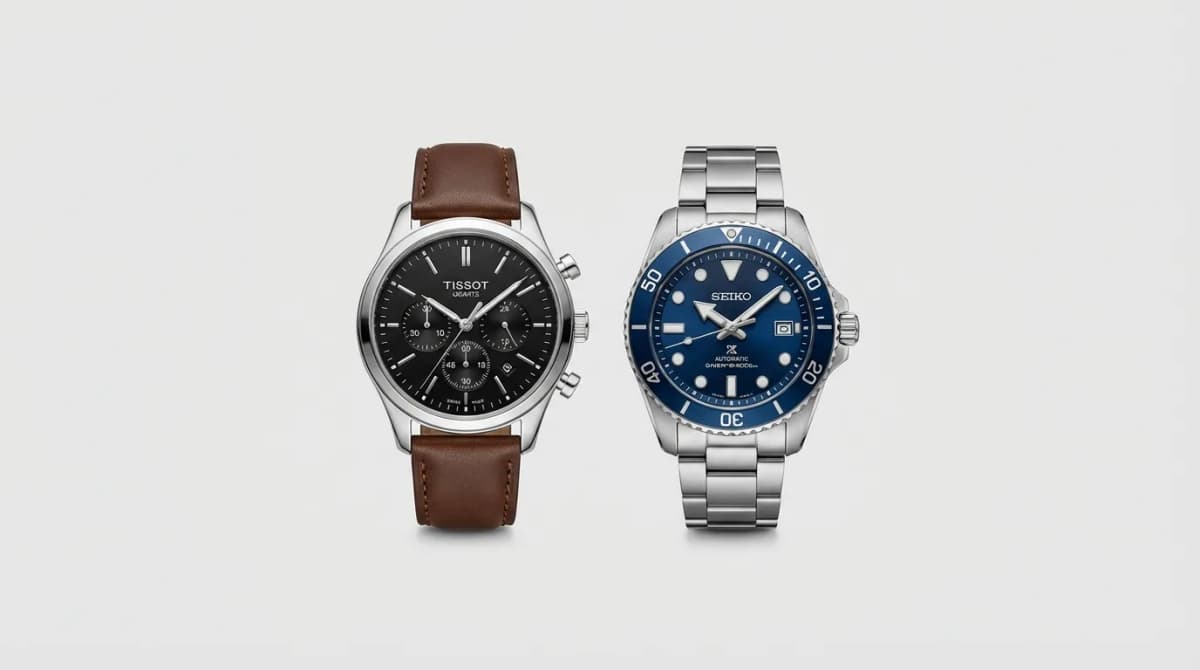
Quartz vs Mechanical Watches: Complete Guide
Understand the real differences between quartz and mechanical movements, from accuracy and maintenance to value and longevity, to choose the right watch.
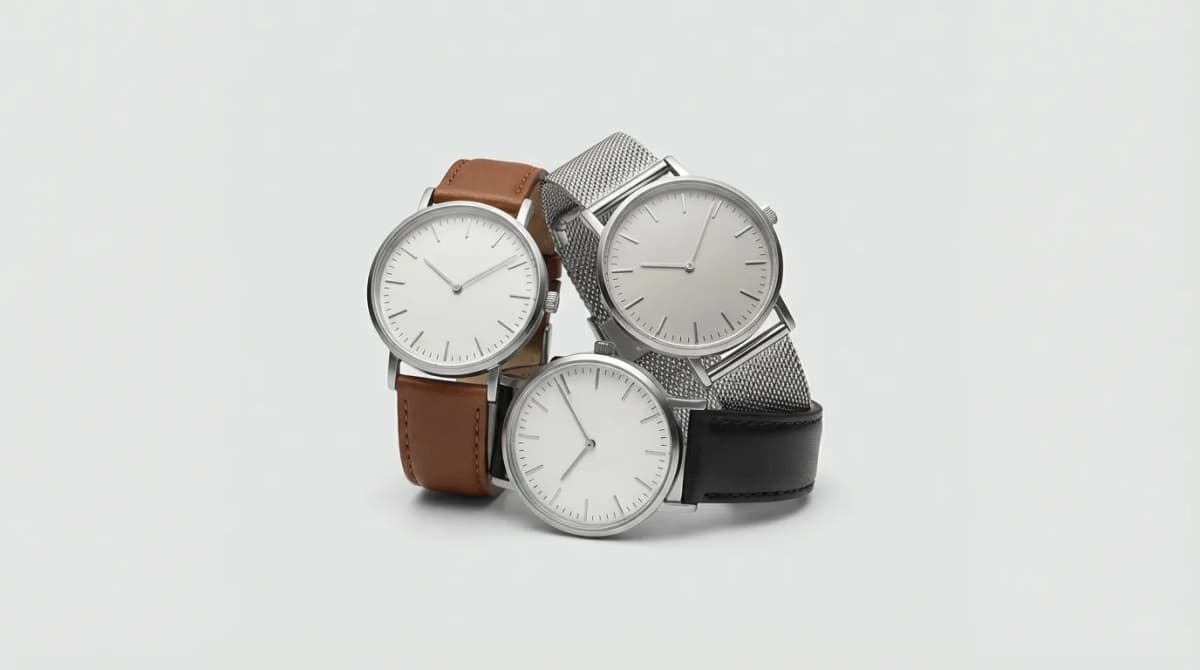
Best Minimal Watches for Everyday Wear
Clean dials, versatile straps, and no-nonsense cases make minimal watches work with everything. Here's what actually matters when choosing one.
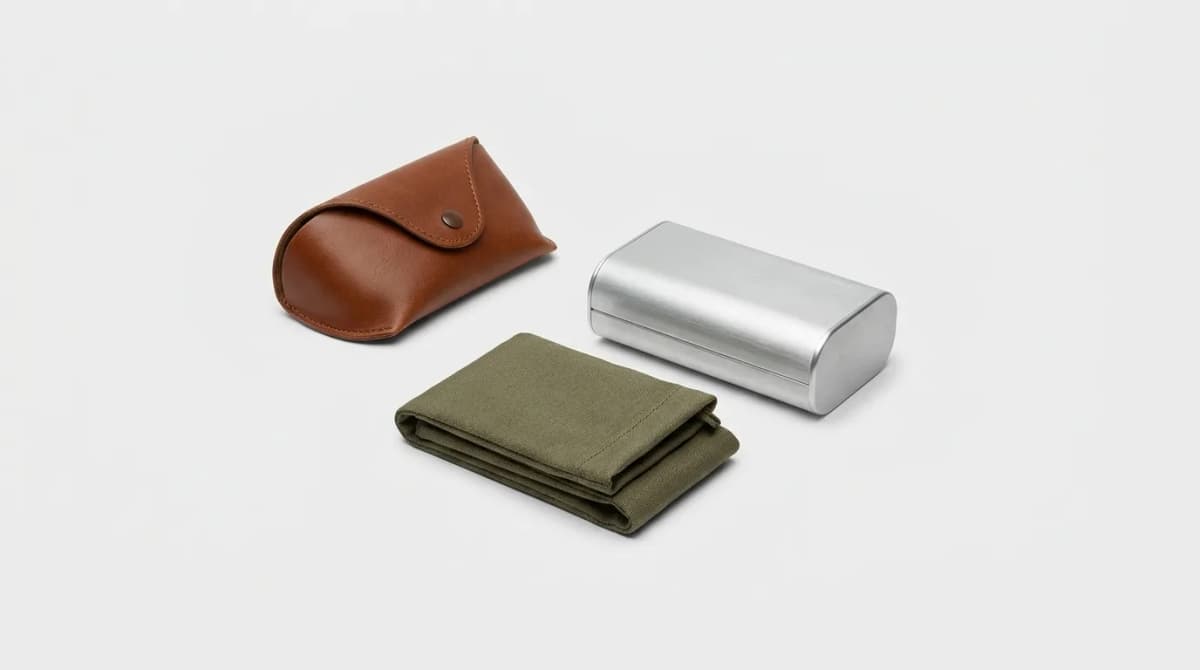
Best Pocket-Friendly Sunglasses Cases
Hard shells crack under pressure, soft pouches let lenses scratch. We tested compact cases that actually fit in your pocket and protect your sunglasses.