Cardholder vs Bifold: Finding Your Perfect Wallet
Cardholders promise minimalism but limit capacity. Bifolds offer versatility but add bulk. We break down which wallet style actually fits your daily carry.
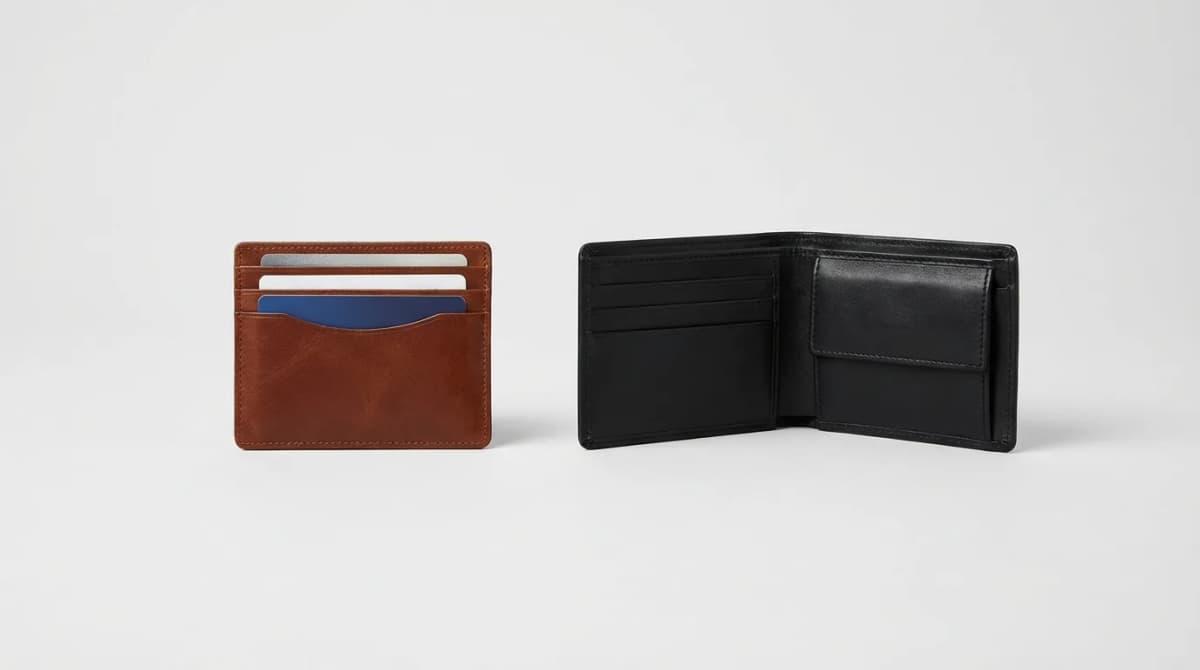
Your wallet rides in your pocket every single day, pressed against your leg or crammed into your bag. The choice between a cardholder and a bifold is not about fashion. It is about how many cards you actually carry, whether you still use cash, and if you are willing to rethink 20 years of wallet habits.
Most people carry 6-12 cards daily. A cardholder maxes out at 8-10 before it bulges like a deck of cards. A bifold handles 12-15 comfortably, plus cash, receipts, and that coffee shop stamp card you keep meaning to use. The difference is not subtle when you are standing at a register digging for the right card.
Capacity: What You Actually Carry vs What You Think You Need
Cardholders force discipline. You get 2-4 slots depending on the design, with a center pocket for folded bills or extra cards in a pinch. Ridge Wallet claims 12 cards, but past 8 the elastic stretches and cards slide out easier. Real-world capacity is always less than advertised.
Bifolds give you options. Two card slots per side, a bill compartment, maybe a coin pocket or ID window. You can carry 15 cards if you double them up, though your pocket will hate you. The flexibility is the point - you are not editing your wallet contents before every trip.
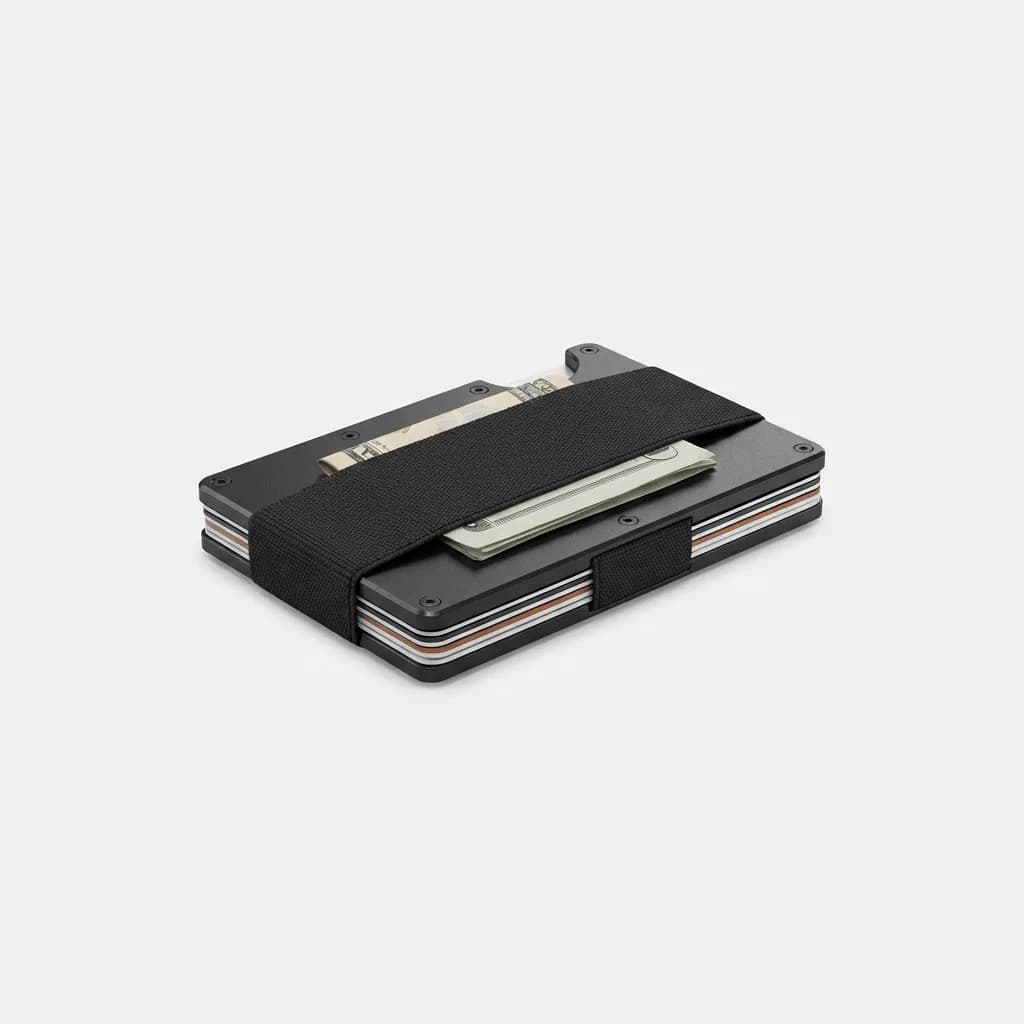
Ridge Wallet
$75-$115
Aluminum or carbon fiber frame with elastic band holds 1-12 cards and folded cash. RFID blocking, lifetime guarantee. 3.5 x 2.2 x 0.2 inches.
The cash problem is real. Cardholders treat bills like an afterthought - you fold them into a money clip or tuck them behind your cards. Fine for a couple twenties, but if you are carrying multiple denominations or need to separate business receipts, it gets messy fast. Bifolds give cash its own compartment where it lays flat and organized.
We switched to a cardholder for three months. The first week was liberating. The second week we started keeping a spare credit card in the car. By week eight we were back to a bifold because we got tired of deciding which four cards made the cut.
Access Speed: Getting to Your Cards When It Matters
Cardholders are faster for your top two cards. They sit in dedicated slots, visible from the top. You pull the wallet out and your debit card is already in your hand. For anything else, you are fanning through a stack or pulling cards out to reach the one underneath.
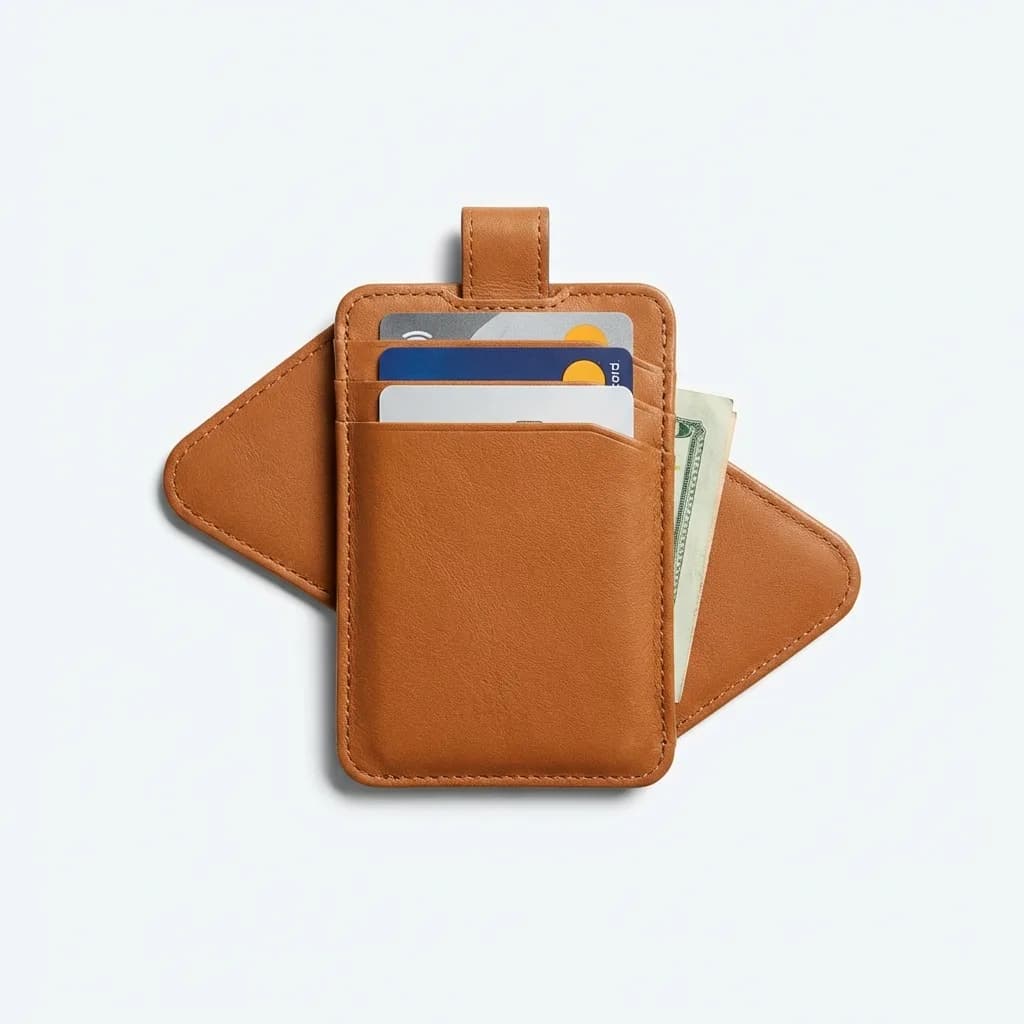
Bellroy Card Sleeve
$59
Premium leather cardholder with pull-tab for quick card access, holds 4-8 cards plus folded notes. Slim profile at 0.3 inches thick.
Bifolds make you flip open a cover, but once open everything is visible at once. Your insurance card is in the right pocket, loyalty cards on the left, ID in the window. You can see and grab what you need without shuffling a stack. This matters more when you are not reaching for the same two cards every time.
The ID window is a bifold advantage that rarely gets mentioned. TSA, age verification at bars, picking up packages - you flash your ID without removing it. Cardholders require you to pull your license out every time, then slide it back in the right orientation. Small friction, but it adds up over dozens of interactions per month.
Build Quality and Materials: What Lasts and What Falls Apart
Leather cardholders stretch. That tight fit you love at purchase loosens after 6-8 months of daily card swaps. Stitching around the pockets takes constant stress from sliding cards in and out. Budget cardholders (under $30) start losing shape by month four. Premium leather versions hold up better but still soften over time.
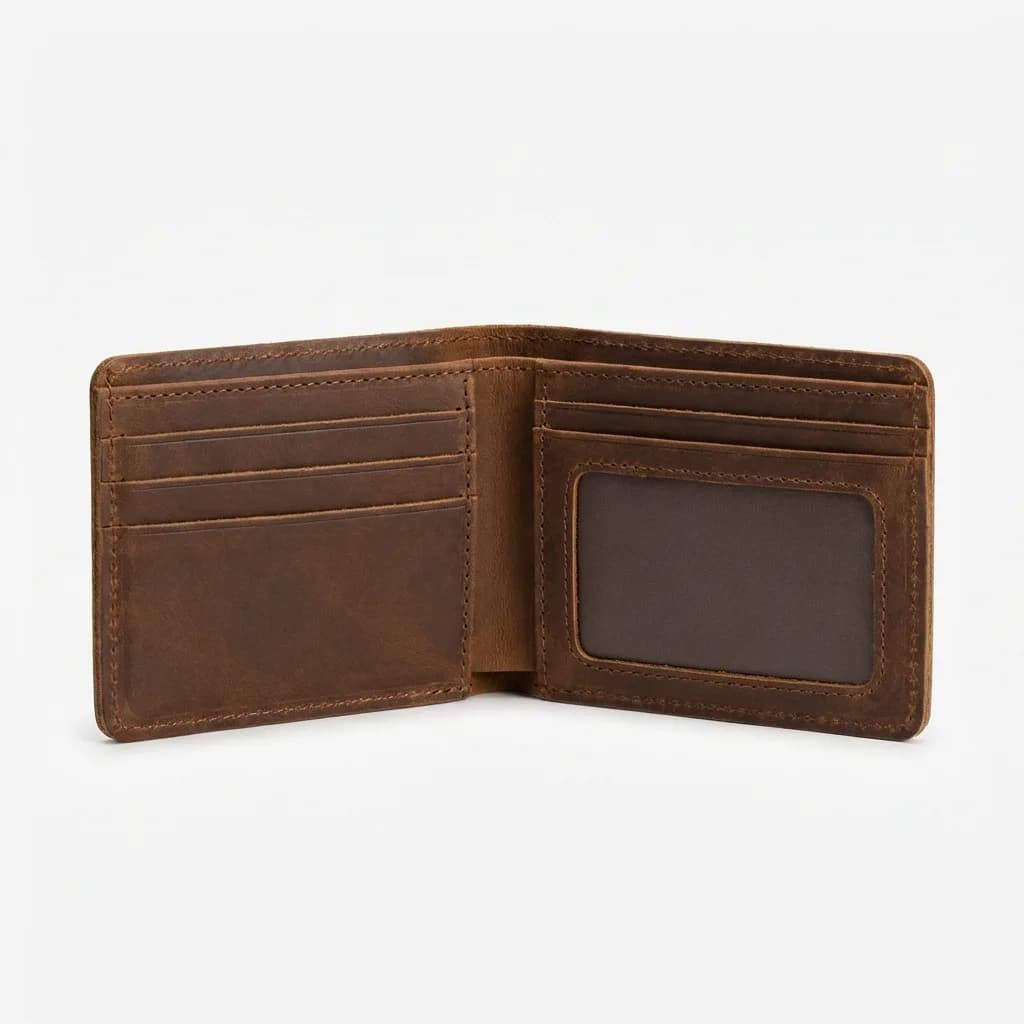
Saddleback Leather Bifold Wallet
$88
Full-grain leather bifold with 100-year warranty. Six card slots, two hidden pockets, removable ID sleeve. Made in Mexico, 4.5 x 3.5 inches.
Bifolds distribute wear across a larger surface. The fold line takes the most stress, but quality bifolds reinforce this with double stitching or a leather backing strip. A well-made bifold ages gracefully - the leather develops patina, but the structure holds. Cheap bifolds ($15-25) fall apart at the seams within a year.
Metal cardholders skip the stretch problem entirely. Ridge, Fantom, and similar brands use aluminum, titanium, or carbon fiber frames with elastic bands. The frame never deforms, but the elastic band wears out. Most brands sell replacement bands for $5-10, and you will need one every 18-24 months with daily use.
Material choice affects thickness more than you would expect. A leather bifold with 8 cards measures 0.8-1 inch thick. A leather cardholder with 8 cards hits 0.6-0.7 inches because there is no fold adding bulk. Metal cardholders stay under 0.5 inches even fully loaded because the frame contains the stack rigidly.
Front Pocket vs Back Pocket: Fit and Comfort Differences
Cardholders were designed for front pockets. They slip into a jeans watch pocket or sit flat in a shirt pocket. In a back pocket they feel like a phone - noticeable but not uncomfortable. Sitting on them long-term is fine because there is no fold creating a pressure point.
Bifolds are back pocket natives. The fold aligns with how your pocket drapes, and the width distributes weight so you barely notice it. Front pocket carry is possible but awkward - the folded shape does not sit flat against your leg, and it takes up more real estate than your phone.
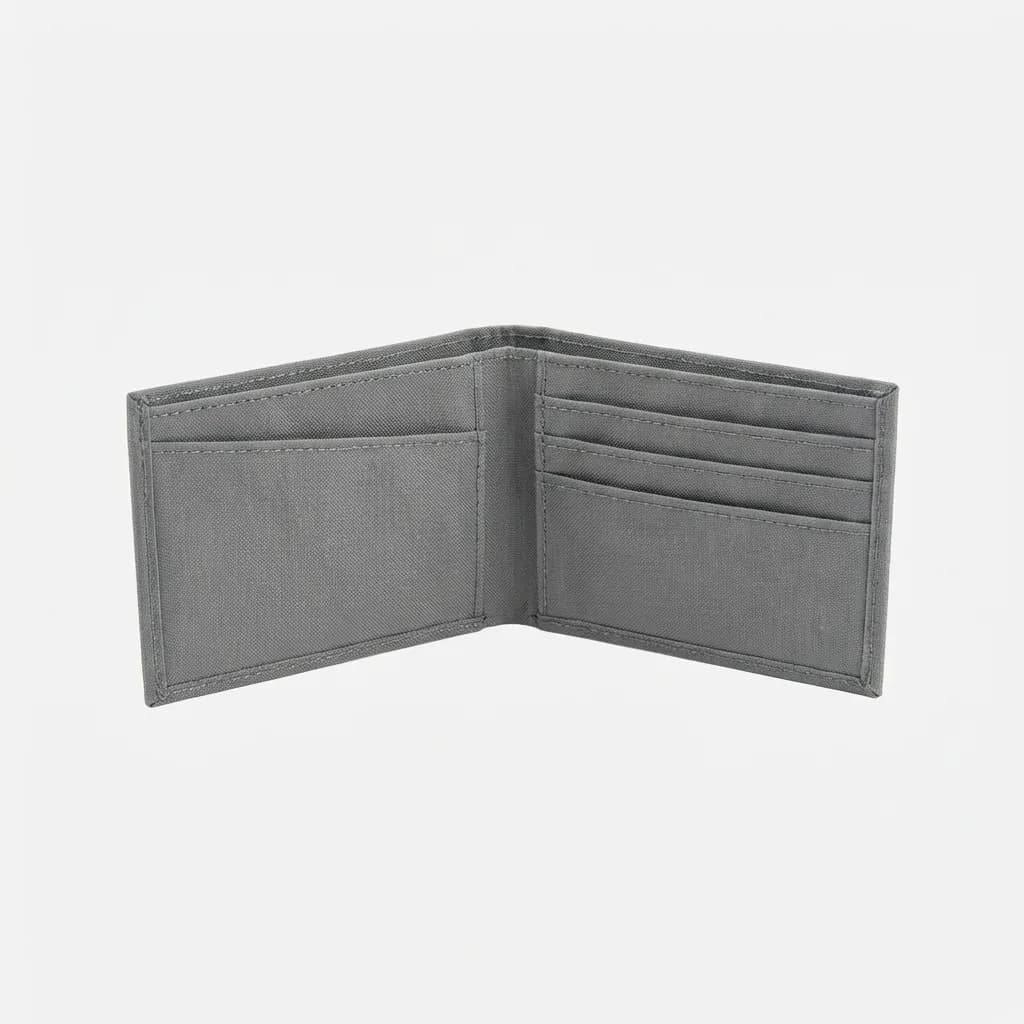
Flowfold Vanguard Limited Billfold Wallet
$38
Ultra-thin bifold made from sailcloth with RFID blocking. Three card slots, bill compartment, 0.2 inches thin. Waterproof and lightweight at 0.7 oz.
The back pocket sitting debate is overblown but not invented. Sitting on a thick bifold tilts your pelvis slightly if you are in a chair for hours. Chiropractors mention it, ergonomics studies confirm small postural changes. Most people never notice, but if you have lower back issues, front pocket carry or a slim cardholder makes sense.
When Cardholders Win: Scenarios Built for Minimalism
Travel internationally and cardholders shine. Pickpockets target back pockets and bags. A cardholder in your front pocket with two credit cards, your passport card, and emergency cash covers 90% of situations. You keep your passport and backup cards in the hotel safe.
Night out carry is cardholder territory. One card, ID, a fifty folded behind it. No bulk, nothing to lose, fits in pockets that barely qualify as pockets. You are not carrying your FSA card and Costco membership to a bar.
Active use cases favor cardholders too. Running errands on a bike, hiking with minimal gear, beach days where you want the smallest possible pocket load. Anywhere you are thinking about weight and bulk, the cardholder wins by default.
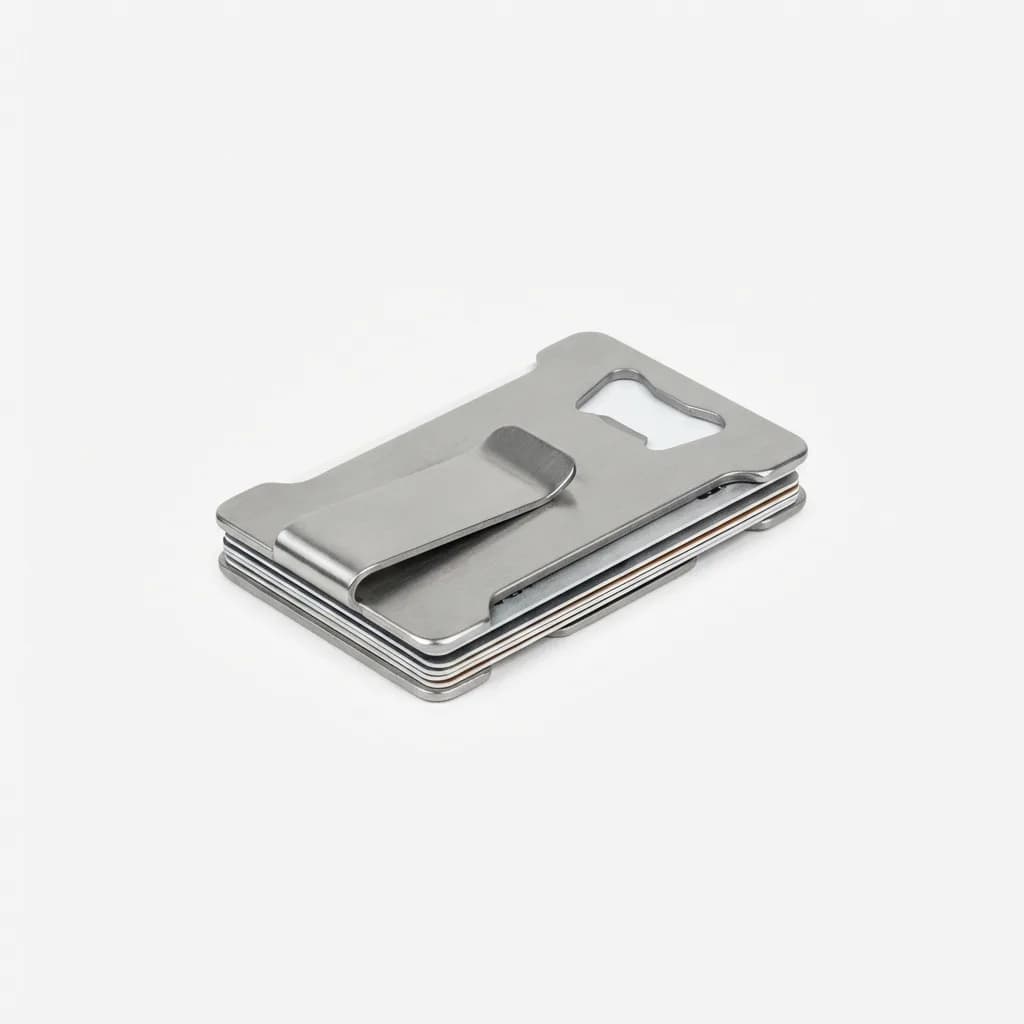
Trayvax Contour Wallet
$75
Stainless steel cardholder with bottle opener, holds 4-7 cards. Multi-tool design with money clip. RFID blocking, lifetime warranty, made in USA.
When Bifolds Make More Sense: Versatility You Cannot Fake
Daily driving with kids means insurance cards, medical cards for multiple people, pharmacy discount cards, library cards. You hit 10-12 cards before you even add your personal stuff. A cardholder forces you to keep half your wallet in the car's center console, which defeats the purpose.
Cash-heavy businesses or side gigs need bifolds. If you are collecting payments, making change, or separating personal and business cash, folding bills into a cardholder slot is miserable. The bill compartment in a bifold keeps everything organized and accessible.
Older generations and people carrying physical backup for everything prefer bifolds because that is the format that makes sense to them. Not every EDC decision needs to optimize for minimalism. If you like having options and do not mind the bulk, bifolds do exactly what they have done for 80 years.
Making the Switch: What Actually Happens When You Change Styles
Going from bifold to cardholder requires a wallet audit. Empty your current wallet and sort cards into must-have and nice-to-have. Must-have is what you used in the last five days. Nice-to-have is everything else. Most people are shocked to find they only need 4-6 cards daily.
Digital backups help the transition. Store loyalty cards in Apple Wallet or Google Pay. Photograph your insurance cards and prescription info. Keep a grab bag of secondary cards in your car or desk. The cardholder holds your active rotation, everything else lives in backup.
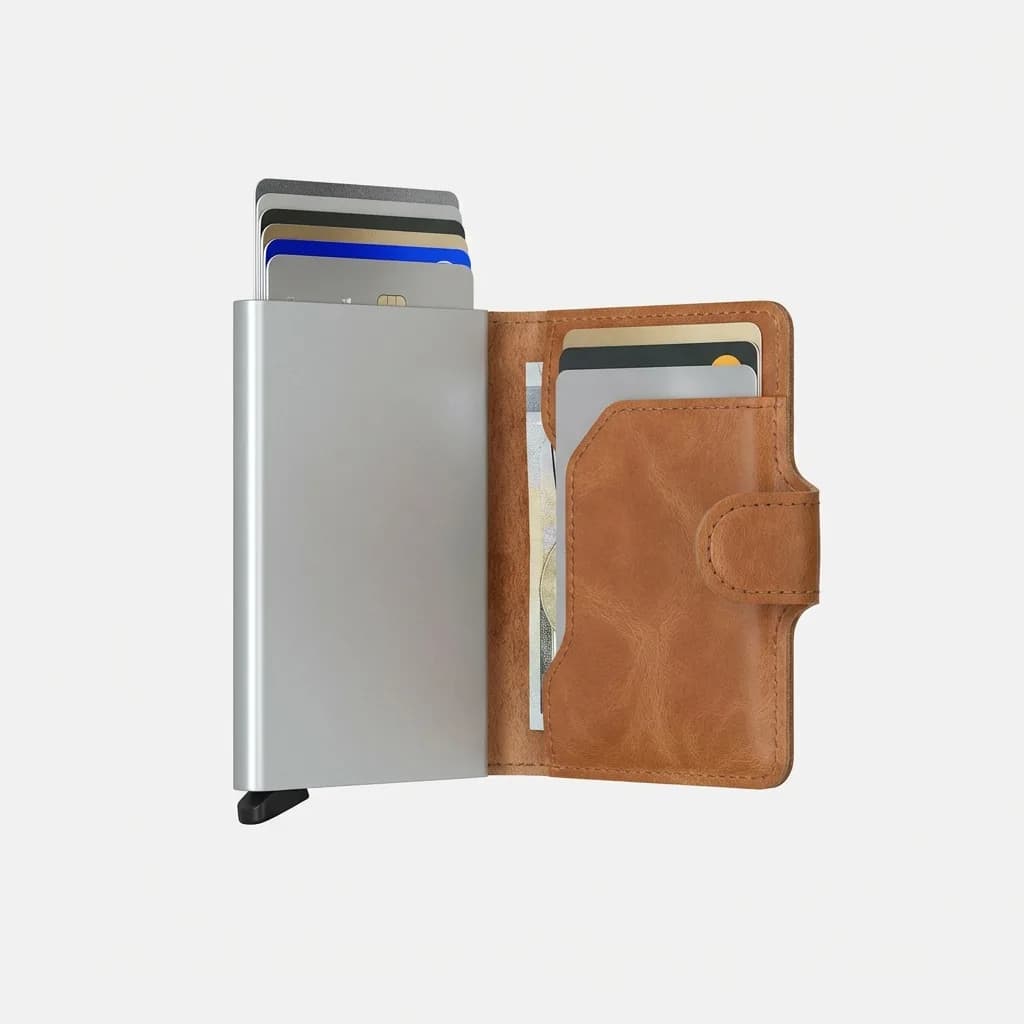
Secrid Slimwallet
$75-$85
Hybrid design with aluminum card protector (4-6 cards) plus leather exterior pocket for cash and extra cards. RFID safe, 2.6 x 4 x 0.5 inches.
Switching from cardholder to bifold is easier. You already know how to live minimal - now you are just adding capacity back. The risk is reverting to old habits and stuffing your bifold with every card you own. Set rules: one card per slot, no receipts older than a week, review contents monthly.
Some people split the difference with hybrid wallets. Secrid and similar brands offer a cardholder mechanism inside a leather bifold shell. You get quick access to 4-6 primary cards in the cardholder portion, with extra slots and cash space in the outer leather. It is thicker than a pure cardholder but slimmer than a traditional bifold.
The Real Question: What Do You Actually Pull Out Daily?
Track your wallet use for one week. Tally which cards you reach for and how often. If two cards account for 80% of your transactions, a cardholder works. If you are rotating through six cards regularly, you need a bifold.
Consider where you live and what you do. Urban environments with strong digital payment adoption make cardholders viable. Rural areas where cash is common and small businesses do not take Apple Pay push you toward bifolds. Your daily routine dictates the answer more than design preferences.
Both styles have premium and budget options that perform their jobs well. The Ridge Wallet costs $100 and lasts years, but a $30 leather cardholder from a solid brand does the same thing with more patina and less hype. A $20 bifold from Fossil will outlast most cardholders if you treat it decently.
Your perfect wallet is the one that matches your actual card count, cash habits, and carry preferences - not the one that looks coolest on Instagram. Try a cardholder if you are curious, but do not force minimalism if your life does not support it. The best wallet is the one you stop thinking about.
The Weekly Dispatch
Enjoying this article?
Subscribe and get our best gear picks delivered every Sunday morning.
Related Stories
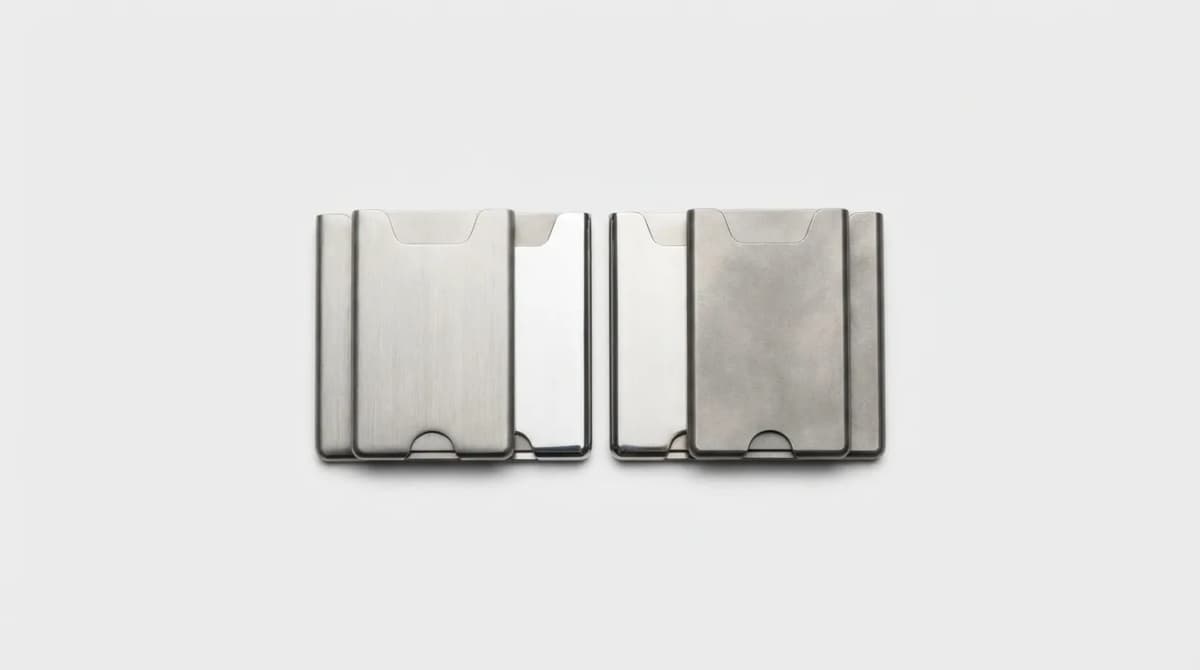
Are Titanium Wallets Worth It? Complete Review
Titanium wallets promise durability and RFID protection, but they cost 3-5x more than leather. We tested the top models to see if the premium is justified.
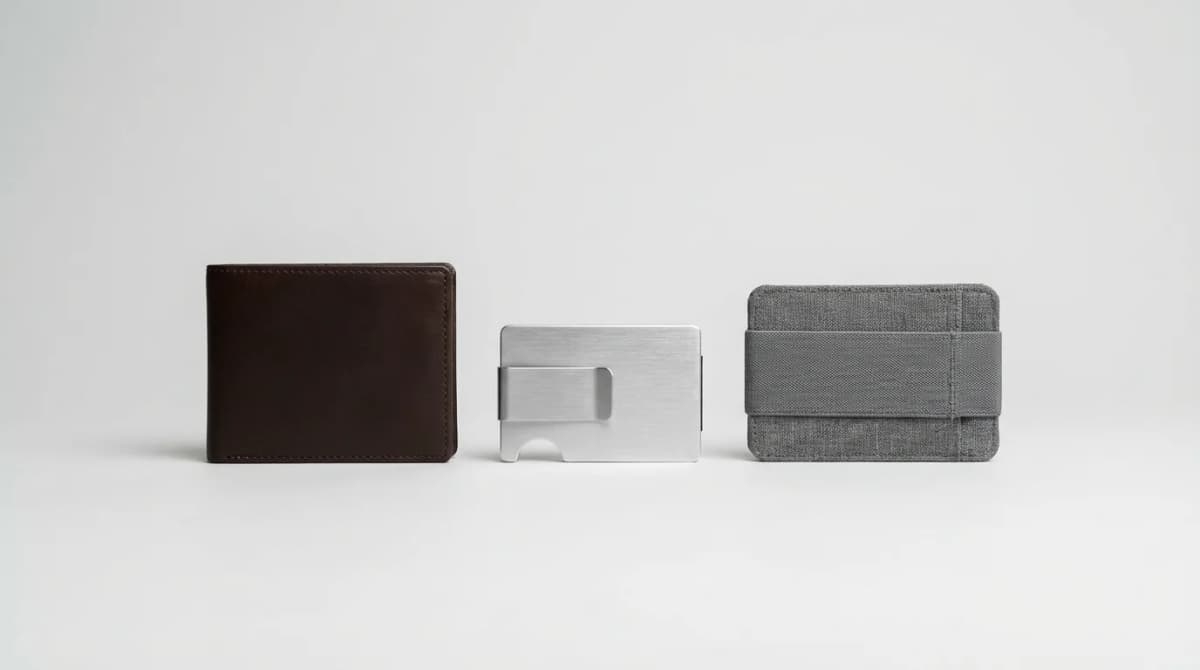
12 Best Minimalist Wallets for Men (2026)
From machined aluminum to supple leather, we tested dozens of slim wallets to find which ones actually deliver on the minimalist promise without the compromises.
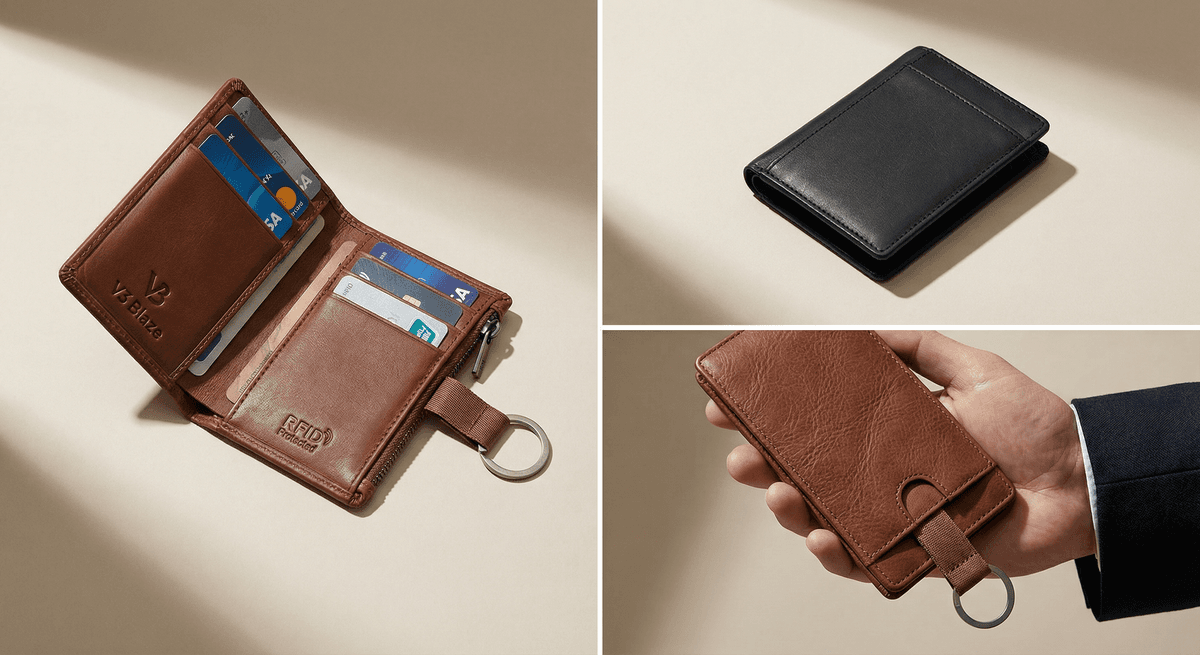
Valmor V3 Blaze: Minimalist RFID Wallet Review
Valmor V3 Blaze is a minimalist leather wallet with RFID protection, NFC capability, GPS tracker pocket, and slim design. Our review of this feature-packed EDC wallet for modern professionals.