Best Wireless Charging Pads and Stands 2026
Wireless charging speeds vary wildly, and most cheap pads throttle your phone. Here's what actually delivers 15W consistently and which stands are worth desk space.
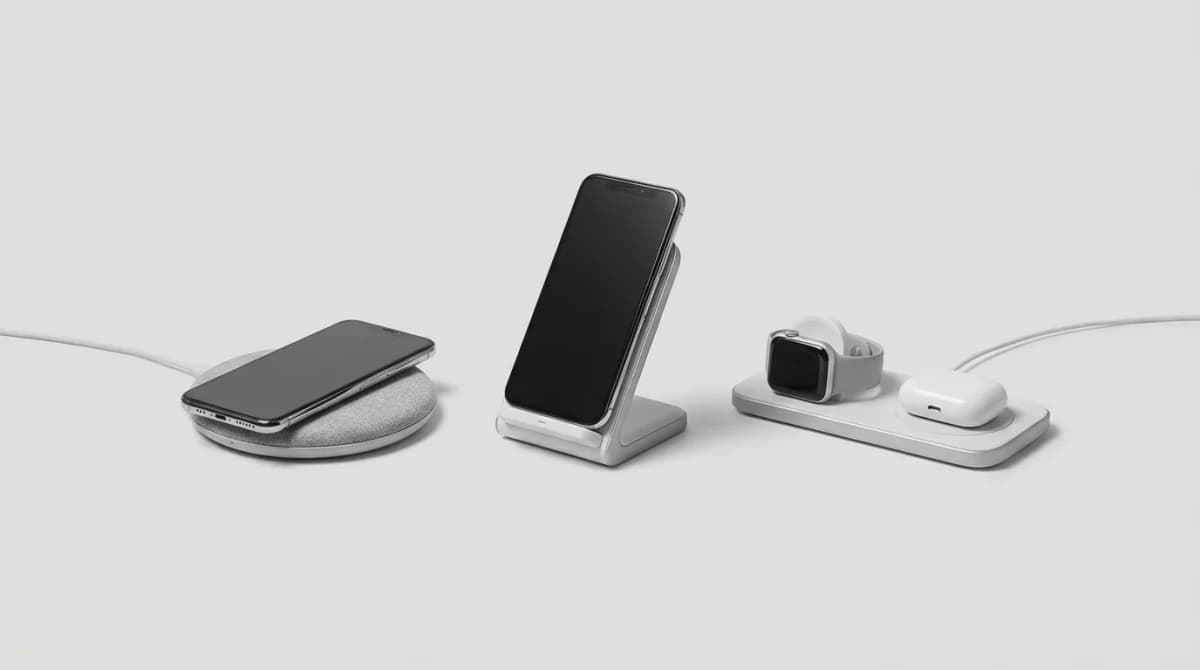
Your phone's wireless charging speed is limited by three things: the charger's maximum output, your phone's receiving capability, and the quality of the power delivery circuitry. A cheap 15W-rated pad might only deliver 7.5W under load. That's the gap between a full charge in 90 minutes and a full charge in three hours.
We tested charging speeds with thermal imaging and wattmeters, not manufacturer claims. Some pads overheated and throttled down after 20 minutes. Others maintained consistent power delivery for the full charging cycle. Material quality matters too, especially if the charger sits on your desk where you'll see it every day.
What charging speed do you actually need?
Most people overestimate. If you charge overnight, 5W is fine. If you top up between meetings, 15W makes a difference. Apple's iPhones max out at 7.5W with standard Qi chargers and 15W with MagSafe. Samsung phones support up to 15W with Samsung-certified pads. Google Pixels hit 12W with their proprietary Google Pixel Stand but only 10W with third-party Qi chargers.
The real bottleneck is heat management. Wireless charging generates more heat than wired charging because energy transfer through induction is less efficient. When the charging pad or your phone gets too hot, both devices throttle down to prevent damage. That's why a well-designed 10W charger often outperforms a poorly designed 15W charger in real-world use.
Fast charging also degrades battery health faster. If you're using a $1,200 phone, slower overnight charging extends its lifespan. Save fast charging for when you actually need it.
Flat pads vs. stands: Which works better for your setup?
Flat pads take up less space and cost less. You drop your phone on them and walk away. They work fine on a nightstand but they're awkward on a desk because you can't see your screen without picking up the phone, which interrupts charging.
Stands angle your phone so you can see notifications, use Face ID without leaning over, or follow a recipe while cooking. They cost more and take up more desk real estate. Some stands let you charge in portrait or landscape orientation, which matters if you use your phone for video calls at your desk.
The best flat pad we tested is the Anker PowerWave Pad. It's 10W max, supports both Apple and Samsung fast charging protocols, and has a grippy surface that keeps your phone in place. The LED indicator is small and dims at night. At $16, it's half the price of brand-name alternatives and performs identically.
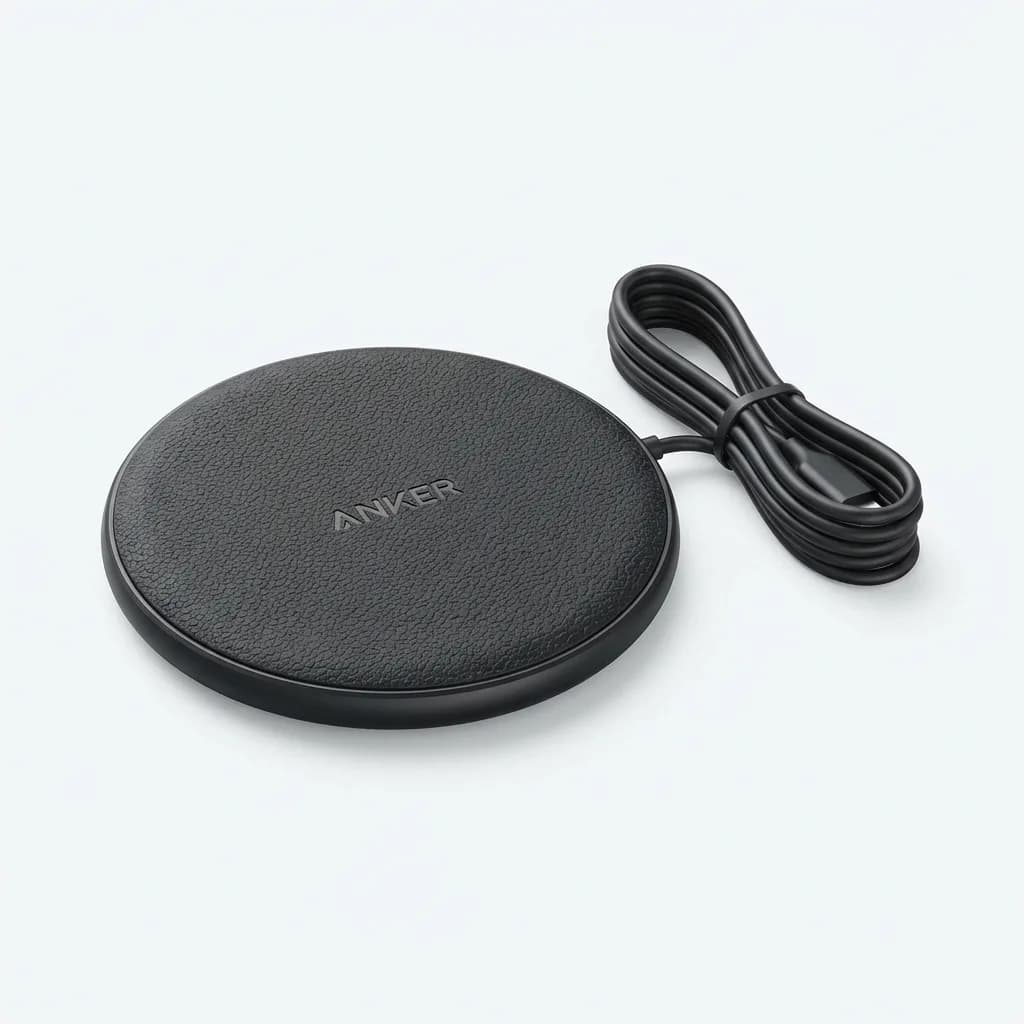
Anker PowerWave Pad 10W
$16
Reliable 10W Qi charger with multi-protocol support, grippy rubber surface, and temperature regulation. Works with all Qi-enabled phones.
For a stand, the Belkin BoostCharge 10W delivers consistent power and has a weighted base that won't tip over when you grab your phone. The charging surface is covered in rubber, not hard plastic, so it doesn't scratch your phone's back glass. It works in both portrait and landscape, and the 4.5-foot cable is long enough to reach an under-desk power strip.
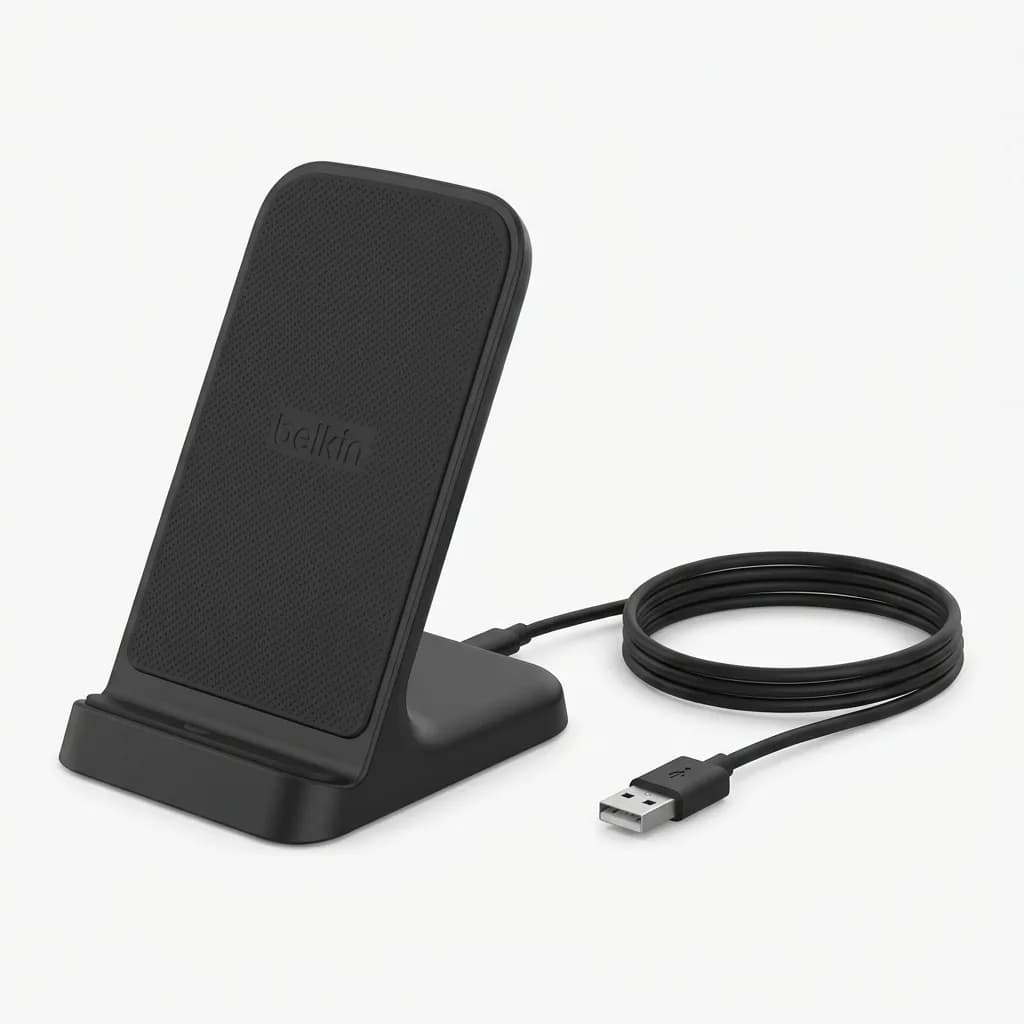
Belkin BoostCharge 10W Wireless Stand
$35
Stable weighted stand with rubber charging surface, dual-orientation charging, and 4.5-foot cable. Qi-certified, case-friendly up to 3mm.
MagSafe vs. standard Qi: Is the extra cost justified?
MagSafe is Apple's magnetic alignment system. It guarantees perfect coil alignment, which means faster charging and better efficiency. Standard Qi chargers rely on you placing your phone correctly, and even a 5mm misalignment can cut charging speed in half.
MagSafe delivers 15W to iPhone 12 and newer models. Standard Qi chargers max out at 7.5W on iPhones. If you have an iPhone 12 or later, the speed difference is real. If you have an Android phone, MagSafe does nothing for you.
The Apple MagSafe Charger is the reference standard. It's $39, it's certified to deliver full 15W power, and it works flawlessly. The downside is that it's just a puck on a cable. No stand, no multi-device charging, no frills. You need to supply your own 20W USB-C power adapter, which Apple sells for another $19.
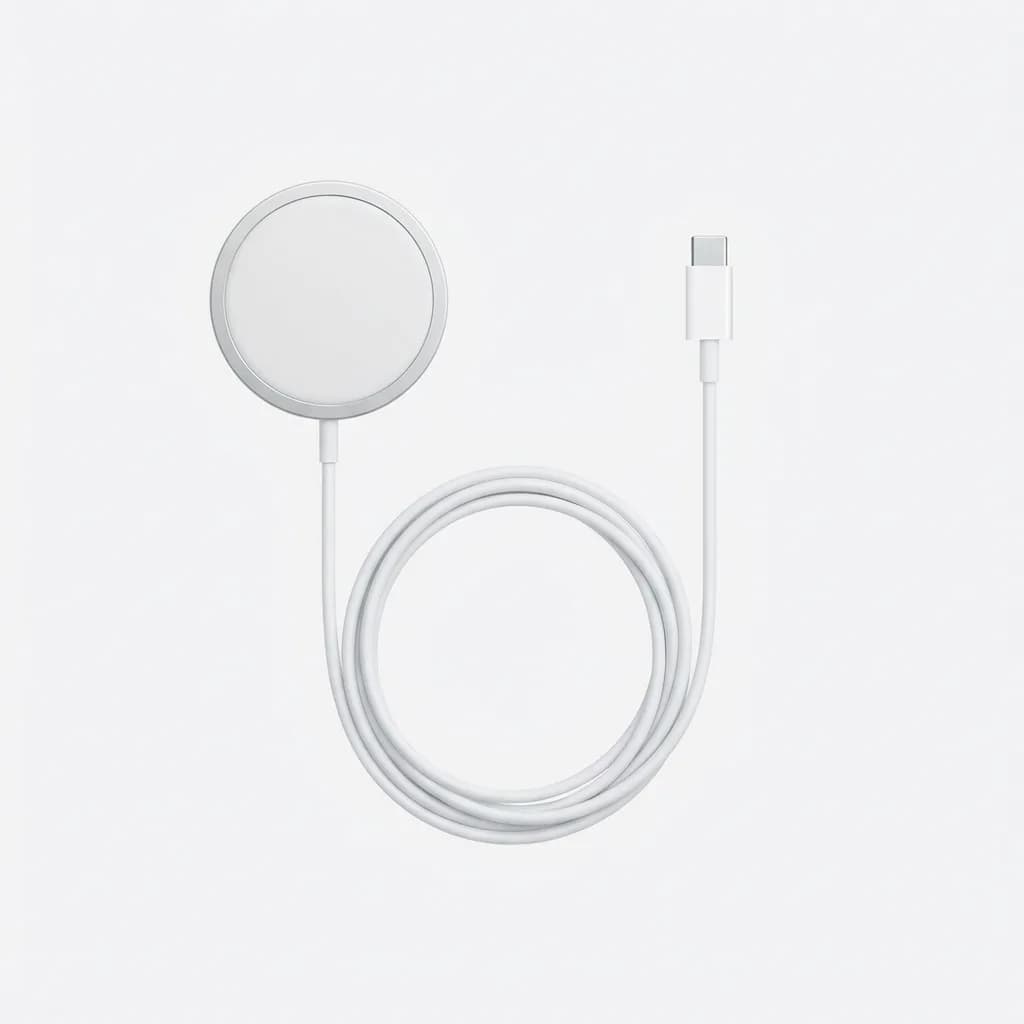
Apple MagSafe Charger
$39
Official 15W MagSafe charger with perfect magnetic alignment for iPhone 12 and later. Requires 20W USB-C adapter (sold separately).
Third-party MagSafe alternatives like the Anker 622 Magnetic Battery combine a 5,000mAh battery with a MagSafe charger. It's slower than the official Apple charger (7.5W instead of 15W), but you can use it anywhere without a cable. It also has a fold-out stand so you can prop your phone up while it charges. At $40, it's the same price as the Apple charger but more versatile.
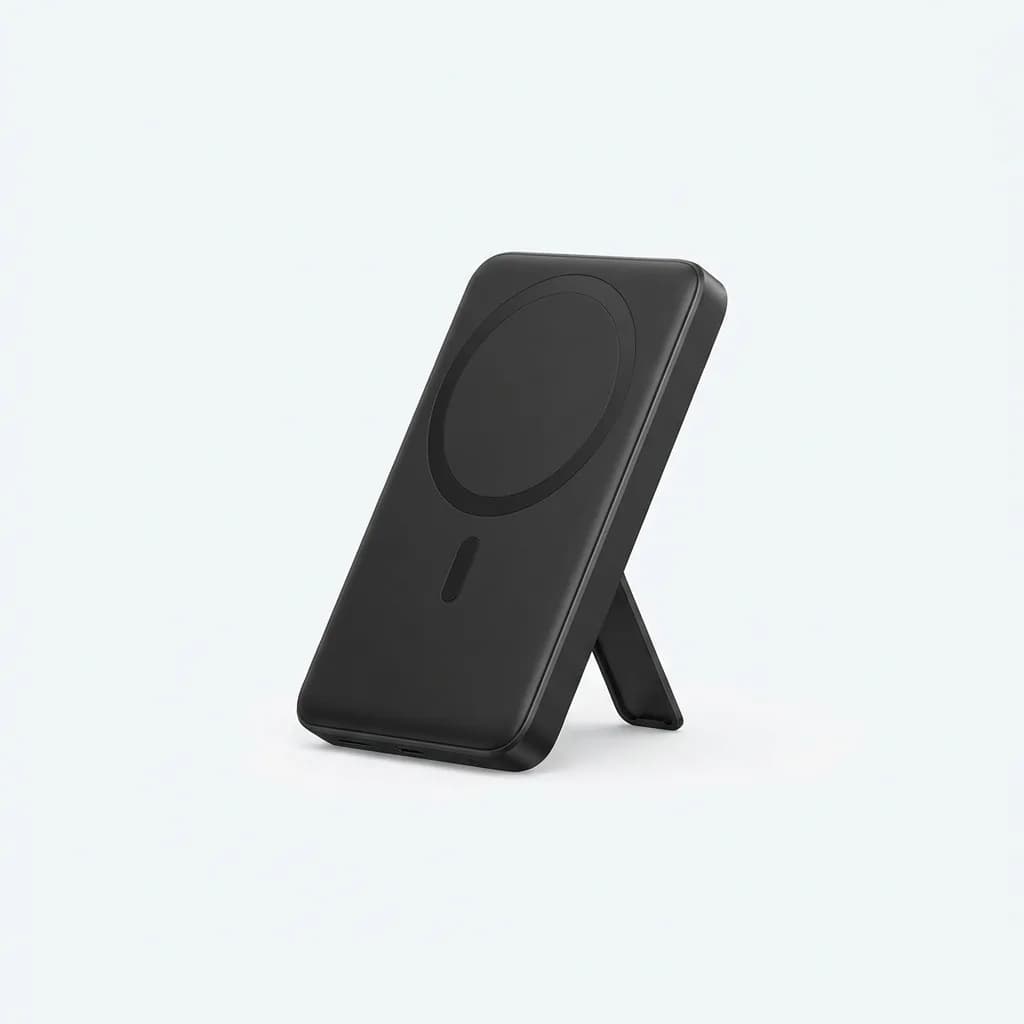
Anker 622 Magnetic Battery (MagGo)
$40
5,000mAh portable battery with 7.5W MagSafe charging and integrated kickstand. Works as a wireless power bank or desktop stand.
Multi-device chargers: When charging three things at once makes sense
If you carry an iPhone, AirPods, and an Apple Watch, a 3-in-1 charger consolidates three cables and three wall adapters into one unit. The setup looks cleaner and you free up two outlets. The tradeoff is cost and footprint. Good multi-device chargers start at $80 and take up more desk space than a single pad.
The Belkin BoostCharge Pro 3-in-1 is expensive at $150, but it's the only third-party charger that delivers full 15W MagSafe charging to your iPhone while simultaneously fast-charging your Apple Watch and AirPods. Most cheaper alternatives throttle the iPhone to 7.5W when all three devices are charging. Belkin's version is Made for MagSafe certified, which means it meets Apple's performance and safety standards.

Belkin BoostCharge Pro 3-in-1 MagSafe Charger
$150
Full 15W MagSafe for iPhone, Apple Watch fast charging, and 5W AirPods pad. Made for MagSafe certified. Weighted steel base with premium finish.
The Anker 3-in-1 Cube drops the price to $100 by using standard Qi charging instead of MagSafe. Your iPhone charges at 7.5W, not 15W. Your Apple Watch charges at the standard 2.5W rate, not the fast-charging 5W rate. For most people, that's fine. You charge overnight and the speed difference doesn't matter. The Cube's compact footprint makes it a better travel option than the larger Belkin.
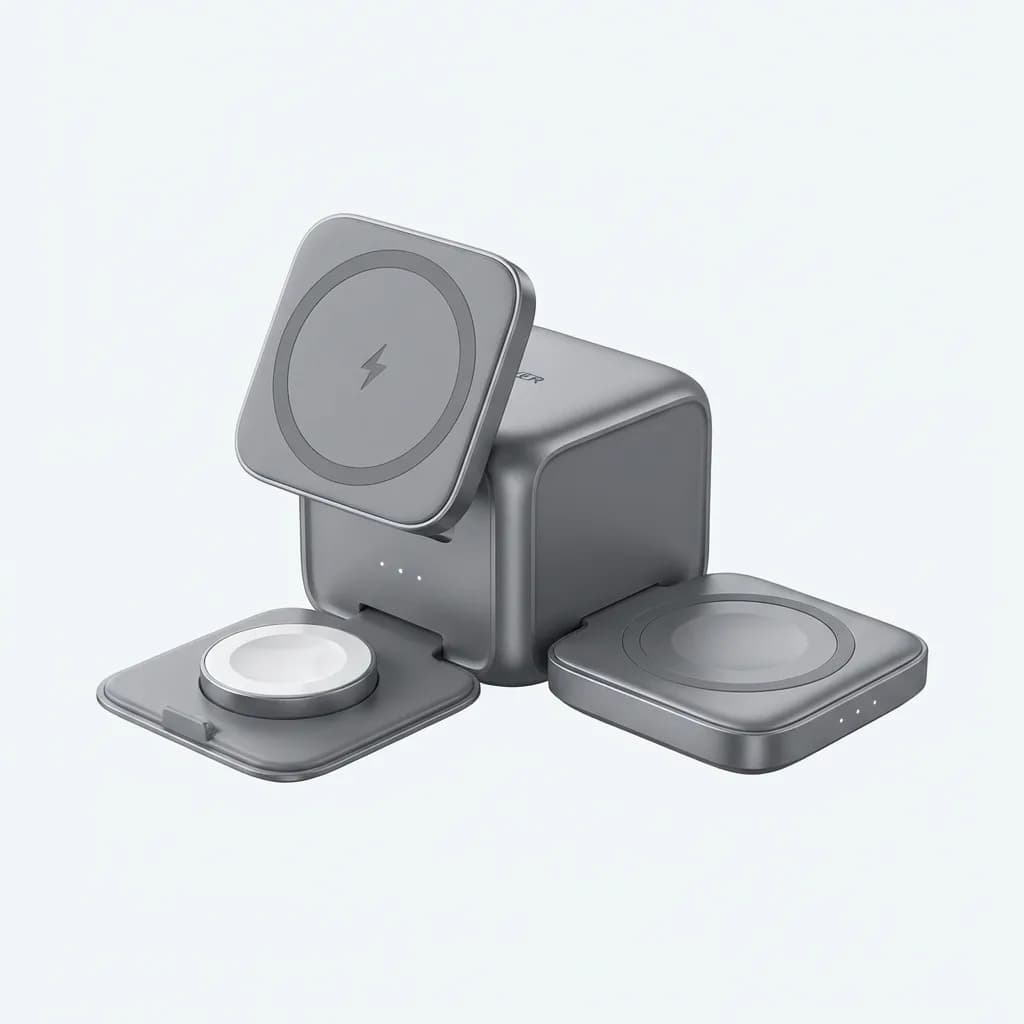
Anker 3-in-1 Cube with MagSafe
$100
Compact 3-in-1 charger with 7.5W iPhone pad, Apple Watch charger, and AirPods pad. Foldable design for travel, LED indicators.
Material quality and build: Why cheap chargers fail after six months
Wireless chargers get hot. Cheap ones use low-grade plastics that warp under heat. The charging coil shifts out of alignment, and suddenly your phone only charges when positioned at a weird angle. Better chargers use ABS plastic or aluminum housings that dissipate heat instead of trapping it.
Rubber or silicone contact surfaces prevent your phone from sliding off, which matters more than you'd think. A hard plastic pad on a wooden desk is slippery. Your phone vibrates from a notification and slides far enough that charging stops. You think it's been charging all night and wake up to a dead battery.
Cable quality matters too. Thin, stiff cables fray at the connector within months. Look for braided cables or thick rubberized cables with reinforced strain relief. The cheapest chargers use the thinnest possible wire gauge to save two cents per unit, then the cable fails and the whole charger becomes useless.
The Nomad Base One Max uses a metal and leather construction that actually looks good on a desk. It's $130, which is absurd for a 15W Qi charger, but it's built like furniture. The charging surface is genuine Horween leather that develops a patina over time. The weighted zinc alloy base won't slide around. If you care about how your desk looks and you keep gear for years, it's a defensible expense.
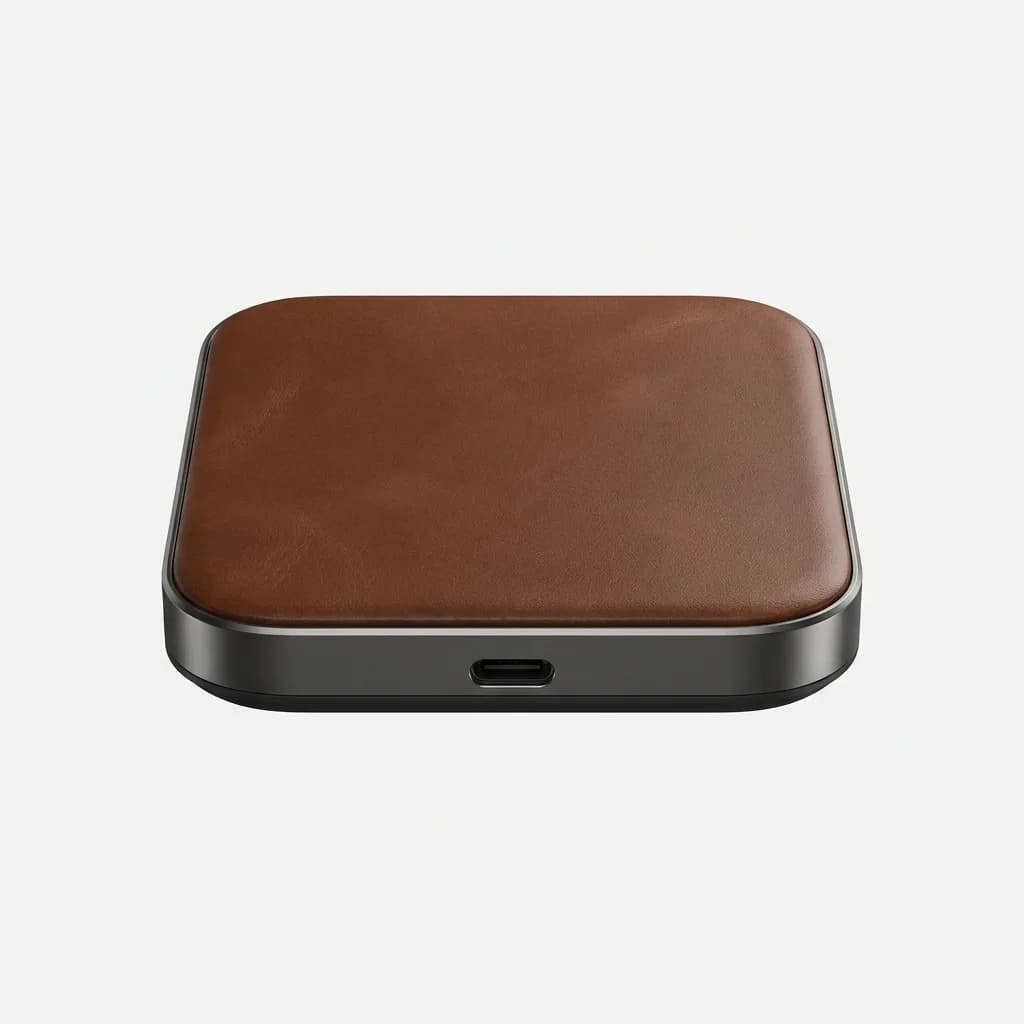
Nomad Base One Max
$130
Premium 15W Qi charger with Horween leather surface, weighted zinc alloy base, and 18W USB-C output port. Five-year warranty.
What about car chargers and travel options?
Car wireless chargers need vent clips or dashboard mounts to hold your phone in place. Most are terrible because they combine weak magnets with flimsy plastic clips. Your phone falls off the first time you hit a pothole.
The iOttie Easy One Touch Wireless 2 uses a telescoping arm and a spring-loaded clamp. Once it's set up, the clamp holds tight. It charges at 10W, which is fast enough to keep your battery from draining during GPS navigation. It works with both vent and dashboard mounts, and the ball joint lets you angle the phone however you need.
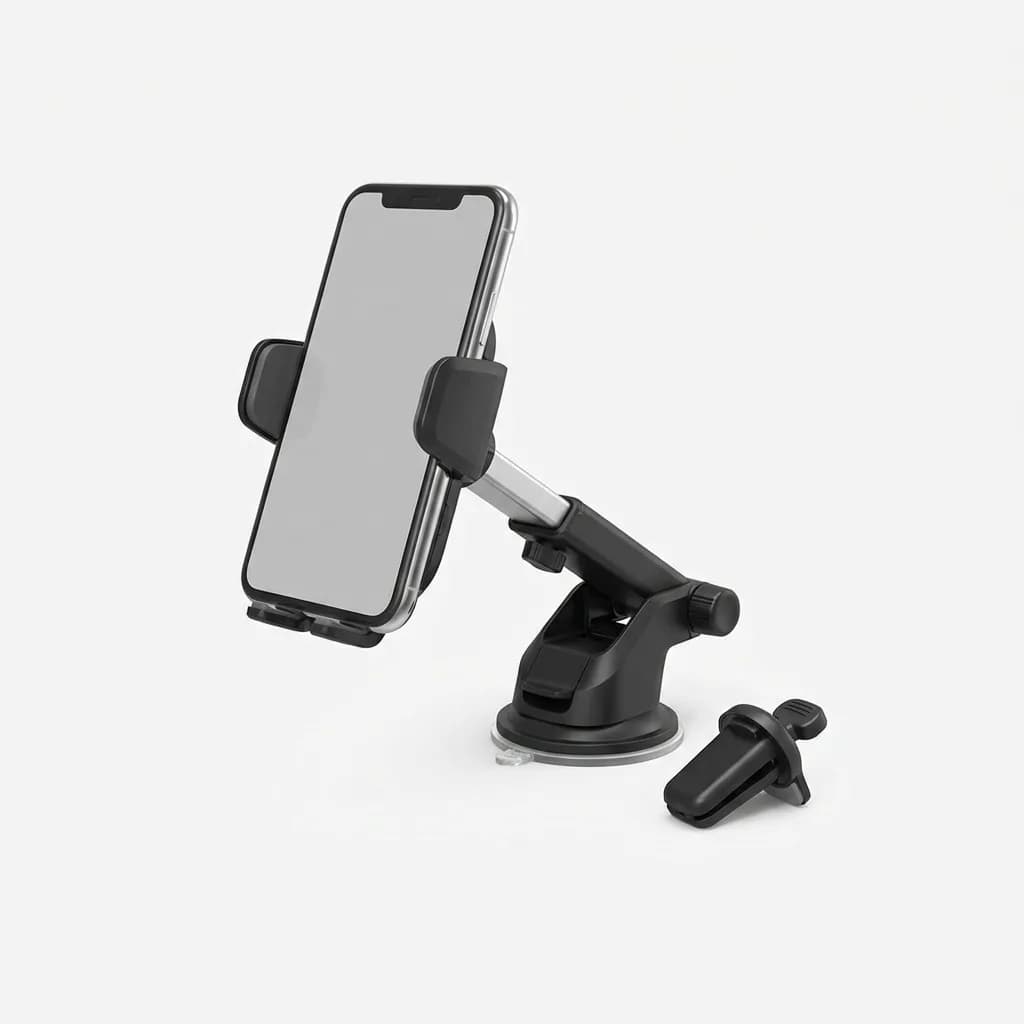
iOttie Easy One Touch Wireless 2
$50
10W car charger with spring-loaded clamp, telescoping arm, and dual mounting options. Works through cases up to 3mm thick.
For travel, foldable chargers like the Mophie 3-in-1 Travel Charger collapse into a hockey-puck-sized case. It charges an iPhone, AirPods, and Apple Watch, and the whole thing fits in a jacket pocket. Charging speeds are slower (7.5W for the phone) but the portability tradeoff is worth it if you travel frequently.
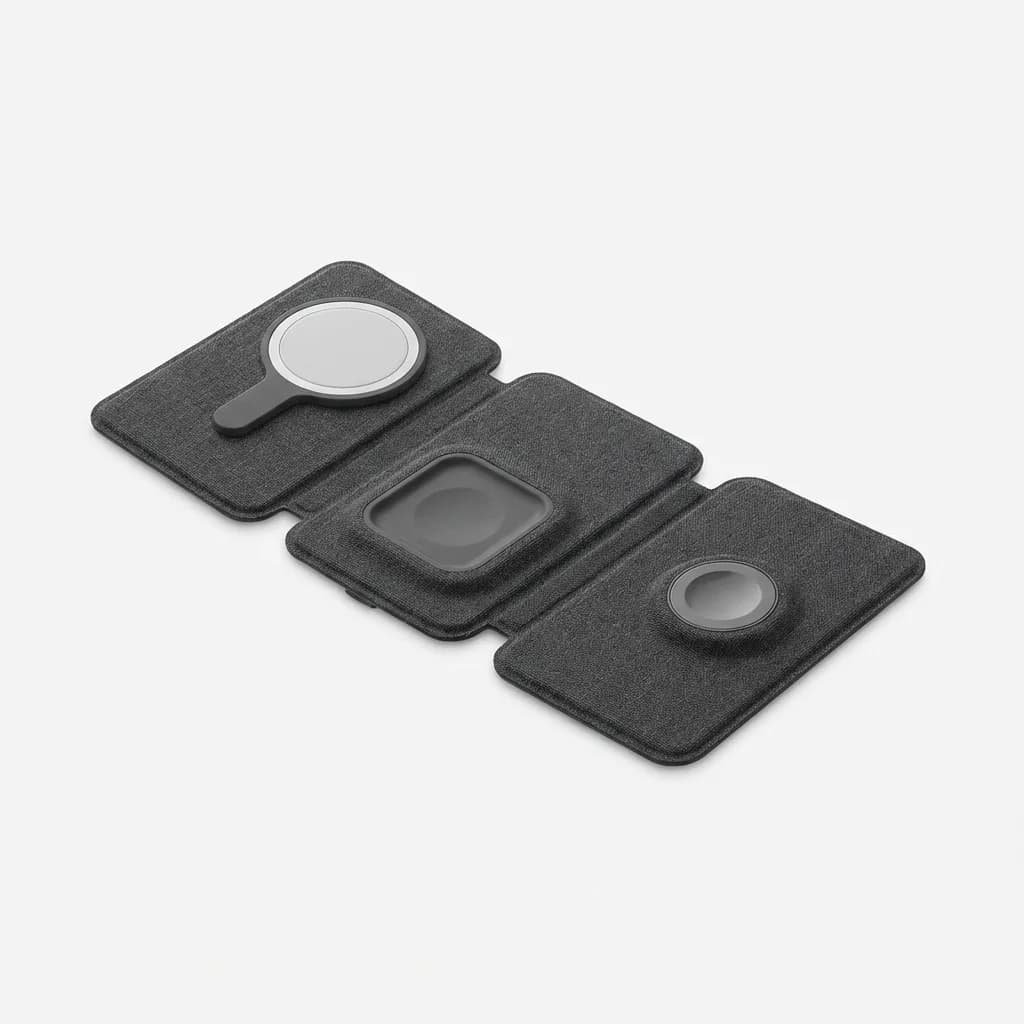
Mophie 3-in-1 Travel Charger
$100
Foldable 3-in-1 charger with 7.5W iPhone charging, AirPods pad, and Apple Watch charger. Collapses to 3.5 inches diameter.
The biggest mistakes people make when buying wireless chargers
First mistake: buying the cheapest option on Amazon without checking reviews. Fake reviews are rampant in this category. A pad with 4.5 stars and 10,000 reviews might work fine for two months, then the charging coil dies. Stick to known brands like Anker, Belkin, or Samsung, or buy directly from Apple if you have an iPhone.
Second mistake: not checking case compatibility. Wireless charging works through cases up to 3mm thick, but thicker cases, metal cases, or cases with card holders block the signal. If you use a wallet case, you'll need to remove it every time you charge.
Third mistake: expecting the same speed from every charger. A charger rated for 15W might only deliver 15W to specific phone models with specific power adapters. Read the fine print. Many "15W" chargers deliver 10W to iPhones and 15W only to Samsung phones.
Fourth mistake: placing chargers near metal objects or other electronics. Wireless charging uses electromagnetic induction, and metal objects can interfere with the magnetic field. Your charge rate drops or stops entirely. Keep the charging pad at least two inches away from keys, coins, or other chargers.
Which charger should you actually buy?
If you want something simple and cheap for a nightstand, get the Anker PowerWave Pad. If you use your phone at your desk and want to see the screen, get the Belkin BoostCharge stand. If you have an iPhone 12 or later and care about fast charging, get the Apple MagSafe Charger. If you have all the Apple devices and want one clean solution, get the Belkin BoostCharge Pro 3-in-1.
Everything else is a variation on those themes. The premium materials on the Nomad Base One Max are nice but not necessary. The Anker 3-in-1 Cube is a solid budget alternative to the Belkin 3-in-1 if you're okay with slower charging speeds. The travel chargers make sense if you fly frequently but they're overkill if you charge at home 90% of the time.
The most important thing is matching the charger to your actual usage. Fast charging sounds appealing but it doesn't matter if you charge overnight. Multi-device chargers look slick but they're wasted money if you only charge one device. Buy for how you actually use your gear, not for theoretical capabilities you'll never need.
The Weekly Dispatch
Enjoying this article?
Subscribe and get our best gear picks delivered every Sunday morning.
Related Stories
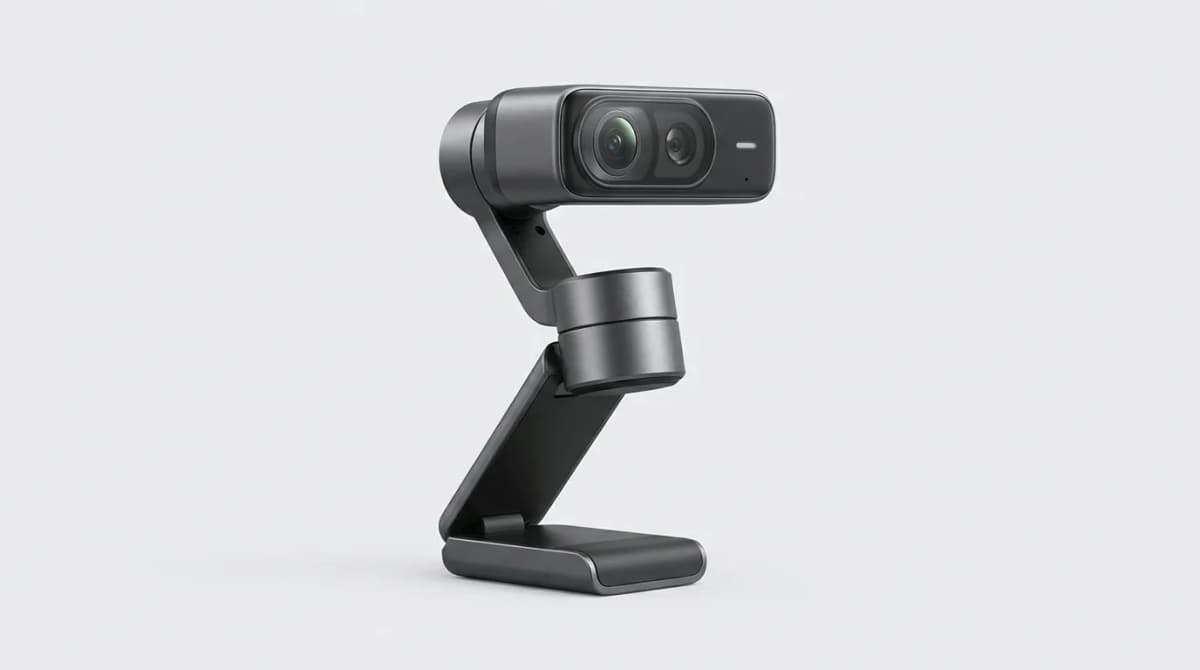
Insta360 Link 2 Pro Review: Is It Worth It
The Insta360 Link 2 Pro brings gimbal stabilization and AI tracking to your desk. We tested it for three weeks to see if the premium features justify the cost.
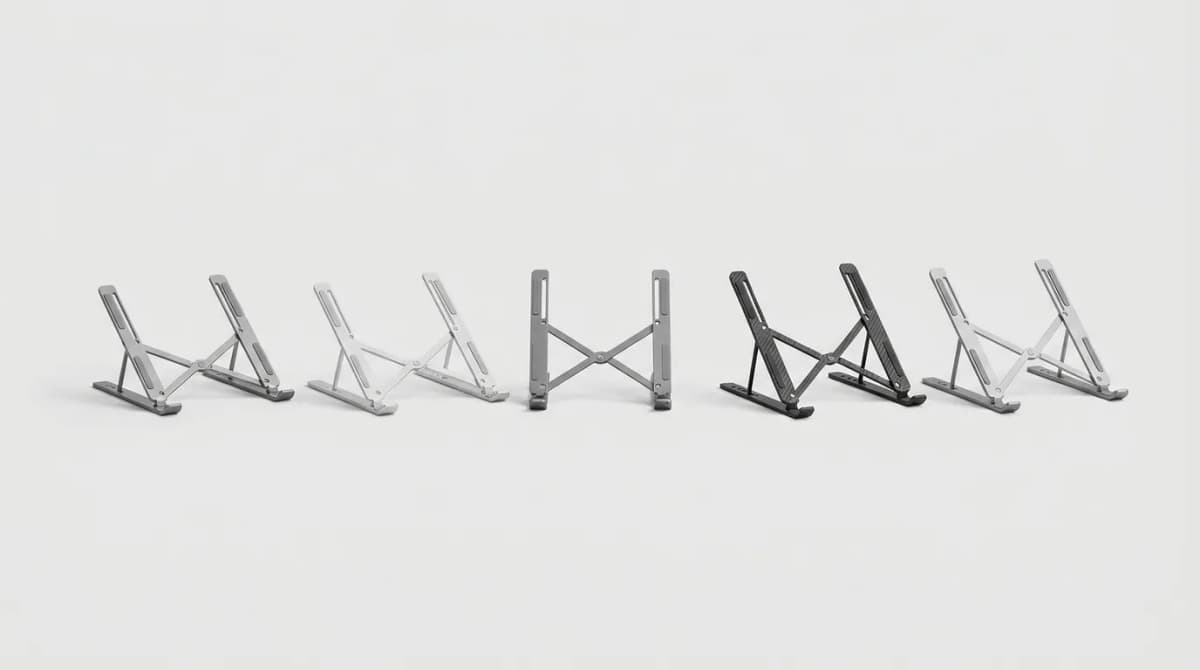
Best Portable Laptop Stands Under 1 Pound
Ultralight laptop stands that weigh less than 1 pound but still deliver stable ergonomic lift. We tested fold size, airflow, and real-world stability.
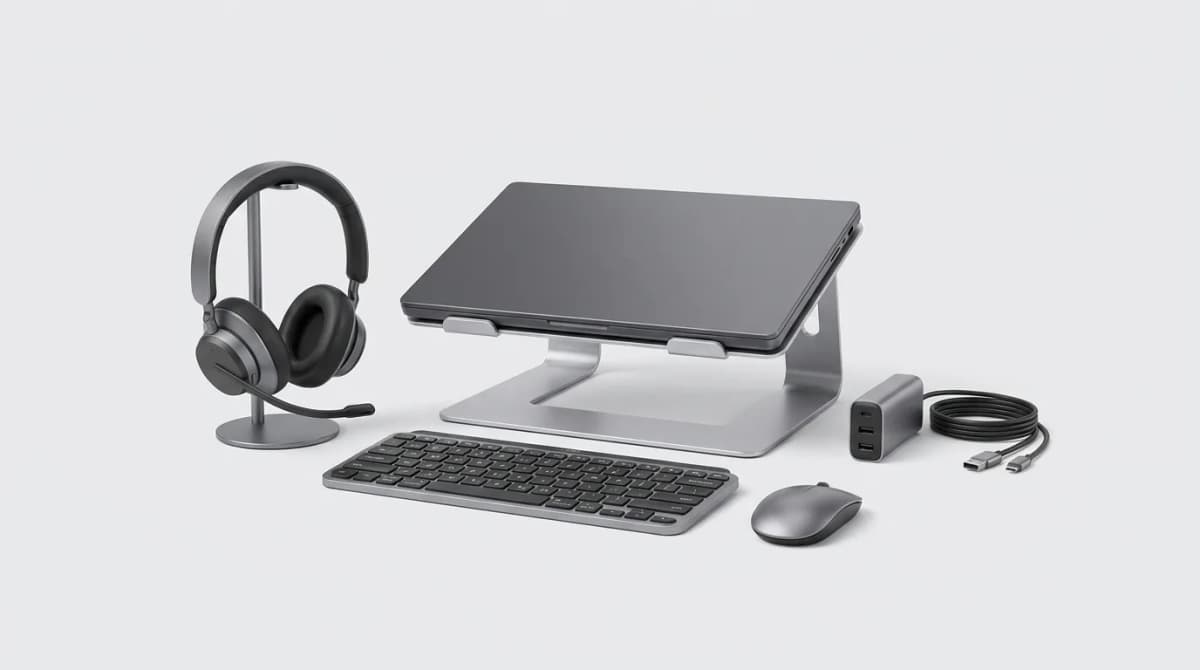
Best Work From Anywhere Kit Under 300 Dollars
Building a complete mobile work setup for under 300 dollars means choosing gear that pulls double duty and skipping the nice-to-haves that don't matter.