Best Car Emergency Kits Worth Keeping in Your Trunk
The best car emergency kits combine first aid, tools, and survival essentials. We break down what actually matters when you are stranded roadside.
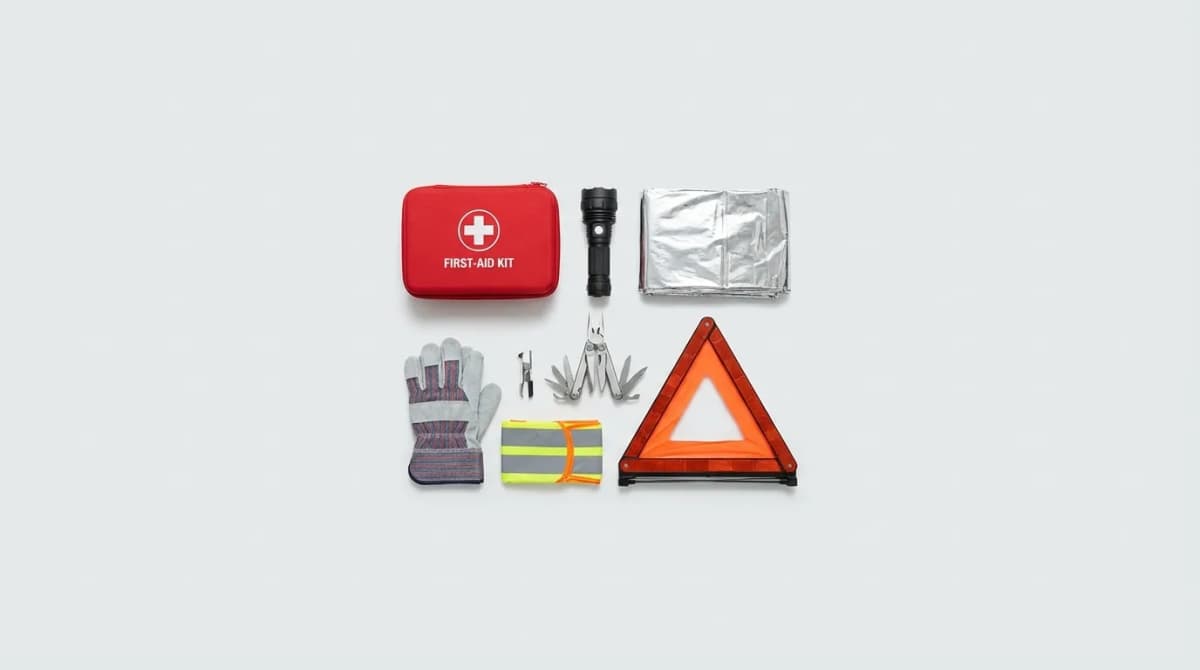
A flat tire in cell range is an inconvenience. A breakdown in January, 40 miles from town, with no phone signal is a different problem entirely. Most car emergency kits treat both scenarios the same, which means they are not quite right for either.
The best car emergency kits balance roadside repair tools, medical supplies, and actual survival gear. You want jumper cables that work, a first aid kit that goes beyond Band-Aids, and enough warmth and water to wait out a real delay. The goal is not to carry everything, it is to cover the likely failures without filling your trunk with redundant junk.
We looked at complete kits, specialty additions, and the gaps most pre-built kits leave open. Here is what actually works when your car does not.
Complete Emergency Kits That Cover the Basics
Most all-in-one kits check predictable boxes: jumper cables, reflective triangles, a basic first aid pouch, maybe a flashlight. The difference is in what they include beyond the obvious and whether those extras are functional or filler.
The AAA Severe Weather Road Kit is built for winter breakdowns. It includes 8-gauge jumper cables (adequate for most sedans and small SUVs, though trucks may need heavier cables), a collapsible shovel, an ice scraper, and a thermal blanket. The shovel is thin stamped steel, not expedition-grade, but it moves snow from around tires without snapping. The kit also packs a tow strap, work gloves, and a 30-piece first aid set with gauze, tape, and basic medications. It fits in a compact nylon case that stays organized.
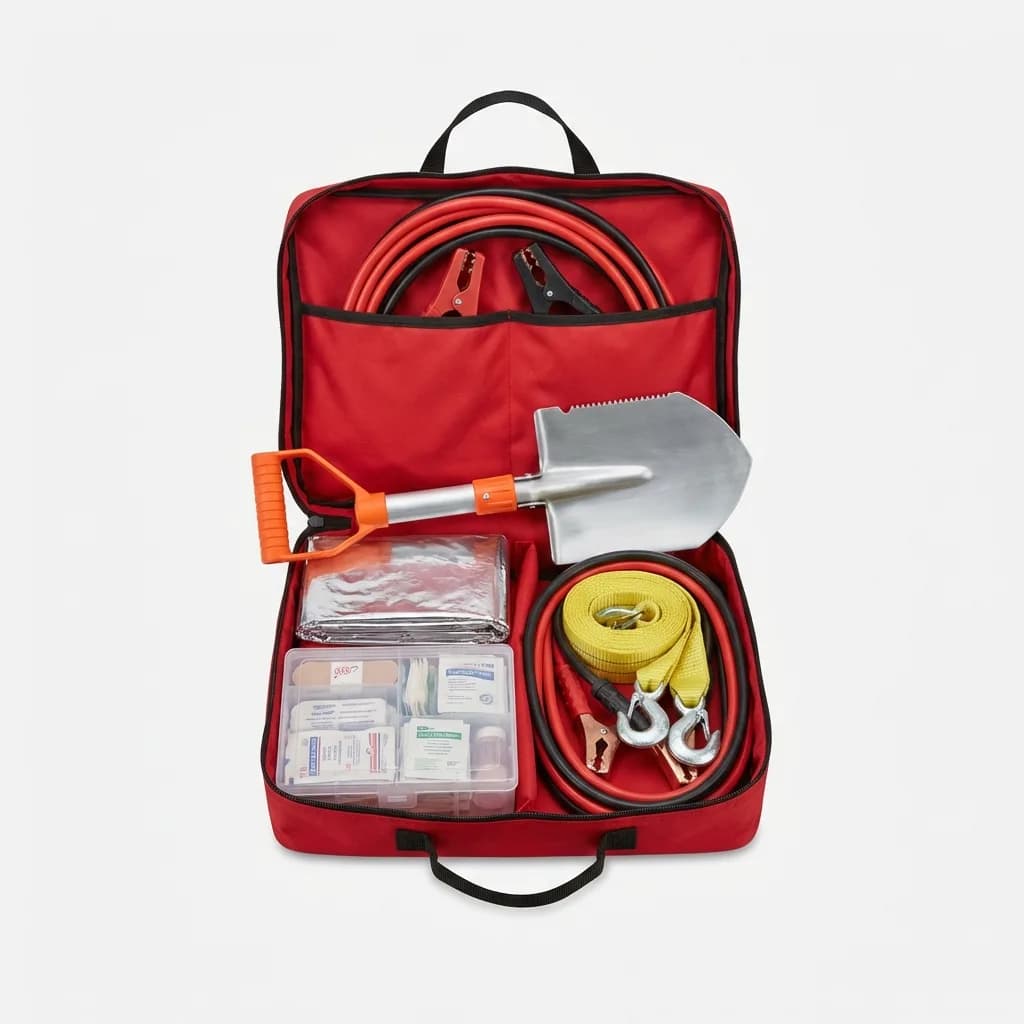
AAA Severe Weather Road Kit
See current price
Winter-focused kit with 8-gauge jumper cables, collapsible shovel, thermal blanket, tow strap, and 30-piece first aid supplies in organized nylon case.
What it misses: a good flashlight and extra water. The included mini light is barely functional. You will want to add a quality LED flashlight separately.
For year-round coverage, the Lifeline AAA Premium Road Kit expands the core list with 10-gauge jumper cables, a more comprehensive 121-piece first aid kit, and better visibility tools including flares and a reflective vest. The first aid supplies go deeper than adhesive bandages, you get a CPR mask, trauma pads, and a wider range of wound care. It also includes bungee cords, electrical tape, zip ties, and a multi-tool, which matter more than most people think when you are trying to secure a loose fender or rig a temporary fix.
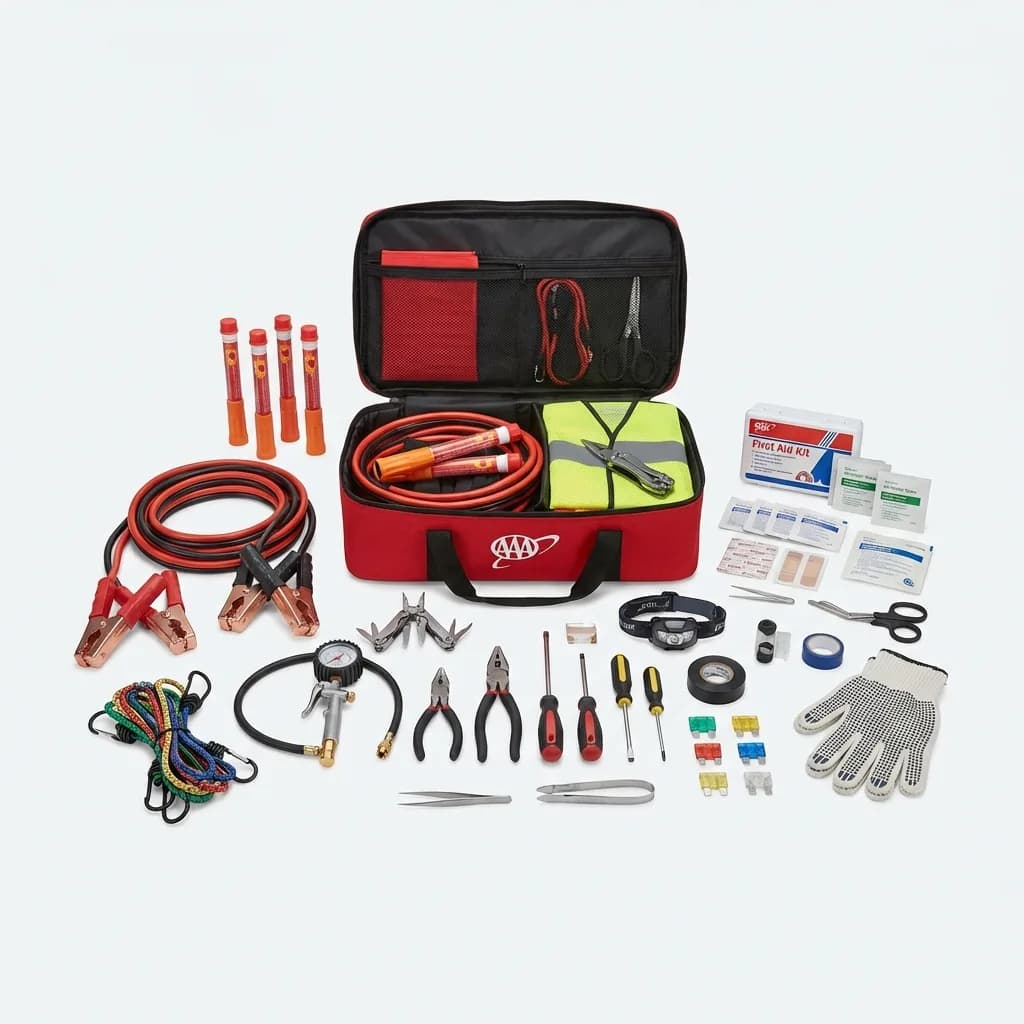
Lifeline AAA Premium Road Kit
See current price
Comprehensive 121-piece first aid kit, 10-gauge jumper cables, road flares, reflective vest, and repair essentials including multi-tool and bungee cords.
The Lifeline kit covers more scenarios but takes up more space. It is worth it if you drive frequently in remote areas or through severe weather. If your commute is suburban and you mostly need a safety net for occasional road trips, the AAA Severe Weather version is enough.
What Pre-Built Kits Usually Get Wrong
Most emergency kits include a first aid section that looks complete on paper but falls apart under scrutiny. You get 40 bandages in assorted sizes, a few alcohol wipes, and maybe a roll of gauze. That is fine for a scraped knuckle, but it is not enough for a deeper laceration or a burn from a hot engine component.
The fix is simple: add a dedicated trauma kit. The Adventure Medical Kits Sportsman Series is designed for backcountry injuries but works just as well in a vehicle. It includes QuikClot gauze for serious bleeding, a SAM splint for fractures or sprains, blister treatments, and medications for pain, inflammation, and allergic reactions. The case is waterproof and the supplies are organized in labeled modules, so you can find what you need without dumping everything out.
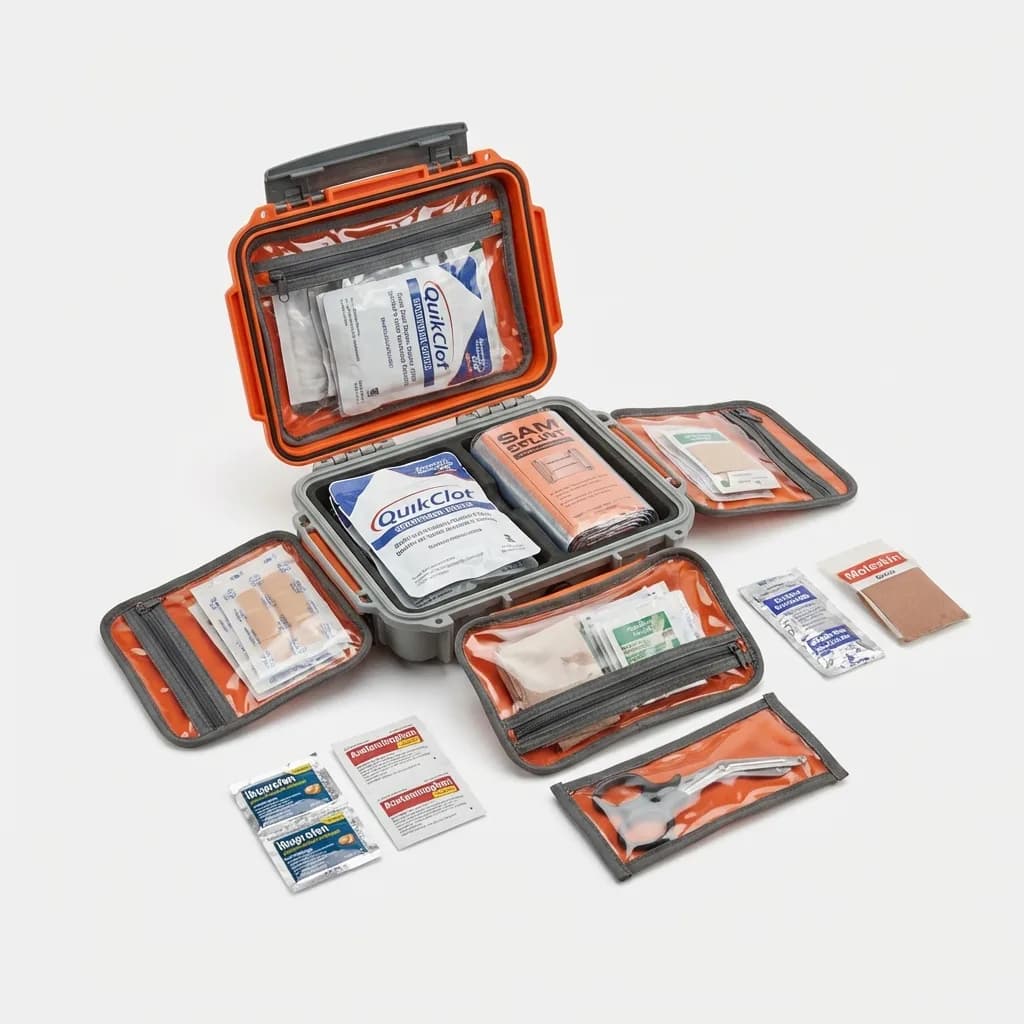
Adventure Medical Kits Sportsman Series
See current price
Trauma-ready first aid with QuikClot gauze for bleeding, SAM splint, blister care, pain meds, and waterproof modular case for fast access.
Another common gap: light. Most kits include a keychain-sized LED or a cheap plastic flashlight with dying batteries. You need something that throws real output and runs for hours. The Streamlight 88040 ProTac HL delivers 600 lumens, runs on two CR123A batteries (included), and has a durable aluminum body with a pocket clip. It is compact enough to store anywhere and bright enough to signal for help or inspect engine components in full dark.
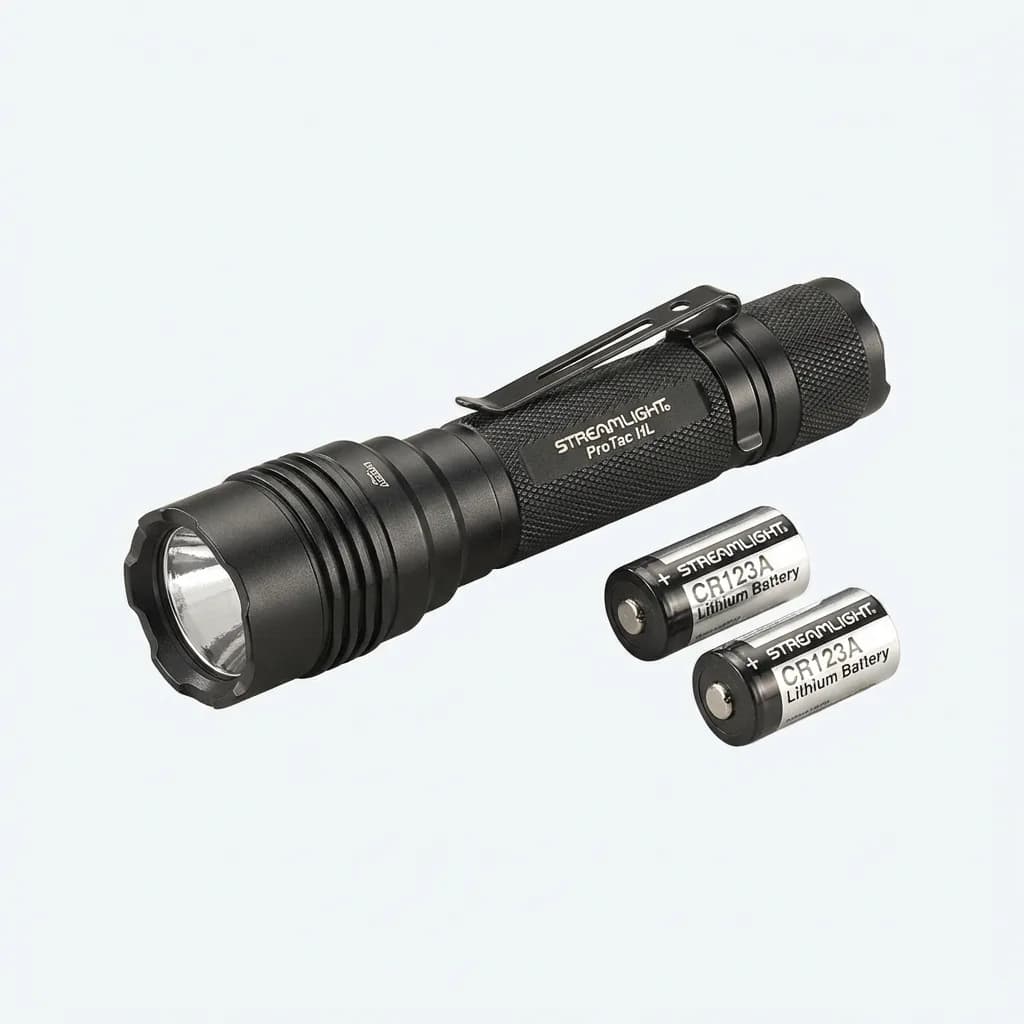
Streamlight 88040 ProTac HL
$65
High-output 600-lumen tactical flashlight with CR123A batteries, durable aluminum body, and multi-hour runtime for emergencies and roadside repairs.
Winter and Cold-Weather Add-Ons
If you live anywhere with freezing temperatures, your emergency kit needs to assume you might be stuck overnight. Thermal blankets help, but they are loud, fragile, and not particularly warm. A better option is a compact sleeping bag rated for cold weather.
The Teton Sports Celsius sleeping bag is rated to 0°F, packs down to about the size of a basketball, and costs less than most premium emergency blankets. It weighs under 4 pounds and includes a stuff sack with compression straps. If you are stuck in your car with the engine off, this keeps you warm without burning fuel or draining the battery. It is also useful for camping or as a guest bag, so it earns its storage space beyond emergencies.
Pair it with a case of bottled water (rotated every six months) and a handful of high-calorie energy bars. Dehydration and low blood sugar make cold exposure worse. You do not need a week's supply, just enough to stay functional for 12 to 24 hours.
Jumper Cables vs. Battery Jump Starters
Jumper cables work if someone else is around with a working battery. A portable jump starter works when no one is. The NOCO Genius Boost Plus GB40 delivers 1000 amps, enough to jump-start gas engines up to 6.0 liters and diesel engines up to 3.0 liters. It is compact, about the size of a thick paperback, and includes built-in safety features to prevent reverse polarity or sparking.
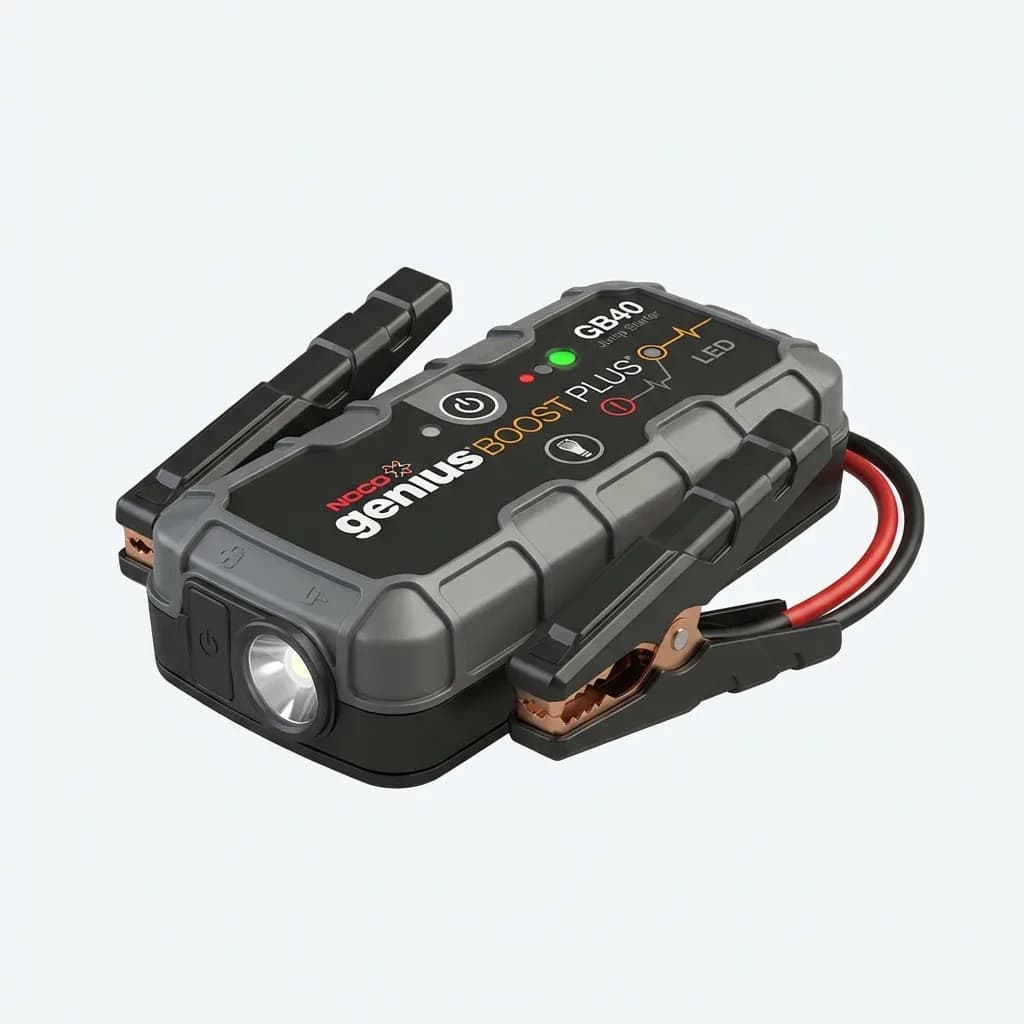
NOCO Genius Boost Plus GB40
$100
1000-amp portable jump starter for gas and diesel engines, compact design, spark-proof connections, and built-in flashlight for solo roadside use.
The GB40 also functions as a USB power bank for charging phones, which matters when your breakdown turns into a long wait. It holds a charge for months and recharges via USB-C in a few hours. If you drive solo or in areas with sparse traffic, this is the single most useful upgrade to any emergency kit.
Traditional jumper cables are still worth carrying as a backup. The Energizer 1-Gauge 800A cables are heavy-duty, with thick copper clad aluminum conductors and industrial clamps that grip battery terminals securely. Keep both in your trunk. The jump starter is your first option, the cables are your fallback if the starter is drained or if you need to help someone else.
Tools and Repair Essentials You Will Actually Use
Duct tape, zip ties, and a multi-tool solve more roadside problems than people expect. A loose license plate, a dangling bumper, a broken mirror mount, these are fixable with basic supplies. The Leatherman Wingman multi-tool includes pliers, wire cutters, scissors, a knife, screwdrivers, and a bottle opener in a compact stainless steel frame. It is not the most expensive Leatherman, but it is the right size and feature set for vehicle storage.
Throw in a roll of Gorilla heavy-duty duct tape and a pack of assorted zip ties. These three items handle 80% of temporary repairs. Add a tire pressure gauge and a 12-volt air compressor. The EPAuto 12V DC Portable Air Compressor plugs into your cigarette lighter and inflates a tire in 5 to 8 minutes. It is loud and slow compared to a gas station air pump, but it works anywhere and costs less than two months of roadside assistance.
How to Actually Organize Your Emergency Kit
Dump everything into a duffel bag and you will never find it when you need it. Use a modular system: a hard-sided case for tools and jumper cables, a soft pouch for first aid, a separate bag for food and water. Label them. When it is dark, cold, and stressful, you do not want to dig through 50 items to find a flashlight.
Store the kit in your trunk, not your cabin. Cabin space fills up with daily gear and groceries. Trunk storage keeps it accessible but out of the way. Check the kit twice a year, replace expired medications, swap out old batteries, and refresh any food or water. This is not the kind of gear you set and forget.
What You Really Need vs. What Sounds Useful
Emergency kits love to pad their contents with items that look practical but rarely get used. Hand warmers, glow sticks, emergency whistles, these are nice to have but not critical. A working flashlight, functional jumper cables, and a real first aid kit matter more.
Skip the kits that brag about piece counts. A 200-piece kit with 150 bandages is not better than a 50-piece kit with trauma supplies. Look for what is included, not how many of each item. Prioritize durability, functionality, and realistic use cases. You are preparing for the breakdown that traps you for hours, not the zombie apocalypse.
The best car emergency kit is the one you build yourself by starting with a solid base kit and filling in the gaps. Get a winter-rated option if you drive in snow, add a jump starter if you drive alone, upgrade the first aid if you take long trips. Test your gear at home before you need it in the field. Make sure the flashlight works, the jumper cables reach, and you know where everything is stored.
Your car emergency kit should give you options when things go wrong. It should keep you safe, warm, and visible until help arrives or you fix the problem yourself. That is the standard. Everything else is just extra weight.
The Weekly Dispatch
Enjoying this article?
Subscribe and get our best gear picks delivered every Sunday morning.
Related Stories
Survival Kit 101: Building a Bug-Out Bag
Building a bug-out bag isn't about prepping for doomsday. It's about having essentials ready when disasters strike. Here's what actually matters.
The Best Mini First Aid Kits for Everyday Carry
Compact first aid kits that actually fit in your pocket or bag without compromising on critical supplies. Here's what to carry and why it matters.
Best Trekking Poles for Bad Knees 2026
Discover which trekking poles reduce knee strain most effectively with shock absorption, proper length adjustment, and grip comfort for long-distance hiking.