Best Smart Thermostat for Energy Savings 2026
Smart thermostats can cut heating and cooling costs by 10-23% annually. We break down which models deliver real savings and which features actually matter.
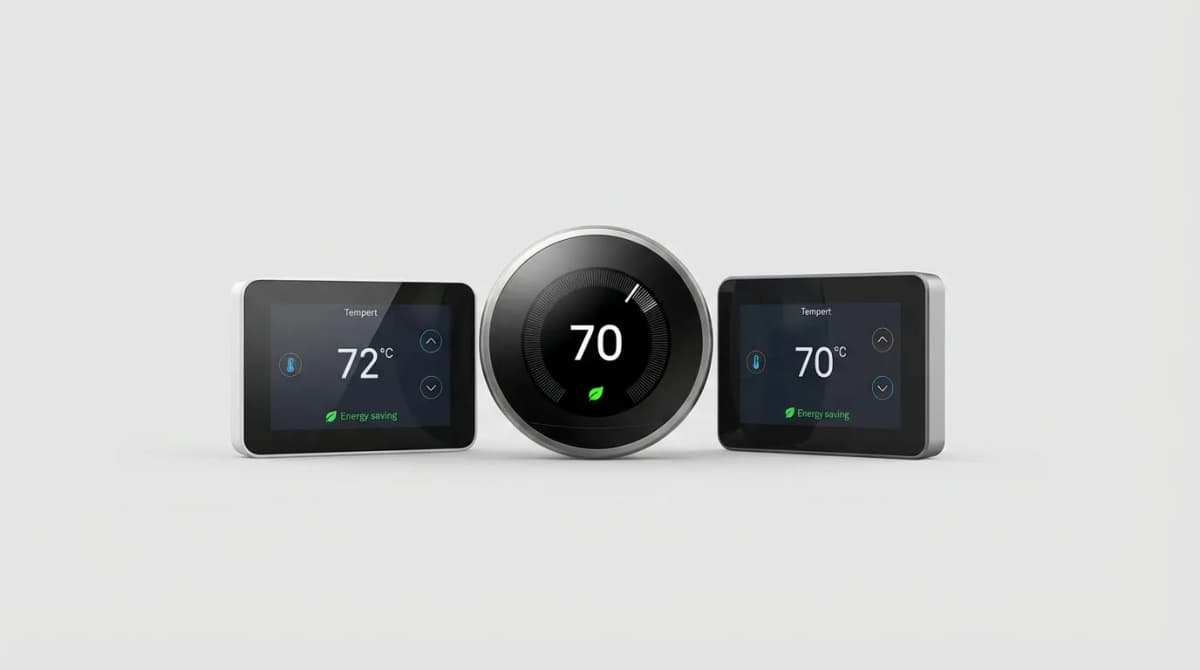
Your heating and cooling system accounts for roughly 43% of your home energy bill. A smart thermostat won't change your HVAC system, but it can reduce how often it runs without sacrificing comfort. Independent studies show savings between 10-23% annually, which means most units pay for themselves within 18-24 months.
The question isn't whether a smart thermostat saves money. It's which one delivers the best return for your setup, climate, and routine.
We tested the current market leaders against real-world conditions: varied schedules, remote access needs, multi-zone systems, and compatibility with older HVAC equipment. Some models excel at learning your patterns. Others shine with manual scheduling flexibility. A few offer sensor networks that eliminate hot and cold spots entirely.
What actually drives energy savings in a smart thermostat
Auto-scheduling gets the headlines, but the biggest gains come from reducing runtime during shoulder seasons. Spring and fall create the most waste because your system cycles on and off to maintain a narrow temperature band. Smart thermostats widen that band intelligently, letting your home drift a degree or two when it won't affect comfort.
Remote access matters more than most people expect. Forgot to adjust before a weekend trip? Changed plans and coming home early? Each unnecessary runtime hour costs money. The ability to make adjustments from anywhere prevents that waste.
Geofencing takes this further by detecting when everyone leaves and automatically switching to an away temperature. It sounds gimmicky until you realize how often someone leaves for an unplanned errand or stays late at work. Manual schedules can't adapt to life's randomness.
Room sensors solve the biggest limitation of any single thermostat: it only measures temperature in one spot. If your bedroom runs cold or your home office gets afternoon sun, a sensor network lets the system prioritize occupied rooms instead of running endlessly to heat or cool empty spaces.
Ecobee SmartThermostat Premium - best overall for energy savings
The Ecobee Premium includes a remote room sensor in the box and supports up to 32 total sensors. That sensor network is the key differentiator. Instead of heating your entire home to 68 degrees because the hallway thermostat reads 66, it focuses on the rooms you actually use.
The included sensor has occupancy detection, so the system knows which rooms are active. Set it to prioritize your bedroom at night and your living room during the day. The HVAC runs less while comfort stays consistent.
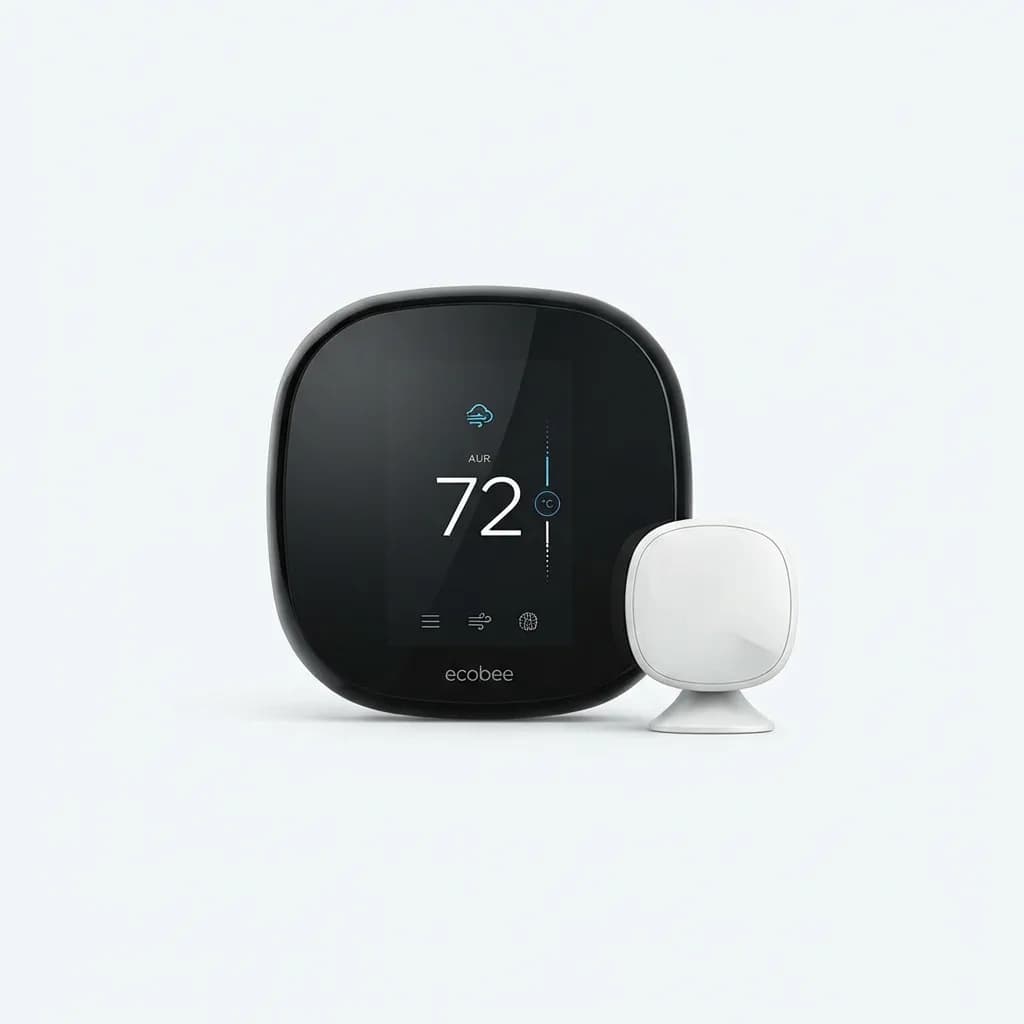
Ecobee SmartThermostat Premium
$249
Built-in air quality monitor, includes one remote sensor, supports up to 32 sensors, voice control via built-in Alexa, works with most 24V HVAC systems including heat pumps.
Energy reports show detailed breakdowns by day, week, and month. You can see exactly how runtime correlates with outdoor temperature and adjust accordingly. The Premium also includes an air quality monitor that tracks VOCs, which doesn't save energy but helps you understand when to run ventilation.
Installation is straightforward if you have a C-wire for continuous power. Without one, you'll need to install the included Power Extender Kit at your furnace, which adds about 20 minutes to setup. Compatibility covers most systems, including heat pumps, dual fuel, and humidifiers.
The interface uses a large touchscreen with clear icons and responsive controls. Voice commands work through the built-in Alexa speaker, though response time lags slightly behind a dedicated Echo device.
Google Nest Learning Thermostat - best for hands-off automation
The Nest Learning builds a schedule automatically by watching your manual adjustments for the first week or two. Turned the heat up at 6am three days in a row? It learns that pattern and anticipates it. Lowered the temperature before bed? Same thing.
This works exceptionally well for consistent routines. If you wake up, work, and sleep on a regular schedule, the Nest adapts without requiring any programming. Just use it manually for a couple weeks and it figures out the rest.
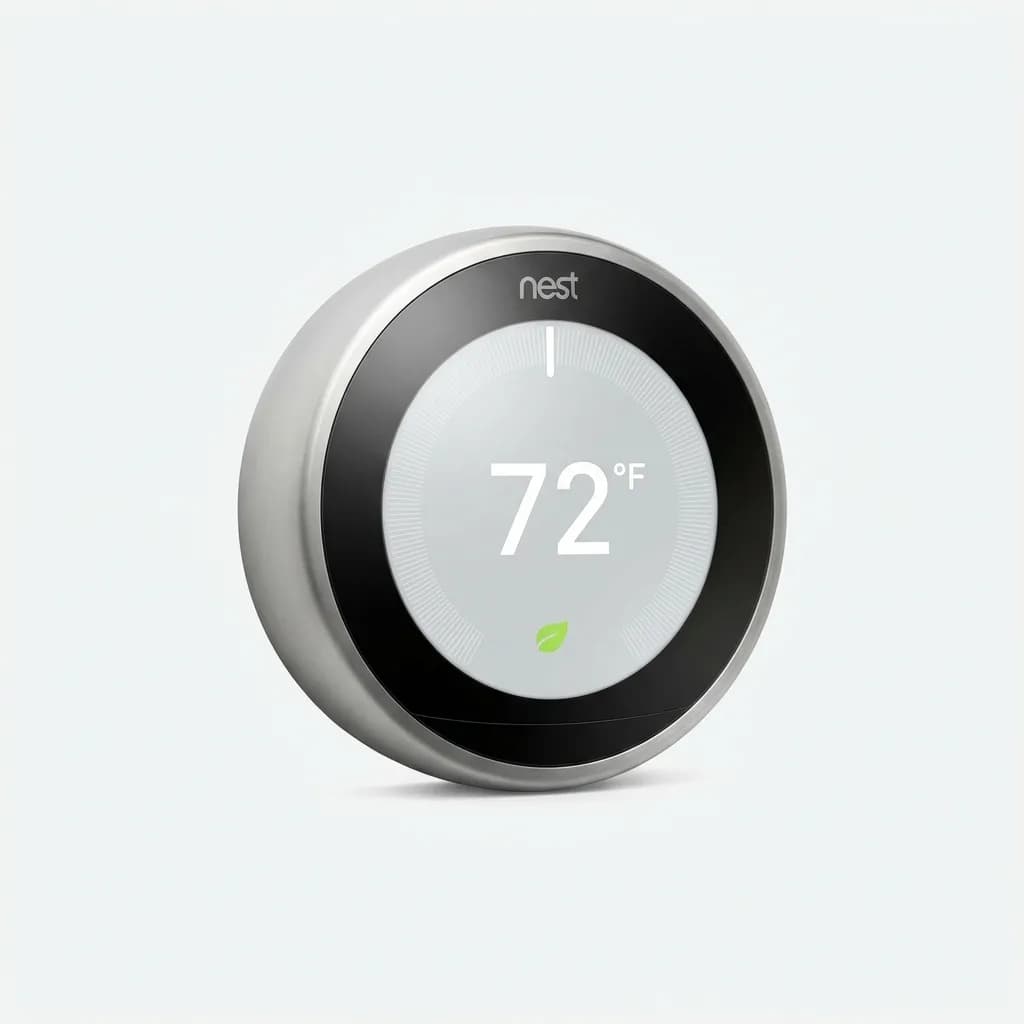
Google Nest Learning Thermostat (3rd Gen)
$199
Auto-learning schedule, Farsight display shows temperature from across the room, works with Nest Temperature Sensors (sold separately), stainless steel ring design.
The Farsight feature lights up the display when you walk by, showing current temperature or time from up to 20 feet away. It's a small touch that makes daily interaction smoother.
Energy History in the Nest app shows monthly consumption and compares it to similar homes in your area. The comparison data comes from other Nest users and provides context for whether your usage is typical or excessive. Home/Away Assist uses phone location to detect when everyone leaves, switching to eco mode automatically.
The Nest works with add-on temperature sensors (sold separately) for multi-room awareness, though it maxes out at six sensors versus Ecobee's 32. For most homes, six is plenty.
One limitation: the Nest Learning requires either a C-wire or compatible system for built-in charging. Some older systems aren't compatible, and while Nest sells a power adapter, it's not included and adds another $20-30.
Amazon Smart Thermostat - best budget option
At $80, the Amazon Smart Thermostat costs less than half what the premium options run. You lose some features, but the core functionality - programmable schedules, remote access, and energy reporting - remains intact.
Alexa integration is native and works smoothly. "Alexa, set the temperature to 70" adjusts instantly. Routines let you tie temperature changes to other smart home triggers, like turning down heat when your smart lock engages.
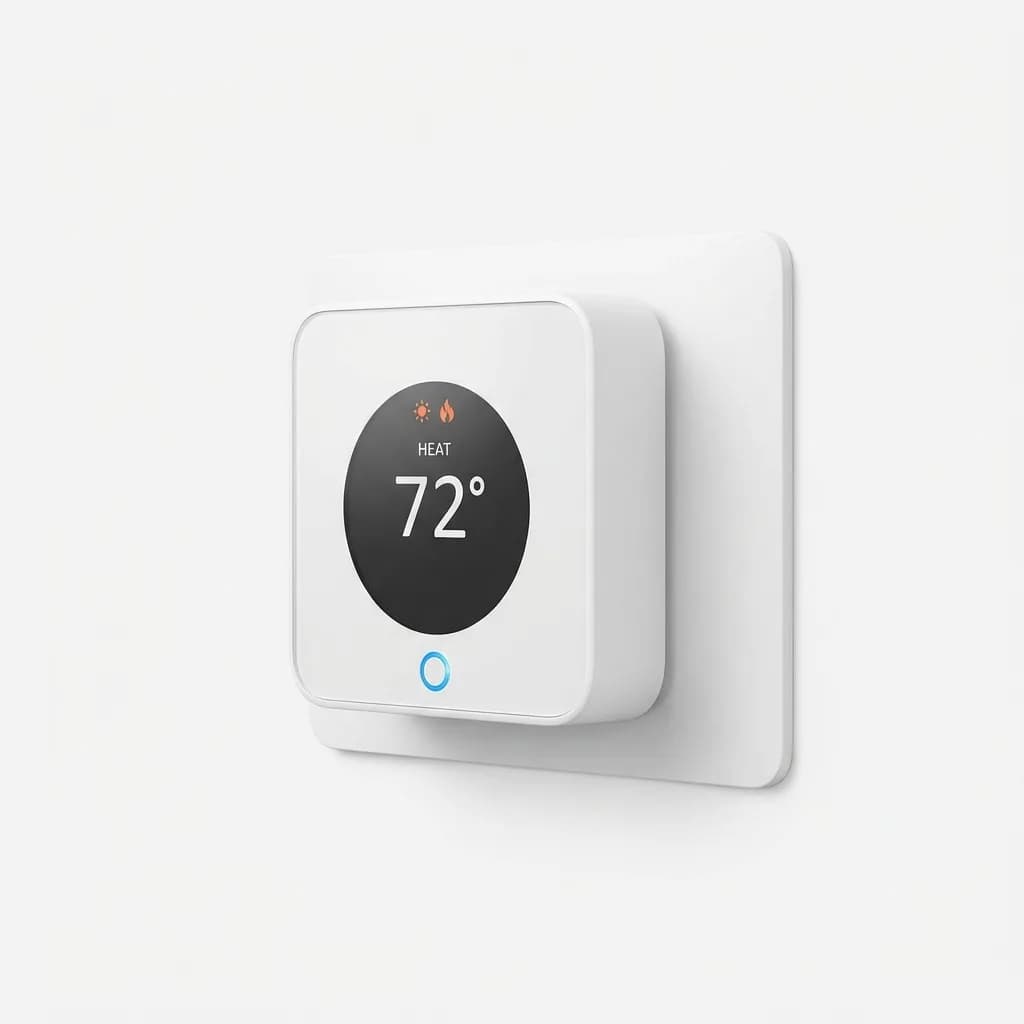
Amazon Smart Thermostat
$80
Works with Alexa for voice control, programmable schedules, Honeywell Home THX321WFS rebadged unit, requires C-wire, Energy Star certified, simple app interface.
The device itself is a rebadged Honeywell unit, which means proven reliability and wide HVAC compatibility. Setup requires a C-wire, though many utility companies offer rebates that cover the full purchase price if you provide proof of installation.
You don't get room sensors, learning algorithms, or air quality monitoring. Schedules must be programmed manually through the Alexa app. But for someone who wants basic smart control without premium pricing, it delivers exactly that.
Energy reports are basic - just monthly summaries without detailed breakdowns. But the Alexa app does track runtime and shows how changes to your schedule affect consumption.
Honeywell Home T9 - best for multi-room control on a budget
The Honeywell T9 bridges the gap between budget models and premium sensor networks. It includes one smart room sensor and supports up to 20 total, putting it between Amazon's zero sensors and Ecobee's 32-sensor maximum.
The sensors measure temperature and humidity, plus they detect occupancy. Set the system to follow you from room to room throughout the day, or prioritize specific sensors during set time blocks.
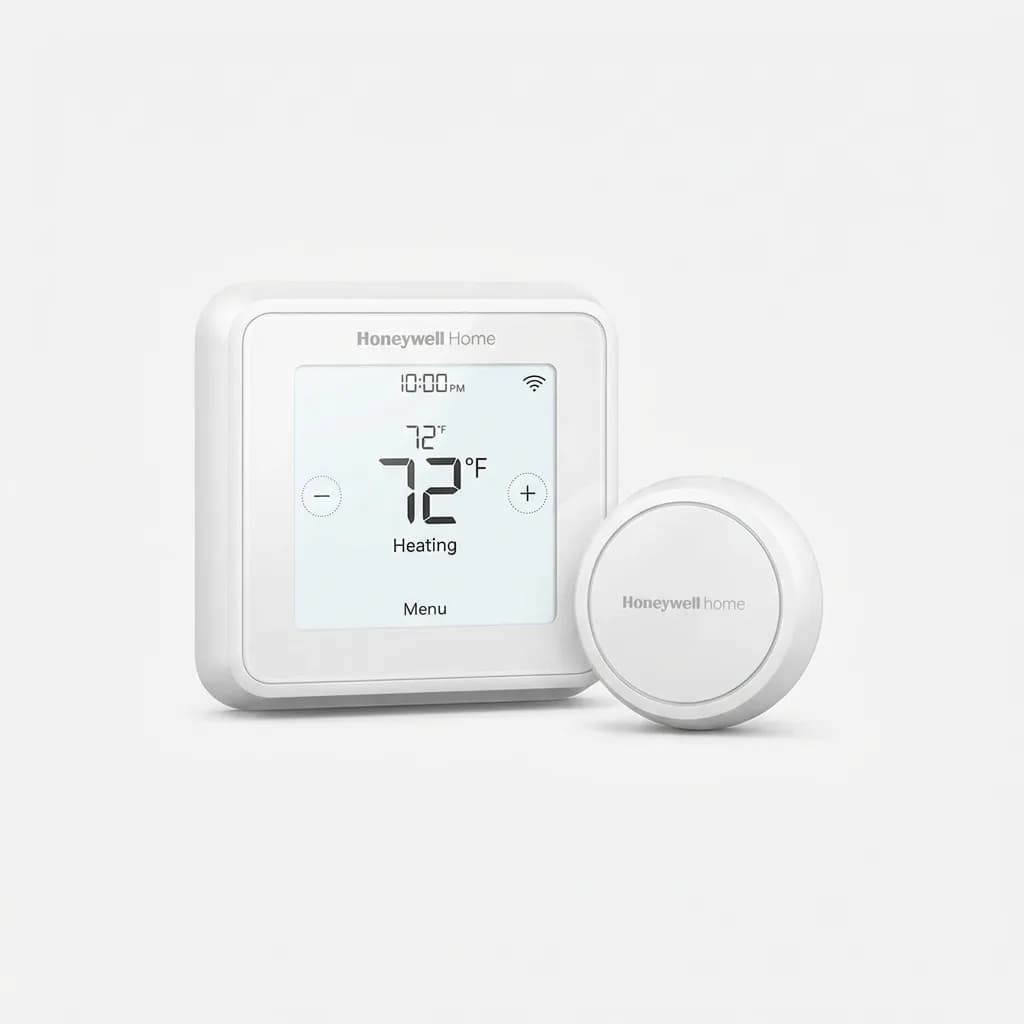
Honeywell Home T9 Smart Thermostat
$149
Includes one smart room sensor, supports up to 20 sensors, geofencing via smartphone, works with Alexa and Google Assistant, flexible scheduling options.
Geofencing works through the Honeywell Home app and triggers away mode when your phone leaves a set radius. It's reliable but requires location services running continuously, which drains phone battery slightly more than app-based scheduling.
The interface uses a simpler touchscreen than Ecobee or Nest, with less visual polish but equally functional controls. Schedules support multiple periods per day (wake, leave, return, sleep) with separate settings for weekdays and weekends.
Additional sensors run about $40 each, making a three-sensor setup cost roughly $230 total - still less than the Ecobee Premium's $249 price tag. For medium-sized homes where two or three sensors cover the main zones, this represents solid value.
What to know before buying any smart thermostat
Check your existing wiring before purchasing. Most smart thermostats need a C-wire (common wire) for continuous power. If your current thermostat only has four wires and none connect to a C terminal, you'll need to either run new wire or install a power adapter.
Some systems, particularly older heat-only or cool-only setups, won't work with certain smart models. Take a photo of your current thermostat's wiring and cross-reference it against the manufacturer's compatibility checker before buying.
Utility rebates can significantly reduce costs. Many power companies offer $50-100 rebates for installing Energy Star certified smart thermostats. Check your provider's website or call their energy efficiency department. The rebate often arrives as a bill credit within 60-90 days.
Consider your household's schedule predictability. If everyone follows consistent routines, a learning thermostat like the Nest makes sense. If schedules vary - shift work, frequent travel, irregular hours - manual programming or geofencing works better.
Room sensors matter most in homes with poor airflow or significant sun exposure. If your bedroom is always warmer than the rest of the house, or your home office gets afternoon heat, sensors solve that problem. For well-insulated homes with good air circulation, a single thermostat location works fine.
Do smart thermostats work with heat pumps and dual-fuel systems?
Most current models support heat pumps, but verify compatibility before purchasing. Heat pumps require different control logic than standard furnaces, particularly for auxiliary heat and defrost cycles.
The Ecobee Premium and Honeywell T9 both handle heat pumps well, including multi-stage systems and auxiliary heat control. The Nest Learning supports heat pumps but sometimes struggles with balance point optimization in dual-fuel setups.
For dual-fuel systems that switch between a heat pump and gas furnace based on outdoor temperature, look for thermostats with configurable switchover points. The Ecobee allows manual balance point adjustment, while the Nest attempts to calculate it automatically.
If you have a less common setup - hydronic heating, multi-zone dampers, humidifiers, or ventilators - check the detailed compatibility specs. The Ecobee generally offers the widest compatibility, followed by Honeywell, then Nest.
Setting up schedules that actually save money
The default away temperature matters more than most people realize. Every degree of setback saves roughly 1% on heating costs. Set your away temperature 8-10 degrees lower in winter and 7-8 degrees higher in summer.
Avoid extreme setbacks that force your system to run continuously for hours to recover. A 15-degree setback might save money while you're gone, but the recovery period often negates those savings. The sweet spot for most climates is 8-10 degrees.
Use sleep setbacks, but keep them moderate. Dropping temperature 5-6 degrees at night saves energy without making mornings uncomfortable. Pair this with a pre-heating period 30 minutes before your alarm so you wake up to a comfortable room.
Geofencing works best with a buffer zone. Set your away radius large enough that the system switches to eco mode before you actually leave the neighborhood. This prevents constant mode switching if you work close to home.
For homes with variable occupancy - kids at school, work-from-home days, part-time schedules - room sensors with occupancy detection provide better savings than rigid time-based schedules. Let the system respond to actual occupancy rather than guessing.
Wrap-up: which smart thermostat saves the most money?
The Ecobee SmartThermostat Premium delivers maximum savings for homes with uneven heating or cooling. The included sensor and support for 32 total sensors means you're not wasting energy conditioning empty rooms or overcompensating for problem areas.
For consistent schedules and minimal setup effort, the Nest Learning adapts automatically and requires almost zero ongoing management. It costs less than the Ecobee and works well for most single-zone homes.
The Amazon Smart Thermostat makes sense if your HVAC system is already well-balanced and you simply want remote access and basic scheduling. At $80 (often less with rebates), it pays for itself faster than premium models.
The Honeywell T9 sits between budget and premium, offering sensor capability at a mid-tier price. It's the right choice for two or three-zone awareness without Ecobee pricing.
Regardless of which model you choose, the real savings come from using the features consistently. Set up geofencing, install room sensors if your home needs them, and review energy reports monthly to spot waste. The hardware enables savings, but your settings determine how much you actually capture.
The Weekly Dispatch
Enjoying this article?
Subscribe and get our best gear picks delivered every Sunday morning.
Related Stories

Best Smart Home Hub for Beginners 2026
Find the right smart home hub without the confusion. We compare Echo, Google Nest, and Apple HomePod to help you pick the system that actually works.
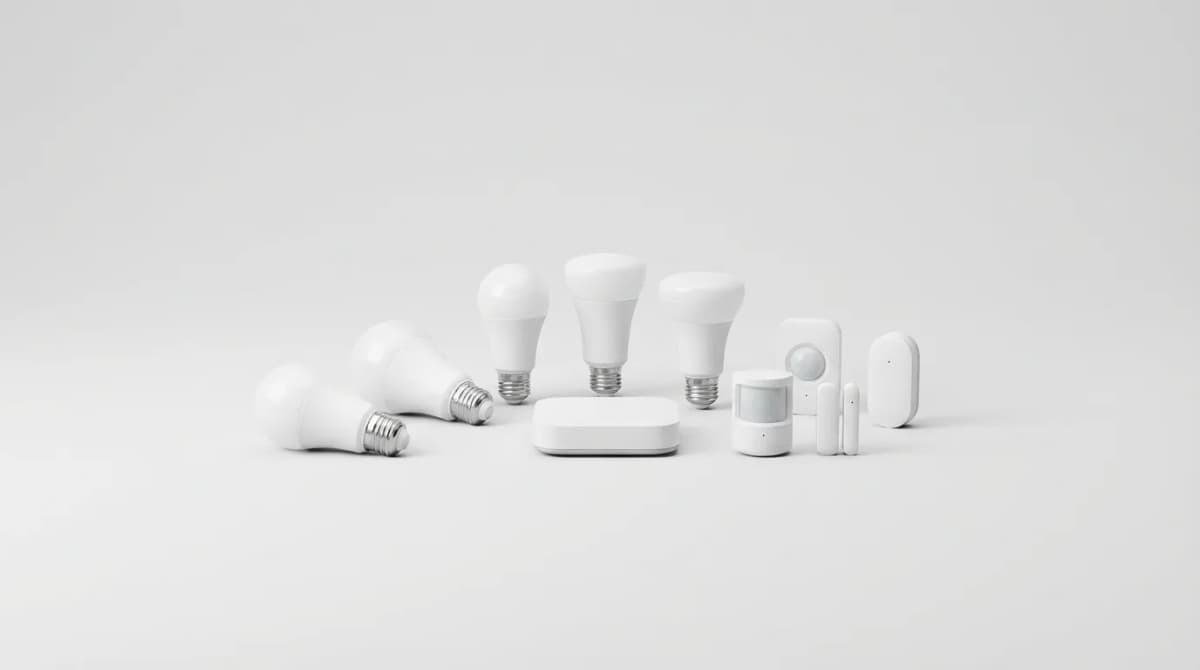
Best Matter Compatible Smart Home Devices 2026
Matter protocol finally delivers on the promise of universal smart home compatibility. Here's what actually works and what's worth buying in 2026.
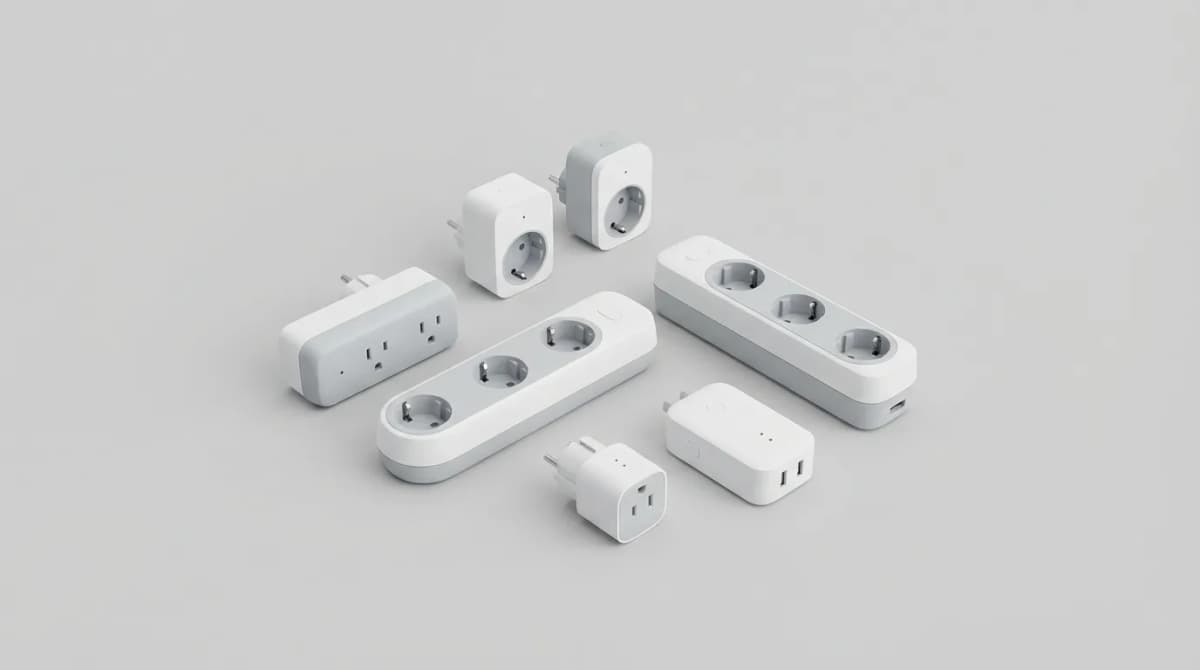
Best Smart Plugs for Energy Monitoring 2026
Track what your appliances actually cost to run. These smart plugs measure real-time energy use, log consumption over time, and help cut your power bill.