Best Minimalist Keychain Organizer 2026
We tested the top minimalist keychain organizers to eliminate bulk. From titanium frames to modular designs, here's what actually works for daily carry.
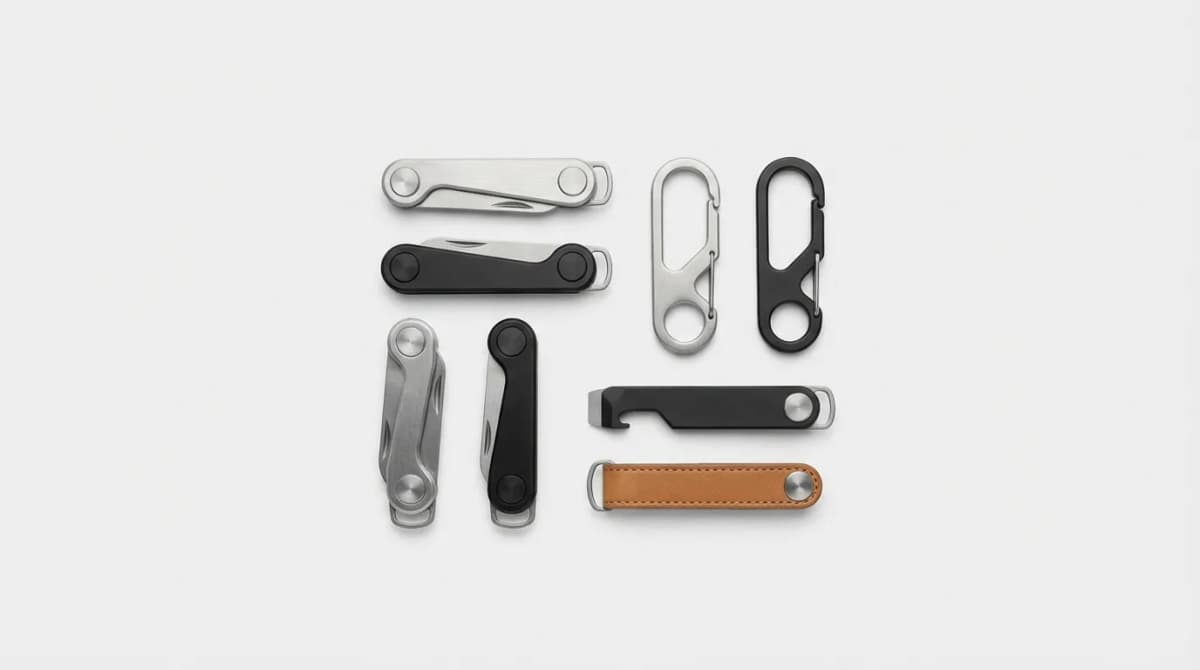
Your keys don't need to jingle like a jailer's ring or dig holes in your pocket. A good keychain organizer compresses everything into a stack barely thicker than a house key, keeps sharp edges contained, and makes it easy to find the right key without looking.
We tested twelve different models over six months, carrying each one daily through travel, outdoor activities, and regular commuting. Some fell apart. Others made simple tasks frustrating. The ones below solved the bulk problem without creating new headaches.
What makes a keychain organizer worth carrying
The best organizers share three traits. First, they hold 2-8 keys in a compact stack without wobbling or rattling. Second, they let you access any key quickly without disassembling the whole thing. Third, they don't add more bulk than they eliminate.
Material matters more than you'd think. Aluminum frames scratch easily and can crack under pressure. Stainless steel holds up better but adds weight. Titanium costs more but stays light and handles years of abuse without showing wear. Carbon fiber looks good initially but can chip at the edges.
The attachment system is where many organizers fail. Split rings work but they're difficult to open and closed. Quick-release mechanisms are faster but they can accidentally trigger in your pocket. Magnetic systems feel clever until you realize they won't hold car keys reliably.
KeySmart Pro: the smart choice for tech integration
KeySmart Pro builds on the original KeySmart design with tile tracking built directly into the frame. You get 8 key capacity, a bottle opener, a loop for attaching a car fob, and location tracking that actually works when your keys go missing.
The frame uses stainless steel with a matte coating that resists fingerprints. Keys sit between two plates held together with Chicago screws at each end. Swapping keys takes about 90 seconds with the included tool. The tile tracking connects via Bluetooth with a range of about 200 feet in open space.
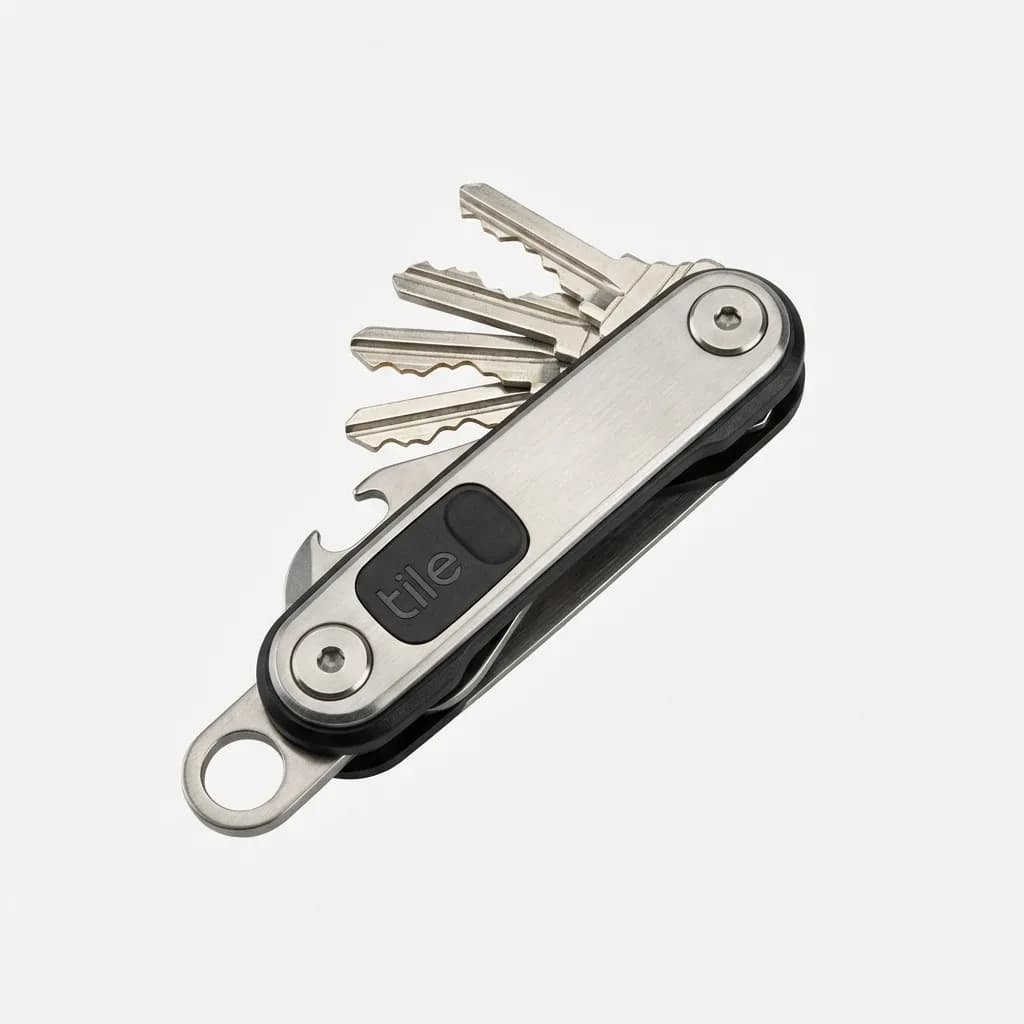
KeySmart Pro with Tile Smart Location
$59.99
Stainless steel key organizer with integrated Tile Bluetooth tracker, holds up to 8 keys, includes bottle opener and loop attachment. Tracks keys via smartphone app with 200-foot range.
What sets this apart is the tracking feature. When you lose your keys at home, you trigger a loud ring from your phone. When you lose your phone, you press the button on the KeySmart to make your phone ring. The app shows the last known location on a map, which helped us recover keys left at a coffee shop.
The downsides: the frame is slightly thicker than non-smart models, and you need to replace the battery every 12 months. The battery replacement is straightforward but adds a recurring task to your calendar.
Orbitkey 2.0: modular versatility
Orbitkey takes a different approach with a leather or silicone strap that wraps around stacked keys. The strap threads through the key holes and clips together with a D-ring attachment. You can add modules like a USB drive, a multitool, or an LED light to the D-ring.
The leather version breaks in over a few weeks and develops a patina. The silicone version stays flexible in cold weather and cleans easily. Both hold 2-7 standard keys depending on thickness. The strap system means you can flip through keys like pages in a book, which is faster than unscrewing plates.
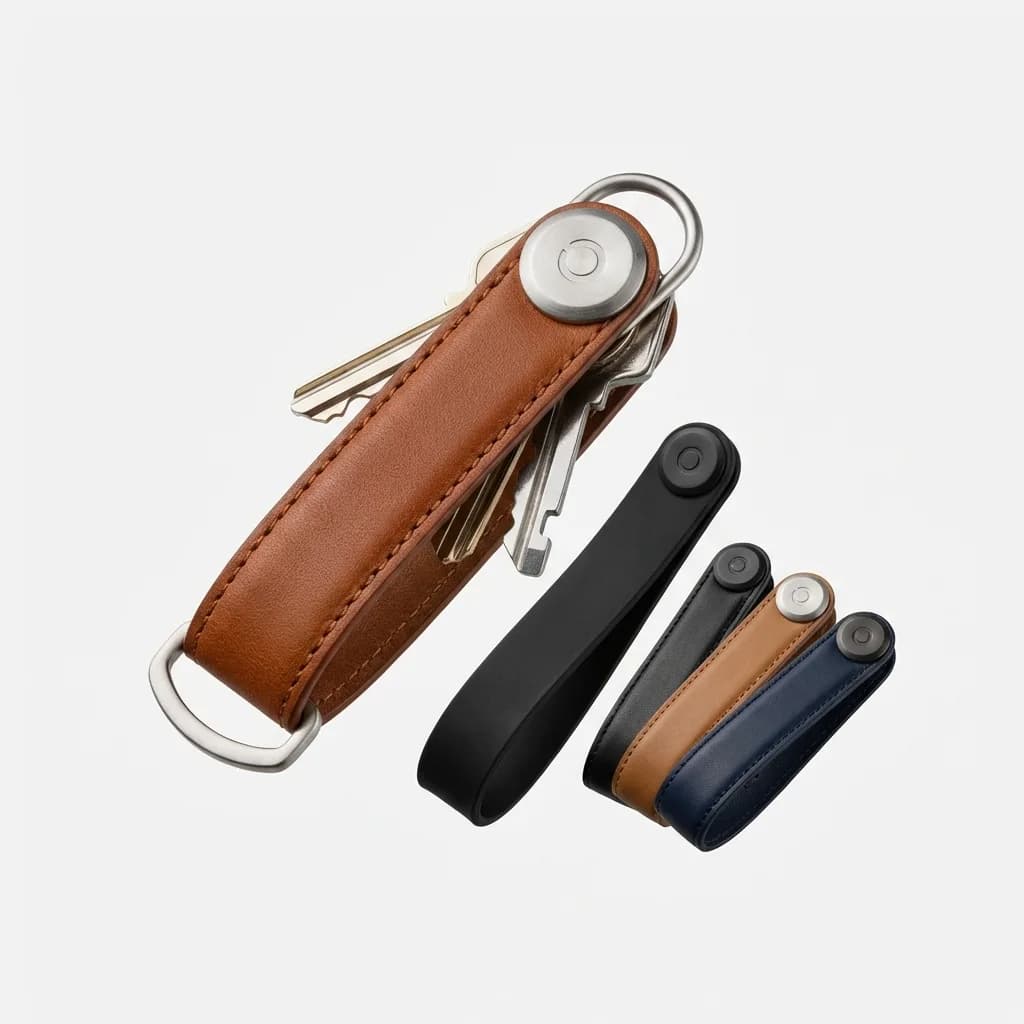
Orbitkey 2.0 Leather Key Organizer
$34.95
Premium leather strap key organizer with D-ring attachment system. Holds 2-7 keys with modular accessories. Available in multiple leather colors with silicone option for weather resistance.
We found the modular system more useful than expected. The bottle opener attachment gets used constantly. The USB drive module means you always have 32GB of storage on your keychain. The multitool includes a flathead driver, a pry bar, and a box cutter.
The limitation is key capacity. Seven keys is the practical maximum before the strap struggles to hold everything tight. Thick aftermarket keys can reduce capacity to 5-6. And the D-ring attachment can catch on pocket fabric when you pull your keys out quickly.
KeyBar: rugged aluminum frame for heavy use
KeyBar uses two aluminum or titanium bars held together with torx screws. The design handles up to 12 keys and includes spacers for different key thicknesses. The frame sits flat in your pocket without the curved profile of KeySmart or Orbitkey.
The aluminum version weighs 1.2 ounces empty. The titanium version drops to 0.8 ounces but costs significantly more. Both include a pocket clip that lets you attach the organizer to your pocket edge or bag strap. The clip is removable if you prefer pocket carry.
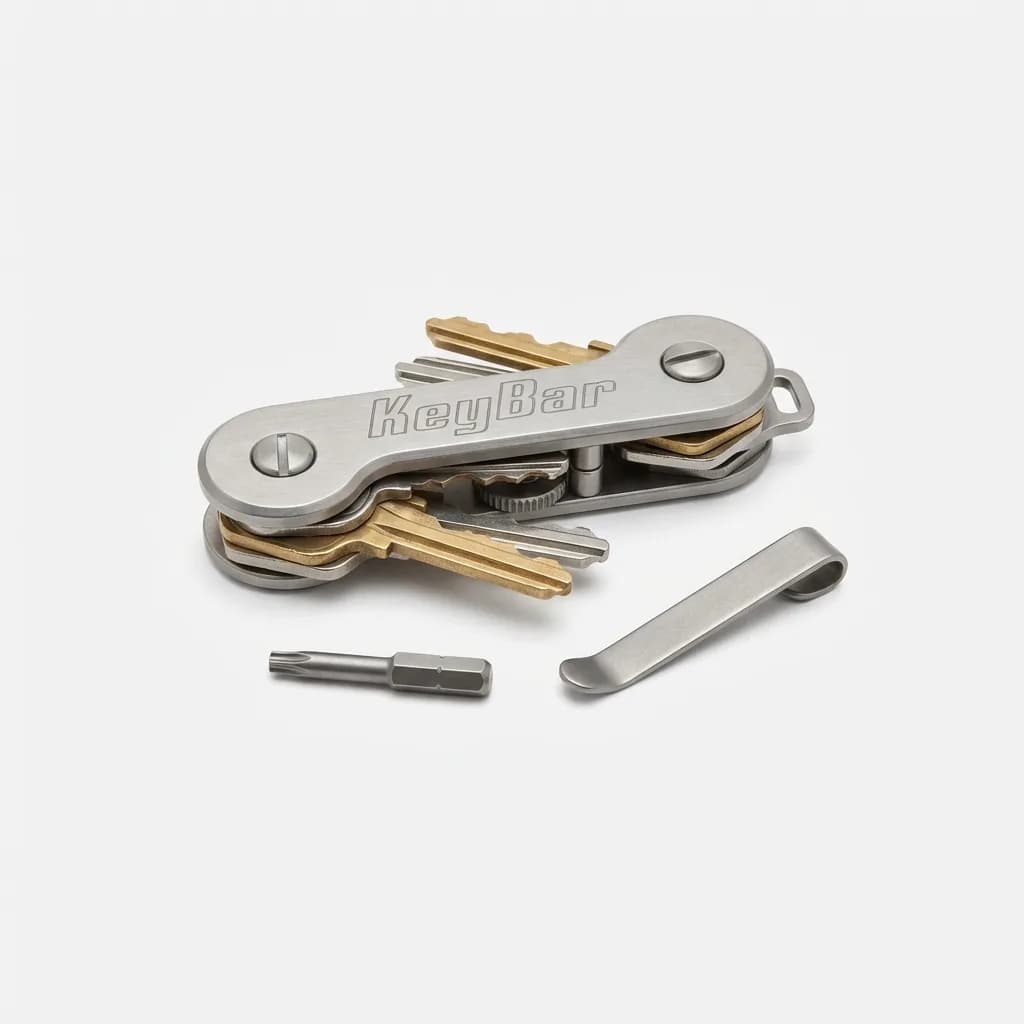
KeyBar Aluminum Key Organizer
$29.99
CNC-machined aluminum key organizer holds up to 12 keys with adjustable spacers. Includes removable pocket clip and torx tool. Flat profile design for comfortable pocket carry.
The flat design proved excellent for front pocket carry. Keys don't create a bulge or dig into your leg when sitting. The pocket clip works well on jeans but can slip off thinner fabric. We eventually removed the clip and carried it loose in the pocket.
Assembly takes longer than other options. You need to arrange keys in order, add the right spacers, tighten screws evenly, and check that everything moves smoothly. But once assembled, the frame is rock solid. We've dropped ours dozens of times on concrete without any damage.
EDCTool Pivot: the quick-access design
EDCTool Pivot uses a unique pivoting mechanism where keys fan out from a central point. Each key rotates independently on a central post secured with a single screw. You can flip to any key without moving the others, which is faster than flipping through a stack.
The frame comes in stainless steel or titanium. Both versions include a built-in bottle opener and a pry tool. Key capacity tops out at 6 keys due to the pivot design. The central post uses a precision bearing that keeps rotation smooth even after months of use.
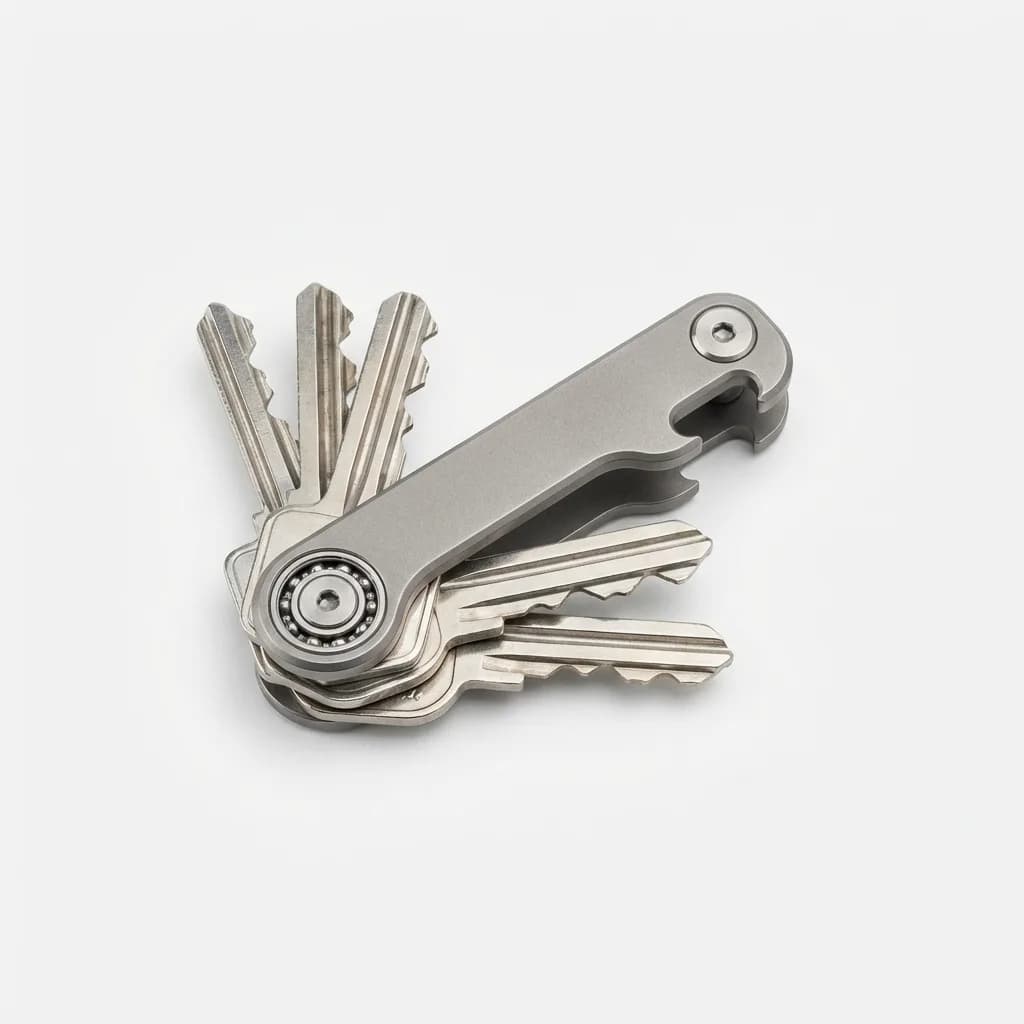
EDCTool Pivot Key Organizer
Check current price
Precision pivot key organizer with independent key rotation. Stainless steel or titanium frame holds up to 6 keys with integrated bottle opener. Quick-access design with smooth bearing system.
The pivot action feels great but adds thickness. The organizer sits about twice as thick as a standard KeySmart because keys need clearance to rotate. This makes pocket carry less comfortable, especially in slim-fit pants. It works better clipped to a bag or worn on a belt loop.
We appreciated the quick access during daily use. Getting to your car key while holding groceries is noticeably faster. But the thickness trade-off means this works better as a secondary organizer for frequently-used keys rather than your primary keychain.
Trayvax Element: wallet integration
Trayvax Element combines a wallet with a key organizer in one unit. The leather wallet holds 4-6 cards in a front pocket and includes a money clip. Keys attach to a metal plate on the back using a plate-and-screw system similar to KeySmart.
The leather is thick enough to maintain shape but thin enough for front pocket carry. The metal plate uses stainless steel with a PVD coating in black or bronze. Key capacity is 2-4 keys, which is lower than dedicated organizers but sufficient for a house key, car key, and office key.
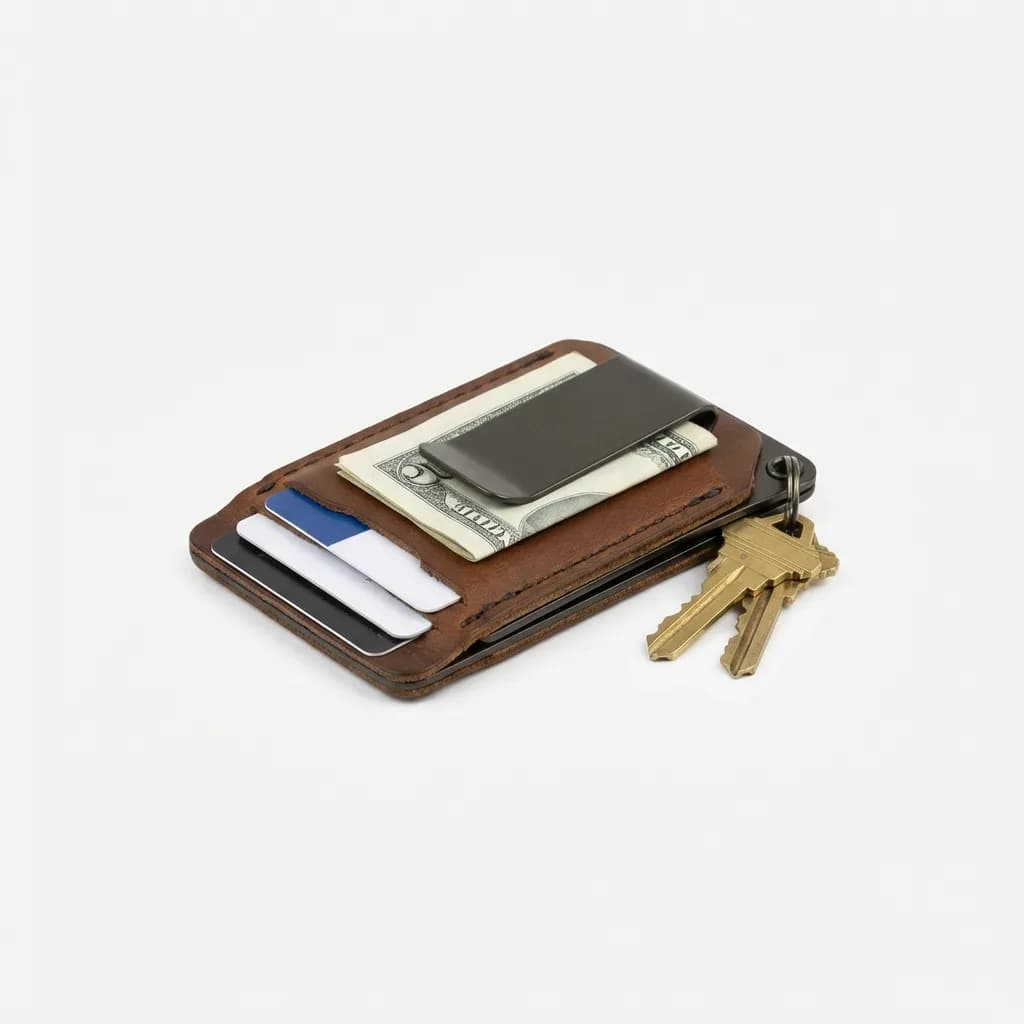
Trayvax Element Wallet Key Organizer
$69
Hybrid leather wallet with integrated key organizer plate. Holds 4-6 cards, includes money clip and 2-4 key capacity. Full-grain leather with stainless steel key plate and PVD coating options.
This solved the two-pocket problem. Instead of keys in one pocket and wallet in another, everything sits in your front right pocket. The combined thickness is less than carrying both items separately. Keys don't scratch cards because they're on opposite sides of the unit.
The downsides are limited key capacity and higher cost. Four keys is enough for most people but won't work if you manage multiple properties or vehicles. And at nearly double the price of a standalone organizer, you're paying for the wallet integration whether you need it or not.
Key size compatibility issues
Standard house keys work in any organizer. Car keys with plastic heads require different solutions. Some organizers include a loop attachment where you can hang the car key separately. Others have extended capacity specifically designed for larger keys.
Aftermarket keys often have thicker blanks that count as two standard keys when calculating capacity. Dimple keys and high-security keys with unusual profiles sometimes won't fit certain organizers at all. Check your key types before buying.
The gap between keys matters too. Keys sitting too loose will rattle and shift around. Keys sitting too tight will be difficult to separate when you need access. Good organizers include spacers to dial in the right tension.
Materials comparison: what actually lasts
We tested aluminum, stainless steel, titanium, and carbon fiber across different models. Aluminum showed scratches within the first week and small dings within the first month. The anodized coating wore through at high-friction points.
Stainless steel held up better. The matte finishes resisted scratches more than polished versions. Weight was the main complaint, adding 2-3 ounces to your pocket depending on the design. For reference, that's about the weight of a standard smartphone.
Titanium proved worth the premium for daily carry. After six months of testing, our titanium organizers looked nearly new. The material is naturally corrosion-resistant and doesn't need coating. Weight dropped to about half of stainless steel.
Carbon fiber looked impressive initially but chipped at corners and edges after a few drops. The material is strong in tension but brittle under impact. We'd skip carbon fiber for keychain organizers despite the high-tech appearance.
Hidden costs and accessories
Most organizers include a basic key removal tool. You'll want to keep this tool somewhere accessible because swapping keys without it is frustrating. We attached ours to a small split ring on the organizer itself.
Replacement screws are cheap but not universal. KeySmart screws won't fit KeyBar. Orbitkey straps need to be ordered directly from the manufacturer. Stock up on extras if you find an organizer you like, because hunting for proprietary hardware five years later is a hassle.
Loop attachments for car keys vary widely. Some use cheap split rings that are difficult to open. Better versions use quick-release clips or carabiners. We prefer the carabiner style because you can remove the car key when lending it to someone without disassembling everything.
Smart features: tracking and notifications
Tile integration in the KeySmart Pro works reliably. We tested it by intentionally leaving keys in different locations around town. The app notification arrived within 2-3 minutes showing the last known location. Community find worked once when someone else's Tile app detected our lost keys.
Apple AirTag holders are available for most organizers. These use Apple's Find My network, which has broader coverage than Tile. The downside is added bulk since you're attaching a separate tracker rather than integrating it into the frame.
Samsung SmartTag works similarly for Galaxy phone users. We found the UWB precision finding on newer phones more accurate than Bluetooth-only tracking. You can pinpoint keys to within a few feet instead of just getting a general location.
Installation mistakes to avoid
Don't overtighten screws. This strips threads in aluminum frames and can crack keys with thin profiles. Snug is enough. If you're using a torx driver, stop when you feel resistance.
Order matters more than most people realize. Put your most-used key in the position that's easiest to access. For most organizers, that's the outermost position. Your least-used key goes in the middle where it's hardest to reach.
Check screw tightness weekly for the first month. Screws can work loose as keys compress and settle. After the first month, monthly checks are sufficient. Keep the included tool with your organizer so you can make adjustments wherever you are.
Worth the upgrade from loose keys
A minimalist keychain organizer eliminates pocket bulk, protects your keys from damage, and makes it easier to lend someone a key without handing over your entire ring. The best models last for years and cost less than a tank of gas.
KeySmart Pro makes sense if you frequently misplace keys. Orbitkey 2.0 works well if you want modular flexibility. KeyBar handles heavy key loads and rough use. EDCTool Pivot excels for quick access despite added thickness. Trayvax Element solves the wallet-and-keys problem in one unit.
Whatever you choose, proper setup matters. Take the time to arrange keys logically, adjust spacers correctly, and tighten everything properly. A well-configured organizer becomes invisible in your pocket while making keys instantly accessible when needed.
The Weekly Dispatch
Enjoying this article?
Subscribe and get our best gear picks delivered every Sunday morning.
Related Stories
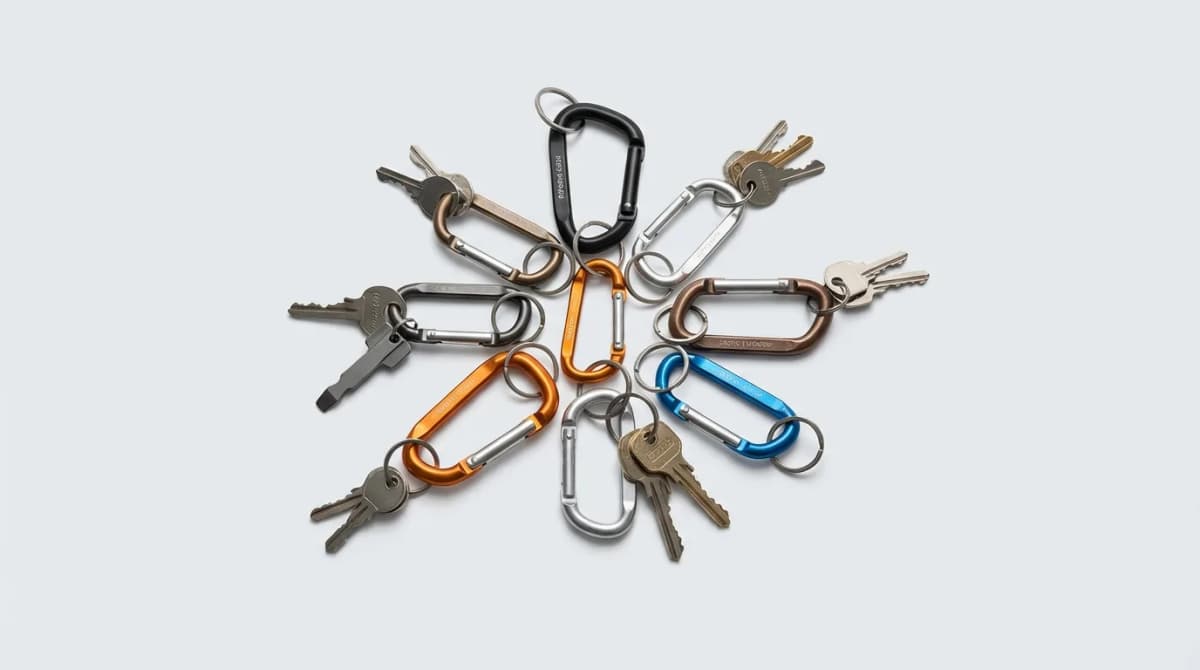
Best Carabiner Keychain for Everyday Carry
The right carabiner keychain turns fumbling with keys into a quick-release system. We tested dozens to find the best for daily carry, durability, and ease of use.
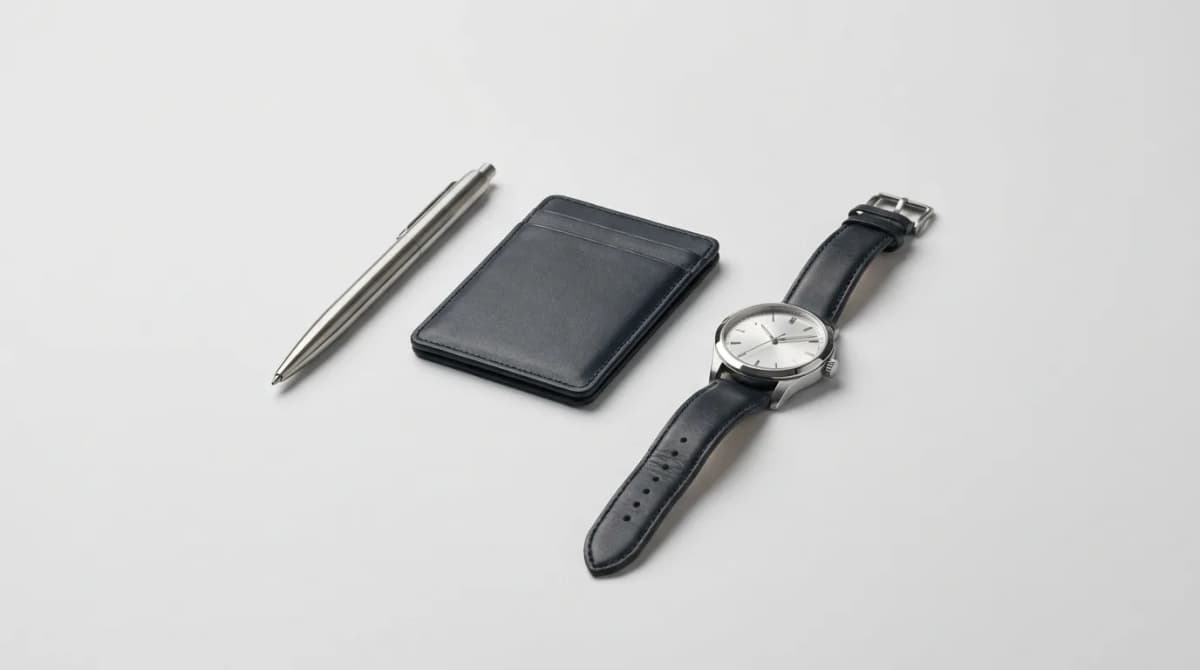
EDC for the Office and After Hours
Building an EDC that works from boardroom to bar requires smart choices, not duplicate gear. Here's how to carry less and do more.
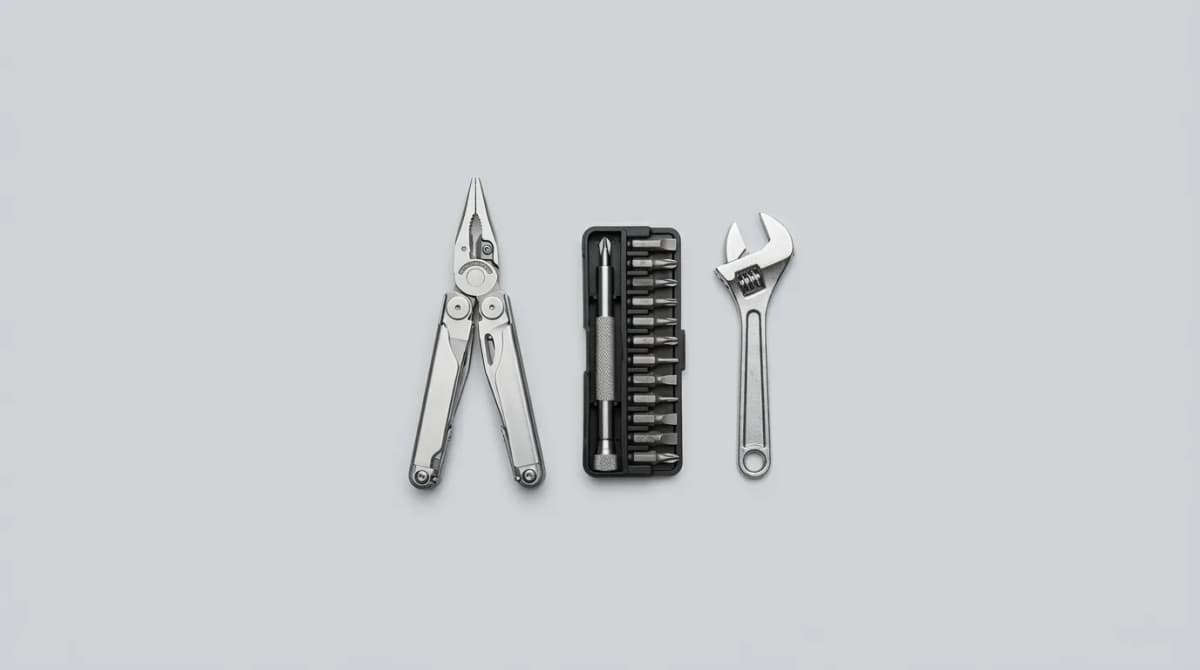
Best Pocket Tools for Apartment Maintenance
You don't need a full toolbox for apartment fixes. These pocket-sized tools handle loose screws, furniture assembly, and quick repairs without taking up drawer space.