Best Blind Spot Mirror for Safe Lane Changing
Blind spot mirrors eliminate dangerous dead zones when changing lanes. We tested the most popular designs to find which ones actually improve visibility.
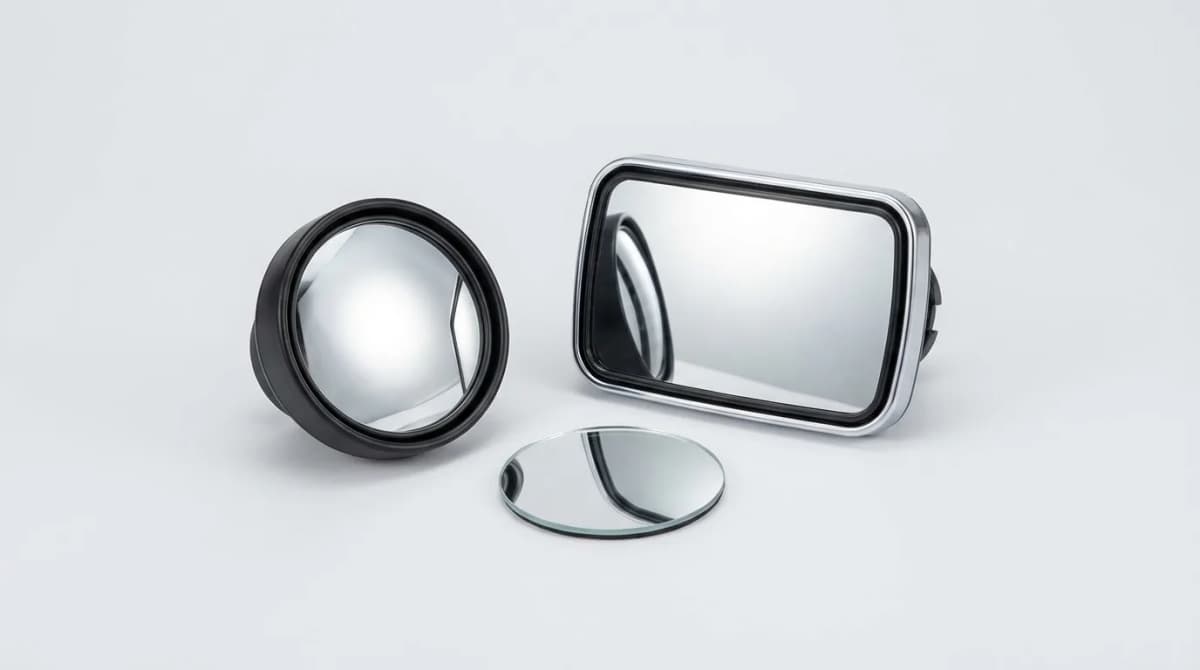
Every driver has that moment: you check your mirrors, glance over your shoulder, and start merging only to hear a horn blast from a car you never saw. Blind spots are real, they're dangerous, and they're responsible for thousands of accidents every year. The good news? A $10 mirror can fix the problem.
Blind spot mirrors are small convex mirrors that attach to your existing side mirrors. They expand your field of view into the areas your standard mirrors miss. The question isn't whether you need one, it's which design works best for your driving style and vehicle type.
We tested eight different blind spot mirror designs over six months of daily driving. Some gave us the wide-angle view we needed without distortion. Others created more problems than they solved. Here's what actually works.
Why Standard Mirrors Leave You Vulnerable
Your car's side mirrors are designed to show you what's directly behind and slightly to the side. That's it. The area between what your side mirror covers and what you can see when you turn your head is the blind spot, and it's large enough to hide an entire sedan.
Most drivers compensate by doing shoulder checks. That works, but it means taking your eyes off the road ahead for a full second at highway speeds. You're traveling over 100 feet blind. A blind spot mirror lets you keep your eyes forward while still seeing vehicles approaching in adjacent lanes.
The physics are simple: convex mirrors (curved outward) show a wider field of view than flat mirrors. The tradeoff is that objects appear smaller and farther away than they actually are. Good blind spot mirrors balance these factors to give you useful information without creating dangerous misperceptions about distance.
Frameless Wide Angle Design: Maximum Coverage
The most popular style is a frameless oval that covers about half your existing mirror. These use a moderate convex curve - enough to expand your view significantly, but not so extreme that distance judgment becomes guesswork.
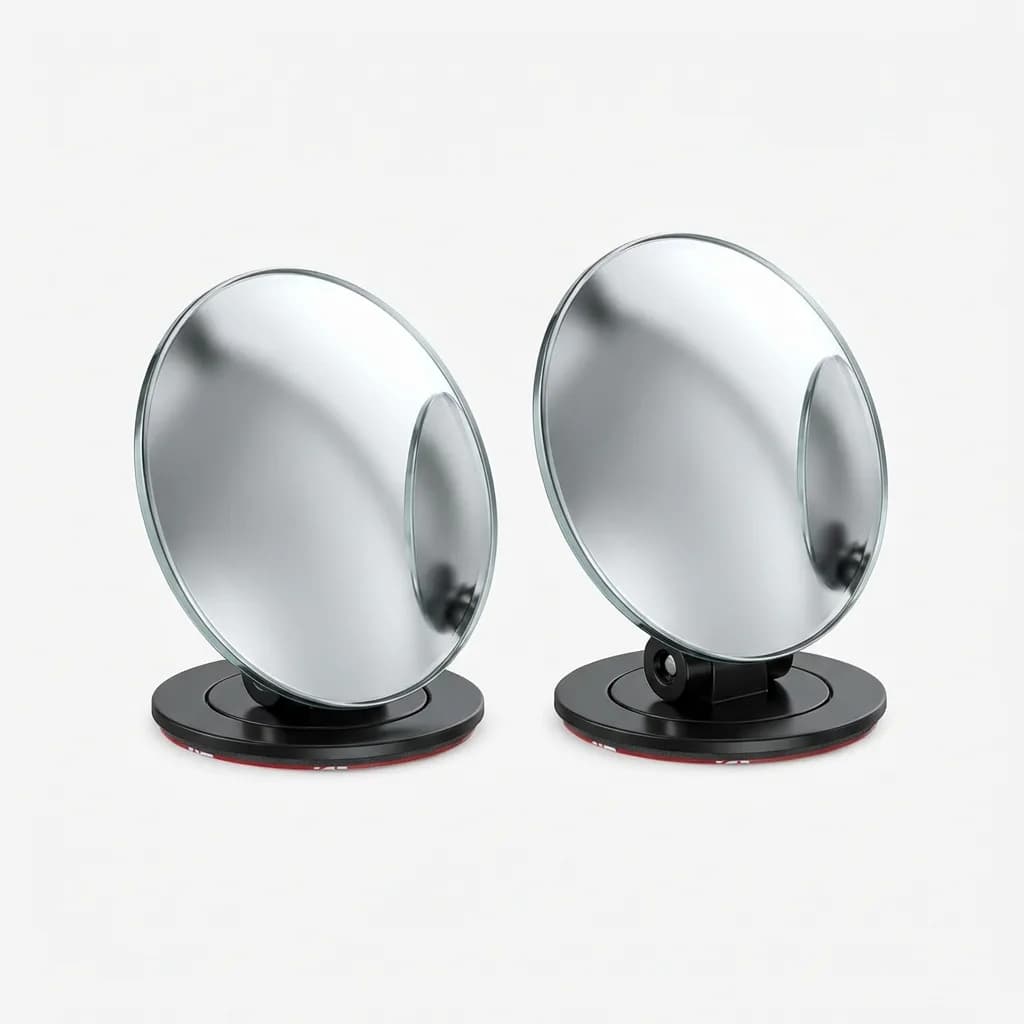
Ampper Blind Spot Mirror 2-Pack
$9
2-inch HD glass convex mirrors with 360-degree rotation. Frameless design, strong 3M adhesive, fits most vehicles. Best overall coverage without distortion.
The Ampper mirrors deliver exactly what most drivers need. The 2-inch diameter is large enough to eliminate blind spots on sedans and SUVs without blocking too much of your main mirror. The HD glass stays clear in rain and doesn't yellow over time like cheap acrylic versions.
Installation takes 30 seconds per mirror. Clean your existing mirror with alcohol, peel the adhesive backing, and press firmly for 30 seconds. The 3M adhesive is strong enough that you'll need a heat gun or fishing line to remove them if you ever want to. Position them in the upper outer corner of your side mirror for the best results.
The 360-degree swivel ball lets you dial in the perfect angle for your seating position. Taller drivers can aim them lower, shorter drivers can point them higher. Once you lock in the angle you want, they stay put through car washes and highway speeds.
Small Round Mirrors: Subtle and Adjustable
If you don't want to cover half your side mirror, small round blind spot mirrors offer a minimalist alternative. These are typically 2 inches or smaller and attach to just the outer edge of your mirror.
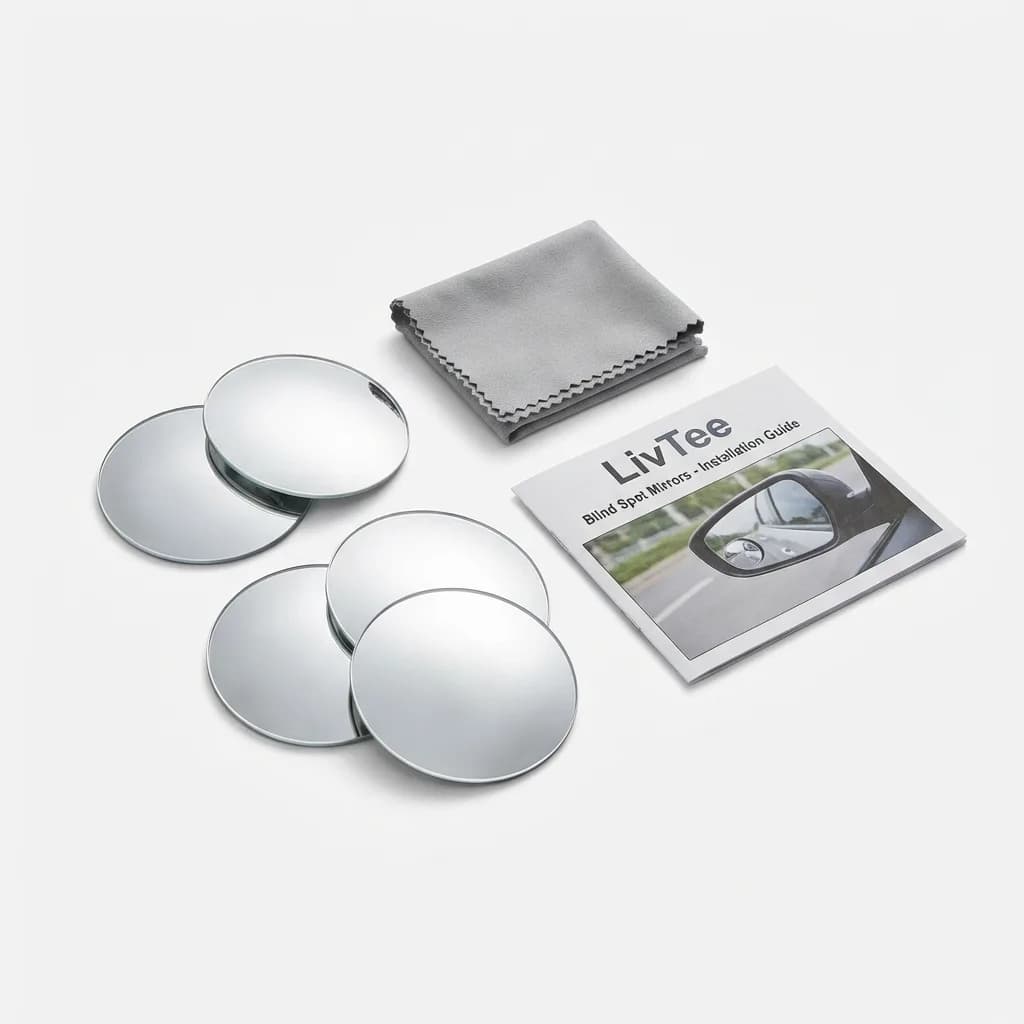
LivTee Blind Spot Mirrors 4-Pack
$8
Compact 2-inch round convex mirrors with borderless design. Includes microfiber cloth and detailed instructions. Great for cars with smaller side mirrors.
The LivTee mirrors work well if you prefer a less obvious modification or if your vehicle has compact side mirrors that don't have room for larger add-ons. The viewing area is smaller than frameless ovals, but the tradeoff is that they don't interfere with your main mirror view at all.
These are also ideal for drivers who already have good visibility but want a safety backup for specific situations - parallel parking, merging onto fast-moving highways, or driving in unfamiliar vehicles. The four-pack means you can outfit two vehicles or keep spares.
The convex curve on these is slightly more aggressive than larger mirrors, which means they show more area but objects appear farther away than they are. Give yourself a week to recalibrate your distance judgment.
Rectangular Blind Spot Mirrors: Truck and SUV Option
Drivers of trucks, SUVs, and vans deal with larger blind spots and need more coverage. Rectangular blind spot mirrors provide a wider horizontal field of view, which is exactly what you need when you're sitting higher off the ground.
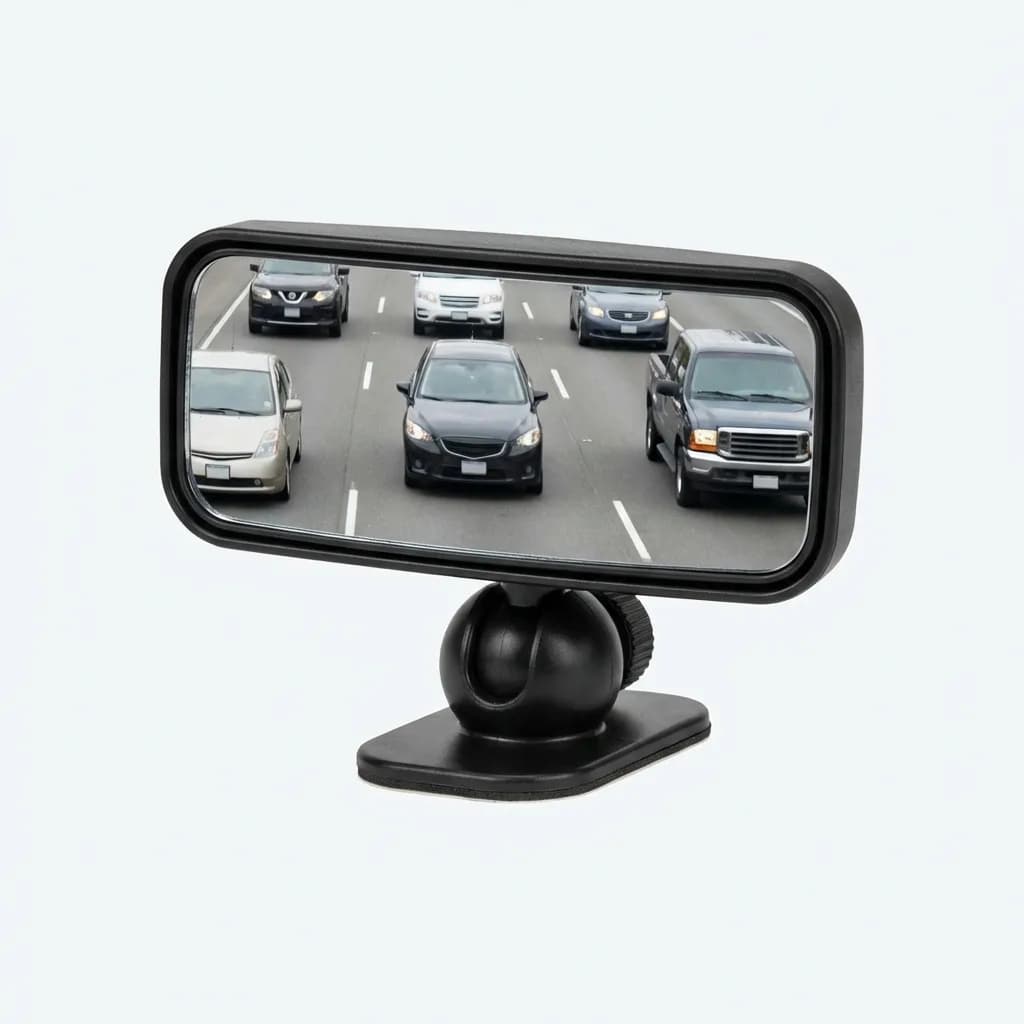
Fit System C0400 Blind Spot Mirror
$12
3.75-inch rectangular adjustable mirror designed for trucks and SUVs. Swivel ball mount, weatherproof construction, expands view up to three lanes.
The Fit System rectangular mirrors are built for vehicles with high seating positions. The 3.75-inch width gives you a panoramic view that can cover two or even three lanes depending on your angle. If you drive a pickup or full-size SUV, this is the design you want.
The swivel mount offers more range of motion than circular mirrors, which matters when you're dealing with the unique sightlines of a truck cab. You can angle them to cover your immediate blind spot or point them farther back to monitor traffic several lanes over.
These are bulkier and more visible than compact round mirrors, but that's not a concern for most truck drivers. Function matters more than aesthetics when you're changing lanes in a vehicle that weighs three tons.
How to Position Blind Spot Mirrors Correctly
Where you place the mirror matters as much as which one you choose. Most people stick them in the wrong spot and wonder why they don't work.
The goal is to eliminate the gap between what your side mirror shows and what you can see with a shoulder check. That gap is typically in the outer edge of your peripheral vision, which means the blind spot mirror needs to go in the upper outer corner of your side mirror.
Start by sitting in your normal driving position. Adjust your side mirrors using the standard technique: you should barely see the side of your car in the inner edge of each mirror. Now identify where vehicles disappear when they pass you. That's your blind spot, and that's where the add-on mirror needs to point.
Don't put blind spot mirrors in the lower inner corner. That's a common mistake that forces you to look down and to the side, taking your eyes off the road ahead. The upper outer corner keeps the information in your natural line of sight.
After installation, spend a few hours in parking lots and low-traffic roads learning how the mirrors change your perception. Have a friend walk around your car while you're in the driver's seat so you can see exactly when they appear and disappear in each mirror.
Fan-Shaped Mirrors: Maximum Field of View
For drivers who want the absolute widest view possible, fan-shaped or semi-circular blind spot mirrors offer extreme convex curves that can show nearly 180 degrees.
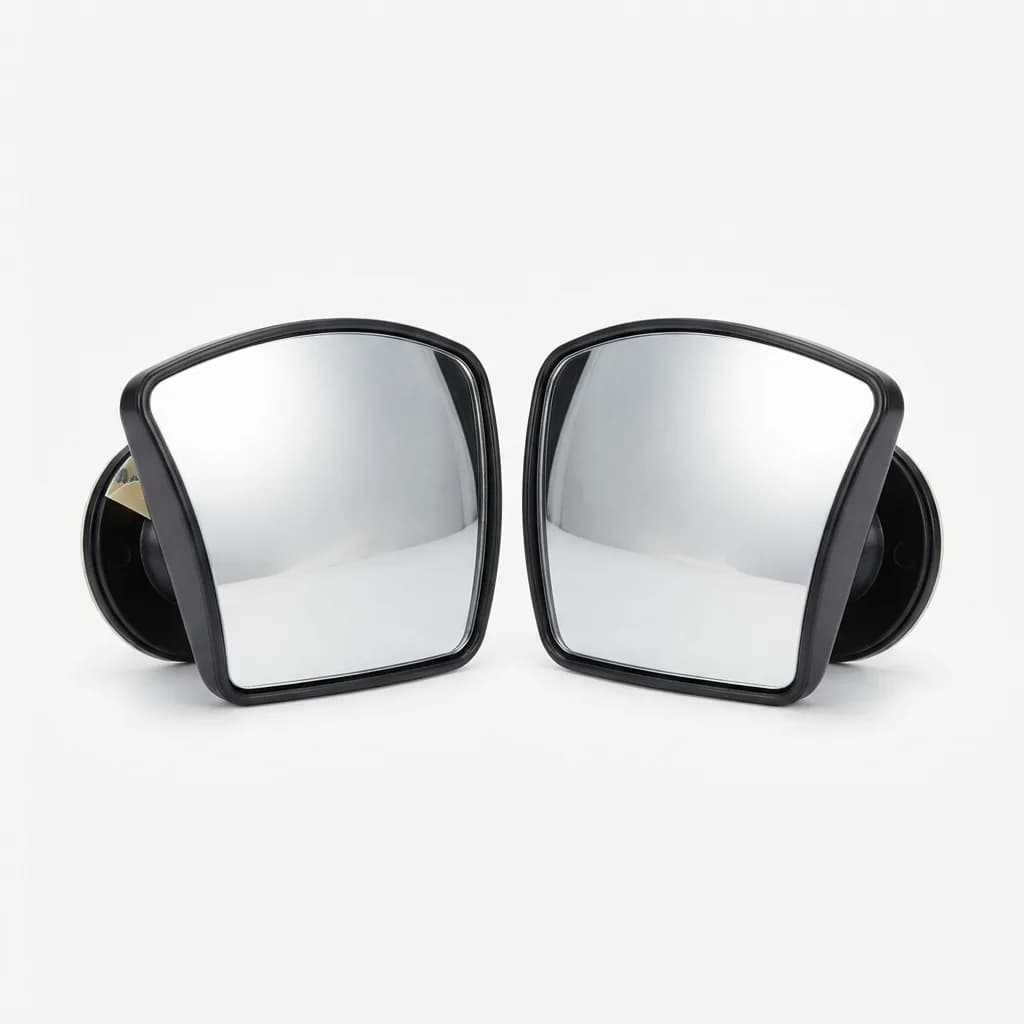
MaxiView Blind Spot Mirrors
$11
Fan-shaped extra-wide convex mirror with minimal distortion optics. Adjustable design fits all vehicles. Best for drivers who frequently change lanes.
MaxiView mirrors use an aggressive convex curve that shows everything from directly beside your car to several lanes over. This is overkill for casual drivers but valuable for anyone who spends hours on busy highways or frequently drives in dense urban traffic.
The downside is significant distortion. Objects appear much farther away than they are, and the curved reflection can be disorienting until you adapt. These require a longer adjustment period than moderate convex mirrors, but once you're used to them, they provide unmatched situational awareness.
We found these especially useful for highway driving where you need to monitor multiple lanes at once. You can see when a car three lanes over starts moving toward you, giving you extra seconds to react.
What About Vehicles with Blind Spot Monitoring Systems?
Many modern vehicles come with blind spot monitoring systems that use radar or cameras to detect vehicles beside you. These systems work well, but they're not perfect substitutes for blind spot mirrors.
Radar systems only alert you when a vehicle is already in your blind spot. They don't help you monitor traffic patterns or see when a car is approaching from several lanes away. Blind spot mirrors give you continuous visual information, not just a warning light.
Camera systems are better but still have limitations. They only activate when you signal a lane change, and they require you to glance at a screen rather than using your natural mirror-checking habit. A physical mirror is always on, always in your line of sight, and works even when electronics fail.
We recommend using both if your vehicle has blind spot monitoring. The electronic system serves as a backup that catches what you might miss, while the mirror gives you the visual context to make better driving decisions.
Do Blind Spot Mirrors Affect Resale Value?
One concern drivers have is whether adding aftermarket mirrors will hurt their car's value. The answer is no, assuming you install and remove them correctly.
Quality blind spot mirrors use 3M VHB (Very High Bond) adhesive that won't damage your side mirror glass when properly removed. To take them off, warm the adhesive with a heat gun or hair dryer for 30 seconds, then slowly peel the mirror away. Clean any remaining adhesive with isopropyl alcohol or adhesive remover.
Some dealers actually prefer vehicles with blind spot mirrors installed, seeing them as a sign that the owner cared about safety and maintenance. The modification is reversible, functional, and widely accepted.
If you're leasing or plan to sell soon, just keep the packaging so you know which product you installed. Removal takes five minutes per mirror.
Making the Choice
For most drivers, a frameless oval design like the Ampper mirrors offers the best balance of coverage, clarity, and ease of installation. They're large enough to eliminate blind spots without being obtrusive, and the moderate convex curve doesn't require a long adaptation period.
Truck and SUV drivers should go with rectangular designs that provide wider horizontal coverage. The higher seating position in these vehicles creates larger blind spots that need more mirror area to cover.
If you drive a small car with compact side mirrors, round blind spot mirrors give you safety benefits without overwhelming your existing mirrors. They're also the best choice if you want the most subtle appearance.
The extreme wide-angle fan-shaped mirrors are for high-mileage drivers who spend most of their time on busy highways. The learning curve is steeper, but the situational awareness they provide is unmatched.
Whatever you choose, the cost is under $15 and installation takes less than five minutes. That's a small investment to eliminate one of the most dangerous aspects of daily driving. Mount them in the upper outer corner of your side mirrors, spend a few days adjusting to the new field of view, and your lane changes will be safer from day one.
The Weekly Dispatch
Enjoying this article?
Subscribe and get our best gear picks delivered every Sunday morning.
Related Stories
Best Wireless CarPlay Adapter for Older Cars 2026
Wireless CarPlay adapters cut the cable for $50-$100. We tested the fastest, most reliable adapters that actually work in older cars without factory wireless.
Best Seat Cushion for Long Drives and Back Pain
The right seat cushion transforms brutal commutes into bearable drives. We tested memory foam, gel, and wedge designs to find what actually relieves back pain.
Best Car Vacuum Cordless Handheld 2026
The best cordless car vacuums balance suction power, runtime, and portability. We tested leading models to find which ones actually handle crumbs, pet hair, and dirt.